

Abstract
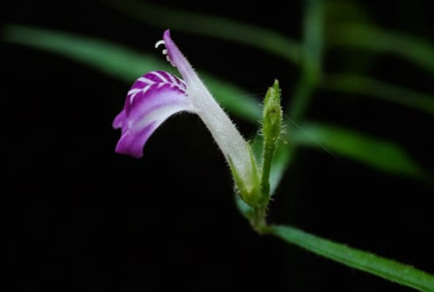
Justicia zappiana is described and illustrated as a new species endemic to the Atlantic Forest of Bahia, Brazil. It occurs in the understory of dense rainforests within protected areas in the southern part of the state and shows morphological affinities with J. anagallis and J. lavandulifolia. It is distinguished by subcylindrical stems, very narrow leaves with short petioles, reduced peduncles, shorter filaments, and pubescent capsules with tuberculate seeds. Although occurring in conservation units, the species is known from few localities, with restricted distribution and small populations. For these reasons, it is assessed as Vulnerable (VU) under IUCN criteria. This discovery highlights the importance of field collections in Bahia for advancing knowledge of Acanthaceae diversity and supporting conservation strategies.
References
- Amorim, A.M., Jardim, J.G., Lopes, M.M.M., Fiaschi, P., Borges, R.A.X., Perdiz, R.O. & Thomas, W.W. (2009) Angiospermas em remanescentes de floresta montana no sul da Bahia, Brasil. Biota Neotropica 9: 1–36. https://doi.org/10.1590/s1676-06032009000300028
- Aona, L.Y.S., Faden, R.B., Bittrich, V. & Amaral, M.C.E. (2016) Four new species of Dichorisandra (Commelinaceae) endemic from Bahia State, Brazil. Brittonia 68: 61–73. https://doi.org/10.1007/s12228-015-9397-x
- APG – Angiosperm Phylogeny Group (2016) An update of the Angiosperm Phylogeny Group classification for the orders and families of flowering plants: APG IV. Botanical Journal of the Linnean Society 181: 1–20. https://doi.org/10.1111/boj.12385
- Bacci, L.F., Amorim, A.M., Michelangeli, F.A. & Goldenberg, R. (2018) Increased sampling in under-collected areas sheds new light on the diversity and distribution of Bertolonia, an Atlantic Forest endemic genus. Systematic Botany 43: 767–792. https://doi.org/10.1600/036364418X697490
- Bachman, S., Moat, J., Hill, A., de la Torre, J. & Scott, B. (2011) Supporting Red List threat assessments with GeoCAT: geospatial conservation assessment tool. ZooKeys 150: 117–126. https://doi.org/10.3897/zookeys.150.2109
- BFG – The Brazil Flora Group (2021) Brazilian Flora 2020: Leveraging the power of a collaborative scientific network. Taxon 71: 178–198.
- Braz, D.M., Daniel, T.F., Kiel, C., Gao, A., Jawadi, S. & Monteiro, R. (2021) Aymoreana (Nelsonioideae, Acanthaceae), a new genus endemic to Brazil. Systematic Botany 46: 211–217. https://doi.org/10.1600/036364421X16128061189530
- Côrtes, A.L.A. & Rapini, A. (2011) Four new species of Justicia (Acanthaceae) from the Caatinga biome of Bahia, Brazil. Kew Bulletin 66: 453–461. https://doi.org/10.1007/s12225-011-9295-7
- Côrtes, A.L.A., Borges, R.L.B. & Rapini, A. (2010b) Reinstatement of Thyrsacanthus Moric. (Acanthaceae) and taxonomic novelties in the genus. Taxon 59: 965–972. https://doi.org/10.1002/tax.593025
- Côrtes, A.L.A. & Rapini, A. (2010a) Notas taxonômicas em Justiceieae (Acanthaceae) no estado da Bahia, Brasil. Rodriguésia 61 (Suppl.): 89–91. https://doi.org/10.1590/2175-7860201061139
- Côrtes, A.L.A. & Rapini, A. (2013) Justiceieae (Acanthaceae) do Semiárido do Estado da Bahia, Brasil. Hoehnea 40: 253–292. https://doi.org/10.1590/s2236-89062013000200003
- Daniel, T.F. (2011) Justicia (Acanthaceae) in Texas. Journal of the Botanical Research Institute of Texas 5: 595–618.
- Daniel, T.F. (2016) Vascular plants of Arizona: Acanthaceae acanthus or shrimp-plant family. Canotia 12: 22–54.
- Erdtman, G. (1952) Pollen morphology and plant taxonomy: Angiosperms. Almqvist & Wiksell, Stockholm.
- Erdtman, G. (1960) The acetolysis method. A revised description. Svensk Botanisk Tidskrift 54: 561–564.
- Flora e Funga do Brasil (2025) Acanthaceae. Available from: https://floradobrasil.jbrj.gov.br/FB33 (accessed 16 August 2025)
- Graham, V.A.W. (1988) Delimitation and infra-generic classification of Justicia (Acanthaceae). Kew Bulletin 43: 551–624. https://doi.org/10.2307/4129957
- Harris, J.G. & Harris, M.W. (2001) Plant identification terminology: an illustrated glossary. Spring Lake Publishing, Spring Lake, 216 pp.
- Hesse, M., Halbritter, H., Zetter, R., Weber, M., Buchner, R., Frosch-Radivo, A. & Ulrich, S. (2009) Pollen terminology - An illustrated handbook. Springer, Wien, 264 pp. https://doi.org/10.1007/978-3-319-71365-6
- Hickey, M. & King, C. (2000) The Cambridge illustrated glossary of botanical terms. Cambridge University Press, Cambridge, 208 pp. https://doi.org/10.1006/anbo.2001.1472
- Indriunas, A. & Kameyama, C. (2012) New species of Herpetacanthus (Acanthaceae) from the Atlantic Forest and neighboring areas (Brazil). Systematic Botany 37: 1006–1022. https://doi.org/10.1600/036364412X656446
- IUCN (2012) IUCN Red List Categories and Criteria, version 3.1. Ed. 2. IUCN, Gland & Cambridge.
- IUCN (2022) Guidelines for using the IUCN Red List Categories and Criteria, version 15.1. IUCN, Gland & Cambridge.
- Kiel, C.A., Daniel, T.F., Darbyshire, I. & McDade, L.A. (2017) Unraveling relationships in the morphologically diverse and taxonomically challenging ‘justicioid’ lineage (Acanthaceae, Justicieae). Taxon 66: 645–674. https://doi.org/10.12705/663.8
- Kiel, C.A., Daniel, T.F. & McDade, L.A. (2018) Phylogenetics of New World “justicioids” (Justicieae: Acanthaceae): major lineages, morphological patterns, and widespread incongruence with classification. Systematic Botany 43: 459–484. https://doi.org/10.1600/036364418X697201
- Linnaeus, C. (1753) Species plantarum 1. Salvius, Stockholm, 560 pp. https://doi.org/10.5962/bhl.title.669
- Lindau, G. (1895) Acanthaceae. In: Engler, A. & Prantl, K. (Ed.) Die natürlichen Pflanzenfamilien 4 (3b). Leipzig, pp. 274–354.
- Manzitto-Tripp, E.A., Darbyshire, I., Daniel, T.F., Kiel, C.A. & McDade, L.A. (2022) Revised classification of Acanthaceae and worldwide dichotomous keys. Taxon 71: 103–153. https://doi.org/10.1002/tax.12600
- Marinho, L.C., Martins, M.V., Amorim, A.M. & Bittrich, V. (2016) Vismia atlantica (Hypericaceae), a new species previously thought to be well-known from the Brazilian Atlantic Forest. Journal of the Torrey Botanical Society 143: 330–337. https://doi.org/10.3159/torrey-d-15-00041
- Martini, A.M.Z., Fiaschi, P., Amorim, A.M. & Paixão, J.L. (2007) A hot-point within a hot-spot: a high diversity site in Brazil’s Atlantic Forest. Biodiversity and Conservation 16: 3111–3128. https://doi.org/10.1007/s10531-007-9166-6
- McDade, L.A., Daniel, T.F. & Kiel, C.A. (2005) Phylogenetic relationships among Acantheae (Acanthaceae): major lineages present contrasting patterns of molecular evolution and morphological differentiation. Systematic Botany 30: 834–862. https://doi.org/10.1600/036364405775097734
- McDade, L.A., Daniel, T.F. & Kiel, C.A. (2008) Toward a comprehensive understanding of phylogenetic relationships among lineages of Acanthaceae s.l. (Lamiales). American Journal of Botany 95: 1136–1152. https://doi.org/10.3732/ajb.0800096
- Monteiro, D., Leitman, P. & Coelho, M.M. (2016) Two new Peperomia (Piperaceae) species from southern Bahia, Brazil. Phytotaxa 258: 172–188. https://doi.org/10.11646/phytotaxa.258.3.4
- Nees von Esenbeck, C.G. (1847a) Acanthaceae. In: von Martius, K.P., Eichler, A.G. & Urban, I. (Ed.) Flora Brasiliensis 9. Typographia Regia, Monachii, pp. 1–164.
- Nees von Esenbeck, C.G. (1847b) Acanthaceae. In: Candolle, A.P. de (Ed.) Prodromus Systematis Naturalis Regni Vegetabilis 11. Masson, Paris, pp. 46–519. https://doi.org/10.5962/bhl.title.286
- Punt, W., Hoen, P.P., Blackmore, S., Nilsson, S. & Le Thomas, A. (2007) Glossary of pollen and spore terminology. Review of Paleobotany and Palynology 143: 1–81. https://doi.org/10.1016/j.revpalbo.2006.06.008
- Profice, S.R. & Leitman, P. (2013) Clistax bahiensis (Acanthaceae), a new epiphytic species from Bahia, Brazil. Phytotaxa 132: 47–52. https://doi.org/10.11646/phytotaxa.132.1.4
- Profice, S.R. (1997) Two new species of Mendoncia (Acanthaceae) from Bahia, Brazil. Brittonia 49: 67–70. https://doi.org/10.2307/2807695
- QGIS Development Team (2025) QGIS Geographic Information System version 3.42.0. QGIS Association, Brighton. [https://www.qgis.org]
- Rizzini, C.T. (1949) Contribuição ao conhecimento da tribo Justicieae (Acanthaceae). Archivos do Jardim Botânico do Rio de Janeiro 9: 44–64.
- Robards, A.W. (1978) An introduction to techniques for scanning electron microscopy of plant cells. In: Hall, J.L. (Ed.) Electron microscopy and cytochemistry of plant cells. Elsevier, New York, pp. 343–403.
- Schwarzbach, A.E. & McDade, L.A. (2002) Phylogenetic relationships of the mangrove family Avicenniaceae based on chloroplast and nuclear ribosomal DNA sequences. Systematic Botany 27: 84–98.
- Silva, F.A., Kameyama, C., Zappi, D.C. & Gil, A.S.B. (2022) The genus Justicia (Acanthaceae) in the state of Pará, Amazon, Brazil. Rodriguésia 73: 1–46. https://doi.org/10.1590/2175-7860202273046
- Sobral, M. & Stehmann, J.R. (2009) An analysis of new angiosperm species discoveries in Brazil. Taxon 58: 227–232. https://doi.org/10.1002/tax.581021
- Taylor, C. & Jardim, J.G. (2018) Rubiacearum Americanarum Magna Hama Pars XLI: new species, a new section, and new combinations in Palicourea from the Atlantic Forest of eastern Brazil (Palicoureeae). Novon 26: 310–313. https://doi.org/10.3417/2018077
- Thomas, W.W., Carvalho, A.M.V., Amorim, A.M., Garrison, J. & Santos, T.S. (2008) Diversity of woody plants in the Atlantic coastal forest of southern Bahia, Brazil. In: Thomas, W.W. (Ed.) The Atlantic Coastal Forests of northeastern Brazil. Memoirs of the New York Botanical Garden 100: 21–66. https://doi.org/10.2307/2807838
- Tripp, E.A., Daniel, T.F., Fatimah, S. & McDade, L.A. (2013) Phylogenetic relationships within Ruellieae (Acanthaceae) and a revised classification. International Journal of Plant Sciences 174: 97–137. https://doi.org/10.1086/668248
- Wallnöfer, B. (2015) A revision of neotropical Diospyros (Ebenaceae): part 14. Annalen des Naturhistorischen Museums in Wien, Serie B 121: 323–348.
- Wasshausen, D.C. (1993) Notes on Acanthaceae from Pico das Almas, Bahia, Brazil. Kew Bulletin 48: 17–20. https://doi.org/10.2307/4115742
- Wasshausen, D.C. (2004) Acanthaceae. In: Smith, N., Mori, S.A., Henderson, A., Stevenson, D.W. & Heald, S.V. (Eds.) Flowering plants of the Neotropics. Princeton University Press, Princeton, pp. 3–7.