

Abstract
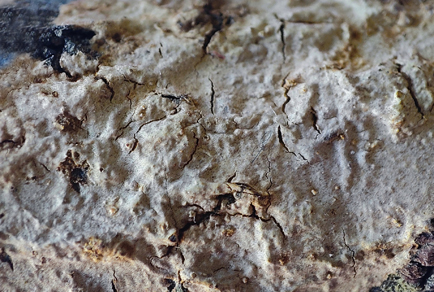
The fungi constitute a highly diverse group distinct from plants and animals, and accurately determining the taxonomic placement of newly discovered taxa is essential for understanding fungal evolution and ecological function. In this study, a new species, Hymenochaete yaoshanensis, is proposed based on a combination of morphological features and molecular evidence of ITS and nLSU. The phylogenetic analysis inferred from ITS+nLSU sequence data placed H. yaoshanensis within the family Hymenochaetaceae and showed it to be closely related to H. pinnatifida and H. longispora. Hymenochaete yaoshanensis is characterized by a tuberculate to locally verruculose hymenial surface, a monomitic hyphal system, slightly thick-walled generative hyphae with simple septa, and oblong ellipsoid basidiospores (4–6 × 2–3 µm). A full description, illustrations, and phylogenetic analysis are provided to facilitate future taxonomic and systematic studies of Hymenochaete taxa.
References
- Berbee, M.L., James, T.Y. & Strullu-Derrien, C. (2017) Early diverging fungi: diversity and impact at the dawn of terrestrial life. Annual Review of Microbiology 71: 41–60. https://doi.org/10.1146/annurev-micro-030117-020324
- Dai, Y.C. (2010) Hymenochaetaceae (Basidiomycota) in China. Fungal Diversity 45: 131–343. https://doi.org/10.1007/s13225-010-0066-9
- Dai, Y.F., Yuan, Q., Yang, X., Liu, R., Liu, D.F., Yuan, H.S. & Zhao, C.L. (2025) Morphological characteristics and phylogenetic analyses reveal five new species of Hymenochaetales (Agaricomycetes, Basidiomycota) from southwestern China. MycoKeys 114: 133. https://doi.org/10.3897/mycokeys.114.143851
- Deng, Y.L., Chen, M., Liu, L.F., Li, Q.Z., Zhang, S.C., Yuan, H.S. & Zhao, C.L. (2025) Morphological and molecular analyses revealed four new wood-inhabiting fungal species (Hymenochaetales, Basidiomycota) from Yunnan. MycoKeys 117: 29–66. https://doi.org/10.3897/mycokeys.117.146236
- Dong, J.H., Li, Q., Yuan, Q., Luo, Y.X., Zhang, X.C., Dai, Y.F., Zhou, Q., Liu, X.F., Deng, Y.L., Zhou, H.M., Muhammad, A. & Zhao, C.L. (2024) Species diversity, taxonomy, molecular systematics and divergence time of wood-inhabiting fungi in Yunnan-Guizhou Plateau, Asia. Mycosphere 15 (1): 1110–1293. https://doi.org/10.5943/mycosphere/15/1/10
- Du, P., Cao, T.X., Wu, Y.D., Zhou, M. & Liu, Z.B. (2021) Two new species of Hymenochaetaceae on Dracaena cambodiana from tropical China. MycoKeys 80: 1–17. https://doi.org/10.3897/mycokeys.80.63997
- Felsenstein, J. (1985) Confidence intervals on phylogenetics: an approach using bootstrap. Evolution 39: 783–791. https://doi.org/10.1111/j.1558-5646.1985.tb00420.x
- Frey, W., Hurka, K. & Oberwinkler, F. (1997) Beiträge zur Biologie der Niederen Pffanzen. Systematik, Stammesgeschichte, Ökologie. Gustav Fischer Verlag, Stuttgart/New York. [https://d-nb.info/780065964/04]
- Gan, T., Luo, T., Pang, K. Zhou, C.M., Zhou, G.H., Wan, B., Li, G., Yi, Q.R., Czaja, A.D. & Xiao, S.H. (2021) Cryptic terrestrial fungus-like fossils of the early Ediacaran period. Nature Communications 12: 641. https://doi.org/10.1038/s41467-021-20975-1
- He, M.Q., Zhao, R.L., Liu, D.M., Denchev, T.T., Begerow, D., Yurkov, A., Kemler, M., Millanes, A.M., Wedin, M., McTaggart, A.R., Shivas, R.G., Buyck, B., Chen, J., Vizzini, A., Papp, V., Zmitrovich, I.V., Davoodian, N. & Hyde, K.D. (2022) Species diversity of basidiomycota. Fungal Diversity 114 (1): 281–325. https://doi.org/10.1007/s13225-021-00497-3
- He, S.H. & Dai, Y.C. (2012) Taxonomy and phylogeny of Hymenochaete and allied genera of Hymenochaetaceae (Basidiomycota) in China. Fungal Diversity 56 (1): 77–93. https://doi.org/10.1007/s13225-012-0174-9
- He, S.H. & Li, H.J. (2011) Hymenochaete rhododendricola and H. quercicola spp. nov. (Basidiomycota, Hymenochaetales) from Tibet, south-western China. Nordic Journal of Botany 29: 484–487. https://doi.org/10.1111/j.1756-1051.2011.01217.x
- He, S.H. & Li, H.J. (2014) Hymenochaete (Hymenochaetales, Basidiomycota) in China. 7. H. cana sp. nov. and H. denticulata new to China. Chiang Mai Journal of Science 41 (4): 781–788. [http://epg.science.cmu.ac.th/ejournal/ Contributed Paper]
- He, S.H., Liu, S.L., Li, S.L. & Dai, Y.C. (2017) Two new species of Hymenochaete (Hymenochaetaceae, Basidiomycota) and H. colliculosa new to China from Shanxi Province. Phytotaxa 324: 168–178. https://doi.org/10.11646/phytotaxa.324.2.5
- Hu, Y.W., Karunarathna, S.C., Li, H.L., Galappaththi, M.C.A., Zhao, C.L., Kakumyan, P. & Mortimer, P.E. (2022) The impact of drying temperature on basidiospore size. Diversity 14 (4): 239. https://doi.org/10.3390/d14040239
- Hyde, K.D., Noorabadi, M.T., Thiyagaraja, V., He, M.Q., Johnston, P.R., Wijesinghe, S.N., Armand, A., Biketova, A.Y., Chethana, K.W.T., Erdoğdu, M., Ge, Z.W., Groenewald, J.Z., Hongsanan, S., Kušan, I., Leontyev, D.V., Li, D.W., Lin, C.G., Liu, N.G., Maharachchikumbura, S.S.N., Matočec, N., May, T.W., McKenzie, E.H.C., Mešić, A., Perera, R.H., Phukhamsakda, C., Piątek, M., Samarakoon, M.C., Selcuk, F., Senanayake, I.C., Tanney, J.B., Tian, Q., Vizzini, A., Wanasinghe, D.N., Wannasawang, N., Wijayawardene, N.N., Zhao, R.L., Abdel-Wahab, M.A., Abdollahzadeh, J., Abeywickrama, P.D., Absalan, S., Acharya, K., Afshari, N., Afshan, N.S., Afzalinia, S., Ahmadpour, S.A., Akulov, O., Alizadeh, A., Alizadeh, M., Al-Sadi, A.M., Alves, A., Alves, V.C.S., Alves-Silva, G., Antonín, V., Aouali, S., Aptroot, A., Apurillo, C.C.S., Arias, R.M., Asgari, B., Asghari, R., Assis, D.M.A., Assyov, B., Atienza, V., Aumentado, H.D.R., Avasthi, S., Azevedo, E., Bakhshi, M., Bao, D.F., Baral, H.O., Barata, M., Barbosa, K.D., Barbosa, R.N., Barbosa, F.R., Baroncelli, R., Barreto, G.G., Baschien, C., Bennett, R.M., Bera, I., Bezerra, J.D.P., Bhunjun, C.S., Bianchinotti, M.V., Błaszkowski, J., Boekhout, T., Bonito, G.M., Boonmee, S., Boonyuen, N., Bortnikov, F.M., Bregant, C., Bundhun, D., Burgaud, G., Buyck, B., Caeiro, M.F., Cabarroi-Hernández, M., Cai, M.F., Cai, L., Calabon, M.S., Calaça, F.J.S., Callalli, M., Câmara, M.P.S., Cano-Lira, J., Cao, B., Carlavilla, J.R., Carvalho, A., Carvalho, T.G., Castañeda-Ruiz, R.F., Catania, M.D.V., Cazabonne, J., Cedeño-Sanchez, M., Chaharmiri-Dokhaharani, S., Chaiwan, N., Chakraborty, N., Cheewankoon, R., Chen, C., Chen, J., Chen, Q., Chen, Y.P., Chinaglia, S., Coelho-Nascimento, C.C.S., Coleine, C., Costa-Rezende, D.H., Cortés-Pérez, A., Crouch, J.A., Crous, P.W., Cruz, R.H.S.F., Czachura, P., Damm, U., Darmostuk, V., Daroodi, Z., Das, K., Das, K., Davoodian, N., Davydov, E.A., da Silva, G.A., da Silva, .IR., da Silva, R.M.F., da Silva, S.A.C., Dai, D.Q., Dai, Y.C., de Groot, M.D., De Kesel, A., De Lange, R., de Medeiros, E.V., de Souza, C.F.A., de Souza, F.A., dela Cruz, T.E.E., Decock, C., Delgado, G., Denchev, C.M., Denchev, T.T., Deng, Y.L., Dentinger, B.T.M., Devadatha, B., Dianese, J.C., Dima, B., Doilom, M., Dissanayake, A.J., Dissanayake, D.M.L.S., Dissanayake, .LS., Diniz, A.G., Dolatabadi, S., Dong, J.H., Dong, W., Dong, Z.Y., Drechsler-Santos, E.R., Druzhinina, I.S., Du, T.Y., Dubey, M.K., Dutta, A.K., Elliott, T.F., Elshahed, M.S., Egidi, E., Eisvand, P., Fan, L., Fan, X., Fan, X.L., Fedosova, A.G., Ferro, L.O., Fiuza, P.O., Flakus, A., Fonseca, E.O., Fryar, S.C., Gabaldón, T., Gajanayake, A.J., Gannibal, P.B., Gao, F., García-Sánchez, D., García-Sandoval, R., Garrido-Benavent, I., Garzoli, L., Gasca-Pineda, J., Gautam, A.K., Gené, J., Ghobad-Nejhad, M., Ghosh, A., Giachini, A.J., Gibertoni, T.B., Gentekaki, E., Gmoshinskiy, V.I., Góes-Neto, A., Gomdola, D., Gorjón, S.P., Goto, B.T., Granados-Montero, M.M., Griffith, G.W., Groenewald, M., Grossart, H.P., Gu, Z.R., Gueidan, C., Gunarathne, A., Gunaseelan, S., Guo, S.L., Gusmão, L.F.P., Gutierrez, A.C., Guzmán-Dávalos, L., Haelewaters, D., Haituk, H., Halling, R.E., He, S.C., Heredia, G., Hernández-Restrepo, M., Hosoya, T., Hoog, S.D., Horak, E., Hou, C.L., Houbraken, J., Htet, Z.H., Huang, S.K., Huang, W.J., Hurdeal, V.G., Hustad, V.P., Inácio, C.A., Janik, P., Jayalal, R.G.U., Jayasiri, S.C., Jayawardena, R.S., Jeewon, R., Jerônimo, G.H., Jin, J., Jones, E.B.G., Joshi, Y., Jurjević, Ž., Justo, A., Kakishima, M., Kaliyaperumal, M., Kang, G.P., Kang, J.C., Karimi, O., Karunarathna, S.C., Karpov, S.A., Kezo, K., Khalid, A.N., Khan, M.K., Khuna, S., Khyaju, S., Kirchmair, M., Klawonn, I., Kraisitudomsook, N., Kukwa, M., Kularathnage, N.D., Kumar, S., Lachance, M.A., Lado, C., Latha, K.P.D., Lee, H.B., Leonardi, M., Lestari, A.S., Li, C., Li, H., Li, J., Li, Q., Li, Y., Li, Y.C., Li, Y.X., Liao, C.F., Lima, J.L.R., Lima, J.M.S., Lima, N.B., Lin, L., Linaldeddu, B.T., Linn, M.M., Liu, F., Liu, J.K., Liu, J.W., Liu, S., Liu, S.L., Liu, X.F., Liu, X.Y., Longcore, J.E., Luangharn, T., Luangsa-ard, J.J., Lu, L., Lu, Y.Z., Lumbsch, H.T., Luo, L., Luo, M., Luo, Z.L., Ma, J., Madagammana, A.D., Madhushan, A., Madrid, H., Magurno, F., Magyar, D., Mahadevakumar, S., Malosso, E., Malysh, J.M., Mamarabadi, M., Manawasinghe, I.S., Manfrino, R.G., Manimohan, P., Mao, N., Mapook, A., Marchese, P., Marasinghe, D.S., Mardones, M., Marin-Felix, Y., Masigol, H., Mehrabi, M., Mehrabi-Koushki, M., Meiras-Ottoni, A., Melo, R.F.R., Mendes-Alvarenga, R.L., Mendieta, S., Meng, Q.F., Menkis, A., Menolli, N.J., Mikšík, M., Miller, S.L., Moncada, B., Moncalvo, J.M., Monteiro, J.S., Monteiro, M., Mora-Montes, H.M., Moroz, E.L., Moura, J.C., Muhammad, U., Mukhopadhyay, S., Nagy, G.L., Najamul, S.A., Najafiniya, M., Nanayakkara, C.M., Naseer, A., Nascimento, E.C.R., Nascimento, S.S., Neuhauser, S., Neves, M.A., Niazi, A.R., Nie, Y., Nilsson, R.H., Nogueira, P.T.S., Novozhilov, Y.K., Noordeloos, M., Norphanphoun, C., Nuñez, O.N., O’Donnell, R.P., Oehl, F., Oliveira, J.J.A., Oliveira, I., Oliveira, N.V.L., Oliveira, P.H.F., Orihara, T., Oset, M., Pang, K.L., Papp, V., Pathirana, L.S., Peintner, U., Pem, D., Pereira, O.L., Pérez-Moreno, J., Pérez-Ortega, S., Péter, G., Pires-Zottarelli, C.L.A., Phonemany, M., Phongeun, S., Pošta, A., Prazeres, J.F.S.A., Quan, Y., Quandt, C.A., Queiroz, M.B., Radek, R., Rahnama, K., Raj, K.N.A., Rajeshkumar, K.C., Rajwar, S., Ralaiveloarisoa, A.B., Rämä, T., Ramírez-Cruz, V., Rambold, G., Rathnayaka, A.R., Raza, M., Ren, G.C., Rinaldi, A.C., Rivas-Ferreiro, M., Robledo, G.L., Ronikier, A., Rossi, W., Rusevska, K., Ryberg, M., Safi, A., Salimi, F., Salvador-Montoya, C.A., Samant, B., Samaradiwakara, N.P., Sánchez-Castro, I., Sandoval-Denis, M., Santiago, A.L.C.M.A., Santos, A.C.D.S., Santos, L.A., Sarma, V.V., Sarwar, S., Savchenko, A., Savchenko, K., Saxena, R.K., Schoutteten, N., Selbmann, L., Ševčíková, H., Sharma, A., Shen, H.W., Shen, Y.M., Shu, Y.X., Silva, H.F., Silva-Filho, A.G.S., Silva, V.S.H., Simmons, D.R., Singh, R., Sir, E.B., Sohrabi, M., Souza, F.A., Souza-Motta, C.M., Sri-indrasutdhi, V., Sruthi, O.P., Stadler, M., Stemler, J., Stephenson, S.L., Stoyneva-Gaertner, M.P., Strassert, J.F.H., Stryjak-Bogacka, M., Su, H., Sun, Y.R., Svantesson, S., Sysouphanthong, P., Takamatsu, S., Tan, T.H., Tanaka, K., Tang, C., Tang, X., Taylor, J.E., Taylor, P.W.J., Tennakoon, D.S., Thakshila, S.A.D., Thambugala, K.M., Thamodini, G.K., Thilanga, D., Thines, M., Tiago, P.V., Tian, X.G., Tian, W.H., Tibpromma, S., Tkalčec, Z., Tokarev, Y.S., Tomšovský, M., Torruella, G., Tsurykau, A., Udayanga, D., Ulukap, M., Untereiner, W.A., Usman, M., Uzunov, B.A., Vadthanarat, S., Valenzuela, R., Van den Wyngaert, S., Van Vooren, N., Velez, P., Verma, R.K., Vieira, L.C., Vieira, W.A.S., Vinzelj, J.M., Tang, A.M.C., Walker, A., Walker, A.K., Wang, Q.M., Wang, Y., Wang, X.Y., Wang, Z.Y., Wannathes, N., Wartchow, F., Weerakoon, G., Wei, D.P., Wei, X., White, J.F., Wijesundara, D.S.A., Wisitrassameewong, K., Worobiec, G., Wu, H.X., Wu, N., Xiong, Y.R., Xu, B., Xu, J.P., Xu, R., Xu, R.F., Xu, R.J., Yadav, S., Yakovchenko, L.S., Yang, H.D., Yang, X., Yang, Y.H., Yang, Y.Y., Yang, Y.Y., Yoshioka, R., Youssef Noha, H., Yu, F.M., Yu, Z.F., Yuan, L.L., Yuan, Q., Zabin, D.A., Zamora, J.C., Zapata, C.V., Zare, R., Zeng, M., Zeng, X.Y., Zhang, J.F., Zhang, J.Y., Zhang, S., Zhang, X.C., Zhao, C.L., Zhao, H., Zhao, H.J., Zhao, Q., Zhou, H.M., Zhu, X.Y., Zmitrovich, I.V., Zucconi, L. & Zvyagina, E. (2024) The 2024 Outline of Fungi and fungus-like taxa. Mycosphere 15 (1): 5146–6239. https://doi.org/10.5943/mycosphere/15/1/25
- Ji, X.H., He, S.H., Chen, J.J., Si, J., Wu, F., Zhou, L.W., Vlasák, J., Tian, X.M. & Dai, Y.C. (2017) Global diversity and phylogeny of Onnia (Hymenochaetaceae) species on gymnosperms. Mycologia 109: 27–34. https://doi.org/10.1080/00275514.2016.1274619
- Katoh, K., Rozewicki, J. & Yamada, K.D. (2019) MAFFT online service: multiple sequence alignment, interactive sequence choice and visualization. Briefings in Bioinformatics 20: 1160–1166. https://doi.org/10.1093/bib/bbx108
- Korotkin, H.B., Swenie, R.A., Miettinen, O., Budke, J.M., Chen, K.H., Lutzoni, F., Smith, M.E. & Matheny, P.B. (2018) Stable isotope analyses reveal previously unknown trophic mode diversity in the Hymenochaetales. American Journal of Botany 105 (11): 1869–1887. https://doi.org/10.1002/ajb2.1183
- Larsen, M. & Cobb-Poulle, L.A. (1990) Phellinus (Hymenochaetaceae). A survey of the world taxa. Synopsis Fungorum 3: 1–206. https://doi.org/10.2307/3760175
- Larsson, A. (2014) AliView: a fast and lightweight alignment viewer and editor for large data sets. Bioinformatics 30: 3276–3278. https://doi.org/10.1093/bioinformatics/btu531
- Larsson, K.H., Parmasto, E., Fischer, M., Langer, E., Nakasone, K.K. & Redhead, S.A. (2006) Hymenochaetales: A molecular phylogeny for the hymenochaetoid clade. Mycologia 98 (6): 926–936. https://doi.org/10.1080/15572536.2006.11832622
- Léger, J.C. (1998) Le genre Hymenochaete Léveillé. Bibliotheca Mycologica 171: 1–319.
- Léveillé, J.H. (1846) Descriptions des champignons de l’herbier du Muséum de Paris. Annales Des Sciences Naturelles Botanique Série III, 5: 111–167. [https://www.biodiversitylibrary.org/part/246655]
- Li, Y.C., Chen, M.L., Xiao, W.Y., Zhang, J.Z. & Zhao, C.L. (2024) Molecular phylogeny and morphology reveal a new Hymenochaete species (Hymenochaetaceae, Basidiomycota) from China. Phytotaxa 664 (3): 159–171. https://doi.org/10.11646/phytotaxa.664.3.1
- Liu, L.L., Ren, Y.L., Habib, K., Lu, C.T., Wu, Y.P., Long, S.H., Lin, Y., Zhang, X., Kang, Y.Q., Wijayawardene, N.N., Wang, F., Elgorban, A.M., Al-Rejaie, S., Samarakoon, M.C., Shen, X.C. & Li, Q.R. (2025a) New taxa of Xylariales from Karst Ecosystems in Southwestern China. Mycosphere 16 (1): 1–78. https://doi.org/10.5943/mycosphere/16/1/1
- Liu, Z.B., Yuan, Y., Dai, Y.C., Liu, H.G., Vlasák, J., Zeng, G.Y., He, S.H. & Wu, F. (2025b) Global diversity and systematics of Hymenochaetaceae with non-poroid hymenophore. Fungal Diversity 131 (1): 1–97. https://doi.org/10.1007/s13225-025-00552-3
- Loron, C.C., François, C., Rainbird, R.H., Turner, E.C., Borensztajn, S. & Javaux, E.J. (2019) Early fungi from the Proterozoic era in Arctic Canada. Nature 570: 232–235. https://doi.org/10.1038/s41586-019-1217-0
- Maddison, W.P. & Maddison, D.R. (2021) Mesquite: a modular system for evolutionary analysis, version 3.70. Available from: http://www.mesquiteproject.org/ (accessed 6 May 2026)
- Miettinen, O., Larsson, K.H. & Spirin, V. (2019) Hydnoporia, an older name for Pseudochaete and Hymenochaetopsis, and typification of the genus Hymenochaete (Hymenochaetales, Basidiomycota). Fungal Systematics and Evolution 4: 77–96. https://doi.org/10.3114/fuse.2019.04.07
- Miller, M.A., Pfeiffer, W. & Schwartz, T. (2012) The CIPRES science gateway. In: Proceedings of the 1st conference of the extreme science and engineering discovery environment: bridging from the extreme to the campus and beyond, Chicago, IL, USA. 39 pp. https://doi.org/10.1145/2335755.2335836
- Nie, T., Tian, Y., Liu, S.L., Yang, J. & He, S.H. (2017) Species of Hymenochaete (Hymenochaetales, Basidiomycota) on bamboos from East Asia, with descriptions of two new species. MycoKeys 20: 51–65. https://doi.org/10.3897/mycokeys.20.11754
- Niskanen, T., Lücking, R., Dahlberg, A., Gaya, E., Suz1, L.M., Mikryukov, V., Liimatainen, K., Druzhinina, I., Westrip, J.R.S., Mueller, G.M., Martins-Cunha, K., Kirk, P., Tedersoo, L. & Antonelli, A. (2023) Pushing the frontiers of biodiversity research: unveiling the global diversity, distribution, and conservation of fungi. Annual Review of Environment and Resources 48 (1): 149–176. https://doi.org/10.1146/annurev-environ-112621-090937
- Olariaga, I., Marquez-Sanz, R., Gorjon, S.P., Zamora, J.C. & Salcedo, I. (2024) Hymenochaete ametzii sp. nov. (Hymenochaetales, Basidiomycota), an endangered bark-dwelling species inhabiting old Quercus pyrenaica trees from the Iberian Peninsula. Phytotaxa 669 (3): 194–210. https://doi.org/10.11646/phytotaxa.669.3.2
- Pacheco, M.C., Valenzuela, R., Raymundo, T. & Pacheco, L. (2018) Hymenochaete cifuentesii, H. potosina, and H. raduloides spp. nov. from the tropical dry forest of Mexico. Mycotaxon 133: 499–512. https://doi.org/10.5248/133.499
- Pan, R.R. & Zhou, L.W. (2016) Hymenochaete conchata sp. nov. (Hymenochaetaceae, Basidiomycota) from Chiang Mai, Thailand. Phytotaxa 273 (3): 200–206. https://doi.org/10.11646/phytotaxa.273.3.7
- Parmasto, E. & Gilbertson, R.L. (2005) The genus Hymenochaete (Basidiomycota, Hymenomycetes) in the Hawaiian Islands. Mycotaxon 94: 189–214. https://doi.org/10.5962/p.418116
- Parmasto, E. (1986) New species and a new combination in the genus Hymenochaete (Basidiomycetes, Hymenochaetaceae). Mikologiya i Fitopatologiya 20 (5): 374–1377.
- Parmasto, E. (2001) Hymenochaetoid fungi (Basidiomycota) of North America. Mycotaxon 79: 107–176. https://doi.org/10.5962/p.418262
- Parmasto, E. (2012) New taxa of Hymenochaete (Agaricomycetes, Hymenochaetales) with a note on H. caucasica. Mycotaxon 121: 477–484. https://doi.org/10.5248/121.477
- Parmasto, E., Saar, I., Larsson, E. & Rummo, S. (2014) Phylogenetic taxonomy of Hymenochaete and related genera (Hymenochaetales). Mycological Progress 13 (1): 55–64. https://doi.org/10.1007/s11557-013-0891-9
- Petersen, J.H. (1996) Farvekort. In: The Danish Mycological Society’s Colour-Chart. Foreningen til Svampekundskabens Fremme, Greve, pp. 6.
- Purahong, W., Wubet, T., Krüger, D. & Buscot, F. (2018) Molecular evidence strongly supports dead wood-inhabiting fungi exhibiting unexpected tree species preferences in temperate forests. The ISME Journal 12 (1): 289–295. https://doi.org/10.1038/ismej.2017.177
- Rathnayaka, A.R., Tennakoon, D.S., Jones, G.E., Wanasinghe, D.N., Bhat, D.J., Priyashantha, A.H., Stephensonm, S.L., Tibpromma, S. & Karunarathna, S.C. (2025) Significance of precise documentation of hosts and geospatial data of fungal collections, with an emphasis on plant-associated fungi. New Zealand Journal of Botany 63 (2–3): 462–489. https://doi.org/10.1080/0028825X.2024.2381734
- Rehner, SA, Samuels GJ (1994) Taxonomy and phylogeny of Gliocladium analysed fromnuclear large subunit ribosomal DNA sequences. Mycological Research 98 (6): 625–634. https://doi.org/10.1016/S0953-7562(09)80409-7
- Ronquist, F., Teslenko, M., Mark, P.V.D, Ayres, D.L., Darling, A., Hӧhna, S., Larget, B., Liu, L., Suchard, M.A. & Huelsenbeck, J.P. (2012) Mrbayes 3.2: efficient Bayesian phylogenetic inference and model choice across a large model space. Systematic Biology 61: 539–542. https://doi.org/10.1093/sysbio/sys029
- Rossi, W., Das, K, Hembrom, M.E., Santamaria, S., Parihar, A., Ghosh, A., Henkel, T.W., Hofstetter, V., Randrianjohany, É., Vizzini, A., Wang, X.H. & Buyck, B. (2020) Fungal biodiversity profiles 91–100. Cryptogamie Mycologie 41 (4): 69–107. https://doi.org/10.5252/cryptogamie-mycologie2020v41a4
- Ryvarden, L. (2005) The genus Inonotus, a synopsis. Synopsis Fungorum 21: 1–149. [http://biologi.uio.no/Ascomycete/FungiFlora]
- Schmit, J.P. & Mueller, G.M. (2007) An estimate of the lower limit of global fungal diversity. Biodiversity and Conservation 16: 99–111. https://doi.org/10.1007/s10531-006-9129-3
- Seehausen, O., Butlin, R.K., Keller, I., Wagner, C.E., Boughman, J.W., Hohenlohe, P.A., Peichel, C.L., Saetre, G.P., Bank, C. & Brännström, A. (2014) Genomics and the origin of species. Nature Reviews Genetics 15 (3): 176–192. https://doi.org/10.1038/nrg3644
- Swofford, D.L. (2002) PAUP*: Phylogenetic analysis using parsimony (*and other Methods). Sinauer Associates, Sunderland, MA, USA, Version 4.0b10.
- Taylor, J.W. & Berbee, M.L. (2006) Dating divergences in the fungal tree of life: Review and new analyses. Mycologia 98: 838–849. https://doi.org/10.1080/15572536.2006.11832614
- Vainioa, E.J., Hakanpääa, J., Dai, Y.C., Hansenc, E., Korhonena, K. & Hantulaa, J. (2011) Species of Heterobasidion host a diverse pool of partitiviruses with global distribution and horizontal transmission between species. Fungal Biology 115: 1234–1243. https://doi.org/10.1016/j.funbio.2011.08.008
- Vilgalys, R. & Hester, M. (1990) Rapid genetic identification and mapping of enzymatically amplified ribosomal DNA from several Cryptococcus species. Journal of Bacteriology 172: 4238–4246. https://doi.org/10.1128/jb.172.8.4238-4246.1990
- Vu, D., Groenewald, M., De Vries, M., Gehrmann, T., Stielow, B., Eberhardt, U., Al-Hatmi1, A., Groenewald, J.Z., Cardinali, G., Houbraken, J., Boekhout, T., Crous, P.W., Robert,V. & Verkley, G.J.M. (2019) Large-scale generation and analysis of filamentous fungal DNA barcodes boosts coverage for kingdom fungi and reveals thresholds for fungal species and higher taxon delimitation. Studies in Mycology 92 (1): 135–154. https://doi.org/10.1016/j.simyco.2018.05.001
- Wagner, T. & Fischer, M. (2001) Natural groups and a revised system for the European poroid Hymenochaetales (Basidiomycota) supported by nLSU rDNA sequence data. Mycological Research 105 (7): 773–782. https://doi.org/10.1017/S0953756201004257
- Wagner, T. & Fischer, M. (2002a) Classification and phylogenetic relationships of Hymenochaete and allied genera of the Hymenochaetales, inferred from rDNA sequence data and nuclear behaviour of vegetative mycelium. Mycological Progress 1 (1): 93–104. https://doi.org/10.1007/s11557-006-0008-9
- Wagner, T. & Fischer, M. (2002b) Proceedings towards a natural classification of the wordwide taxa Phellinus s.l. and Inonotus s.l., and phylogenetic relationships of allied genera. Mycologia 94 (6): 998–1016. https://doi.org/10.1080/15572536.2003.11833156
- Wang, C.G., Dai, Y.C., Kout, J., Gates, G.M., Liu, H.G., Yuan, Y. & Vlasák, J. (2025a) Multi–gene phylogeny and taxonomy of Physisporinus (Polyporales, Basidiomycota). Mycosphere 15 (1): 1455–1521. https://doi.org/10.5943/mycosphere/15/1/12
- Wang, C.G., Wu, Y.D., Zhang, X., Dai, Y.C., Li, Z.H. & Yuan, Y. (2025b) Studies in phylogeny and divergence times of Irpicaceae and Meripilaceae (Polyporales, Basidiomycota), with an emphasis on Ceriporia and Meripilus including ten new species. IMA Fungus 16: e161336. https://doi.org/10.3897/imafungus.16.161336
- White, T.J., Bruns, T., Lee, S. & Taylor, J. (1990) Ampliffcation and direct sequencing of fungal ribosomal RNA genes for phylogenetics. In: Innis MA, Gelfand DH, Sninsky, J.J. & White, T.J. (Eds.) PCR protocols: A guide to methods and applications. Academic Press, San Diego, pp. 315–322. https://doi.org/10.1016/B978-0-12-372180-8.50042-1
- Wiens, J.J. (2004) Speciation and ecology revisited: phylogenetic niche conservatism and the origin of species. Evolution 58 (1): 193–197. https://doi.org/10.1554/03-447
- Wijesinghe, S.N., Deng, Y.L., Yuan, Q., Zhou, H.M, Wang, L., Dai, Y.F., Xu, Y., Jiang, N., Al-Otibi F, Al-Sadi, A.M., Cao, B., Chen, Q., de Silva, N.I., Dong, J.H., Dong, W., Du, T.Y., Gu, Z.R., He, S.Y., Jiang, Q.Q., Li, F., Li, Q., Li, W., Liu, P., Liu, W.X., Liu, X.Y., Liu, Z.B., Lu, W.H., Maharachchikumbura, S.S.N., Su, J.Q., Tang, S.M., Tennakoon, D.S., Wang, X.C., Xiao, W.Y., Xie, M.L., Yang, X., Yang, Y., Yang, Yu, Yang, Y.H., Yang, Y.T., Zhang, J.L., Zhang, S.C., Zhang, X.C., Zhang, X.J., Zhou, Q., Al-Kharousi, M., Al-Maqbali, D., Al-Owaisi, A., Al-Yahya'ei, M.N., Han, X.X., Hongsanan, S., Hussain, S., Jin, J.L., Karunarathna, S.C., Li, C.T., Li, S.L., Li, Y., Luo, Z.L., Manawasinghe, I.S., Peng, L.Y., Thongklang, N., Tian, W.H., Tibpromma, S., Velazhahan, R., Xiao, Y.P., Zhang, Z.J., Zhao, H.J., Zhao, R.L., Rathnayaka, A.R., Wanasinghe, D.N., Hyde, K.D. & Zhao, C.L. (2025) Mycosphere Notes 572-624: Exploring the hidden diversity of fungi and fungi-like taxa in different terrestrial microhabitats. Mycosphere 16 (1): 2975–3129. https://doi.org/10.5943/mycosphere/16/1/21
- Wu, F., Zhou, L.W., Vlasák, J. & Dai, Y.C. (2022) Global diversity and systematics of Hymenochaetaceae with poroid hymenophore. Fungal Diversity 113 (1): 1–192. https://doi.org/10.1007/s13225-021-00496-4
- Wu, F., Zhou, L.W., Yang, Z.L., Bau, T., Li, T.H. & Dai, Y.C. (2019) Resource diversity of Chinese macrofungi: edible, medicinal and poisonous species. Fungal Diversity 98: 1–76. https://doi.org/10.1007/s13225-019-00432-7
- Yang, Y., Xu, Y., Wang, L., Jiang, Q.Q., Su, J.Q., Li, R., Zhou, H.M. & Zhao, C.L. (2025) Multigene phylogeny of seven wood-inhabiting fungal orders in Basidiomycota, and proposal of a new genus and thirteen new species. Mycosphere 16 (1): 245–295. https://doi.org/10.5943/mycosphere/16/1/4
- Yang, J. & He, S.H. (2014) Hymenochaete in China. 8. H. biformisetosa sp. nov. with a key to species with denticulate setae. Mycotaxon 128 (1): 137–144. https://doi.org/10.5248/128.137
- Yuan, Y., Bian, L.S., Wu, Y.D., Chen, J.J., Wu, F., Liu, H.G., Zeng, G.Y. & Dai, Y.C. (2023) Species diversity of pathogenic wood-rotting fungi (Agaricomycetes, Basidiomycota) in China. Mycology 14: 204–226. https://doi.org/10.1080/21501203.2023.2238779
- Zhao, H., Dai, Y.C., Wu, F., Liu, X.Y., Maurice, S., Krutovsky, K.V., Pavlov, I.N., Lindner, D.L., Martin, F.M. & Yuan, Y. (2023) Insights into the ecological diversification of the Hymenochaetales based on comparative genomics and phylogenomics with an emphasis on Coltricia. Genome Biology and Evolution 15 (8): 136. https://doi.org/10.1093/gbe/evad136
- Zhao, H., Wu, F., Maurice, S., Pavlov, I.N., Krutovsky, K.V., Liu, H.G., Yuan, Y. & Dai, Y.C. (2025) Large-scale phylogenomic insights into the evolution of the Hymenochaetales. Mycology 16 (2): 617–634. https://doi.org/10.1080/21501203.2024.2391527
- Zhao, H., Wu, Y.D., Yang, Z.R., Liu, H.G., Wu, F., Dai, Y.C. & Yuan, Y. (2024) Polypore funga and species diversity in tropical forest ecosystems of Africa, America and Asia, and a comparison with temperate and boreal regions of the Northern Hemisphere. Forest Ecosystem 11: 100200. https://doi.org/10.1016/j.fecs.2024.100200
- Zhou, L.W., Vlasák, J. & Dai, Y.C. (2016) Taxonomy and phylogeny of Phellinidium (Hymenochaetales, Basidiomycota): A redenition and the segregation of Coniferiporia gen. nov. for forest pathogens. Fungal Biology 120: 988–1001. https://doi.org/10.1016/j.funbio.2016.04.008
- Zhou, M., Dai, Y.C., Vlasák, J., Liu, H.G. & Yuan, Y. (2023) Revision and updated systematics of Trihaptum s.l. (Hymenochaetales, Basidiomycota). Mycosphere 14: 815–917. https://doi.org/10.5943/mycosphere/14/1/11