
Abstract
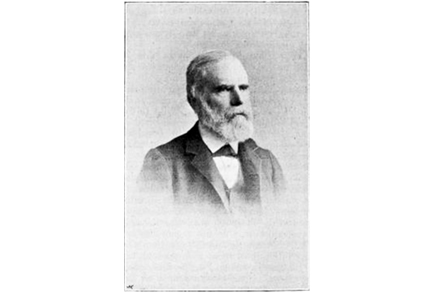
Freeman Clarke Samuel Roper described three new taxa of Biddulphia: B. granulata, B. reticulata and the invalidly published B. reticulata var. β. His original drawings of these have been discovered as in most cases they identify the exact slide (and sometime the exact specimen) used for his study. These have been examined here and, in some cases, revised names of certain species studied by us earlier are proposed.
References
- Anonymous (1896) [Obituary] Mr. F.C.S.Roper. Journal of Botany, British and Foreign 34: 430–431.
- Ashworth, M.P., Nakov, T. & Theriot, E.C. (2013) Revisiting Ross and Sims (1971); toward a molecular phylogeny of the Biddulphiaceae and Eupodiscaceae (Bacillariophyceae). Journal of Phycology 49 (6): 1207–1222. https://doi.org/10.1111/jpy.12131
- Bailey, J.W. (1851a) Microscopical examination of soundings made by the U.S. Coast Survey off Atlantic coast of the U.S. Smithsonian Contributions to Knowledge 2 (3): 1–15. [1 pl.]
- Bailey, J.W. (1851b) Microscopical observations made in South Carolina, Georgia, and Florida. Smithsonian Contributions to Knowledge 2 (8): 1–48. [3 pls] https://doi.org/10.5962/bhl.title.2007
- Bailey, J.W. (1854) Notes on new species and localities of microscopical organisms. Smithsonian Contributions to Knowledge 7 (3): 1–[16], [1 pl.].
- Bailey, L.W. (1862) Notes on new species of microscopical organisms chiefly from the Para River, South America. Boston Journal of Natural History 7: 329–352.
- Brightwell, T. (1859) On some of the rarer or undescribed species of Diatomaceae. Part I. Quarterly Journal of Microscopical Science, London 7: 179–181, pl. IX.
- Castracane, F. (1886) Report on the Scientific Results of the Voyage of H.M.S. Challenger during the years 1873–76. Botany - Vol. II. Her Majesty's Stationery Office, London, 178 pp., 30 pls.
- Chavez, M.delC. & Baumgartner, T.R. (1983) Taxonomic relationships among diatom genera of the families Biddulphiaceae and Eupodiscaceae from sediments of the Gulf of California. Relaciones taxonomicas entre generos de diatomeas de las familias Biddulphiaceae y Eupodiscaceae de los sedimentos del Golfo de California. Ciencias Marinas 9: 53–76. https://doi.org/10.7773/cm.v9i1.411
- Cleve, P.T. (1878) Diatoms from the West Indian Archipelago. Bihang till Kongliga Svenska Vetenskaps-Akademiens Handlingar 5: 1–22, 5 pls. https://doi.org/10.5962/bhl.part.5127
- Cleve, P.T. (1879) Diatomees de l’Archipel des Indes Occidentales (1). (Suite). Journal de micrographie 3: 73–78.
- Cleve, P.T. (1883) Diatoms, Collected during the expedition of the Vega. Vega-Expedition Vetenskåpliga Iakttagelser Bearbetade of Deltagare I Resan Och Andra Forskare untgifna af A.E. Nordenskiöld 3: 457–517, 4 pls. https://doi.org/10.5962/bhl.title.14741
- Cleve, P.T. (1901) Plankton from the Indian Ocean and the Malay Archipelago. Kongliga Svenska-Vetenskaps Akademiens Handlingar 35 (5): 1–58.
- Cleve, P.T. & Möller, J.D. (1882) Diatoms. Part VI, nos 277–324. Esatas Edquists Boktryckeri, Upsala.
- Cleve-Euler, A. (1951) Die Diatomeen von Schweden und Finnland. Part I, Centricae. Kongliga Svenska Vetenskaps Akademiens Handlingar ser. 4 2 (1): 1–163, 6 pls.
- De Toni, G.B. (1894) Sylloge algarum omnium hucusque cognitarum. Vol. II. Bacillarieae; sectio III. Cryptoraphideae. Typis Seminarrii, Patavii, pp. 819–1556, I–CCXIV. https://doi.org/10.5962/bhl.title.22595
- Edwards, A.M. (1860) On American Diatomaceae. Quarterly Journal of Microscopical Science 8: 127–129.
- Ehrenberg, C.G. (1839) Über die Bildung der Kreidefelsen und des Kreidemergels durch unsichtbare Organismen. Abhandlungen der Königlichen Akademie der Wissenschaften zu Berlin Physikalische Klasse 1838: 59–147, 4 pls. https://doi.org/10.5962/bhl.title.11390
- Ehrenberg, C.G. (1840a) Characteristik von 274 neuen Arten von Infusorien. Bericht über die zur Bekanntmachung geeigneten Verhandlungen der Königlich-Preussischen Akademie der Wissenschaften zu Berlin 1840: 197–219. https://doi.org/10.1515/9783112391648-011
- Ehrenberg, C.G. (1840b) Über noch zahlreich jetzt lebende Thierarten der Kreidebildung und den Organismus der Polythalamien. Berlin, 94 pp., 4 pls. [preprint of Ehrenberg 1841]
- Ehrenberg, C.G. (1841) Über noch zahlreich jetzt lebende Thierarten der Kreidebildung und den Organismus der Polythalamien. Abhandlungen der Königlichen Akademie der Wissenschaften zu Berlin Physikalische Klasse 1840: 81–174, 4 pls. https://doi.org/10.5962/bhl.title.82563
- Ehrenberg, C.G. (1843) […] Beobachtungen des bedeutenden Einflusses unsichtbar kleiner Organismen auf die untern Stromgebiethe, besonders der Elbe, Jahde, Ems und Schelde. Bericht über die zur Bekanntmachung geeigneten Verhandlungen der Königlich-Preussischen Akademie der Wissenschaften zu Berlin 1843: 259–272. https://doi.org/10.1515/9783112391648-011
- Ehrenberg, C.G. (1844a) […] Mittheilung über 2 neue Lager von Gebirgsmassen aus Infusorien als Meeres-Absatz in Nord-Amerika und eine Vergleichung derselben mit den organischen Kreide-Gebilden in Europa und Afrika. Bericht über die zur Bekanntmachung geeigneten Verhandlungen der Königlich-Preussischen Akademie der Wissenschaften zu Berlin 1844: 57–97. https://doi.org/10.1515/9783112391648-011
- Ehrenberg, C.G. (1844b) […] Untersuchungen über die kleinsten Lebensformen im Quellenlande des Euphrats und Araxes, so wie über eine an neuen Formen sehr reiche marine Tripelbildung von den Bermuda-Inseln vor. Bericht über die zur Bekanntmachung geeigneten Verhandlungen der Königlich-Preussischen Akademie der Wissenschaften zu Berlin 1844: 253–275, 1 pl. https://doi.org/10.1515/9783112391648-011
- Ehrenberg, C.G. (1853) Über einige neue Materialien zur Übersicht des kleinsten Lebens. Bericht über die zur Bekanntmachung geeigneten Verhandlungen der Königlich-Preussischen Akademie der Wissenschaften zu Berlin 1853: 505–533. https://doi.org/10.1515/9783112391648-011
- Ehrenberg, C.G. (1854) Mikrogeologie. Einundvierzig Tafeln mit über viertausend grossentheils colorirten Figuren, Gezeichnet vom Verfasser [Atlas]. Leopold Voss, Leipzig, 40 pls.
- Fernandes, L.F. & de Souza-Mosimann, R.M. (2001) Triceratium moreirae sp. nov. and Triceratium dubium (Triceratiaceae - Bacillariophyta) from estuarine environments of Southern Brazil, with comments on the genus Triceratium C. G. Ehrenberg. Brazilian Journal of Biology 6: 159–170. https://doi.org/10.1590/S0034-71082001000100020
- Gogorev, R.M., Chudaev, D.A., Stepanova, V. & Kulikovskiy, M. (2018) Russian and English terminological glossary on morphology of diatoms. Novosti sistematiki nizshikh rastenii 52 (2): 265–309. https://doi.org/10.31111/nsnr/2018.52.2.265
- Gogorev, R.M., Chudaev, D.A. & Gololobova, M.A. (2024) Addition to the glossary of diatom morphology. Novosti sistematiki nizshikh rastenii 58: A35–A58. https://doi.org/10.31111/nsnr/2024.58.1.a35
- Grove, E. & Sturt, G. (1887) On a fossil marine Diatomaceous Deposit from Oamaru, Otago, New Zealand. Part III. Journal of the Quekett Microscopical Club ser. 2, 3 (18): 63–78.
- Guiry, M.D. (2026) AlgaeBase. World-wide electronic publication, National University of Ireland, Galway. Available from: https://www.algaebase.org (accessed 10 February 2026)
- Harper, M.A., Cassie Cooper, V., Chang, F.H., Nelson, W.A. & Broady, P.A. (2012) Phylum Ochrophyta: brown and golden-brown algae, diatoms, silicoflagellates, and kin. In: Gordon, D.P. (Eds.) New Zealand inventory of biodiversity. Volume Three. Kingdoms Bacteria, Protozoa, Chromista, Plantae, Fungi. Canterbury University Press, Christchurch, pp. 114–163. https://doi.org/10.1086/668151
- Harris, A.C. & Michelsen-Heath, S. (2006) Sidney Herbert Rawson (1883–1951) Dentist and amateur botanist (specializing in ferns, diatoms, and slime moulds) and his place in the Dunedin diatom group. New Zealand Botanical Society Newsletter 86 (December): 22–25. [https://www.nzbotanicalsociety.org.nz/newsletter/nzbotsoc-2006-86.pdf]
- Hartley, B., Ross, R. & Williams, D.M. (1986) A check-list of the freshwater, brackish and marine diatoms of the British Isles and adjoining coastal waters. Journal of the Marine Biological Association of the United Kingdom 66 (3): 531–610. https://doi.org/10.1017/S0025315400042235
- Hoover, R.B. (1976) Inventory of the original typical collection of the Reverend William Smith (1808–1857). Koninklijke Maatschappij voor Dierkunde van Antwerpen met de medewerking van de Koninklijke Albert 1 en het Stadsbestuur van Antwerpen, Antwerp. https://doi.org/10.21825/kzm.v35i0.17523
- Hustedt, F. (1930) Die Kieselalgen Deutschlands, Österreichs und der Schweiz unter Berücksichtigung der übrigen Länder Europas sowie der angrenzenden Meeresgebiete. In: Rabenhorst, L. (Ed.) Kryptogamen Flora von Deutschland, Österreich und der Schweiz. Akademische Verlagsgesellschaft m.b.h., Leipzig, pp. 609–920, figs 353–542. https://doi.org/10.5962/bhl.title.100894
- Jahn, R. & Kusber, W.-H. (2004) Algae of the Ehrenberg collection – 1. Typification of 32 names of diatom taxa described by C. G. Ehrenberg. Willdenowia 34: 577–595. https://doi.org/10.3372/wi.34.34219
- Kützing, F.T. (1844) Die Kieselschaligen. Bacillarien oder Diatomeen. Nordhausen, 152 pp., 30 pls. https://doi.org/10.5962/bhl.title.64360
- Kützing, F.T. (1849) Species algarum. F.A. Brockhaus, Lipsiae, 922 pp.
- Maltwood, T. (1858) On a finder for registering the position of microscopic objects. Transactions of the Microscopical Society of London 6: 59–62.
- Mann, A. (1907) Report on the Diatoms of the Albatross Voyages in the Pacific Ocean, 1888–1904. Contributions from the United States National Herbarium 10 (5): 221–419, 11 pls. https://doi.org/10.1126/science.26.670.586
- Mereschkowsky, C. (1901) List of California Diatoms. Annals and Magazine of Natural History ser. 7, 7: 292–300, 474–480, 505–520. https://doi.org/10.1080/00222930108678501
- Mereschkowsky, C. (1902) On Polynesian Diatoms. Scripta Botanica Horti Universitatis (Imperialis) Petropolitanae 18: 99–164.
- Möller, J.D. (1891) Lichtdrucktafeln hervorragend schöner und vollständiger Möller’scher Diatomaceen-Präparate. Selbstverlag des Herausgegebers, Wedel, Holstein.
- Möller, J.D. (1892) Verzeichniss der in den Lichtdrucktafeln mollerscher Diatomaceen-Praparate enthalten Arten. Mit Atlas. Selbstverlag des Herausgegebers, Wedel (Holstein), x + 176 pp., 59 pls. https://doi.org/10.5962/bhl.title.64255
- Okeden, F. (1855) On the deep diatomaceous deposits of the mud of Milford Haven and other localities. Quarterly Journal of Microscopical Science, London 3: 26–30.
- Peragallo, M. (1903) Le Catalogue Général des Diatomées. Clermont-Ferrand, pp. 472–973.
- Peragallo, H. & Peragallo, M. (1902) Diatomées Marines de France et des Districts Maritimes Voisins. Atlas. J. Tempère (ed.), Micrographe-Editeur, à Grez-sur-Loing (S.-et-M.), pls 97–110, 112, 113. https://doi.org/10.5962/bhl.title.68918
- Pethiyagoda, R. & Manamendra-Archchi, K. (1997) The life and work of Edward Fredric Kelaart. Journal of South Asian Natural History 2: 217–246. [https://www.hiranya.me/uploads/1/2/1/5/121509091/2.2g.pdf]
- Petit, P. (1903) Catalogue de diatomées provenant de Madagascar. Association Francaise pour l'Avancement des Sciences […], compte rendu de la 31me session, Montauban 1902, seconde partie, Notes et Mémoires, pp. 590–599. [https://gallica.bnf.fr/ark:/12148/bpt6k201197q/f3.item]
- Pritchard, A. (1852) A history of Infusorial animalcules, living and fossil; illustrated by several hundred magnified representations. A new edition enlarged. Whittaker and Co., London, Edition III, viii + 704 pp., 24 pls. https://doi.org/10.5962/bhl.title.12194
- Pritchard, A. (1861) A history of infusoria, living and fossil: arranged according to Die Infusionsthierchen of C.G. Ehrenberg; containing colored engravings, illustrative of all the genera, and descriptions of all the species in that work, with several new ones; to which is appended an account of those recently discovered in the chalk formations. Edition IV, revised and enlarged by J.T. Arlidge, W. Archer, J. Ralfs, W.C. Williamson and the author. Whittaker and Co., London, xiii + 968 pp., 40 pls. https://doi.org/10.5962/bhl.title.147377
- Rattray, J. (1888) A revision of the genus Auliscus Ehrenberg and of some allied genera. Journal of the Royal Microscopical Society 1888: 861–920, 5 pls. https://doi.org/10.1111/j.1365-2818.1888.tb05838.x
- Ricard, M. (1977) Les peuplements de diatomeés des lagons de l’Archipel de la Société (Polynésie Française). Revue Algologique n.s. 12: 137–336.
- Roper, F.C.S. (1859a) On the genus Biddulphia and its affinities. Transactions of the Microscopical Society of London 7: 1–24.
- Roper, F.C.S. (1859b) On Actinocyclus and Euopodiscus. Quarterly Journal of Microscopical Science 7: 261–262.
- Ross, R., Cox, E.J., Karayeva, N.I., Mann, D.G., Paddock, T.B.B., Simonsen, R. & Sims, P.A. (1979) A suggested terminology for the siliceous components of the diatom cell. Beihefte zur Nova Hedwigia 64: 513–533.
- Schmidt, A.W.F. (1882) Atlas der Diatomaceen-kunde. Commissions-Verlag Von Ludwig Siever’s Buchandlung, Aschersleben, Series II, Heft 20, pls 77–80.
- Schmidt, A.W.F. (1885) Atlas der Diatomaceen-kunde. Commissions-Verlag Von Ludwig Siever’s Buchandlung, Aschersleben, Series III, Heft 21–22, pls 81–88.
- Schmidt, A.W.F. (1886) Atlas der Diatomaceen-kunde. Commissions-Verlag Von Ludwig Siever’s Buchandlung, Aschersleben, Series III, Heft 25, pls 97–99.
- Shadbolt, G. ([1853] 1854) A short description of some new forms of Diatomaceae from Port Natal. Transactions of the Microscopical Society n.s. 2: 13–18. https://doi.org/10.1111/j.1365-2818.1854.tb01839.x
- Sims, P.A., Ashworth, M.P., Theriot, E.C. & Manning, S.R. (2022 [2023]) Molecular and morphological analysis of Biddulphia sensu lato: a new diagnosis of Biddulphia, with a description of the new genera Biddulphiella and Neobrightwellia. Marine Micropaleontology 178 (102186): 1–21. https://doi.org/10.1016/j.marmicro.2022.102186
- Sims, P.A. & Ross, R. (1990) Triceratium pulvinar and T. unguiculatum, two confused species. Diatom Research 5: 155–169. https://doi.org/10.1080/0269249X.1990.9705100
- Sims, P.A., Williams, D.M. & Ashworth, M.A. (2018) Examination of type specimens for the genera Odontella and Zygoceros (Bacillariophyceae) with evidence for the new family Odontellaceae and a description of three new genera. Phytotaxa 382: 1–56. https://doi.org/10.11646/phytotaxa.382.1.1
- Sims, P.A. & Witkowski, J. (2012) Generic limits within the Eupodiscaceae: I. Observations on three unusual species of Cerataulus, with reference to the type species, C. turgidus. Diatom Research 27: 223–236. https://doi.org/10.1080/0269249X.2012.720613
- Smith, H.L. (1888) Diatomacearum Species Typicae. Stodder, Boston, supplement numbers 601–750.
- Smith, W. (1853) Synopsis of British Diatomaceae; with remarks of their structure, functions and distribution; and instructions for collecting and preserving specimens. John Van Voorst, London, 1, 89 pp., pl. 1–31. https://doi.org/10.5962/bhl.title.10706
- Smith, W. (1856) Synopsis of the British Diatomaceae; with remarks of their structure, functions and distribution; and instructions for collecting and preserving specimens. John Van Voorst, London, 2, 107 pp.
- Smith, W. (1859) List of the British Diatomaceae in the Collection of the British Museum. Taylor and Francis, London, 55 pp.
- Stosch, H.A.von & Simonsen, R. (1984) Biddulphiopsis, a new genus of the Biddulphiaceae. Bacillaria 7: 9–36.
- Tempère, J. & Peragallo, H. (1907) Diatomées du Monde Entier. 2nd edition, fascicule 1. Chez J. Tempère, Arcachon, Gironde, pp. 1–16. https://doi.org/10.5962/bhl.title.1026
- Tempère, J. & Peragallo, H. (1911) Diatomées du Monde Entier. 2nd edition, fascicule 17–19. Chez J. Tempère, Arcachon, Gironde, pp. 257–304. https://doi.org/10.5962/bhl.title.1026
- Turland, N.J., Wiersema, J.H., Barrie, F.R., Gandhi, K.N., Gravendyck, J., Greuter, W., Hawksworth, D.L., Herendeen, P.S., Klopper, R.R., Knapp, S., Kusber, W.-H., Li, D.-Z., May, T.W., Monro, A.M., Prado, J., Price, M.J., Smith, G.F. & Zamora Señoret, J.C. (2025) International Code of Nomenclature for algae, fungi, and plants (Madrid Code). Regnum Vegetabile 162. University of Chicago Press, Chicago. https://doi.org/10.7208/chicago/9780226839479.001.0001
- Van Heurck, H. (1882) Synopsis des Diatomées de Belgique. Atlas. Ducaju & Cie., Anvers, pls 78–103.
- Van Heurck, H. (1885) Synopsis des Diatomées de Belgique. Atlas. Ducaju & Cie., Anvers, pls A–C. https://doi.org/10.5962/bhl.title.1990
- Van Heurck, H. (1896) A Treatise on the Diatomaceae. (translated by W.E. Baxter), William Wesley & Son, London, 558 pp., 35 pls.
- West, T. (1860) Remarks on some Diatomaceae, new or imperfectly described and a new Desmid. Transactions of the Microscopical Society n.s. 8: 147–153. https://doi.org/10.1111/j.1365-2818.1860.tb01251.x
- Williams, D.M. (2021) Studies on type material from Kützing’s diatom collection VI: The identity of Diatoma liber Suhr (1831). Phytotaxa 528 (3): 215–223. https://doi.org/10.11646/phytotaxa.528.3.6
- Williams, D.M. (2023) Names, diagnoses and ‘Dead Names’: the case of Synedra pelagica. Diatom Research 38: 69–75. https://doi.org/10.1080/0269249X.2023.2233515
- Witt, O.N. (1873) Bericht über die Untersuchung zweier Diatomaceen-Gemische. Ein Beitrag zur Kenntniss der Flora der Süudsee. Journal des Museums Godeffroy 1 (1): 63–70.
- Wood, E.J.F. (1961) Studies on Australian and New Zealand diatoms. V. The Rawson collection of recent diatoms. Transactions of the Royal Society of New Zealand 88 (4): 699–712.