

Abstract
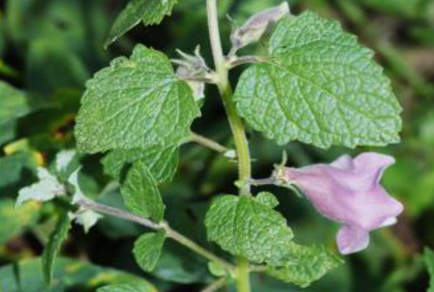
A new species of Sesamum (Pedaliaceae), Sesamum albidiflorum sp. nov., is described and illustrated from the savanna, Nigeria. The species is morphologically similar to the widespread African taxa S. indicum, S. radiatum, and S. sesamoides, but is readily distinguished by its entirely white flowers, glabrous calyx lobes, shorter pedicels, and fewer seeds per capsule. Phylogenetic analyses based on nuclear and plastid DNA markers indicate S. albidiflorum as sister to S. sesamoides, supporting its recognition as a distinct species. Comparative analysis of seed coat micromorphology further corroborates its taxonomic distinctiveness. Detailed morphological comparisons with regional floras, herbarium specimens (including type material), confirm the uniqueness of S. albidiflorum within the genus. Information on its distribution, habitat, phenology, and diagnostic characteristics is provided, along with a preliminary conservation assessment based on IUCN Red List criteria. The description of S. albidiflorum highlights the existing underestimation of plant diversity in West Africa and underscores the value of integrative taxonomic approaches that combine morphology, micromorphology, and molecular phylogenetics.
References
- Akobundu, I.O. & Agyakwa, C.W. (2006) A handbook of West African Weeds. International Institute of Tropical Agriculture, Ibadan, Nigeria, pp. 36–369.
- Al-Ghamdi, F.A. & Jury, S.L. (2001) A review of the genus Sesamum L. (Pedaliaceae) in the Arabian Peninsula. Botanical Journal of the Linnean Society 137: 399–409. https://doi.org/10.1111/j.1095-8339.2001.tb00786.x
- Bachman, S., Moat, J., Hill, A.W., de la Torre, J. & Scott, B. (2011) Supporting Red List threat assessments with GeoCAT: geospatial conservation assessment tool. In: Smith, V. & Penev, L. (Eds.) e-Infrastructures for data publishing in biodiversity science. ZooKeys 150: 117–126. (Version BETA). https://doi.org/10.3897/zookeys.150.2109
- Baker, J.G. (1895) Pedaliaceae. In: Prain, D. (Ed.) Flora of Tropical Africa Vol. 4. Reeve & Co, London, pp. 563–572.
- Bedigian, D. (2004) History and lore of sesame in Southwest Asia. Economic Botany 58: 329–353. https://doi.org/10.1663/0013-0001(2004)058[0329:HALOSI]2.0.CO;2
- Bedigian, D. (2015) Systematics and evolution in Sesamum L. (Pedaliaceae), part 1: evidence regarding the origin of sesame and its closest relatives. Webbia 70: 1–42. https://doi.org/10.1080/00837792.2014.968457
- Bedigian, D. & Harlan, J.R. (1986) Evidence for cultivation of sesame in the ancient world. Economic Botany 40: 137–154. https://doi.org/10.1007/BF02859156
- Bello, A., Edie, S.M., Yessoufou, K. & Muellner-Riehl, A.N. (2024) Trends in botanical exploration in Nigeria forecast over 1000 yet undescribed vascular plant species. Annals of Botany 133: 789–800. https://doi.org/10.1093/aob/mcad106
- Brown, R. (1810) Prodromus fFlorae Novae Hollandiae et iInsulae Van Diemen (Vol. 1). J. Johnson and Co, London, 519 pp. https://doi.org/10.5962/bhl.title.6720
- Byng, J.W., Christenhusz, M.J.M. & Fay, M.F. (eds.) (2018) The Global Flora: A practical Flora to vascular plant species of the World. Vol. 4: Special Edition – GLOVAP Nomenclature Part 1. Plant Gateway Ltd., Bradford, 146 pp.
- De Candolle, A.P. (1845) Prodromus systematis naturalis regni vegetabilis (Vol. 9). Treuttel & Würtz, Paris, 298 pp. https://doi.org/10.5962/bhl.title.286
- De Queiroz, K. (2007) Species concepts and species delimitation. Systematic Biology 56: 879–886. https://doi.org/10.1080/10635150701701083
- Doyle, J.J. & Doyle, J.L. (1987) A rapid DNA isolation procedure for small quantities of fresh leaf tissue. Phytochemical Bulletin of Botanical Society of America 19: 11–15.
- Endlicher, S.L. (1832) Ceratotheca sesamoides. Linnaea: Ein Journal für die Botanik in ihrem ganzen Umfange 7: 5–10.
- Engler, A. (1895) Pedaliaceae. In: Engler, A. & Prantl, K. (Eds.) Die natürlichen Pflanzenfamilien Vol. 4, Teil 3b. Wilhelm Engelmann, Leipzig, pp. 222–236. https://doi.org/10.1002/ardp.18872252106
- GeoCAT (2018) Available from: http://geocat.kew.org/editor#/add-points (accessed 13 October 2025)
- Gormley, I.C., Bedigian, D. & Olmstead, R.G. (2015) Phylogeny of Pedaliaceae and Martyniaceae and the placement of Trapella in Plantaginaceae. Systematic Botany 40: 259–268. https://doi.org/10.1600/036364415x686558
- Govaerts, R., Nic Lughadha, E., Black, N., Turner, R. & Paton, A. (2021) The World Checklist of Vascular Plants, a continuously updated resource for exploring global plant diversity. Scientific Data 8: 215. https://doi.org/10.1038/s41597-021-00997-6
- Haller, A. (1768) Historia stirpium indigenarum Helvetiae, Vol. 2. Bern, 244 pp.
- Hijmans, R.J. (2017) Introduction to the ‘raster’ package (version 2.6–7). R package. Available from: https://cran.r-project.org/package=raster (accessed November 2025)
- Hornemann, J.W. (1806) Enumeratio plantarum horti regii botanici Hafniensis. Supplementum 2. Copenhagen, pp. 12.
- Hutchinson, J. & Dalziel, J.M. (1972) Flora of West Tropical Africa. Vol. I. Part 1. Second Edition. Keay R.W.J. Crown Agents for Overseas Governments and Administrations, London, 295 pp.
- IUCN (2025) Guidelines for using the IUCN Red List categories and criteria. Version 12. Standards and Petitions Subcommittee. Available from: http://www.iucnredlist.org/documents/RedListGuidelines.pdf (accessed 1 November 2025)
- JSTOR (2025) JSTOR Global Plants. Available from: https://www.jstor.org/ (accessed 13 October 2025)
- Kawase, M. (2000) Genetic diversity of sesame and its conservation. In: Janick, J. (Ed.) Plant Breeding Reviews 19: 179–228).
- Linnaeus, C. (1753) Species plantarum 1. Salvius, Stockholm, 550 pp. https://doi.org/10.5962/bhl.title.37656
- Pathak, N., Rai, A.K., Kumari, R. & Bhat, K.V. (2015) Value addition in sesame: A perspective on bioactive components for enhancing utility and productivity. Pharmacognosy Reviews 8: 147–155. https://doi.org/10.4103/0973-7847.134240
- R Core Team (2025) The R Foundation for Statistical Computing Platform: x86_64-w64-mingw32/x64. Available from: (accessed November 2025)
- Sawa, F.B.J., Zhigila, D.A., Abdul, S.D., Akawu, J.J., Liman, M.A., Musa, U., Difa, A.A. Oloja, E.E. Abba, H.M. & Babale, A. (2025) Small herbaria reveal unique taxonomic records and biogeographic origins of vascular plants in the Guinea and Sudan savannas, Nigeria. Nigerian Journal of Botany 38: 21–36. https://doi.org/10.4314/njbot.v38i1.2
- Schumacher, C.F. (1827) Beskrivelse af Guineiske Planter. Copenhagen, 284 pp. https://doi.org/10.5962/bhl.title.51454
- Schlick-Steiner, B.C., Steiner, F.M., Seifert, B., Stauffer, C., Christian, E. & Crozier, R.H. (2010) Integrative taxonomy: a multisource approach to exploring biodiversity. Annu Rev Entomol 55: 421–38. https://doi.org/10.1146/annurev-ento-112408-085432
- Schreber, J.C.D. (1791) Genera plantarum, ed. 8[a], Vol. 2. Frankfurt am Main, 541 pp.
- Sun, Q., Wu, K., Lin, X. & Yan, M. (2010) Genetic diversity of Chinese sesame landraces assessed by AFLP markers. Biochemical Systematics and Ecology 38: 131–139.
- Verdcourt, B. (1971) Pedaliaceae. In: Milne-Redhead, E. & Polhill, R.M. (Eds.) Flora of Tropical East Africa. Crown Agents, London, 99 pp.
- Wolf, N.M. (1776) Genera plantarum. Tübingen, 23 pp.
- Zhigila, D.A. & Muasya, A.M. (2023) Molecular phylogenetics, biogeography and character evolution in Sesamum (Pedaliaceae). Botanical Journal of the Linnean Society 201: 455–470. https://doi.org/10.1093/botlinnean/boac074
- Zhigila, D.A., Sawa, F.B.J. & Abdul, S.D. (2015) Morphometric study of accessions of Sesamum indicum L. collected from Nigeria. African Journal of Plant Science 9: 56–64. https://doi.org/10.5897/AJPS2014.1180
- Zhigila, D.A., Sawa, F.B.J., Abdul, S.D. & Muasya, M.A. (2023) A guide to the savanna herbaceous plants. Ile-Ife University Press, Osun State, 358–361 pp.
- Zhigila, D.A., Verboom, G.A. & Muasya, A.M. (2020) An infrageneric classification of Thesium (Santalaceae) based on molecular phylogenetic data. Taxon 69: 100–123. https://doi.org/10.1002/tax.12202