

Abstract
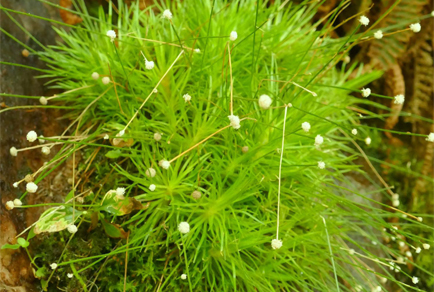
Paepalanthus angustifolius with flat leaves and P. schlechtendalii with conduplicate leaves were described by Friedrich Körnicke more than 150 years ago, from collections by Blanchet from the Chapada Diamantina, Bahia, Brazil. Afterwards, those species were transferred to the genus Leiothrix. Based on the type-specimen analyses and new collections from the Chapada Diamantina, including a closely related L. rufula, we propose the epitypification of L. angustifolia, together with a more narrow circumscription of this species, and recognize three new species: L. chapadensis, L. montana and L. sincorensis, endemic to the same region. We present an identification key to the species, full descriptions, illustrations, and preliminary conservation status assessments. Comments on the Blanchet collection in the Chapada Diamantina region are also provided.
References
- Andrade, M.J.G., Giulietti, A.M., Rapini, A., Queiroz, L.P., Conceição, A.D.S., Almeida, P.R.M. & van den Berg, C. (2010) A comprehensive phylogenetic analysis of Eriocaulaceae: Evidence from nuclear (ITS) and plastid (psbA-trnH and trnL-F) DNA sequences. Taxon 59: 379–388. https://doi.org/10.1002/tax.592004
- Andrino, C.O., Sano, P.T., Inglis, P.W., Hensold, N., Costa, F.N. & Simon, M.F. (2021) Phylogenetics of Paepalanthus (Eriocaulaceae), a diverse Neotropical monocot lineage. Botanical Journal of the Linnean Society 195: 34–52. https://doi.org/10.1093/botlinnean/boaa070
- Bachman, S., Moat, J., Hill, A.W., De La Torre, J. & Scott, B. (2011) Supporting Red List threat assessments with GeoCAT: geospatial conservation assessment tool. ZooKeys 150: 117–126. https://doi.org/10.3897/zookeys.150.2109
- Bentham, G. (1833) Labiatarum genera and species. Ridgeway & Sons, London, 783 pp.
- Boeckeler, O. (1873) Die Cyperaceen des Könoglichen Herbariums zu Berlin. Die Rhynchoporeen. Linnaea 36: 520–643.
- Bongard, M. (1831) Essai monographique sur lés espèces d`Eriocaulon du Brésil. Bulletin de l`Academie impériale des sciences de St.-Pétersbourg 6: 60–655.
- Brasil. (2000) Lei nº 9.985, de 18 de julho de 2000. Available from: http://www.planalto.gov.br/ccivil_03/leis/l9985.htm (accessed 5 January 2026)
- Flora e Funga do Brasil. (n.d.) Eriocaulaceae in Flora e funga do Brasil. Jardim Botânico do Rio de Janeiro. Available from: https://floradobrasil.jbrj.gov.br/FB110 (accessed 21 March 2026)
- Ferreira, J.P. (1958) Enciclopédia dos municípios brasileiros. Municípios do Estado da Bahia. Vols. 20, 21. IBGE, Rio de Janeiro.
- Giulietti, A.M. (1984) Estudos taxonômicos no gênero Leiothrix Ruhland. Thesis, Universidade de São Paulo, São Paulo.
- Giulietti, A.M. (1986) Eriocaulaceae. In: Harley, R.M. & Simmons, N.A. (Eds.) Florula of Mucugê, Chapada Diamantina, Bahia, Brazil. Royal Botanic Gardens, Kew, pp. 61–70.
- Giulietti, A.M. (1996) Leiothrix Ruhl. (Eriocaulaceae) no Estado da Bahia, Brasil. Sitientibus 15: 61–68.
- Giulietti, A.M. (2020) An annotated synopsis of Leiothrix (Eriocaulaceae) with additional nomenclatural notes. Phytotaxa 477: 102–150. https://doi.org/10.11646/phytotaxa.477.2.1
- Giulietti, A.M. (2026) Leiothrix. In: Flora e funga do Brasil. Jardim Botânico do Rio de Janeiro. Available from: http://floradobrasil.jbrj.gov.br/reflora/floradobrasil/FB7541 (accessed 25 January 2026)
- Giulietti, A.M. & Hensold, N. (1991) Nomenclatural changes and range extension in Leiothrix flavescens (Bong.) Ruhl. (Eriocaulaceae). Novon 1: 45–49. https://doi.org/10.2307/3391718
- Giulietti, A.M. & Parra, L.R. (1995) Eriocaulaceae. In: Stannard, B.L. (Ed.) Flora of the Pico das Almas, Chapada Diamantina—Bahia, Brazil. Royal Botanic Gardens, Kew, pp. 684–704.
- Giulietti, A.M. & Silva, D.M. (2016) A new Leiothrix (Eriocaulaceae) from the Espinhaço Range, Bahia, Brazil. Phytotaxa 247: 127–132. https://doi.org/10.11646/phytotaxa.247.2.4
- Giulietti, A.M., Amaral, M.C.E. & Bittrich, V. (1995) Phylogenetic analysis of inter- and infrageneric relationships of Leiothrix Ruhland (Eriocaulaceae). Kew Bulletin 50: 55–71. https://doi.org/10.2307/4114608
- Giulietti, A.M., Andrade, M.J.G., Scatena, V.L., Trovó, M., Coan, A.I., Sano, P.T., Santos, F.A.R., Borges, R.L.B. & Van den Berg, C. (2012) Molecular phylogeny, morphology and their implications for the taxonomy of Eriocaulaceae. Rodriguésia 63: 1–19. https://doi.org/10.1590/S2175-78602012000100001
- Harley, R.M. & Pastore, J.F.B. (2012) A generic revision and new combinations in the Hyptidineae (Lamiaceae), based on molecular and morphological evidence. Phytotaxa 58: 1–58. https://doi.org/10.11646/phytotaxa.58.1.1
- Herzog, T. (1924) Neue Sűdamerikanische Eriocaulonaceae. Fedde Repertorium 20: 82–88. https://doi.org/10.1002/fedr.19240200603
- Hind, J.N. (1999) A new species of Lasiolaena (Compositae: Eupatoriae Gyptidinae) and a synopsis of the genus. Kew Bulletin 54: 915–925. https://doi.org/10.2307/4111169
- IUCN. (2024) Guidelines for Using the IUCN Red List Categories and Criteria. Version 16. Prepared by the Standards and Petitions Committee. Available from: https://www.iucnredlist.org/documents/RedListGuidelines.pdf (accessed 29 October 2025)
- Körnicke, F. (1863) Eriocaulaceae. In: Martius, K.F.P. & Eichler, A.W. (Eds.) Flora brasiliensis. Frid. Fleischer, Monachii.v. 3, pars 1, pp. 271–308.
- Kunth, C.S. (1841) Eriocauleae. In: Kunth, C.S. Enumeratio plantarum. J.G. Cottae, Stutgardiae et Tubingae. v. 3, pp. 492–580.
- Kuntze, O. (1891) 196. Eriocaulonaceae. In: Kuntze, O. Revisio generum plantarum. Arthur Felix, Leipzig, v. 2, pp. 745–746.
- Linnaeus, C. (1753) Species Plantarum. Laurentius Salvius, Stockholm, 1200 pp.
- Lucresia, L. (2022) Distribuição de Myrtaceae em diferentes tipos vegetacionais da Cadeia do Espinhaço: composição florística e influência ambiental. Master’s Dissertation, Instituto de Biociências, University of São Paulo, São Paulo, 137 pp.
- Martius, K.F. von (1834) Les Eriocauleés considérées comme une familie distincte. Annales des Sciences Naturelles Botanique sér 2, 2: 25–43.
- Martius, K.F. von (1841) Martius Herbarium Florae Brasiliensis. Continuatio. Flora 24 (2 Beibl.): 1–112.
- Mascarenhas, A.A., Giulietti, A.M. & Scatena, V.L. (2020) Leaf and scape anatomy of Leiothrix Ruhland (Eriocaulaceae) from a taxonomic and ecological perspective. Flora 262: Article 151518. https://doi.org/10.1016/j.flora.2019.151518
- Mascarenhas, A.A.S., Scatena, V.L. & Oriane, A. (2023) Understanding floral variation in Leiothrix (Poales: Eriocaulaceae): anatomy, development and insights into pollination. Botanical Journal of the Linnean Society 20: 1–21. https://doi.org/10.1093/botlinnean/boac046
- Miranda, E. & Giulietti, A.M. (2001) Eriocaulaceae no Morro do Pai Inácio (Palmeiras) e Serra da Chapadinha (Lençois), Chapada Diamantina, Bahia, Brasil. Sitientibus série Ciências Biológicas 1: 15–32.
- Moldenke, H.N. (1970) Additional notes on the Eriocaulaceae. III. Phytologia 20: 4–120. https://doi.org/10.5962/bhl.part.7115
- Moldenke, H.N. (1977) Additional notes on the Eriocaulaceae. LXXIII. Phytologia 37: 22–58. https://doi.org/10.5962/bhl.part.19800
- Moldenke, H.N. (1980) Eriocaulaceae. In: Harley, R.M. & Mayo, S. (Eds.) Towards a checklist of the Flora of Bahia. Royal Botanic Gardens, Kew, pp. 72–77.
- NASA Shuttle Radar Topography Mission. (2013) Shuttle Radar Topography Mission (SRTM) Global. Distributed by Open Topography. Available from: https://doi.org/10.5069/G9445JDF (accessed 7 December 2025)
- Parra, L.R., Giulietti, A.M., Andrade, M.J.G. de & van den Berg, C. (2010) Reestablishment and new circumscription of Comanthera (Eriocaulaceae). Taxon 59: 1135–1146. https://doi.org/10.1002/tax.594013
- QGIS.org. (2025) QGIS Geographic Information System. QGIS Association. Available from: https://qgis.org/download/ (accessed 29 October 2025)
- Rapini, A. (2004) Classes or individuals? The paradox of Systematics revisited. Studies in History and Philosophy of Biological and Biomedical Sciences 35: 675–695. https://doi.org/10.1016/j.shpsc.2004.09.006
- Reflora. (2025) Reflora—Herbário Virtual. Available from: http://floradobrasil.jbrj.gov.br/reflora/herbarioVirtual/ (accessed 1 December 2025)
- Ruhland, W. (1900) Eriocaulaceae. In: Urban, I. (Ed.) Symbolae Antillanae seu fundamenta florae Indiae Occidentalis 1. Borntraeger, Berlin, Klincksieck, Paris and Williams & Norgate, London, pp. 482–494.
- Ruhland, W. (1903) Eriocaulaceae. In: Engler, A. (Ed.) Das Pflanzenreich. Wilhelm Engelmann, Leipzig, v. IV–30 (Heft 13).
- Saint-Hilaire, A. de (1833) Voyage dans le district des diamans et sur le littoral du Brasil. Vol. 1. Librairie-Gide, Paris.
- Silveira, A.A. (1928) Floralia Montium (Eriocaulaceae). vol. 2. Imprensa Oficial, Belo Horizonte.
- Smith, L.B. (1937) A new genus of Eriocaulaceae. Contributions from the Gray Herbarium of Harvard University 117: 38–39. https://doi.org/10.5962/p.336188
- SpeciesLink network. (2025) speciesLink. Available from: https://specieslink.net/search (accessed 1 December 2025)
- Thiers, B. (2025) [continuously updated] Index Herbariorum: A global directory of public herbaria and associated staff. New York Botanical Garden’s Virtual Herbarium [http://sweetgum.nybg.org/ih/]
- Trovó, M., Andrade, M.J.G. de, Sano, P.T., Ribeiro, P.L. & van den Berg, C. (2013) Molecular phylogenetics and biogeography of Neotropical Paepalanthoideae with emphasis on Brazilian Paepalanthus (Eriocaulaceae). Botanical Journal of Linnean Society 171: 225–243. https://doi.org/10.1111/j.1095-8339.2012.01310.x
- Turland, N.J., Wiersema, J.W., Barrie, F.R., Gandhi, K.N., Gravendyck, J., Greuter, W., Hawksworth, D.L., Herendeen, P.S., Klopper, R.R., Knapp, S., Kusber, W.H., Li, D.Z., May, T.W., Monro, A.M., Prado, J., Price, M.J., Smith, G.F. & Zamora Señoret, J.C. (2025) International Code of Nomenclature for algae, fungi, and plants (Madrid Code). University of Chicago Press, Chicago.
- Urban, I. (1895) Biographische Skizzen III. 4. Jacques Samuel Blanchet (1807–1875). Botanische Jahrbücher fur Systematik, Pflanzengeschichte und Pflanzengeographie 21 (3): 1–5.
- Wikström, J.E. (1820) Trenne nya Arter af Ȍrtslӓgtet Eriocaulon. Kungliga Svenska Vetenskapsacademiens Hardlinger 1820: 74–81.