

Abstract
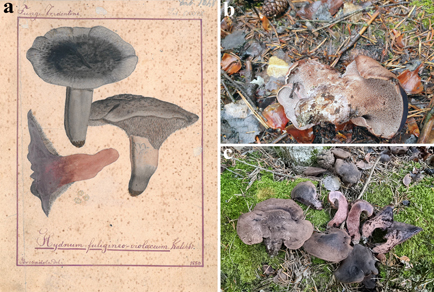
Hydnellum cristatum, H. fuligineoviolaceum and Phellodon ellisianus are reported for the first time from Italy with molecular support based on fresh collections. Additionally, the first record of P. castaneoleucus for Croatia is documented based on a recent collection. For each species, comprehensive morphological descriptions, molecular data, and discussions regarding diagnostic characters, ecology, and distribution are provided.
References
- Agerer, R. (1991a) Ectomycorrhizae of Sarcodon imbricatus on Norway spruce and their chlamydospores. Mycorrhiza 1 (1): 21–30. https://doi.org/10.1007/BF00205898
- Agerer, R. (1991b) Sarcodon imbricatus. In: Agerer, R. (Ed.) Colour Atlas of Ectomycorrhizae. Einhorn, Schwäbisch Gmünd, pl. 66.
- Agerer, R. (1992) Ectomycorrhizae of Phellodon niger on Norway spruce and their chlamydospores. Mycorrhiza 2 (1): 47‒52. https://doi.org/10.1007/BF00206283
- Agerer, R. (1993) Ectomycorrhizae of Hydnellum peckii on Norway spruce and their chlamydospores. Mycologia 85 (1): 74–83. https://doi.org/10.1080/00275514.1993.12026249
- Agerer, R. (2006) Fungal relationships and structural identity of their ectomycorrhizae. Mycological Progress 5: 67–107. https://doi.org/10.1007/s11557-006-0505-x
- Agerer, R. (2018) Order Thelephorales Corner ex Oberw. In: Begerow, D, Agerer, R & McTaggart, A. (Ed.) Basidiomycota and Entorhizomycota. A. Engler’s Syllabus of Plant Families, part 1/3. Borntraeger, Stuttgart, Germany, pp. 239–243.
- Ainsworth, A.M. (2004) BAP fungi handbook. English Nature Research Reports, Report Number 600, Peterborough, 115 pp. [https://publications.naturalengland.org.uk/publication/113017]
- Ainsworth, A.M. (2019) Nomenclatural novelties. Index Fungorum 401: 1.
- Ainsworth, A.M., Parfitt, D, Rogers, H.J & Boddy, L. (2010) Cryptic taxa within European species of Hydnellum and Phellodon revealed by combined molecular and morphological analysis. Fungal Ecology 3 (2): 65‒80. https://doi.org/10.1016/j.funeco.2009.07.001
- Ainsworth, A.M. & von Bonsdorff, T. (2025) Hydnellum nemorosum. The IUCN Red List of Threatened Species 2025: e.T272564579A272617999. https://doi.org/10.2305/IUCN.UK.2025-1.RLTS.T272564579A272617999.en
- Albertini, J.B & Schweinitz, L.D. von (1805) Conspectus fungorum in Lusatiae Superioris agro Niskiensi crescentium, e methodo Persooniana. Sumtibus Kummerianis. Lipsiae (Leipzig), 376 pp. https://doi.org/10.5962/bhl.title.3601
- Allison, S.D., Czimczik, C.I & Treseder, K.K. (2008) Microbial activity and soil respiration under nitrogen addition in Alaskan boreal forest. Global Change Biology 14: 1156‒1168. https://doi.org/10.1111/j.1365-2486.2008.01549.x
- Alonso, J & Rigueiro, A. (2020) Catálogo da macromicobiota das montañas do Courel (Galicia, NO España). Monografías do Ibader - Serie Cadernos da Estação Científica do Courel. Ibader. Universidade de Santiago de Compostela. Lugo, Galicia, 521 pp. [https://www.ibader.gal/ficha/563/965/Catalogo-da-macromicobiota-das-montanas-do-Courel-Galicia.html]
- Altschul, S.F., Gish, W, Miller, W, Myers, E.W & Lipman, D.J. (1990) Basic local alignment search tool. Journal of Molecular Biology 215 (3): 403–410. https://doi.org/10.1016/S0022-2836(05)80360-2
- Andersson, M, Stighäll, K, Wasstorp, B, Rydebjörk, O, Axegård, M & Strid, Å. (2024) Svampar i Roslagen – ett inventeringsprojekt. Svensk Mykologisk Tidskrift 45 (3): 20–41.
- Arnolds, E. (1989a) Former and present distribution of stipitate hydnaceous fungi (Basidiomycetes) in the Netherlands. Nova Hedwigia 48: 107–142.
- Arnolds, E. (1989b) A preliminary Red Data List of macrofungi in the Netherlands. Persoonia 14 (1): 77–125.
- Arnolds, E. (1991) Decline of ectomycorrhizal fungi in Europe. Agriculture, Ecosystems & Environment 35 (2–3): 209–244. https://doi.org/10.1016/0167-8809(91)90052-Y
- Arnolds, E. (2003) De Stekelzwammen en Pruikzwammen van Nederland en België. Coolia 46 (3) (supplement): 1–96.
- Arnolds, E. (2010) The fate of hydnoid fungi in The Netherlands and Northwestern Europe. Fungal Ecology 3 (2): 81‒88. https://doi.org/10.1016/j.funeco.2009.05.005
- Arnolds, E & De Vries, B. (1993) Conservation of fungi in Europe. In: Pegler, D.N, Boddy, L & Ing, B, Kirk, P.M. (Eds.) Fungi of Europe: Investigation, Recording and Conservation. Royal Botanic Gardens, Kew, pp. 211–230.
- Arnolds, E & van den Berg, A. (2013) Beknopte standaardlijst van Nederlandse paddenstoelen. Nederlandse Mycologische Vereniging, Utrecht, The Netherlands, 287 pp.
- Arnolds, E, Chrispijn, R & Enzlin, R. (2015) Ecologische atlas van paddenstoelen in Drenthe vol. 2. Mushroom Working Group Drenthe, The Netherlands, 744 pp.
- Arnolds, E & Krisai-Greilhuber, I. (2019) Sarcodon joeides. The IUCN Red List of Threatened Species 2019: e.T75124333A75124572. https://doi.org/10.2305/IUCN.UK.2019-2.RLTS.T75124333A75124572.en
- Arnolds, E, Gonçalves, S.C, Brandrud, T.-E & von Bonsdorff, T. (2019) Sarcodon leucopus. The IUCN Red List of Threatened Species 2019: e.T75124883A75124951. https://doi.org/10.2305/IUCN.UK.2019-2.RLTS.T75124883A75124951.en
- Arora, D. (1986) Mushrooms demystified. Ten Speed Press, Berkeley, CA, 959 pp.
- Artsdatabanken (2021) Norsk rødliste for arter 2021. Available from: https://artsdatabanken.no/lister/rodlisteforarter/2021/ (accessed 10 December 2025)
- Atkinson, G.F. (1902) Preliminary notes on some new species of Fungi. The Journal of Mycology 8 (3): 110–119. https://doi.org/10.2307/3752544
- Baird, R.E. (1984) Stipitate hydnums of the southern Appalachian Mountains. Genera: Bankera, Hydnellum, Phellodon, Sarcodon. Unpubl. Ph.D. Dissertation, Univ. Tennessee, K, 367 pp.
- Baird, R.E. (1986a) Type studies of North American and other related taxa of stipitate hydnums: Genera Bankera, Hydnellum, Phellodon, Sarcodon. Bibliotheca Mycologica 103: 1‒89.
- Baird, R.E. (1986b) Studies of the stipitate hydnums from the southern Appalachian Mountains-Genera: Bankera, Hydnellum, Phellodon, Sarcodon. Bibliotheca Mycologica 104: 1‒156.
- Baird, R.E & Khan, S.R. (1986) The stipitate hydnums (Thelephoraceae) of Florida. Brittonia 38: 171–184. https://doi.org/10.2307/2807273
- Baird, R.E, Wallace, L.E, Baker, G & Scruggs, M. (2013a) Stipitate hydnoid fungi of the temperate southeastern United States. Fungal Diversity 62: 41‒114. https://doi.org/10.1007/s13225-013-0261-6
- Baird, R.E, Wallace, L.E & Baker, G. (2013b) Stipitate hydnums of the southern United States 1: Phellodon mississippiensis sp. nov. Mycotaxon 123: 183‒191. https://doi.org/10.5248/123.183
- Banker, H.J. (1902) A historical review of the proposed genera of the Hydnaceae. Bulletin of the Torrey Botanical Club 29 (7): 436‒448. https://doi.org/10.2307/2478543
- Banker, H.J. (1906) A contribution to a revision of the North American Hydnaceae. Memoirs of the Torrey Botanical Club 12 (2): 99‒194. [https://www.jstor.org/stable/43392152]
- Banker, H.J. (1913) Type Studies in the Hydnaceae III. The Genus Sarcodon. Mycologia 5 (1): 12–17. https://doi.org/10.1080/00275514.1913.12018503
- Barrett, C.F, Freudenstein, J.V, Taylor, D.L & Kõljalg, U. (2010) Range wide analysis of fungal associations in the fully mycoheterotrophic Corallorhiza striata complex (Orchidaceae) reveals extreme specificity on ectomycorrhizal Tomentella (Thelephoraceae) across North America. American Journal of Botany 97 (4): 628–643. https://doi.org/10.3732/ajb.0900230
- Bidartondo, M.I & Bruns, T.D. (2001) Extreme specificity in epiparasitic Monotropoideae (Ericaceae): widespread phylogenetic and geographical structure. Molecular Ecology 10 (9): 2285‒2295. https://doi.org/10.1046/j.1365-294x.2001.01358.x
- Bickford, D, Lohman, D.J, Sodhi, N.S, Ng, P.K, Meier, R, Winker, K, Ingram, K.K & Das, I. (2007) Cryptic species as a window on diversity and conservation. Trends in Ecology and Evolution 22 (3): 148–155. https://doi.org/10.1016/j.tree.2006.11.004
- Binder, M, Hibbett, D.S, Larsson, K-H, Larsson, E, Langer, E & Langer, G. (2005) The phylogenetic distribution of resupinate forms across the major clades of mushroom-forming fungi (Homobasidiomycetes). Systematics and Biodiversity 3 (2): 113–157. https://doi.org/10.1017/S1477200005001623
- Bisby, G.R, Buller, A.H.R, Dearness, J, Fraser, W.P, Russell, R.C & Güssow, H.T. (1938) The fungi of Manitoba and Saskatchewan. National Research Council of Canada, Ottawa, 189 pp. https://doi.org/10.4224/21273304
- Björnström, H & Wikström, P. (2023) Sandtallskogens marksvampar. Mykologiska publikationer vol. 10. Sveriges Mykologiska Förening, Sweden, 100 pp.
- Bondartsev, A & Singer, R. (1941) Zur Systematik der Polyporaceen. Annales Mycologici 39 (1): 43–65.
- Borgarino, D, Moreau, P-A & Richard, F. (2005) Une espèce hydnoïde nouvelle pour la France Beenakia mediterranea comb. nov. Bulletin trimestriel de la Société mycologique de France 121 (3–4): 187–199.
- Botnen, S, Kauserud, H, Carlsen, T, Blaalid, R & Høiland, K. (2015) Mycorrhizal fungal communities in coastal sand dunes and heaths investigated by pyrosequencing analyses. Mycorrhiza 25 (6): 447–456. https://doi.org/10.1007/s00572-014-0624-1
- Bosanquet, S.D.S, Ainsworth, A.M, Cooch, S.P, Genney, D.R & Wilkins, T.C. (2018) Guidelines for the Selection of Biological SSSIs. Part 2: Detailed Guidelines for Habitats and Species Groups. Chapter 14 Non-lichenised Fungi. JNCC, Peterborough, 28 pp. [https://hub.jncc.gov.uk/assets/d1fcb171-8086-4f5b-ade5-a34c5edc78c5]
- Bouckaert, R, Vaughan, T.G, Barido-Sottani, J, Duchêne, S, Fourment, M, Gavryushkina, A, Heled, J, Jones, G, Kühnert, D, De Maio, N, Matschiner, M, Mendes, F.K, Müller, N.F, Ogilvie, H.A, du Plessis, L, Popinga, A, Rambaut, A, Rasmussen, D, Siveroni, I, Suchard, M.A, Wu, C.H, Xie, D, Zhang, C, Stadler, T & Drummond, A.J. (2019) BEAST 2.5: An advanced software platform for Bayesian evolutionary analysis. PLoS Computational Biology 15 (4): e1006650. https://doi.org/10.1371/journal.pcbi.1006650
- Brandrud, T.E. (2007) Rødlistearter av sopp knyttet til edellauvskog; habitatkrav, hotspothabitater og utbredelsesmønstre. [Redlisted species of fungi in Norway associated with thermophilous deciduous forests: habitat preferences, hotspot-habitats and distributional patterns.] Agarica 27: 91–109.
- Brandrud, T.-E. (2015) Hydnellum gracilipes. The IUCN Red List of Threatened Species 2015: e.T76170958A76170972. https://doi.org/10.2305/IUCN.UK.2015-4.RLTS.T76170958A76170972.en
- Brandrud, T.E & Bendiksen, E. (2014) Fungi of sandy pine forests in Norway, and a comparison of this threatened element elsewhere in Europe(-Asia). Agarica 35: 67–87.
- Breitenbach, J & Kränzlin, F. (1986) Fungi of Switzerland. Vol. 2. Verlag Mykologia, Luzern, 412 pp.
- Bresadola, G. (1881) Fungi Tridentini novi vel nondum delineati et iconibus illustrati. Vol. 2. J. Zippel, Trento, 106 pp.
- Bresadola, G. (1932) Iconographia Mycologica. Vol. 21. Società Botanica Italiana, Museo Civico di Storia Naturale di Trento, Milano, Tab. 1001–1050.
- Bresinsky, A & Rennschmid, A. (1971) Pigmentmerkmale, Organisationsstufen und systematische Gruppen bei Höheren Pilzen. Berichte der Deutschen Botanischen Gesellschaft 84 (6): 313–329.
- Bridge, P.D & Panchal, G. (2004) Population diversity and speciation in Hydnellum and Phellodon species. BAP fungi handbook. English Nature Research Reports, Report Number 557, Peterborough, 44 pp. [https://publications.naturalengland.org.uk/publication/209323]
- Brock, P.M, Döring, H & Bidartondo, M.I. (2009) How to know unknown fungi: the role of a herbarium. New Phytologist 181 (3): 719–724. https://doi.org/10.1111/j.1469-8137.2008.02703.x
- Brown, S.P, Shahrtash, M, Tucker, A.E, Knoepp, J, Stokes, C.E & Baird, R. (2022) Seasonal disconnects between saprobic and mycorrhizal sporocarp communities in the Southern Appalachian Mountains. Fungal Ecology 55: 101125. https://doi.org/10.1016/j.funeco.2021.101125
- Bruns, T.D, Szaro, T.M, Gardes, M, Cullings, K.W, Pan, J.J, Taylor, T, Horton, T.R, Kretzer, A, Garbelotto, M & Li, Y. (1998) A sequence database for identification of ectomycorrhizal basidiomycetes by phylogenetic analysis. Molecular Ecology 7 (3): 257–272. https://doi.org/10.1046/j.1365-294X.1998.00337.x
- Cannon, P.F & Kirk, P.M. (2007) Fungal Families of the World. CAB International, Oxfordshire, 456 pp.
- Cao, T, Hu, Y-P, Yu, J-R, Wei, T-Z & Yuan, H-S. (2021) A phylogenetic overview of the Hydnaceae (Cantharellales, Basidiomycota) with new taxa from China. Studies in Mycology 99: 100121. https://doi.org/10.1016/j.simyco.2021.100121
- Cejp, K. (1928) Monografie Hydnaceí republiky Československé. Česká akademie věd a umění, Praha, 107 pp., 2 tab.
- Cetto, B. (1987) I Funghi dal vero. Vol. 5. 1st ed. Ed. Saturnia, Trento, 723 pp.
- Chevallier, F.F. (1826) Flore générale des environs de Paris. [Tome premier]. Imprimerie de Decourchant, Paris, 674 pp. [https://www.biodiversitylibrary.org/bibliography/73194]
- Christiansen, M.P & Larsen, J.E.B. (1970) Byssocristella pallidocitrina gen. nov., sp. nov. Friesia 9 (3): 313–314.
- Čížek, K, Hagara, L & Lizoň, P. (2007) Amaurodon mustialaënsis (Basidiomycetes, Thelephoraceae), new to Slovakia. Czech Mycology 59 (2): 177–183.
- Coker, W.C. (1919) The Hydnums of North Carolina. Journal of the Elisha Mitchell Scientific Society 34 (4): 163–197. [http://www.jstor.org/stable/24331561]
- Coker, W.C. (1926) Further notes on Hydnums. Journal of the Elisha Mitchell Scientific Society 41 (3–4): 270–287. [http://www.jstor.org/stable/24330723]
- Coker, W.C. (1939) New or noteworthy Basidiomycetes. Journal of the Elisha Mitchell Scientific Society 55 (2): 373–387. [http://www.jstor.org/stable/24332504]
- Coker, W.C & Beers, A.H. (1951) The stipitate hydnums of the eastern United States. Univ. N.C. Press, Chapel Hill, 211 pp.
- Colpaert, J.V. (1999) Thelephora. In: Cairney, J.W.G & Chambers, S.M. (Eds.) Ectomycorrhizal Fungi. Key Genera in Profile. Springer, Berlin Heidelberg, pp. 325–345. https://doi.org/10.1007/978-3-662-06827-4_14
- Cooper, J.A & Leonard, P. (2012) Boletopsis nothofagi sp. nov. associated with Nothofagus in the Southern Hemisphere. MycoKeys 3: 13–22. https://doi.org/10.3897/mycokeys.3.2762
- Corrales, A, Xu, H, Garibay-Orijel, R, Alfonso-Corrado, C, Williams-Linera, G, Chu, C, Truong, C, Jusino, M.A, Clark-Tapia, R, Dalling, J.W, Liu, Y & Smith, M.E. (2021) Fungal communities associated with roots of two closely related Juglandaceae species with a disjunct distribution in the tropics. Fungal Ecology 50: 101023. https://doi.org/10.1016/j.funeco.2020.101023
- Dahlberg, A. (2025a) Hydnellum illudens. The IUCN Red List of Threatened Species 2025: e.T273191304A273191323. https://doi.org/10.2305/IUCN.UK.2025-1.RLTS.T273191304A273191323.en
- Dahlberg, A. (2025b) Hydnellum roseoviolaceum. The IUCN Red List of Threatened Species 2025: e.T272564550A272616312. https://doi.org/10.2305/IUCN.UK.2025-1.RLTS.T272564550A272616312.en
- Dahlberg, A. (2025c) Hydnellum scabrosum. The IUCN Red List of Threatened Species 2025: e.T273191293A273191328. https://doi.org/10.2305/IUCN.UK.2025-1.RLTS.T273191293A273191328.en
- Dahlberg, A. (2025d) Bankera fuligineoalba. The IUCN Red List of Threatened Species 2025: e.T125433791A125435510. https://doi.org/10.2305/IUCN.UK.2025-1.RLTS.T125433791A125435510.en
- Dahlberg, A & Croneborg, H. (2003) 33 threatened fungi in Europe. Complementary and revised information on candidates for listing in Appendix I of the Bern Convention. Swedish Environmental Protection Agency and European Council for Conservation of Fungi, Uppsala, 82 pp.
- Dahlberg, A & Croneborg, H. (2006) The 33 threatened fungi in Europe. Nature and environment, No. 136. Council of Europe, Strasbourg, 132 pp.
- Dahlberg, A, von Bonsdorff, T & Brandrud, T.-E. (2019) Boletopsis grisea. The IUCN Red List of Threatened Species 2019: e.T58521185A58521192. https://doi.org/10.2305/IUCN.UK.2019-2.RLTS.T58521185A58521192.en
- Dahlberg, A, Kautmanova, I, Ainsworth, A.M, von Bonsdorff, T & Brandrud, T.-E. (2025) Hydnellum fuligineoviolaceum. The IUCN Red List of Threatened Species 2025: e.T58521594A58521620. https://doi.org/10.2305/IUCN.UK.2025-1.RLTS.T58521594A58521620.en
- Dämmrich, F, Lotz-Winter, H, Schmidt, M, Pätzold, W, Otto, P, Schmitt, J.A, Scholler, M, Schurig, B, Winterhoff, W, Gminder, A, Hardtke, H.J, Hirsch, G, Karasch, P, Lüderitz, M, Schmidt-Stohn, G, Siepe, K, Täglich, U & Wöldecke, K. (2016) Rote Liste der großpilze und vorläufige gesamtartenliste der ständer- und schlauchpilze (Basidiomycota und Ascomycota) Deutschlands mit ausnahme der flechten und der phytoparasitischen kleinpilze. In: Matzke-Hajek, G, Hofbauer, N & Ludwig, G (Red.) Rote Liste gefährdeter Tiere, Pflanzen und Pilze Deutschlands. Band 8: Pilze (Teil 1) – Großpilze. – Münster (Landwirtschaftsverlag), pp. 31‒433.
- Dämon, W & Krisai-Greilhuber, I. (2017) Die Pilze Österreichs. Verzeichnis und Rote Liste 2016. Österreichische Mykologische Gesellschaft, Wien, 608 pp.
- Darriba, D, Taboada, G.L, Doallo, R & Posada, D. (2012) jModelTest 2: more models, new heuristics and parallel computing. Nature Methods 9 (8): 772. https://doi.org/10.1038/nmeth.2109
- Della Maggiora, M. (2022) Studio del typus di Sarcodon cyrneus e sua ricombinazione in Hydnellum insieme a quelle di S. coactus, S. grosselepidotus e S. lidongensis. Micologia Toscana 4: 57–85.
- Donk, M.A. (1961) Four new families of Hymenomycetes. Persoonia 1 (4): 405–407. [https://repository.naturalis.nl/pub/532089]
- Donk, M.A. (1964) A conspectus of the families Aphyllophorales. Persoonia 3 (2): 199–324. [https://repository.naturalis.nl/pub/532067]
- Douch, J.K, Vaughan, L.J, Cooper, J.A, Holmes, G.D, Robinson, R, Stefani, F, Idnurm, A & May, T.W. (2024) Taxonomic revision of fleshy species of Hydnellum, Neosarcodon and Sarcodon (Thelephorales) from Australasia. Mycologia 116 (6): 965–992. https://doi.org/10.1080/00275514.2024.2363211
- Doweld, A. (2001) Prosyllabus Tracheophytorum, Tentamen systematis plantarum vascularium (Tracheophyta). Geos, Moscow, LXXX + 110 pp.
- Dvořák, D & Hrouda, P. (Eds.) (2021) Metodika druhové ochrany hub – příloha: Mykorhizní druhy [Methodology of fungal species protection – appendix: Mycorrhizal species]. Masarykova univerzita, Brno and Ministerstvo životního prostředí, Praha, 102 pp. Available from: http://www.czechmycology.org/_docs/ODOIMZ-priloha_Mykorhizni_druhy-20210113.pdf (accessed 11 May 2025)
- Ekanayaka, A.H, Karunarathna, S.C, Tibpromma, S, Dutta, A.K, Tennakoon, D.S, Karunarathna, A, Chukeatirote, E, Dai, D.-Q, Stephenson, S.L, Maharachchikumbura, S.S.N, Liu, C & Phillips, A.J.L. (2025) Species evolution: cryptic species and phenotypic noise with a particular focus on fungal systematics. Frontiers in Cellular and Infection Microbiology 15: 1497085. https://doi.org/10.3389/fcimb.2025.1497085
- Fang, S.T, Zhang, L, Li, Z.-H, Li, B & Liu, J.K. (2010) Cyathane diterpenoids and nitrogenous terphenyl derivative from the fruiting bodies of basidiomycete Phellodon niger. Chemical and Pharmaceutical Bulletin 58 (9): 1176–1179. https://doi.org/10.1248/cpb.58.1176
- Fayod, V. (1889) Sopra un nuovo genere di Imenomiceti. Malpighia 3: 69–73.
- Felsenstein, J. (1985) Confidence limits on phylogenies: an approach using the bootstrap. Evolution 39 (4): 783–791. https://doi.org/10.2307/2408678
- Fraiture, A & Otto, P. (2015) Distribution, ecology and status of 51 macromycetes in Europe. Scripta Botanica Belgica 53: 1–247.
- Franklin, W.A. (1999) An alpha-taxonomic study of Hydnellum and Sarcodon for Northern California. Thesis. The Faculty of Humboldt State University, CA, 158 pp.
- Friebes, G, Gallé, A, Hanson, M.K & Michelitsch, S. (2024) Ergänzungen zur Funga der Steiermark 5. Joannea Botanik 20: 7–47. [https://www.zobodat.at/pdf/JoanBot_20_0007-0047.pdf]
- Fries, E.M. (1815) Observationes mycologicae 1. G. Bonnieri, Havniae (Copenhagen), 230 pp., 4 tab. https://doi.org/10.5962/bhl.title.112534
- Fries, E.M. (1821) Systema mycologicum 1. Ex Officina Berlingiana, Sweden, 520 pp.
- Fries, E.M. (1836) Anteckningar öfver de i Sverige växande ätliga Svampar. Palmblad, Sebell & c., Uppsala, 68 pp.
- Fries, E.M. (1838) Epicrisis systematis mycologici. E Typographia Academica, Sweden, 610 pp.
- Fries, E.M. (1861) Hymenomycetes novi vel minus cogniti, in Suecia 1852–1860 observati. Öfversigt af Kongl. Kongliga Vetenskaps-Akademiens Förhandlingar 18 (1): 19–34.
- Fries, E.M. (1863) Monographia Hymenomycetum Sueciae 2. C.A. Leffler, Uppsaliae (Uppsala), 355 pp. [https://www.digitale-sammlungen.de/en/view/bsb10301538?page=4,5]
- Fries, E.M. (1874) Hymenomycetes europaei. Ed. Berling, Uppsaliae (Uppsala), 755 pp. [https://www.biodiversitylibrary.org/bibliography/72562]
- Fritzson, P & Bråvander, B. (2025) Fungal Diversity Survey Sweden ITS-LSU rDNA [Data set]. Uppsala University. https://doi.org/10.15468/KSCFJ6
- Gao, C., Zhang, Y., Shi, N.-N., Zheng, Y., Chen, L., Wubet, T., Bruelheide, H., Both, S., Buscot, F., Ding, Q., Erfmeier, A., Kühn, P., Nadrowski, K., Scholten, T. & Guo, L.D. (2015) Community assembly of ectomycorrhizal fungi along a subtropical secondary forest succession. New Phytologist 205 (2): 771–785. https://doi.org/10.1111/nph.13068
- Gardes, M. & Bruns, T.D. (1993) ITS primers with enhanced specificity for Basidiomycetes – application to the identification of mycorrhizae and rusts. Molecular Ecology 2 (2): 113–118. https://doi.org/10.1111/j.1365-294X.1993.tb00005.x
- Gäumann, E. (1926) Vergleichende Morphologie der Pilze. Gustav Fischer, Jena, 626 pp.
- Giachini, A.J., Hosaka, K., Nouhra, E., Spatafora, J. & Trappe, J.M. (2010) Phylogenetic relationships of the Gomphales based on nuc-25S-rDNA, mit-12S-rDNA, and mit-atp6-DNA combined sequences. Fungal Biology 114 (2–3): 224–234. https://doi.org/10.1016/j.funbio.2010.01.002
- Gill, M. & Steglich, W. (1987) Pigments of fungi (Macromycetes). Fortschritte der Chemie organischer Naturstoffe 51: 1–317. https://doi.org/10.1007/978-3-7091-6971-1_1
- Ginns, J. (1989) Descriptions and notes for some unusual North American corticioid fungi (Aphyllophorales, Corticiaceae). Memoirs of the New York Botanical Garden 49: 129–137.
- Grand, L.F. & Van Dyke, C.G. (1976) Scanning Electron Microscopy of basidiospores of species of Hydnellum, Hydnum, Phellodon and Bankera (Hydnaceae). Journal of the Elisha Mitchell Scientific Society 92 (3): 114–123.
- Grebenc, T., Martín, M.P. & Kraigher, H. (2009) Ribosomal ITS diversity among the European species of the genus “Hydnum” (Hydnaceae). Anales del Jardín Botánico de Madrid 66S1: 121–132. https://doi.org/10.3989/ajbm.2221
- Grupe, A., Baker, A., Uehling, J.K., Smith, M.E., Baroni, T.J., Lodge, D.J. & Henkel, T.W. (2015) Sarcodon in the Neotropics I: new species from Guyana, Puerto Rico and Belize. Mycologia 107 (3): 591–606. https://doi.org/10.3852/14-185
- Grupe, A., Vasco-Palacios, A.M., Smith, M.E., Boekhout, T. & Henkel, T.W. (2016) Sarcodon in the Neotropics II: four new species from Colombia and a key to the regional species. Mycologia 108 (4): 791–805. https://doi.org/10.3852/15-254
- Gulden, G. & Stordal, J. (1973) Orn stilkete og kjukeformete piggsopper i Norge. Blyttia 31 (2–3): 103–127.
- Gulden, G. & Hanssen, E.W. (1992a) Distribution and ecology of stipitate hydnaceous fungi in Norway, with special reference to the question of decline. Sommerfeltia 13: 1‒58. https://doi.org/10.2478/som-1992-0001
- Gulden, G. & Hanssen, E.W. (1992b) Jordboende piggsopper i Norge. Del 6. De fire siste Hydnellum-artene. Blekksoppen 20 (58): 15–23.
- Gustafsson, J. (2009) Lilaköttig taggsvamp Sarcodon fuligineoviolaceus – Miljökrav I Sverige och en analys av vad som styr artens etablering. Opubl. examensarbete vid SLU, Institutionen för skoglig mykologi och patologi, SLU, Dept. of Forest Mycology and Plant Pathology Uppsala, 54 pp. [https://stud.epsilon.slu.se/702/1/gustafsson_j_091216.pdf]
- Hall, D. & Stuntz, D.E. (1971) Pileate Hydnaceae of the Puget Sound area I. White-spored genera: Auriscalpium, Hericium, Dentinum and Phellodon. Mycologia 63 (6): 1099–1128. https://doi.org/10.1080/00275514.1971.12019214
- Hall, D. & Stuntz, D.E. (1972) Pileate Hydnaceae of the Puget Sound area II. Brown-spored genera: Hydnum. Mycologia 64 (1): 15–37. https://doi.org/10.2307/3758011
- Harrison, K.A. (1961) The stipitate hydnums of Nova Scotia. Canada Department of Agriculture (Publ. 1099), R. Duhamel, Ottawa, Canada, 60 pp.
- Harrison, K.A. (1964) New or little known North American stipitate hydnums. Canadian Journal of Botany 42: 1205–1233. https://doi.org/10.1139/b64-116
- Harrison, K.A. (1968) Studies on the hydnums of Michigan I. Genera Phellodon, Bankera, Hydnellum. The Michigan Botanist 7: 212–264.
- Harrison, K.A. (1984) New combinations in the genus Sarcodon. The Michigan Botanist 23 (2): 76.
- Harrison, K.A. & Grund, D.W. (1987) Preliminary keys to the terrestrial stipitate hydnums of North America. Mycotaxon 28: 419–426.
- Hattori, T. (2001) Type studies of the polypores described by E. J. H. Corner from Asia and West Pacific Areas III. Species described in Trichaptum, Albatrellus, Boletopsis, Diacanthodes, Elmerina, Fomitopsis and Gloeoporus. Mycoscience 42 (5): 423–431. https://doi.org/10.1007/BF02464338
- He, M.-Q., Zhao, R.-L., Hyde, K.D., Begerow, D., Kemler, M., Yurkov, A., McKenzie, E.H.C., Raspé, O., Kakishima, M., Sánchez-Ramírez, S., Vellinga, E.C., Halling, R., Papp, V., Zmitrovich, I.V., Buyck, B., Ertz, D., Wijayawardene, N.N., Cui, B.K., Schoutteten, N., Liu, X.-Z., Li, T.-H., Yao, Y-J., Zhu, X.-Y., Liu, A.-Q., Li, G.-J., Zhang, M.-Z., Ling, Z.-L., Cao, B., Antonín, V., Boekhout, T., da Silva, B.D.B., De Crop, E., Decock, C., Dima, B., Dutta, A.K., Fell, J.W., Geml, J., Ghobad-Nejhad, M., Giachini, A.J., Gibertoni, T.B., Gorjón, S.P., Haelewaters, D., He, S-H., Hodkinson, B.P., Horak, E., Hoshino, T., Justo, A., Lim, Y-W., Menolli, N., Mešić, A., Moncalvo, J.M., Mueller, G.M., Nagy, L.G., Nilsson, R.H., Noordeloos, M., Nuytinck, J., Orihara, T., Ratchadawan, C., Rajchenberg, M., Silva-Filho, A.G.S., Sulzbacher, M.A., Tkalčec, Z., Valenzuela, R., Verbeken, A., Vizzini, A., Wartchow, F., Wei, T.-Z., Weiß, M., Zhao, C.-L. & Kirk, P.M. (2019) Notes, outline and divergence times of Basidiomycota. Fungal Diversity 99: 105–367. https://doi.org/10.1007/s13225-019-00435-4
- He, M.-Q., Cao, B., Liu, F., Boekhout, T., Denchev, T.T., Schoutteten, N., Denchev, C.M., Kemler, M., Gorjón, S.P., Begerow, D., Valenzuela, R., Davoodian, N., Niskanen, T., Vizzini, A., Redhead, S.A., Ramírez-Cruz, V., Papp, V., Dudka, V.A., Dutta, A.K., García-Sandoval, R., Liu, X.-Z., Kijpornyongpan, T., Savchenko, A., Tedersoo, L., Theelen, B., Trierveiler-Pereira, L., Wu, F., Zamora, J.C., Zeng, X.-Y., Zhou, L.-W., Liu, S.-L., Ghobad-Nejhad, M., Giachini, A.J., Li, G.-J., Kakishima, M., Olariaga, I., Haelewaters, D., Sulistyo, B., Sugiyama, J., Svantesson, S., Yurkov, A., Alvarado, P., Antonín, V., da Silva, A.F., Druzhinina, I., Gibertoni, T.B., Guzmán-Dávalos, L., Justo, A., Karunarathna, S.C., Galappaththi, M.C.A., Toome-Heller, M., Hosoya, T., Liimatainen, K., Márquez, R., Mešic, A., Moncalvo, J.-M., Nagy, L.G., Varga, T., Orihara, T., Raymundo, T., Salcedo, I., Silva-Filho, A.G.S., Tkalcec, Z., Wartchow, F., Zhao, C.-L., Bau, T., Cabarroi-Hernández, M., Cortés-Pérez, A., Decock, C., De Lange, R., Weiss, M., Menolli, N., Jr., Nilsson, R.H., Fan, Y.-G., Verbeken, A., Gafforov, Y., Meiras-Ottoni, A., Mendes-Alvarenga, R.L., Zeng, N.-K., Wu, Q., Hyde, K.D., Kirk, P.M. & Zhao, R.-L. (2024) Phylogenomics, divergence times and notes of orders in Basidiomycota. Fungal Diversity 126: 127–406. https://doi.org/10.1007/s13225-024-00535-w
- Hjortstam, K. (1970) Studies in the Swedish species of the genus Tomentella (Thelephoraceae). II. Svensk Botanisk Tidskrift 64 (4): 421–428.
- Hobbie, E.A. & Agerer, R. (2010) Nitrogen isotopes in ectomycorrhizal sporocarps correspond to belowground exploration types. Plant and Soil 327 (1–2): 71–83. https://doi.org/10.1007/s11104-009-0032-z
- Holec, J. & Beran, M. (Eds.) (2006) Červený seznam hub (makromycetů) České republiky. Příroda, Praha 24: 1–282.
- Holec, J., Kučera, T. & Kolařík, M. (2017) The rare hydnoid fungus Sarcodon lundellii (Basidiomycota, Bankeraceae) documented from the Czech Republic for the first time. Mykologické listy, Praha 136: 41–48.
- Holec, J. & Kučera, T. (2018) Hydnoid fungi of the family Bankeraceae – their assemblages and vegetation ecology in Central Europe, Czech Republic. Fungal Ecology 32: 40–48. https://doi.org/10.1016/j.funeco.2017.11.007
- Hrouda, P. (1996) Notes on two hydnums – Bankera violascens and Sarcodon versipellis. Czech Mycology 49 (1): 35–39.
- Hrouda, P. (1999a) Hydnaceous fungi of the Czech Republic and Slovakia. Czech Mycology 51 (2–3): 99–155.
- Hrouda, P. (1999b) Hydnaceous fungi – changes in their occurrence and possible causes. In: Jankovský, L., Krejčíř, R. & Antonín, V. (Eds.) Houby a les. Sborník referátů z konference. MZLU, Brno, pp. 53–56.
- Hrouda, P. (2005) Bankeraceae in Central Europe. 1. Czech Mycology 57 (1–2): 57–78. [https://czechmycology.org/article/57103] https://doi.org/10.33585/cmy.57103
- Hrouda, P. (2005) Bankeraceae in Central Europe. 2. Czech Mycology 57 (3–4): 279–297. [https://czechmycology.org/article/57308] https://doi.org/10.33585/cmy.57308
- Huber, A. (2023) The stipitate hydnoid fungi of North Tyrol: taxonomy, phylogeny and distribution. Master thesis, Microbiology Institute, Leopold Franzens University Innsbruck, Innsbruck, 116 pp.
- Hyvärinen, E., Juslén, A., Kemppainen, E., Uddström, A. & Liukko, U.-M. (Eds.) (2019) The 2019 Red List of Finnish Species. Ympäristöministeriö & Suomen ympäristökeskus, Helsinki, 704 pp.
- Ing, B. (1992) A Provisional Red Data List of British Fungi. The Mycologist 6 (3): 124–128. https://doi.org/10.1016/S0269-915X(09)80591-0
- IUCN (2025) The IUCN Red List of Threatened Species, version 2025-2. Available from: https://www.iucnredlist.org/ (accessed 16 January 2026)
- Jülich, W. (1982) Higher taxa of Basidiomycetes. Bibliotheca Mycologica 85: 1–485.
- Jülich, W. (1984) Die nichtblätterpilze, gallertpilze und bauchpilze. Gustav Fischer, Stuttgart, 626 pp.
- Kalchbrenner, K. (1874) Hydnum fuligineoviolaceus In: Fries, E.M. (Ed.) Hymenomycetes europaei. Berling, p. 602 [as ‘fuligineo-violaceum’]
- Karsten, P.A. (1866) Fungi Fenniae Exsiccati. Cent. VI. P.A. Karsten- Finska Litteratur-sällskapets Tryckeri, Helsingfors/Mustiala, 501–600 pp.
- Karsten, P.A. (1870) Symbolae ad mycologiam Fennicam. I. Notiser ur Sällskapets pro Fauna et Flora Fennica Förhandlingar 11: 211–268.
- Karsten, P.A. (1879) Symbolae ad mycologiam Fennicam. VI. Meddelanden af Societas pro Fauna et Flora Fennica 5: 15–46.
- Karsten, P.A. (1881a) Enumeratio Hydnearum Fr. Fennicarum, systemate novo dispositarum. Revue Mycologique (Toulouse) 3 (9): 19–21.
- Karsten, P.A. (1881b) Enumeratio Boletinearum et Polyporearum Fennicarum, systemate novo dispositarum. Revue Mycologique (Toulouse) 3 (9): 16–19.
- Katoh, K., Misawa, K., Kuma, K. & Miyata, T. (2002) MAFFT: a novel method for rapid multiple sequence alignment based on fast Fourier transform. Nucleic Acids Research 30 (14): 3059–3066. https://doi.org/10.1093/nar/gkf436
- Kautmanova, I. (2025) Hydnellum versipelle. The IUCN Red List of Threatened Species 2025: e.T247832196A247854049. https://dx.doi.org/10.2305/IUCN.UK.2025-1.RLTS.T247832196A247854049.en
- Kautmanova, I., von Bonsdorff, T., Mešić, A. & Jordal, J. (2025) Hydnellum martioflavum. The IUCN Red List of Threatened Species 2025: e.T247832026A247853350. https://dx.doi.org/10.2305/IUCN.UK.2025-1.RLTS.T247832026A247853350.en
- Kirk, P.M., Cannon, P.F., Minter, D.W. & Stalpers, J.A. (2008) Dictionary of the Fungi. 10th edition. CABI, Wallingford, 771 pp.
- Kõljalg, U. (1996) Tomentella (Basidiomycota) and related genera in Temperate Eurasia. Synopsis Fungorum 9: 1–213.
- Köljalg, U. & Renvall, P. (2000) Hydnellum gracilipes - a link between stipitate and resupinate Hymenomycetes. Karstenia 40: 71–77.
- Kõljalg, U., Dahlberg, A., Taylor, A.F., Larsson, E., Hallenberg, N., Stenlid, J., Larsson, K.-H., Fransson, P.M., Karen, O. & Jonsson, L. (2000) Diversity and abundance of resupinate thelephoroid fungi as ectomycorrhizal symbionts in Swedish boreal forests. Molecular Ecology 9 (12): 1985–1996. https://doi.org/10.1046/j.1365-294X.2000.01105.x
- Kõljalg, U., Tammi, H., Timonen, S., Agerer, R. & Sen, R. (2002) ITS rDNA sequence-based phylogenetic analysis of Tomentellopsis species from boreal and temperate forests, and the identification of pink-type ectomycorrhizas. Mycological Progress 1: 81–92. https://doi.org/10.1007/s11557-006-0007-x
- Kõljalg, U., Saar, I. & Svantesson, S. (2024) Merging the genus Tomentella with Thelephora (Fungi, Thelephorales). Folia Cryptogamica Estonica 61: 67–86. https://doi.org/10.12697/fce.2024.61.09
- Kornerup, J.H. & Wanscher, A. (1984) Methuen handbook of colour. 3rd ed. Eyre Methuen, London, 252 pp., 30 pl.
- Korshunova, T., Picton, B., Furfaro, G., Mariottini, P., Pontes, M., Prkić, J., Fletcher, K., Malmberg, K., Lundin, K. & Martynov, A. (2019) Multilevel fine-scale diversity challenges the ‘cryptic species’ concept. Scientific Reports 9 (1): 6732. https://doi.org/10.1038/s41598-019-42297-5
- Kotiranta, H., Saarenoksa, R. & Kytövuori, I. (2009) Aphyllophoroid fungi of Finland. A check-list with ecology, distribution and threat categories. Norrlinia 19: 1–223.
- Kozlov, A.M., Darriba, D., Flouri, T., Morel, B. & Stamatakis, A. (2019) RAxML-NG: a fast, scalable and user-friendly tool for maximum likelihood phylogenetic inference. Bioinformatics 35 (21): 4453–4455. https://doi.org/10.1093/bioinformatics/btz305
- Kranabetter, J.M., Friesen, J., Gamiet, S. & Kroeger, P. (2009) Epigeous fruiting bodies of ectomycorrhizal fungi as indicators of soil fertility and associated nitrogen status of boreal forests. Mycorrhiza 19 (8): 535–548. https://doi.org/10.1007/s00572-009-0255-0
- Kranabetter, J.M., de Montigny, L. & Ross, G. (2013) Effectiveness of green-tree retention in the conservation of ectomycorrhizal fungi. Fungal Ecology 6 (5): 430–438. https://doi.org/10.1016/j.funeco.2013.05.001
- Kranabetter, J.M., Stoehr, M. & O’Neill, G.A. (2015) Ectomycorrhizal fungal maladaptation and growth reductions associated with assisted migration of Douglas-fir. New Phytologist 206 (3): 1135–1144. https://doi.org/10.1111/nph.13287
- Krieglsteiner, G.J. (2000) Die großpilze Baden-Württembergs, vol. 1. Eugen Ulmer, Stuttgart, 629 pp.
- Kunze, G. & Schmidt, J.C. (1817) Mykologische Hefte 1. Voss, Leipzig, 109 pp.
- Kutszegi, G. & Dima, B. (2008) A Bankeraceae család (Basidiomycota) irodalmi áttekintése és morfológiai jellemzése, a magyarországi fajok elterjedési adatai és határozókulcsa. Mikológiai Közlemények. Clusiana 47 (2): 149–180.
- Læssøe, T. & Petersen, J.H. (2019) Fungi of Temperate Europe (2 vols.). Princeton University Press, Princeton, 1715 pp.
- Landry, J., Labbé, R., Lambert, H., Lebeuf, R., Lamoureux, Y. et coll. (n.d.) Base de données de Mycoquébec. Available from: https://www.mycoquebec.org (accessed 11 May 2025)
- Larsson, K.-H., Larsson, E. & Kõljalg, U. (2004) High phylogenetic diversity among corticioid homobasidiomycetes. Mycological Research 108 (9): 983–1002. https://doi.org/10.1017/s0953756204000851
- Larsson, K.-H., Svantesson, S., Miscevic, D., Kõljalg, U. & Larsson, E. (2019) Reassessment of the generic limits for Hydnellum and Sarcodon (Thelephorales, Basidiomycota). MycoKeys 54: 31–47. https://doi.org/10.3897/mycokeys.54.35386
- Lee, D., Boo, K.H., Lee, J.M., Viet, C.D., Quyen, N., Unno, T., Cho, M., Riu, K.Z. & Lee, D.S. (2012) Anti-viral activity of Hydnellum concrescens, a medicinal mushroom. African Journal of Biotechnology 11 (86): 15241–15245. https://doi.org/10.5897/AJB12.2171
- Lei, L., Luangharn, T., Yu, F.-M., Li, W.-J., Li, W.-C. & Zhao, Q.-I. (2023) A novel hydnoid species of Hydnellum (Bankeraceae, Thelephorales) from southwest China. Phytotaxa 600 (5): 291–300. https://doi.org/10.11646/phytotaxa.600.5.4
- Leonard, P.L., McMullan-Fisher, S., May, T., Buchanan, P. & Cooper, J.A. (2016) Boletopsis nothofagi. The IUCN Red List of Threatened Species 2016: e.T80188388A95382635. https://dx.doi.org/10.2305/IUCN.UK.2016.RLTS.T80188388A95382635.en
- Li, V. (2017) Phylogenetic study of family Bankeraceae in Korea. Master’s degree thesis, Graduate School of Biological Sciences, Seoul National University, Seoul, 77 pp.
- Li, D., Jin, X.-H., Li, Y., Wang, Y.-C., He, H.-Y. & Zhang, H.-B. (2024) Fungal communities associated with early immature tubers of wild Gastrodia elata. Ecology and Evolution 14: e11004. https://doi.org/10.1002/ece3.11004
- Lilleskov, E.A., Hobbie, E.A. & Horton, T.R. (2011) Conservation of ectomycorrhizal fungi: exploring the linkages between functional and taxonomic responses to anthropogenic N deposition. Fungal Ecology 4 (2): 174–183. https://doi.org/10.1016/j.funeco.2010.09.008
- Lindman, J. (2010) Evaluation of an ectomycorrhizal macrofungi as an indicator species of high conservation value pine-heath forests in northern Sweden. Master’s degree thesis in Biology, Department of Forest Ecology and Management, Faculty of Forest Sciences, SLU, Examensarbete 2010:13, Umeå, 32 pp.
- Linnaeus, C. (1753) Species Plantarum exhibentes plantas rite cognitas ad genera relatas, cum diferentiis specificis, nominibus trivialibus, synonymis selectis, locis natalibus, secundum systema sexuale digestas, t. 2. Laurentii Salvii, Holmiae (Stockholm), 640 pp. [https://www.biodiversitylibrary.org/item/84236#page/5/mode/1up]
- Lizon, P. (1993) Decline of macrofungi in Europe: An overview. Transactions of the Mycological Society of the Republic of China 8 (3–4): 21–48. https://doi.org/10.7099/TMSRC.199312.0021
- Liu, Y.-Y., Zhang, M., Tang, F., Wang, H.-Q., Gao, J.-M., Li, M. & Qi, J. (2024) Exploring the molecular tapestry of Sarcodon secondary metabolites: chemical structures, activities, and biosynthesis. Mycology 16 (1): 158–179. https://doi.org/10.1080/21501203.2024.2380381
- Lizon, P. (1995) Macrofungi reported as extinct or threatened with extinction in European Red Data Lists. Fungi and Conservation Newsletter 3: 3–4.
- Loizides, M., Alvarado, P., Assyov, B., Arnolds, E.E.F. & Moreau, P.-A. (2016) Hydnellum dianthifolium sp. nov. (Basidiomycota, Thelephorales), a new tooth-fungus from southern Europe with notes on H. concrescens and H. scrobiculatum. Phytotaxa 280 (1): 23–35. https://doi.org/10.11646/phytotaxa.280.1.2
- Loizides, M., Ševčíková, H., Rossi, C. & Moreau, P.-A. (2020) Taxonomic challenges posed by the genera Hydnellum and Phellodon highlighted by two interesting collections on the Atlantic coast of Spain. In: Paz Conde, A. & Lavoise, C. (Eds.) Myco-Liébana: Un encuentro con la biodiversità fúngica delle Picos de Europa. Sociedad Ibérica de Micología, Madrid, pp. 81–96.
- Maas Geesteranus, R.A. (1956) The stipitate hydnums of the Netherlands I. Sarcodon P. Karst. Fungus 26: 44–60.
- Maas Geesteranus, R.A. (1957) The stipitate hydnums of the Netherlands II. Hydnellum P. Karst. Fungus 27: 50–71.
- Maas Geesteranus, R.A. (1958) The stipitate hydnums of the Netherlands III. Phellodon P. Karst. and Bankera Coker & Beers ex Pouz. Fungus 28: 48–61.
- Maas Geesteranus, R.A. (1960) Notes on hydnums. Persoonia 1 (3): 341–384. [https://repository.naturalis.nl/pub/531727]
- Maas Geesteranus, R.A. (1962) Hyphal structures in Hydnums. Persoonia 2 (3): 377–405. [https://repository.naturalis.nl/pub/531794]
- Maas Geesteranus, R.A. (1963) A correction. Persoonia 2 (4): 476.
- Maas Geesteranus, R.A. (1967) Notes on Hydnums, VII. Persoonia 5 (1): 1–13. [https://repository.naturalis.nl/pub/532279]
- Maas Geesteranus, R.A. (1969) Notes on Hydnums, VIII. Proceedings van de Koninklijke Nederlandse Akademie van Wetenschappen Section C 72: 213–221.
- Maas Geesteranus, R.A. (1971) Hydnaceous fungi of the eastern old world. Verhandelingen der Koninklijke Nederlandse Akademie van Wetenschappen, Afdeling Natuurkunde Tweede Reeks 60: 1–176.
- Maas Geesteranus, R.A. (1975) Die terrestrischen Stachelpilze Europas [The terrestrial hydnums of Europe]. Verhandelingen der Koninklijke Nederlandse Akademie van Wetenschappen, Afdeling Natuurkunde Tweede Reeks 65: 1–127.
- Maas Geesteranus, R.A. (1976) Notes on American Hydnums, X. Proceedings van de Koninklijke Nederlandse Akademie van Wetenschappen Section C 79 (3): 273–289.
- Maas Geesteranus, R.A. & Nannfeldt, J.A. (1969) The genus Sarcodon in Sweden in the light of recent investigations. Svensk Botanisk Tidskrift 63 (4): 401–440. [https://www.mykoweb.com/; https://www.mykoweb.com/CAF/PDF/The%20genus%20Sarcodon%20in%20Sweden%20in%20the%20light%20of%20recent%20investigations.pdf]
- Malençon, G. & Bertault, R. (1963) Lenzitopsis oxycedri Malençon & Bertault, genre nouveau et espéce nouvelle d’ Aphyllophorales a spores colorees. Bulletin de la Société Mycologique de France 79 (1): 75–82.
- Malysheva, E.F., Malysheva, V.F., Schepin, O.N. & Novozhilov, Yu.K. (2018) Wildfire influence on structure and species composition of ectomycorrhizal fungal communities in pine forests in Northwest Russia: the results of metagenomic analysis. Mikologiya i Fitopatologiya 52 (5): 328–348 [In Russian] УДК 631.466.1:581.557.24:581.524.342 https://doi.org/10.1134/S0026364818050057
- Marcotullio, M.C. (2011) Sarcodon Mushrooms: Biologically Active Metabolites. In: Rasooli, I. (Ed.) Phytochemicals - Bioactivities and Impact on Health. InTech, Rijeka, pp. 77–94. [http://www.intechopen.com/books/phytochemicals-bioactivities-and-impact-on-health/sarcodon-mushrooms-biologically-active-metabolites] https://doi.org/10.5772/2373
- Marren, P.R. (2002) Stipitate hydnoid Fungi in England. Field Mycology 3 (4): 120–123.
- Marren, P.R. & Dickson, G. (2000) British tooth-fungi and their conservation. British Wildlife 11 (6): 401–409.
- Matheny, P.B., Wang, Z., Binder, M., Curtis, J.M., Lim, Y.W., Nilsson, R.H., Hughes, K.W., Hofstetter, V., Ammirati, J.F., Schoch, C.L., Langer, E., Langer, G., McLaughlin, D.J., Wilson, A.W., Frøslev, T., Ge, Z.W., Kerrigan, R.W., Slot, J.C., Yang, Z.L., Baroni, T.J., Fischer, M., Hosaka, K., Matsuura, K., Seidl, M.T., Vauras, J. & Hibbett, D.S. (2007) Contributions of rpb2 and tef1 to the phylogeny of mushrooms and allies (Basidiomycota, Fungi). Molecular Phylogenetics and Evolution 43 (2): 430–451. https://doi.org/10.1016/j.ympev.2006.08.024
- May, T. (2019) Sarcodon sp. nov. ‘Wombat’. The IUCN Red List of Threatened Species 2019: e.T154932503A154932509. https://dx.doi.org/10.2305/IUCN.UK.2019-3.RLTS.T154932503A154932509.en
- Miettinen, O. & Kõljalg, U. (2007) Amaurodon sumatranus (Thelephorales, Basidiomycota), a new species from Indonesia. Mycotaxon 100: 51–59.
- Mikryukov, V.S., Dulya, O.V. & Modorov, M.V. (2020) Phylogenetic signature of fungal response to long-term chemical pollution. Soil Biology and Biochemistry 140: 107644. https://doi.org/10.1016/j.soilbio.2019.107644
- Min, S., Chang-Qin, Z., Yong-Peng, M., Welti, S., Moreau, P.A. & Selosse, M.-A. (2012) Mycorrhizal features and fungal partners of four mycoheterotrophic Monotropoideae (Ericaceae) species from Yunnan, China. Symbiosis 57: 1–13. https://doi.org/10.1007/s13199-012-0180-4
- Miscevic, D. (2013) A phylogenetic study of the genus Sarcodon. MSc degree project, Department of Biological and Environmental Sciences, University of Gothenburg, Gothenburg, 32 pp.
- Mleczko, P., Zubek, S. & Kozak, M. (2011) Description of ectomycorrhiza and a new Central European locality of the rare hydnoid species Sarcodon leucopus (Pers.) Maas G. et Nannf. (Thelephorales, Basidiomycota). Nova Hedwigia 92 (1–2): 257–272. https://doi.org/10.1127/0029-5035/2011/0092-0257
- Moeller, H.V., Peay, K.G. & Fukami, T. (2014) Ectomycorrhizal fungal traits reflect environmental conditions along a coastal California edaphic gradient. FEMS Microbiology Ecology 87 (3): 797–806. https://doi.org/10.1111/1574-6941.12265
- Mu, Y.-H., Wu, F. & Yuan, H.-S. (2019) Hydnaceous fungi of China 7. Morphological and molecular characterization of Phellodon subconfluens sp. nov. from temperate, deciduous forests. Phytotaxa 414 (6): 280–288. https://doi.org/10.11646/phytotaxa.414.6.2
- Mu, Y.-H., Hu, Y.-P., Wei, Y.-L. & Yuan, H.-S. (2020) Hydnaceous fungi of China 8. Morphological and molecular identification of three new species of Sarcodon and a new record from southwest China. MycoKeys 66: 83–103. https://doi.org/10.3897/mycokeys.66.49910
- Mu, Y.-H., Yu, J.-R., Cao, T., Wang, X.-H. & Yuan, H.-S. (2021) Multi‐Gene phylogeny and taxonomy of Hydnellum (Bankeraceae, Basidiomycota) from China. Journal of Fungi 7 (10): 818. https://doi.org/10.3390/jof7100818
- Murrill, W.A. (1910) Agaricaceae. North American Flora 9: 163–423.
- Newton, A.C., Holden, E., Davy, L.M., Ward, S.D., Fleming, L.V. & Watling, R. (2002) Status and distribution of stipitate hydnoid fungi in Scottish coniferous forests. Biological Conservation 107 (2): 181–192. https://doi.org/10.1016/S0006-3207(02)00060-5
- Niemelä, T., Kinnunen, J., Renvall, P. & Schigel, D. (2003) Phellodon secretus (Basidiomycota), a new hydnaceous fungus from northern pine woodlands. Karstenia 43 (2): 37–44. https://doi.org/10.29203/ka.2003.391
- Nikolajeva, T.L. (1961) Flora plantarum cryptogamarum URSS Vol. VI. Fungi (2). Familia Hydnaceae. Academica Scientiarum URSS Institutum Botanica nomine V.L.Komarovii, Moscow-Leningrad, 432 pp.
- Niskanen, T., Liimatainen, K., Nuytinck, J., Kirk, P., Ibarguren, I.O., Garibay-Orijel, R., Norvell, L., Huhtinen, S., Kytövuori, I., Ruotsalainen, J., Niemelä, T., Ammirati, J.F. & Tedersoo, L. (2018) Identifying and naming the currently known diversity of the genus Hydnum, with an emphasis on European and North American taxa. Mycologia 110 (5): 890–918. https://doi.org/10.1080/00275514.2018.1477004
- Nitare, J. (2006) Åtgärdsprogram för bevarande av rödlistade fjälltaggsvampar (Sárcodon). [Species action plan for red-listed Sarcodon. In Swedish with an English summary]. Naturvårdsverket, rapport 5609, Stockholm, 70 pp.
- Nitare, J. (2015a) Hydnellum compactum. The IUCN Red List of Threatened Species 2015: e.T70408373A70408376. https://dx.doi.org/10.2305/IUCN.UK.2015-4.RLTS.T70408373A70408376.en
- Nitare, J. (2015b) Hydnellum mirabile. The IUCN Red List of Threatened Species 2015: e.T70408415A70408439. https://dx.doi.org/10.2305/IUCN.UK.2015-4.RLTS.T70408415A70408439.en
- Nitare, J. (2023) Skyddsvärd skog - naturvårdsarter och andra kriterier för naturvärdesbedömning [In Swedish: Protected forests: nature conservation species and other criteria for nature value assessment]. 3rd ed. Skogsstyrelsen, Jönköping, 592 pp.
- Nitare, J. & Hallingbäck, T. (2000) Signalarter indikatorer på skyddsvärd skog: flora över kryptogamer. Skogsstyrelsen, Jönköping, 384 pp.
- Nitare, J. & Högberg, N. (2012) Svenska arter av fjälltaggsvampar (Sarcodon) ‒ en preliminär rapport [The genus Sarcodon in Sweden – a preliminary report]. Svensk Mykologisk Tidskrift 33 (3): 2–49.
- Nitare, J., Hemberg, J. & Brandrud, T.E. (2015) Kompakt taggsvamp (Hydnellum compactum) några tankar om dess ekologi och utbredning i Sverige och Norge. Svensk Mykologisk Tidskrift 36 (3): 2–11.
- Nitare, J., Ainsworth, A.M., Larsson, E., Parfitt, D., Suz, L.M., Svantesson, S. & Larsson, K.H. (2021) Four new species of Hydnellum (Thelephorales, Basidiomycota) with a note on Sarcodon illudens. Fungal Systematics and Evolution 7: 233–254. https://doi.org/10.3114/fuse.2021.07.12
- Nuñez, M. & Ryvarden, L. (1994) A note on the genus Beenakia. Sydowia 46 (2): 321–328.
- Oberwinkler, F. (1976) Eine agaricoide Gattung der Thelephorales. Sydowia 28 (1–6): 359–362.
- Oberwinkler, F. (1977) Das neue System der Basidiomyceten. In: Frey, W., Hurka, H. & Oberwinkler, F. (Eds.) Beiträge zur Biologie der niederen Pflanzen. Fischer, Stuttgart, pp. 59–105.
- Otto, P. (1989) Seltene stachelpilze aus Thüringen und untersuchungen zur mykorrhiza. Boletus 13: 33–40.
- Otto, P. (1990) Die terrestrischen Stachelpilze der DDR-Taxonomie, Ökologie, Verbreitung und Rückgang. Dissertation, Martin-Luther-Universität, Halle-Wittenberg, 217 pp.
- Otto, P. (1992) Verbreitung und Rückgang der terrestrischen Stachelpilze Ostdeutschlands. Gleditschia 20: 153–202.
- Otto, P. (1997) Kommentierter bestimmungsschlüssel der terrestrischer stachelpilze Deutschlands mit taxonomischen und nomenklatorischen anmerkungen. Boletus 21: 1–21.
- Ozinga, W.A., Arnolds, E.J.M., Keizer, P.J. & Kuyper, T.W. (2013) Paddenstoelen in het natuurbeheer: OBN preadvies paddenstoelen. Bosschap, Driebergen, 377 pp.
- Pantidou, M. (1980) Macrofungi in forests of Abies cephalonica in Greece. Nova Hedwigia 32: 709–723.
- Parfitt, D., Ainsworth, A.M., Simpson, D., Rogers, H.J. & Boddy, L. (2007) Molecular and morphological discrimination of stipitate hydnoids in the genera Hydnellum and Phellodon. Mycological Research 111 (7): 761–777. https://doi.org/10.1016/j.mycres.2007.05.003
- Passerini, G. (1872) Funghi parmensi enumerati. Nuovo Giornale Botanico Italiano 4 (3): 145–170.
- Patiño-Conde, V. (2006) Relaciones filogenéticas del complejo Sarcodon imbricatus–S. squamosus. Maestría en Ciencias Biológicas (Sistemática). Facultad des Ciencias. Universidad Nacional Autónoma de México, Ciudad de México, 73 pp.
- Patiño-Conde, V., Cifuentes, J., González, D., Magallón, S. & León-Regagnon, V. (2004) Taxonomic boundaries of Sarcodon imbricatus sensu lato from Mexico. Inoculum 55 (4): 29. (Poster, Abstracts for the 2004 MSA Annual Meeting, Asheville N.C., July 15–21).
- Patouillard, N.T. (1887) Les Hyménomycètes d’Europe. Anatomie générale et classification des champignons supérieurs. P. Klincksieck, Paris, 166 pp.
- Patouillard, N.T. (1900) Essai taxonomique sur les Hyménomycètes. Imprimerie Declume, Lons-le-Saunier, 118 pp.
- Peay, K.G., Kennedy, P.G., Davies, S.J., Tan, S. & Bruns, T.D. (2010) Potential link between plant and fungal distributions in a dipterocarp rainforest: community and phylogenetic structure of tropical ectomycorrhizal fungi across a plant and soil ecotone. New Phytologist 185 (2): 529–542. http://dx.doi.org/10.1111/j.1469-8137.2009.03075.x
- Peck, C.H. (1873) Descriptions of new species of fungi. Bulletin of the Buffalo Society of Natural Sciences 1 (6–9): 41–72.
- Pegler, D.N., Roberts, P.J. & Spooner, B.M. (1997) British chanterelles and tooth fungi. Royal Botanic Gardens Kew, Kew, 114 pp.
- Peiger, M. (2020) Zriedkavý jelenkovec sivofialový – Sarcodon fuligineoviolaceus (Kalchbr.) Pat. opäť objavený na území Slovenska. Spravodajca Slovenskej Mykologickej Spoločnosti 52: 4–10.
- Peintner, U., Iotti, M., Klotz, P., Bonuso, E. & Zambonelli, A. (2007) Soil fungal communities in a Castanea sativa (chestnut) forest producing large quantities of Boletus edulis sensu lato (porcini): where is the mycelium of porcini? Environmental Microbiology 9 (4): 880–889. https://doi.org/10.1111/j.1462-2920.2006.01208.x
- Peng, Z., Wu, Y., Luo, Z., Xiong, C., Liu, X., Wang, B., Ma, B., Wei, J. & Yu, Z. (2023) Luteodorsum huanglongense (Gomphaceae, Gomphales), a new Genus and species of Gomphoid fungus from the Loess Plateau, Northwest China. Journal of Fungi 9 (6): 664. https://doi.org/10.3390/jof9060664
- Pérez Gorjón, S. & García Jiménez, P. (2009) Sobre los hidnos estipitados presentes en el Parque Natural de Las Batuecas Sierra de Francia (Salamanca, España). Boletín micológico “Lazarillo” 4: 13–20.
- Persoon, C.H. (1794) Neuer Versuch einer systematischen Eintheilung der Schwämme. Neues Magazin für die Botanik in ihrem ganzen Umfange 1: 63–80.
- Persoon, C.H. (1800) Commentarius D. Jac. Christ. Schaefferi … Fungorum Bavariae Indigenorum Icones Pictas Differentiis Specificis, Synonymis et Observationibus Selectis Illustrans. J.J. Palmium, Erlangae (Erlangen), 130 pp.
- Persoon, C.H. (1801) Synopsis methodica fungorum: sistens enumerationem omnium huc vsque detectarum specierum, cum breuibus descriptionibus nec non synonymis et obseruationibus selectis. H. Dieterich, Gottingae (Göttingen), 706 pp. https://doi.org/10.5962/bhl.title.166151
- Persoon, C.H. (1825) Mycologia Europaea. Vol. 2 (Sectio secunda). J.J. Palmius, Erlangen, 214 pp.
- Phillips, R. (1981) Mushrooms and other fungi of Great Britain & Europe. Pan Books, London, 287 pp.
- Phillips, R. (2010) Mushrooms and Other Fungi of North America (3rd ed.). Firefly Books (USA), Buffalo, 384 pp.
- Pickles, B.J., Genney, D.R., Anderson, I.C. & Alexander, I.J. (2012) Spatial analysis of ectomycorrhizal fungi reveals that root tip communities are structured by competitive interactions. Molecular Ecology 21 (20): 5110–5123. https://doi.org/10.1111/j.1365-294x.2012.05739.x
- Pouzar, Z. (1955) Sbírejte losákovité houby!. Česká Mykologie 9 (2): 95–96. [https://czechmycology.org/article/09210]
- Pouzar, Z. (1956) Príspevek k poznání nasich kloboukatých losáku. Česká Mykologie 10 (2): 65–76. [https://czechmycology.org/article/10201]
- Quélet, L. (1878) Quelques espèces de Champignons nouvellement observées dans le Jura, dans les Vosges et aux environs de Paris. Bulletin de la Société Botanique de France 24: 317–332.
- Quélet, L. (1883) Quelques espèces critiques ou nouvelles de la Flore Mycologique de France. Comptes Rendus de l’Association Française pour l’Avancement des Sciences 11: 387–412.
- Quélet, L. (1886) Enchiridion Fungorum in Europa media et praesertim in Gallia Vigentium. O. Doin, Lutetiae, 352 pp.
- Quélet, L. & Le Breton, A. (1880) Champignons récemment observés en Normandie, aux environs de Paris et de La Rochelle, en Alsace, en Suisse et dans les montagnes du Jura et des Vosges & Contributions a la flore mycologique de la Seine-Inférieure. Bulletin de la Société des Amis des Sciences Naturelles et du Muséum de Rouen Ser. 2. 15: 151–184.
- Rathnayaka, A.R., Tennakoon, D.S., Jones, G.E.B., Wanasinghe, D.N., Bhat, D.J., Priyashantha, A.K.H., Stephenson, S.L., Tibpromma, S. & Karunarathna, S.C. (2025) Significance of precise documentation of hosts and geospatial data of fungal collections, with an emphasis on plant-associated fungi. New Zealand Journal of Botany 63 (2–3): 462–489. https://doi.org/10.1080/0028825X.2024.2381734
- Reekie, T.A., Austin, K.A., Banwell, M.G. & Willis, A.C. (2008) The chemoenzymatic total synthesis of phellodonic acid, a biologically active and highly functionalized hirsutane derivative isolated from the tasmanian fungus Phellodon melaleucus. Australian Journal of Chemistry 61 (2): 94–106. https://doi.org/10.1071/CH07403
- Reid, D.A. (1955) New or interesting records of Australasian Basidiomycetes. Kew Bulletin 10 (4): 631–648.
- Ronquist, F., Teslenko, M., van der Mark, P., Ayres, D.L., Darling, A., Höhna, S., Larget, B., Liu, L., Suchard, M.A. & Huelsenbeck, J.P. (2012) MrBayes 3.2: efficient Bayesian phylogenetic inference and model choice across a large model space. Systematic Biology 61 (3): 539–542. http://dx.doi.org/10.1093/sysbio/sys029
- Rubio Casas, L., Rubio-Roldán, L. & Català, S. (2011) Sarcodon amygdaliolens nueva especie de Sarcodon encontrada en la Península Ibérica. Boletín de la Sociedad Micólogica de Madrid 35: 43–56.
- Ryberg, M., Larsson, E. & Molau, U. (2009) Ectomycorrhizal diversity on Dryas octopetala and Salix reticulata in an alpine cliff ecosystem. Arctic, Antarctic, and Alpine Research 41 (4): 506–514. https://doi.org/10.1657/1938-4246-41.4.506
- Saar, I., Oja, J., Põldmaa, K., Pärtel, K., Zettur, I. & Kõljalg, U. (2019) Red List of Estonian Fungi – 2019 update. Folia Cryptogamica Estonica 56: 117–126. https://doi.org/10.12697/fce.2019.56.12
- Schaeffer, J.C. (1774) Fungorum qui in Bavaria et Palatinatu circa Ratisbonam nascuntur Icones, nativis coloribus expressae. 4. J.J. Palmium, Erlangae (Erlangen), 136 pp. [https://www.biodiversitylibrary.org/page/3887147]
- Schröter, J. (1888) Kryptogamen-Flora von Schlesien. 3.1 (4). J.U. Kern, Breslau (Wrocław), 127 pp.
- Senn-Irlet, B., Bieri, G. & Egli, S. (2007) Lista Rossa dei macromiceti minacciati in Svizzera. Ed. Ufficio federale dell’ambiente, Berna e WSL, Birmensdorf. Pratica ambientale n. 0718, 92 pp.
- Siegel, N. (2017) Hydnellum cyanopodium. The IUCN Red List of Threatened Species 2017: e.T95384499A95385474. https://dx.doi.org/10.2305/IUCN.UK.2017-3.RLTS.T95384499A95385474.en
- Siegel, N. (2021) Phellodon atratus. The IUCN Red List of Threatened Species 2021: e.T198480584A198488515. https://dx.doi.org/10.2305/IUCN.UK.2021-2.RLTS.T198480584A198488515.en
- Siegel, N. & Schwarz, C. (2016) Mushrooms of the Redwood Coast. Ten Speed Press, Berkeley, CA, 601 pp.
- Sirikantaramas, S., Sugioka, N., Lee, S.S., Mohamed, L.A., Lee, H.S., Szmidt, A.E. & Yamazaki, T. (2003) Molecular identification of ectomycorrhizal fungi associated with Dipterocarpaceae. Tropics 13 (2): 69–77. http://dx.doi.org/10.3759/tropics.13.69
- SLU Artdatabanken (2020) Rödlistade arter i Sverige 2020. [Red-listed species in Sweden 2020] SLU, Uppsala, 242 pp.
- SLU Artdatabanken (2026) Artfakta: lilaköttig taggsvamp (Hydnellum fuligineoviolaceum). Available from: https://artfakta.se/taxa/1436 (accessed 12 December 2025)
- Smith, H.V. & Smith, A.H. (1973) How to know the non-gilled fleshy fungi. W.C. Brown Co., Dubuque, Iowa, 402 pp.
- Smith, S.E. & Read, D.J. (2002) Mycorrhizas in managed environments: forest production, interactions with other microorganisms and pollutants. In: Smith, S.E. & Read, D.J. (Eds.) Mycorrhizal Symbiosis (second edition). Academic Press, Amsterdam, pp. 470–489. https://doi.org/10.1016/B978-012652840-4/50018-8
- Smith, S.E. & Read, D.J. (2008) Mycorrhizal Symbiosis (third edition). Academic Press, Amsterdam, 787 pp.
- Smith, J.H., Suz, L.M. & Ainsworth, A.M. (2016) Red List of Fungi for Great Britain: Bankeraceae, Cantharellaceae, Geastraceae, Hericiaceae and Selected Genera of Agaricaceae (Battarrea, Bovista, Lycoperdon & Tulostoma) and Fomitopsidaceae (Piptoporus). Jodrell Laboratory, Royal Botanic Gardens, Kew, UK, 90 pp.
- Smith, A., Javed, S., Barad, A., Myhre, V., Li, W.-M., Reimer, K., Massicotte, H.B., Tackaberry, L.E., Payne, G.W., Egger, K.N. & Lee, C.-H. (2017) Growth-Inhibitory and Immunomodulatory Activities of Wild Mushrooms from North-Central British Columbia (Canada). International Journal of Medicinal Mushrooms 19 (6): 485–497. https://doi.org/10.1615/intjmedmushrooms.v19.i6.10
- Snell, W.H. & Jackson, H.A.C. (1954) Notes on the pileate Hydnums. II. Lloydia 17 (3): 247–256.
- Snell, W.H. & Dick, E.A. (1962) Notes on the pileate Hydnums. V. Lloydia 25 (3): 160–163.
- Song, C.-G., Ji, X., Liu, S., He, X.-L. & Cui, B.-K. (2021) Taxonomy and molecular phylogeny of Phellodon (Thelephorales) with descriptions of four new species from Southwest China. Forests 12 (7): 932. https://doi.org/10.3390/f12070932
- Song, C.-G., Chen, Y.-Y., Liu, S., Xu, T.-M., He, X.-L., Wang, D. & Cui, B.-K. (2022a) A phylogenetic and taxonomic study on Phellodon (Bankeraceae, Thelephorales) from China. Journal of Fungi 8 (5): 429. https://doi.org/10.3390/jof8050429
- Song, C.-G., Sun, Y.-F., Liu, S., Chen, Y.-Y. & Cui, B.-K. (2022b) Phylogenetic analyses and morphological studies reveal four new species of Phellodon (Bankeraceae, Thelephorales) from China. Journal of Fungi 9 (1): 30. https://doi.org/10.3390/jof9010030
- Song, C.-G., Sun, Y.-F., Wu, D.-M., Gao, N., Liu, S., Xu, T.-M. & Cui, B.-K. (2022c) Morphology and molecular phylogeny reveal five new species of Hydnellum (Bankeraceae, Thelephorales) from China. Frontiers in Microbiology 13: 1049007. https://doi.org/10.3389/fmicb.2022.1049007
- Song, C.-G., Xu, T.-M., Xu, Y.-H., Wang, D., Zeng, L., Fan, X.-P., Sun, Y.-F. & Cui, B.-K. (2025) Systematic revision, molecular phylogeny and divergence times of Thelephorales (Basidiomycota). Mycosphere 16 (1): 296–422. https://doi.org/10.5943/mycosphere/16/1/5
- Souček, J., Holec, J., Borovička, J., Dvořák, D., Forman, P., Hrouda, P. & Kolařík, M. (2025) A DNA-based checklist of the stipitate hydnoids (Bankeraceae s.l.) of Czechia. Czech Mycology 77 (1): 37–88. https://doi.org/10.33585/cmy.77104
- Stadler, M., Anke, T., Dasenbrock, J. & Steglich, W. (1993) Phellodonic acid, a new biologically active hirsutane derivative from Phellodon melaleucus (Thelephoraceae, Basidiomycetes). Zeitschrift für Naturforschung C: A Journal of Biosciences 48 (7–8): 545–549. https://doi.org/10.1515/znc-1993-7-803
- Stalpers, J.A. (1993) The Aphyllophoraceous fungi I: keys to the species of the Thelephorales. Studies in Mycology 35: 1–168. [https://www.studiesinmycology.org/index.php/issue/37-studies-in-mycology-no-35]
- Strid, Å. (1985) Svenska taggsvampar 6. Släktet Sarcodon. Jordstjärnan 6 (1): 5–10.
- Strid, Å. (1997) Bankeraceae. In: Hansen, L. & Knudsen, H. (Eds.) Nordic macromycetes vol. 3. Nordsvamp, Copenhagen, Denmark, pp. 308–315.
- Struck, T.H., Feder, J.L., Bendiksby, M., Birkeland, S., Cerca, J., Gusarov, V.I., Kistenich, S., Larsson, K.H., Liow, L.H., Nowak, M.D., Stedje, B., Bachmann, L. & Dimitrov, D. (2018) Finding evolutionary processes hidden in cryptic species. Trends in Ecology and Evolution 33 (3): 153–163. https://doi.org/10.1016/j.tree.2017.11.007
- Stucky, B.J. (2012) SeqTrace: A graphical tool for rapidly processing DNA sequencing chromatograms. Journal of Biomolecular Techniques 23 (3): 90–93. https://doi.org/10.7171/jbt.12-2303-004
- Suetsugu, K., Haraguchi, T.F., Tanabe, A.S. & Tayasu, I. (2021) Specialized mycorrhizal association between a partially mycoheterotrophic orchid Oreorchis indica and a Tomentella taxon. Mycorrhiza 31 (2): 243–250. https://doi.org/10.1007/s00572-020-00999-z
- Sutton, M.D. (2021) Stipitate hydnoid fungi survey in Pembrokeshire. NRW Evidence Report 493. Natural Resources Wales, Bangor, 22 pp.
- Svantesson, S. (2020) Taxonomy and systematics of Thelephorales – Glimpses into its hidden hyperdiversity. Dissertation, University of Gothenburg, Gothenburg, 29 pp. [https://gupea.ub.gu.se/handle/2077/66642]
- Svantesson, S. (2025) Phellodon secretus. The IUCN Red List of Threatened Species 2025: e.T273188695A273188871. https://dx.doi.org/10.2305/IUCN.UK.2025-1.RLTS.T273188695A273188871.en
- Svantesson, S., Syme, K., Douch, J.K., Robinson, R.M. & May, T.W. (2020) “The Mouldy Marshmallow” Amaurodon caeruleocaseus – the first stipitate species in the genus Amaurodon. Sydowia 74: 181–192. http://dx.doi.org/10.12905/0380.sydowia74-2021-0181
- Svantesson, S., Kõljalg, U., Wurzbacher, C., Saar, I., Larsson, K.-H. & Larsson, E. (2021) Polyozellus vs. Pseudotomentella: generic delimitation with a multi-gene dataset. Fungal Systematics and Evolution 8: 143–154. https://doi.org/10.3114/fuse.2021.08.11
- Svantesson, S., Larsson, E., Larsson, K.-H., Parfitt, D., Suz, L.M. & Ainsworth, A.M. (2025) The genus Phellodon (Thelephorales, Basidiomycota) in Europe: Four new species, one new combination, four new typifications and a first European record. Fungal Systematics and Evolution 15: 1–45. https://doi.org/10.3114/fuse.2025.15.01
- Svrček, M. (1958) Contribution to the taxonomy of the resupinate Thelephoraceous Fungi. Česká Mykologie 12 (2): 66–77. [https://czechmycology.org/article/12202]
- Taylor, D.L. & Bruns, T.D. (1999) Community structure of ectomycorrhizal fungi in a Pinus muricata forest: minimal overlap between the mature forest and resistant propagule communities. Molecular Ecology 8 (11): 1837–1850. https://doi.org/10.1046/j.1365-294x.1999.00773.x
- Tedersoo, L., Suvi, T., Larsson, E. & Kõljalg, U. (2006) Diversity and community structure of ectomycorrhizal fungi in a wooded meadow. Mycological Research 110 (6): 734–748. https://doi.org/10.1016/j.mycres.2006.04.007
- Tedersoo, L., May, T.W. & Smith, M.E. (2010) Ectomycorrhizal lifestyle in fungi: global diversity, distribution, and evolution of phylogenetic lineages. Mycorrhiza 20 (4): 217–63. https://doi.org/10.1007/s00572-009-0274-x
- Tedersoo, L., Harend, H., Buegger, F., Pritsch, K., Saar, I. & Kõljalg, U. (2014) Stable isotope analysis, field observations and synthesis experiments suggest that Odontia is a non-mycorrhizal sister genus of Tomentella and Thelephora. Fungal Ecology 11: 80–90. https://doi.org/10.1016/j.funeco.2014.04.006
- Tedersoo, L., Mikryukov, V., Anslan, S., Bahram, M., Khalid, A.N., Corrales, A., Agan, A., Vasco-Palacios, A.-M., Saitta, A., Antonelli, A., Rinaldi, A.C., Verbeken, A., Sulistyo, B.P., Tamgnoue, B., Furneaux, B., Ritter, C.D., Nyamukondiwa, C., Sharp, C., Marín, C., Dai, D.Q., Gohar, D., Sharmah, D., Biersma, E.M., Cameron, E.K., De Crop, E., Otsing, E., Davydov, E.A., Albornoz, F.E., Brearley, F.Q., Buegger, F., Gates, G., Zahn, G., Bonito, G., Hiiesalu, I., Hiiesalu, I., Zettur, I., Barrio, I.C., Pärn, J., Heilmann-Clausen, J., Ankuda, J., Kupagme, J.Y., Sarapuu, J., Maciá-Vicente, J.G., Fovo, J.D., Geml, J., Alatalo, J.M., Alvarez-Manjarrez, J., Monkai, J., Põldmaa, K., Runnel, K., Adamson, K., Bråthen, K.A., Pritsch, K., Tchan, K.I., Armolaitis, K., Hyde, K.D., Newsham, K.K., Panksep, K., Adebola, L.A., Lamit, L.J., Saba, M., da Silva Cáceres, M.E., Tuomi, M., Gryzenhout, M., Bauters, M., Bálint, M., Wijayawardene, N., Hagh-Doust, N., Yorou, N.S., Kurina, O., Mortimer, P.E., Meidl, P., Nilsson, R.H., Puusepp, R., Casique-Valdés, R., Drenkhan, R., Garibay-Orijel, R., Godoy, R., Alfarraj, S., Rahimlou, S., Põlme, S., Dudov, S.V., Mundra, S., Ahmed, T., Netherway, T., Henkel, T.W., Roslin, T., Fedosov, V.E., Onipchenko, V.G., Yasanthika, W.A.E., Lim, Y.W., Piepenbring, M. & Klavina, D., Kõljalg, U. & Abarenkov, K. (2021) The Global Soil Mycobiome consortium dataset for boosting fungal diversity research. Fungal Diversity 111: 573–588. https://doi.org/10.1007/s13225-021-00493-7
- Termorshuizen, A.J. & Schaffers, A.P. (1991) The decline of sporocarps of ectomycorrhizal fungi in stands of Pinus sylvestris L. in The Netherlands: Possible causes. Nova Hedwigia 53: 267–289.
- Thiers, B.M. (2026) [continuously updated] Index Herbariorum. A global directory of public herbaria and associated staff. New York Botanical Garden’s Virtual Herbarium. Available from: https://sweetgum.nybg.org/science/ih/ (accessed 14 November 2025)
- Turland, N.J., Wiersema, J.H., Barrie, F.R., Gandhi, K.N., Gravendyck, J., Greuter, W., Hawksworth, D.L., Herendeen, P.S., Klopper, R.R., Knapp, S., Kusber, W.-H., Li, D.-Z., May, T.W., Monro, A.M., Prado, J., Price, M.J., Smith, G.F. & Zamora Señoret, J.C. (2025) International Code of Nomenclature for algae, fungi, and plants (Madrid Code). Regnum Vegetabile 162. University of Chicago Press, Chicago. https://doi.org/10.7208/chicago/9780226839479.001.0001
- Van der Linde, S., Alexander, I. & Anderson, I.C. (2008) A PCR-based method for detecting the mycelia of stipitate hydnoid fungi in soil. Journal of Microbiological Methods 75 (1): 40–46. https://doi.org/10.1016/j.mimet.2008.04.010
- Van Vooren, N., Bidaud, A., Cochard, H., Favre, A., Moreau, P.-A. & Rivoire, B. (2023) Liste rouge des champignons menacés d’Auvergne-Rhône-Alpes. FMBDS, Annemasse, 212 pp. [https://fmbds.org/wp-content/uploads/2023/02/ListeRouge-fonge-Aura.pdf]
- Velíšek, J. & Cejpek, K. (2011) Pigments of higher Fungi: a review. Czech Journal of Food Sciences 29 (2): 87–102. https://doi.org/10.17221/524/2010-CJFS
- Vesterholt, J., Asman, W. & Christensen, M. (2000) Nitrogen deposition and decline of fungi on poor and sandy soils. Svampe 42: 53–60.
- Větrovský, T., Morais, D., Kohout, P., Lepinay, C., Algora, C., Awokunle Hollá, S., Bahnmann, B.D., Bílohnědá, K., Brabcová, V., D’Alò, F., Human, Z.R., Jomura, M., Kolařík, M., Kvasničková, J., Lladó, S., López-Mondéjar, R., Martinović, T., Mašínová, T., Meszárošová, L., Michalčíková, L., Michalová, T., Mundra, S., Navrátilová, D., Odriozola, I., Piché-Choquette, S., Štursová, M., Švec, K., Tláskal, V., Urbanová, M., Vlk, L., Voříšková, J. & Žifčáková, L. & Baldrian, P. (2020) GlobalFungi, a global database of fungal occurrences from high-throughput-sequencing metabarcoding studies. Scientific Data 7 (1): 228. [https://globalfungi.com/] https://doi.org/10.1038/s41597-020-0567-7
- Vizzini, A., Carbone, M., Boccardo, F. & Ercole, E. (2012) Molecular validation of Sarcodon quercinofibulatus, a species of the S. imbricatus complex associated with Fagaceae, and notes on Sarcodon. Mycological Progress 12: 465–474. https://doi.org/10.1007/s11557-012-0851-9
- Wainhouse, M., Detheridge, A.P., Griffith, G.W., Dombrowski, A., Woods, R. & Ainsworth, A.M. (2024) Above- and below-ground detection of Phellodon secretus, a tooth fungus new to Britain. Field Mycology 25 (2): 51–58. http://dx.doi.org/10.63482/4vf03r86
- Walleyn, R. & Verbeken, A. (2000) Een gedocumenteerde Rode Lijst van enkele groepen paddestoelen (macrofungi) in Vlaanderen. Instituut voor Natuurbehoud, Brussel, 84 pp.
- Wallenda, T. & Kottke, I. (1998) Nitrogen deposition and ectomycorrhizas. New Phytologist 139 (1): 169–187. https://doi.org/10.1046/j.1469-8137.1998.00176.x
- Wang, D., Feng, H., Zhou, J., Liu, T.-H., Zhang, Z.-Y., Xu, Y.-Y., Tang, J., Peng, W.-H. & He, X.-L. (2024) New insights into the stipitate hydnoid fungi Sarcodon, Hydnellum, and the formerly informally defined Neosarcodon, with emphasis on the edible species marketed in Southwest China. IMA Fungus 15: 8. https://doi.org/10.1186/s43008-023-00138-1
- Watling, R. & Milne, J. (2008) The identity of European and North American Boletopsis spp. (Basidiomycota; Thelephorales, Boletopsidaceae). North American fungi 3 (7): 5–15. https://doi.org/10.2509/naf2008.003.0072
- Wehmeyer, L.E. (1940) Contributions to a study of the fungus flora of Nova Scotia. IV. Additional Basidiomycetes. Canadian Journal of Research 18 (3): 92–110. https://doi.org/10.1139/cjr40c-012
- Westmoreland, S. & Volk, T.J. (2001) A preliminary study of Hydnellum using morphological and pigment characteristics. Phytopathology 91 (6 Suppl): S126.
- White, T.J., Bruns, T., Lee, S. & Taylor, J.W. (1990) Amplification and direct sequencing of fungal ribosomal RNA genes for phylogenetics. In: Innis, M.A., Gelfand, D.H., Sninsky, J.J. & White, T.J. (Eds.) PCR protocols: a guide to methods and applications. Academic Press, New York, pp. 315–322. http://dx.doi.org/10.1016/b978-0-12-372180-8.50042-1
- Willdenow, C.L. (1787) Florae Berolinensis prodromus: secundum systema Linneanum ab illustr. viro ac eq. C.P. Thunbergio emendatum conscriptus. Impensis Wilhelmi Viewegii, Berolini (Berlin), 440 pp. https://doi.org/10.5962/bhl.title.6727
- Young, A.P., Evans, R.C., Newell, R. & Walker, A.K. (2019) Development of a DNA barcoding protocol for fungal specimens from the E.C. Smith Herbarium (ACAD). Northeastern Naturalist 26 (3): 465–483. https://doi.org/10.1656/045.026.0302
- Zhou, H.-M., Zhao, Q., Wang, Q., Wu, F. & Dai, Y.-C. (2022) Two new species of Boletopsis (Bankeraceae, Thelephorales) from Southwest China. MycoKeys 89: 155–169. https://doi.org/10.3897/mycokeys.89.83197
- Zhou, L.-W. & Kõljalg, U. (2013) A new species of Lenzitopsis (Thelephorales, Basidiomycota) and its phylogenetic placement. Mycoscience 54 (1): 87–92. https://doi.org/10.1016/j.myc.2012.06.002
- Zíbarová, L., Kolényová, M., Tejklová, T. & Zehnálek, P. (Eds.) (2024) Červený seznam hub (makromycetů) České republiky [Red list of fungi (macromycetes) of the Czech Republic]. Příroda, Praha, 46: 1–192. [in Czech with English summary]
- Zmitrovich, I.V., Shchepin, O.N., Malysheva, V.F., Kalinovskaya, N.I., Volobuev, S.V., Myasnikov, A.G., Ezhov, O.N. & Novozhilov, Yu.K. (2018) Basidiome reduction in litter-inhabiting Thelephorales in boreal forest environments: morphological and molecular evidence. Current Research in Environmental & Applied Mycology (Journal of Fungal Biology) 8 (3): 360–371. https://doi.org/10.5943/cream/8/3/7