
Abstract
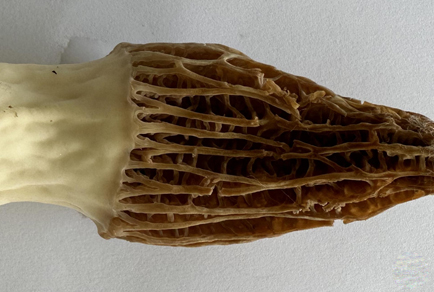
Morels (Morchella spp.), as rare and economically valuable edible mushrooms, have been rapidly cultivated in China and other regions in recent years, becoming a significant part of the agricultural economy. However, with the expansion of cultivation areas, morel diseases have become increasingly prominent. In particular, the white mold disease outbreak has severely restricted yield and quality improvement. A novel species (Mariannaea parasitica) and a new record of Mariannaea (Mariannaea parasitica) are reported from white mold-diseased fruiting bodies of Morchella based on morphology and phylogenetic analysis of ITS and LSU. The new species is characterized by erect, septate, hyaline, irregularly branched conidiophores, which often bear verticillate branches and usually produce 3–6 phialides. The phialides are ampulliform-lageniform, while the conidia are hyaline, smooth-walled, ellipsoidal to ovoid, with one side concave or flattened. This study broadens our understanding of the diversity of pathogen species in cultivated morels.
References
- Bao, D.F., Hyde, K.D., Maharachchikumbura, S.S.N., Perera, R.H., Thiyagaraja, V., Hongsanan, S., Wanasinghe, D.N., Shen, H.W., Tian, X.G., Yang, L.Q., Nalumpang, S. & Luo, Z.L. (2023) Taxonomy, phylogeny and evolution of freshwater Hypocreomycetidae (Sordariomycetes). Fungal Diversity 121: 1–94. https://doi.org/10.1007/s13225-023-00521-8
- Cai, L., Kurniawati, E. & Hyde, K.D. (2009) Morphological and molecular characterization of Mariannaea aquaticola sp. nov. collected from freshwater habitats. Mycological Progress 9: 337–343. https://doi.org/10.1007/s11557-009-0641-1
- Crous, P.W., Carnegie, A.J., Wingfield, M.J., Sharma, R., Mughini, G., Noordeloos, M.E., Santini, A., Shouche, Y.S., Bezerra, J.D.P., Dima, B., Guarnaccia, V., Imrefi, I., Jurjević, Ž., Knapp, D.G., Kovács, G.M., Magistà, D., Perrone, G., Rämä, T., Rebriev, Y.A., Shivas, R.G., Singh, S.M., Souza-Motta, C.M., Thangavel, R., Adhapure, N.N., Alexandrova, A.V., Alfenas, A.C., Alfenas, R.F., Alvarado, P., Alves, A.L., Andrade, D.A., Andrade, J.P., Barbosa, R.N., Barili, A., Barnes, C.W., Baseia, I.G., Bellanger, J.M., Berlanas, C., Bessette, A.E., Bessette, A.R., Biketova, A.Y., Bomfim, F.S., Brandrud, T.E., Bransgrove, K., Brito, A.C.Q., Cano-Lira, J.F., Cantillo, T., Cavalcanti, A.D., Cheewangkoon, R., Chikowski, R.S., Conforto, C., Cordeiro, T.R.L., Craine, J.D., Cruz, R., Damm, U., de Oliveira, R.J.V., de Souza, J.T., de Souza, H.G., Dearnaley, J.D.W., Dimitrov, R.A., Dovana, F., Erhard, A., Esteve-Raventós, F., Félix, C.R., Ferisin, G., Fernandes, R.A., Ferreira, R.J., Ferro, L.O., Figueiredo, C.N., Frank, J.L., Freire, K., García, D., Gené, J., Gêsiorska, A., Gibertoni, T.B., Gondra, R.A.G., Gouliamova, D.E., Gramaje, D., Guard, F., Gusmão, L.F.P., Haitook, S., Hirooka, Y., Houbraken, J., Hubka, V., Inamdar, A., Iturriaga, T., Iturrieta-González, I., Jadan, M., Jiang, N., Justo, A., Kachalkin, A.V., Kapitonov, V.I., Karadelev, M., Karakehian, J., Kasuya, T., Kautmanová, I., Kruse, J., Kušan, I., Kuznetsova, T.A., Landell, M.F., Larsson, K.H., Lee, H.B., Lima, D.X., Lira, C.R.S., Machado, A.R., Madrid, H., Magalhães, O.M.C., Majerova, H., Malysheva, E.F., Mapperson, R.R., Marbach, P.A.S., Martín, M.P., Martín-Sanz, A., Matočec, N., McTaggart, A.R., Mello, J.F., Melo, R.F.R., Mešić, A., Michereff, S.J., Miller, A.N., Minoshima, A., Molinero-Ruiz, L., Morozova, O.V., Mosoh, D., Nabe, M., Naik, R., Nara, K., Nascimento, S.S., Neves, R.P., Olariaga, I., Oliveira, R.L., Oliveira, T.G.L., Ono, T., Ordoñez, M.E., Ottoni, A.M., Paiva, L.M., Pancorbo, F., Pant, B., Pawłowska, J., Peterson, S.W., Raudabaugh, D.B., Rodríguez-Andrade, E., Rubio, E., Rusevska, K., Santiago, A., Santos, A.C.S., Santos, C., Sazanova, N.A., Shah, S., Sharma, J., Silva, B.D.B., Siquier, J.L., Sonawane, M.S., Stchigel, A.M., Svetasheva, T., Tamakeaw, N., Telleria, M.T., Tiago, P.V., Tian, C.M., Tkalčec, Z., Tomashevskaya, M.A., Truong, H.H., Vecherskii, M.V., Visagie, C.M., Vizzini, A., Yilmaz, N., Zmitrovich, I.V. & Zvyagina, E.A. (2019) Fungal Planet description sheets: 868–950. Persoonia 42: 291–473. https://doi.org/10.3767/persoonia.2019.42.11
- Feng, Y., Liu, Y., Hongsanan, S., Tarafder, E., Deng, X., Yang, T., Sun, J., Wen, T.C., Zeng, X.Y. & Liu, F. (2025) Two new species of Meliola (Meliolales, Sordariomycetes) from Guizhou Province, China. MycoKeys 122: 223–236. https://doi.org/10.3897/mycokeys.122.161471
- Fu, Y., Wu, H., Wang, S., Yu, Q., Tian, D. & Xu, X. (2023a) First report of Trichoderma atroviride causing rot of Morchella sextelata in Anhui Province, China. Crop Protection 168: 106206. https://doi.org/10.1016/j.cropro.2023.106206
- Fu, Y., Xu, X., Wu, H., Li, L., Wang, J., Sun, Y., Gu, L. & Yu, Q. (2023b) First Report of Clonostachys rosea Causing Rot of Morchella sextelata in Anhui Province, China. Mycologia 107: 1623. https://doi.org/10.1094/PDIS-08-22-1794-PDN
- Fu, S., Sun, J.E., Tarafder, E., Wijayawardene, N.N., Hu, Y., Wang, Y. & Li, Y. (2024) Pezizomycotina species associated with rotten plant materials in Guizhou Province, China. MycoKeys 106: 265–285. https://doi.org/10.3897/mycokeys.106.125920
- Fries, E.M. (1849) Summa vegetabilium Scandinaviae. Sect. Posterior.
- Gräfenhan, T., Schroers, H.J., Nirenberg, H.I. & Seifert, K.A. (2011) An overview of the taxonomy, phylogeny, and typification of nectriaceous fungi in Cosmospora, Acremonium, Fusarium, Stilbella, and Volutella. Stud Mycol 68: 79–113. https://doi.org/10.3114/sim.2011.68.04
- Hao, Y., Gen.Nuo, W. & Huang, Z. (2021) Mariannaea submersa sp. nov., with a new habitat and geographic record of Mariannaea catenulata. Mycosystema 40: 1286–1298. https://doi.org/10.13346/j.mycosystema.200186
- He, X.L., Peng, W.H., Miao, R.Y., Tang, J., Chen, Y., Liu, L.X., Wang, D. & Gan, B.C. (2017) White mold on cultivated morels caused by Paecilomyces penicillatus. FEMS microbiology letters 364. https://doi.org/10.1093/femsle/fnx037
- Hu, D.M., Wang, M. & Cai, L. (2017) Phylogenetic assessment and taxonomic revision of Mariannaea. Mycological Progress 16: 271–283. https://doi.org/10.1007/s11557-016-1252-2
- Hyde, K.D., Dong, Y., Phookamsak, R., Jeewon, R., Bhat, D.J., Jones, E.B.G., Liu, N.G., Abeywickrama, P.D., Mapook, A., Wei, D., Perera, R.H., Manawasinghe, I.S., Pem, D., Bundhun, D., Karunarathna, A., Ekanayaka, A.H., Bao, D.F., Li, J., Samarakoon, M.C., Chaiwan, N., Lin, C.G., Phutthacharoen, K., Zhang, S.N., Senanayake, I.C., Goonasekara, I.D., Thambugala, K.M., Phukhamsakda, C., Tennakoon, D.S., Jiang, H.B., Yang, J., Zeng, M., Huanraluek, N., Liu, J.K., Wijesinghe, S.N., Tian, Q., Tibpromma, S., Brahmanage, R.S., Boonmee, S., Huang, S.K., Thiyagaraja, V., Lu, Y.Z., Jayawardena, R.S., Dong, W., Yang, E.F., Singh, S.K., Singh, S.M., Rana, S., Lad, S.S., Anand, G., Devadatha, B., Niranjan, M., Sarma, V.V., Liimatainen, K., Aguirre-Hudson, B., Niskanen, T., Overall, A., Alvarenga, R.L.M., Gibertoni, T.B., Pfliegler, W.P., Horváth, E., Imre, A., Alves, A.L., da Silva Santos, A.C., Tiago, P.V., Bulgakov, T.S., Wanasinghe, D.N., Bahkali, A.H., Doilom, M., Elgorban, A.M., Maharachchikumbura, S.S.N., Rajeshkumar, K.C., Haelewaters, D., Mortimer, P.E., Zhao, Q., Lumyong, S., Xu, J. & Sheng, J. (2020) Taxonomic and phylogenetic contributions on genera and species of fungal taxa. Fungal Diversity 100: 5–277. https://doi.org/10.1007/s13225-020-00439-5
- Khan, M.B., Zeng, X.Y., Tarafder, E., Ali, S., Wei, D.P. & Wen, T.C. (2025) Two new species of Meliola from Yunnan Province China. MycoKeys 121: 79–92. https://doi.org/10.3897/mycokeys.121.158055
- Lan, Y.F., Cong, Q.Q., Wang, Q.W., Tang, L.N., Li, X.M., Yu, Q.W., Cui, X., An, X.R., Yu, C.X., Kong, F.H. & Li, X.D. (2020) First Report of Cladobotryum protrusum Causing Cobweb Disease on Cultivated Morchella importuna. Plant Dis. 104: 977. https://doi.org/10.1094/PDIS-08-19-1611-PDN
- Lakshmi, M.A., Bishnoi, S., Ho, C.L., Tarafder, E., Babu, B.K., Subbanna, A., Sahu, S. & Palnam, D.W. (2025) First pathogenomic insights into Ganoderma ellipsoideum as an emerging causal agent of basal stem rot in oil palm. Scientific Reports 15 (1). https://doi.org/10.1038/s41598-025-28488-3
- Li, Y., Chen, H. & Zhang, X. (2023) Cultivation, nutritional value, bioactive compounds of morels, and their health benefits: A systematic review. Frontiers in nutrition 10: 1159029. https://doi.org/10.3389/fnut.2023.1159029
- Liu, Q., Ma, H., Zhang, Y. & Dong, C. (2018) Artificial cultivation of true morels: current state, issues and perspectives. Critical reviews in biotechnology 38: 259–271. https://doi.org/10.1080/07388551.2017.1333082
- Liu, Z., Cong, Y., Sossah, F.L., Lu, Y., Kang, J. & Li, Y. (2023) Characterization and Genome Analysis of Cladobotryum mycophilum, the Causal Agent of Cobweb Disease of Morchella sextelata in China. Journal of Fungi 9: 411. https://doi.org/10.3390/jof9040411
- Lombard, L., Van Der Merwe, A., Groenewald, J.Z. & Crous, P.W. (2014) Lineages in Nectriaceae: re-evaluating the generic status of Ilyonectria and allied genera. Phytopathologia Mediterranea 53: 515–532.
- Lombard, L., van der Merwe, N.A., Groenewald, J.Z. & Crous, P.W. (2015) Generic concepts in Nectriaceae. Stud Mycol 80: 189–245. https://doi.org/10.1016/j.simyco.2014.12.002
- Luo, Z.L., Hyde, K.D., Liu, J.K., Maharachchikumbura, S.S.N., Jeewon, R., Bao, D.F., Bhat, D.J., Lin, C.G., Li, W.L., Yang, J., Liu, N.G., Lu, Y.Z., Jayawardena, R.S., Li, J.F. & Su, H.Y. (2019) Freshwater Sordariomycetes. Fungal Diversity 99: 451–660. https://doi.org/10.1007/s13225-019-00438-1
- Lv, B., Yu, S., Chen, Y., Yu, H. & Mo, Q. (2022) First Report of Lecanicillium aphanocladii Causing Rot of Morchella sextelata in China. Plant Disease 106. https://doi.org/10.1094/PDIS-12-21-2656-PDN
- Miao, Y., Qi, Y. & Peixin, H. (2020) Isolation and Identification of Pathogen of Morel White Rot. 142–145. https://doi.org/10.3389/fmicb.2023.1231353
- Nonaka, K., Kaneta, T., Ōmura, S. & Masuma, R. (2015) Mariannaea macrochlamydospora, a new hyphomycete (Nectriaceae) from soil in the Bonin Islands, Japan. Mycoscience 56: 29–33. https://doi.org/10.1016/j.myc.2014.02.001
- Noh, H. & Kim, S.H. (2025) Gliocladiopsis koreensis sp. nov., Ilyonectria koreensis sp. nov. & Mariannaea koreensis sp. nov. (Nectriaceae), Novel Fungi Isolated from Soil in Jeju Island and Upo Wetland in the Republic of Korea. Mycobiology 53 (2): 183–199. https://doi.org/10.1080/12298093.2025.2450905
- Okuda, T. & Yamamoto, K. (2000) Materials for the fungus flora of Japan (56) Mariannaea camptospora and M. elegans var. punicea from Japan. Mycoscience 41: 411–414. https://doi.org/10.1007/BF02463957
- Rehner, S.A. & Samuels, G.J. (1994) Taxonomy and phylogeny of Gliocladium analysed from nuclear large subunit ribosomal DNA sequences. Mycological Research 98: 625–634. https://doi.org/10.1016/S0953-7562(09)80409-7
- Rabenhorst, G.L. (1862) Cosmospora coccinea Rabenh. Hedwigia 2: 59–59.
- Samson, R.A. (1974) Paecilomyces and some allied Hyphomycetes. Studies in Mycology 6: 1–119.
- Rathnayaka, A.R., Tennakoon, D.S., Jones, G.E.B., Wanasinghe, D.N., Bhat, D.J., Priyashantha, A.K.H., Stephenson, S.L., Tibpromma, S. & Karunarathna, S.C. (2025) Significance of precise documentation of hosts and geospatial data of fungal collections, with an emphasis on plant-associated fungi. New Zealand Journal of Botany 63: 462–489. https://doi.org/10.1080/0028825X.2024.2381734
- Samson, R.A. & Bigg, W.L. (1988) A New Species of Mariannaea from California. Mycologia 80: 131–134. https://doi.org/10.1080/00275514.1988.12025512
- Samuels, G.J. & Seifert, K.A. (1991) Two new species of Nectria with Stilbella and Mariannaea anamorphs. Sydowia 43: 249–263.
- Shen, H.-W., Bao, D.-F., Boonmee, S., Su, X.-J., Tian, X.-G., Hyde, K.D. & Luo, Z.-L. (2023) Lignicolous Freshwater Fungi from Plateau Lakes in China (I): Morphological and Phylogenetic Analyses Reveal Eight Species of Lentitheciaceae, Including New Genus, New Species and New Records. Journal of Fungi.
- Shi, X., Liu, D., He, X., Liu, W. & Yu, F. (2022) Epidemic Identification of Fungal Diseases in Morchella Cultivation across China. Journal of fungi (Basel, Switzerland) 8. https://doi.org/10.3390/jof8101107
- Sun, J., Yu, S., Lu, Y., Liu, H. & Liu, X. (2023) Proposal of a new family Pseudodiploösporeaceae fam. nov. (Hypocreales) based on phylogeny of Diploöspora longispora and Paecilomyces penicillatus. Mycology 14: 60–73. https://doi.org/10.1080/21501203.2022.2143919
- Sun, J., Tarafder, E., Chen, T., Hongsanan, S., Chen, S., Norphanphoun, C., Karunarathna, S.C. & Zeng, X. (2026) Two novel species of sooty mould fungi (Capnodiales, Dothideomycetes) from China. MycoKeys 129: 23–41. https://doi.org/10.3897/mycokeys.129.182290
- Tarafder, E., Wenjun, Z., Karunarathna, S.C., Elgorban, A.M., Huilian, M., Nan, W., Zeng, X., Yong, W. & Tian, F.-H. (2024) Unveiling two new species of Trichoderma (Hypocreales, Hypocreaceae) that cause green mold disease on Stropharia rugosoannulata from Guizhou Province, China. MycoKeys 110: 361–383. https://doi.org/10.3897/mycokeys.110.134154
- Vilgalys, R. & Hester, M. (1990) Rapid genetic identification and mapping of enzymatically amplified ribosomal DNA from several Cryptococcus species. Journal of bacteriology 172: 4238–4246. https://doi.org/10.1128/jb.172.8.4238-4246.1990
- Vu, D., Groenewald, M., de Vries, M., Gehrmann, T., Stielow, B., Eberhardt, U., Al-Hatmi, A., Groenewald, J.Z., Cardinali, G., Houbraken, J., Boekhout, T., Crous, P.W., Robert, V. & Verkley, G.J.M. (2019) Large-scale generation and analysis of filamentous fungal DNA barcodes boosts coverage for kingdom fungi and reveals thresholds for fungal species and higher taxon delimitation. Studies in Mycology 92: 135–154. https://doi.org/10.1016/j.simyco.2018.05.001
- Wijesekara, W.M.S.N., Priyadarshani, T.D.C., Egodawatta, W.C.P., Menike, G.D.N., Weerasinghe, P.A., Tarafder, E., Elgorban, A.M. & Tibpromma, S. (2026) Biocontrol Efficacy of Trichoderma virens Against the White Root Rot Causing Pathogen Paramarasmius palmivorus in Field‐Grown Cowpea. New Zealand Journal of Botany 64 (1). https://doi.org/10.1002/nzb2.70038
- White, T.J., Bruns, T., Lee, S. & Taylor, J. (1990) Amplification and direct sequencing of fungal ribosomal RNA genes for phylogenetics. In: Innis, M.A., Gelfand, D.H., Sninsky, J.J. & White, T.J. (Eds.) PCR Protocols: a Guide to Methods and Applications. Academic Press, London, pp. 315–322.
- Wu, H., Chen, J., Li, J., Liu, Y., Park, H.J. & Yang, L. (2021) Recent Advances on Bioactive Ingredients of Morchella esculenta. Applied biochemistry and biotechnology 193: 4197–4213. https://doi.org/10.1007/s12010-021-03670-1
- Xie, J., Lu, S., Tarafder, E., Pan, Y., Peng, K., Zeng, X. & Tian, F. (2024b) Taxonomy, biological characterization and fungicide sensitivity assays of Hypomyces cornea sp. nov. causing cobweb disease on Auricularia cornea. Fungal Biology 128 (1): 1616–1625. https://doi.org/10.1016/j.funbio.2023.12.007
- Xie, J., Liu, X., Qin, Z., Mei, S., Tarafdar, E., Li, C., Zeng, X. & Tian, F. (2024a) Evolution and Related Pathogenic Genes of Pseudodiploöspora longispora on Morchella Based on Genomic Characterization and Comparative Genomic Analysis. https://doi.org/10.2139/ssrn.4673111
- Xu, C., Qian, L., Meng, Q. & Sun, Y. (2025) State-of-the-art review of morel: From chemistry to nutrition and health benefits. Journal of Food Composition and Analysis 141: 107351. https://doi.org/10.1016/j.jfca.2025.107351
- Xu, J., Yu, X., Suwannarach, N., Jiang, Y., Zhao, W. & Li, Y. (2021) Additions to Lyophyllaceae s.l. from China. Journal of Fungi 7. https://doi.org/10.3390/jof7121101
- Xu, J., Jiang, Y., Wang, T., Zhang, D., Li, X. & Hosen, M.I. (2023) Morphological characteristics and phylogenetic analyses revealed four new species of Agaricales from China. Frontiers in Microbiology 14. https://doi.org/10.3389/fmicb.2023.1118525
- Xu, Y., Tang, J., Wang, Y., He, X., Tan, H., Yu, Y., Chen, Y. & Peng, W. (2022) Large-scale commercial cultivation of morels: current state and perspectives. Applied microbiology and biotechnology 106: 4401–4412. https://doi.org/10.1007/s00253-022-12012-y
- Rabenhorst, G.L. (1862) Cosmospora Rabenh. Hedwigia.
- Zeng, Z.Q. & Zhuang, W.Y. (2014) A new holomorphic species of Mariannaea and epitypification of M. samuelsii. Mycological Progress 13: 980. https://doi.org/10.1007/s11557-014-0980-4
- Zhang, C.L., Jin, Z.W., Sun, C., Moodley, O., Xu, J.Z. & Li, Y. (2021) Morphological and phylogenetical analyses of pathogenic Hypomyces perniciosus isolates from Agaricus bisporus causing wet bubble disease in China. Phytotaxa 491: 115–130. https://doi.org/10.11646/phytotaxa.491.2.2
- Zhu, X., Ma, K., Sun, M., Zhang, J., Liu, L. & Niu, S. (2023) Isolation and identification of pathogens of Morchella sextelata bacterial disease. Frontiers in Microbiology 14: 1231353. https://doi.org/10.3389/fmicb.2023.1231353