

Abstract
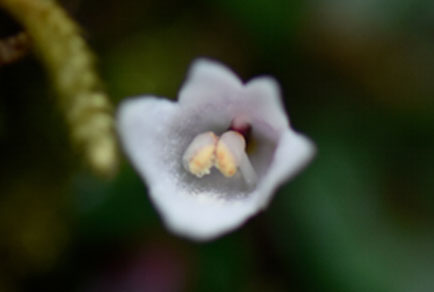
Petrocodon dealbatus Hance var. minimus X.X.Bai & K.Tan, a new variety from northwest Guizhou Province, China, is described and illustrated based on molecular and morphological data. The molecular evidence shows that the new variety is recovered in a highly supported clade. Within this clade, the new one is morphologically similar to Petrocodon Hance in flower size and corolla shape, especially resembling P. dealbatus var. dealbatus in its white corolla and 2 stamens. However, it differs in its shorter leaf blade 2–2.5 cm long, narrower leaf blade 2–4 mm wide, leaf blade leathery, oblanceolate, and leaves along the stem alternate arrangement. Colour photographs, a detailed description, and a provisional IUCN Red List assessment are provided along with discussions of its geographical distribution, ecology and morphological relationships with other similar species.
References
- Chase, M.W. & Hills, H. (1991) Silica gel: An ideal material for field preservation of leaf samples for DNA studies. Taxon 40 (2): 215–220. https://doi.org/10.2307/1222975
- Cen, H.F., Fu, L.F. & Wen, F. (2017) Petrocodon urceolatus sp. nov. (Gesneriaceae) from Zhangjiajie city, northwestern Hunan Province, China. Nordic Journal of Botany 35: 334–338. https://doi.org/10.1111/njb.01333
- Chen, S., Zhou, Y., Chen, Y. & Gu, J. (2018) fastp: an ultra–fast all–in–one FASTQ preprocessor. Bioinformatics 34 (17): 1884–1890. https://doi.org/10.1093/bioinformatics/bty560
- Dierckxsens, N., Mardulyn, P. & Smits, G. (2017) NOVOPlasty: de novo assembly of organelle genomes from whole genome data. Nucleic Acids Research 45 (4): e18. https://doi.org/10.1093/nar/gkw955
- Fedde, F. (1928) Repertorium Specierum Novarum Regni Vegetabilis 24 (669–676): 216.
- Guindon, S., Dufayard, J.F., Lefort, V., Anisimova, M., Hordijk, W. & Gascuel, O. (2010) New algorithms and methods to estimate maximum-likelihood phylogenies: assessing the performance of PhyML 3.0. Systematic Biology 59: 307–321. https://doi.org/10.1093/sysbio/syq010
- Greiner, S., Lehwark, P. & Bock, R. (2019) OrganellarGenomeDRAW (OGDRAW) version 1.3. 1: expanded toolkit for the graphical visualization of organellar genomes. Nucleic Acids Research 47 (W1): W59–W64. https://doi.org/10.1093/nar/gkz238
- GRC. (2025) The Gesneriaceae Resource Centre. Royal Botanic Garden Edinburgh. [https://padme.rbge.org.uk/GRC]
- Henry, T. (1883) Journal of Botany, British and Foreign 21 (6): 167.
- IUCN Standards and Petitions Committee (2024) Guidelines for Using the IUCN Red List Categories and Criteria. Version 16. Prepared by the Standards and Petitions Committee. [https://www.iucnredlist.org/documents/RedListGuidelines.pdf]
- Jiang, Y.S., Zhang, Y., Wang, Y. & Wen, F. (2011) Petrocodon multiflorus sp. nov. (Gesneriaceae) from Guangxi, China. Nordic Journal of Botany 29: 57–60. https://doi.org/10.1111/j.1756-1051.2010.00874.x
- Kalyaanamoorthy, S., Minh, B.Q., Wong, T.K., Haeseler, A. & Jermiin, L.S. (2017) ModelFinder: Fast model selection for accurate phylogenetic estimates. Nature Methods 14 (6): 587–589. https://doi.org/10.1038/nmeth.4285
- Katoh, K. & Standley, D.M. (2013) MAFFT multiple sequence alignment software version 7: improvements in performance and usability. Molecular Biology and Evolution 30: 772–780. https://doi.org/10.1093/molbev/mst010
- Li, Z.Y. & Wang, Y.Z. (2004) Plants of Gesneriaceae in China. Henan Science & Technology Publishing House, Zhengzhou, 721 pp.
- Lu, Y.B., Pan, B., Huang, J., Xiang, C.L. & Zhang, Q. (2017) Petrocodon pulchriflorus sp. nov. (Gesneriaceae) from Guangxi, China. Phytotaxa 291: 81–88. https://doi.org/10.11646/phytotaxa.291.1.8
- Luo, R.B., Liu, B.H., Xie, Y.L., Li, Z.Y., Huang, W.H., Yuan, J.Y., He, G.Z., Chen, Y.X., Pan, Q., Liu, Y.J., Tang, J.B., Wu, G.X., Zhang, H., Shi, Y.J., Liu, Y., Yu, C., Wang, Bo., Lu, Y., Han, C.L., Cheung, D.W., Yiu, S.M., Peng, S.L., Zhu, X.Q., Liu, G.M., Liao, X.K., Li, Y.R., Yang, H.M., Wang, J., Lam, T.W. & Wang, J. (2012) SOAPdenovo2: an empirically improved memory–efficient short–read de novo assembler. GigaScience 1 (1): 18. https://doi.org/10.1186/2047-217X-1-18
- Möller, M., Pfosser, M., Jang, C.G., Mayer, V., Clark, A., Hollingsworth, M.L., Barfuss, M.H.J., Wang, Y.Z., Kiehn, M. & Weber, A. (2009) A preliminary phylogeny of the ‘Didymocarpoid Gesneriaceae’ based on three molecular data sets: incongruence with available tribal classifications. American Journal of Botany 96: 989–1010. https://doi.org/10.3732/ajb.0800291
- Möller, M., Wei, Y.G., Wen, F., Clark, J.L. & Weber, A. (2016) You win some you lose some: updated generic delineations and classification of Gesneriaceae-implications for the family in China. Guihaia 36: 44–60. https://doi.org/10.11931/guihaia.gxzw201512015
- Minh, B.Q., Nguyen, M.A. & Haeseler, A. (2013) Ultrafast approximation for phylogenetic bootstrap. Molecular Biology and Evolution 30: 1188–1195. https://doi.org/10.1093/molbev/mst024
- Swofford, D.L. (2003) PAUP*. Phylogenetic analysis using parsimony (* and other methods), ver. 4.0b10. Sinauer Assocites. https://doi.org/10.1111/j.0014-3820.2002.tb00191.x
- Tillich, M., Lehwark, P., Pellizzer, T., Ulbricht–Jones, E.S., Fischer, A., Bock, R. & Greiner, S. (2017) GeSeq–versatile and accurate annotation of organelle genomes. Nucleic Acids Research 45 (W1): W6–W11. https://doi.org/10.1093/nar/gkx391
- Wang, W.T. (1975) Notulae de Gesneriaceis Sinensibus (continued). Acta Phytotaxonomica Sinica 13 (3): 97–105.
- Wang, W.T. (1990) Gesneriaceae. In: Wang, W.T. (Ed.) Flora Reipublicae Popularis Sinicae, vol. 69. Science Press, Beijing, pp. 125–581.
- Wang, W.T., Pan, K.Y., Li, Z.Y., Weitzman, A.L. & Skog, L.E. (1998) Gesneriaceae. In: Wu, Z.Y. & Raven, P.H. (Eds.) Flora of China 1998. Science Press, Beijing & Missouri Botanical Garden Press, St. Louis, pp. 244–401.
- Weber, A., Middleton, D.J., Forrest, A., Kiew, R., Lim, C.L., Rafidah, A.R., Sontag, S., Triboun, P., Wei, Y.G., Yao, T.L. & Möller, M. (2011a) Molecular systematics and remodelling of Chirita and associated genera (Gesneriaceae). Taxon 60: 767–790. https://doi.org/10.1002/tax.603012
- Weber, A., Wei, Y.G., Puglisi, C., Wen, F., Mayer, V. & Möller, M. (2011b) A new definition of the genus Petrocodon (Gesneriaceae). Phytotaxa 23: 49–67. https://doi.org/10.11646/phytotaxa.23.1.3
- Wei, Y.G. (2007) Petrocodon ferrugineus (Gesneriaceae), a new species from Guangxi, China. Novon 17: 135–137.
- Wei, Y.G., Wen, F., Möller, M., Monro, A., Zhang, Q., Gao, Q., Mou, H.F., Zhong, S.H. & Cui, C. (2010) Gesneriaceae of South China. Guangxi Science and Technology Publishing House, Nanning, 777 pp.
- Xia, X.H. (2013) DAMBE5: A comprehensive software package for data analysis in molecular biology and evolution. Molecular Biology and Evolution 30 (7): 1720–1728. https://doi.org/10.1093/molbev/mst064
- Xiang, C.Y., Gao, F.L., Jakovlić, I., Lei, H.P., Hu, Y., Zhang, H., Zou, H., Wang, G.T. & Zhang, D. (2023) Using PhyloSuite for molecular phylogeny and tree‐based analyses. iMeta 2 (1): e87. https://doi.org/10.1002/imt2.87
- Yang, Z.M., Chou, W.C., Zhao, F.C., Wen, F. & Wei, Y.G. (2022) Petrocodon asterostriatus (Gesneriaceae), a new species from Guangxi, China. Annales Botanici Fennici 59 (1): 285–294. https://doi.org/10.5735/085.059.0141
- Zhang, D., Gao, F.L., Jakovlic, I., Zou, H., Zhang, J., Li, W.X. & Wang, G.T. (2020) PhyloSuite: An integrated and scalable desktop platform for streamlined molecular sequence data management and evolutionary phylogenetics studies. Molecular Ecology Resources 20 (1): 348–355. https://doi.org/10.1111/1755-0998.13096