

Abstract
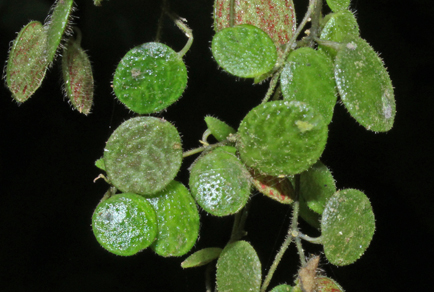
Peperomia is one of the most diverse genera of flowering plants in the Neotropics. Although several national and regional taxonomic revisions and checklists have addressed the genus in Costa Rica and Panama, important discrepancies and gaps remain. In this study, we describe Peperomia isthmophila, an endemic species from the Central American isthmus that was long confused with Peperomia ebingeri. It can be classified within the morphologically heterogeneous clade Peperomia subg. Micropiper based on its fruits with a subapical stigma, borne on a rounded-conical pseudopedicel, and with the surface uniformly covered by sticky papillae. In addition, we report for the first time seven species for the Costa Rican flora: Peperomia alwynii, Peperomia blanda, Peperomia cocleana, Peperomia erythrospicata, Peperomia hispiduliformis, Peperomia pseudoasarifolia, and Peperomia seemanniana. Peperomia erythrospicata is also newly recorded here for the flora of Panama. Moreover, Peperomia leptophylla, a species that has long been confused with Peperomia galioides, is reported here for both countries. The species Peperomia microphylla is excluded from Mesoamerican flora. Because of the large number of names historically applied to the genus, the limited field documentation of type localities, and the persistence of underexplored regions, Peperomia diversity in Costa Rica and Panama still requires detailed investigation. Morphological descriptions are provided for the new species, along with notes on its affinities, distribution and habitat, phenology, conservation status, etymology, and specimens examined. For the newly recorded species, a discussion of morphologically related species is provided. All taxa are illustrated with live photographs and distribution maps.
References
- Adobe Inc. (2024) Adobe Photoshop (Version 25.0) [Software]. Available from: https://www.adobe.com/products/photoshop.html (accessed 5 October 2025)
- Avalos, G. (2019) Still searching the rich coast: Biodiversity of Costa Rica, numbers, processes, patterns, and challenges. In: Pullaiah, T. (Ed.) Global Biodiversity Volume 4: Selected countries in the Americas and Australia. Apple Academic Press, New Jersey, pp. 101–138. https://doi.org/10.1201/9780429433634-4
- Bachman, S., Moat, J., Hill, A.W., de la Torre, J. & Scott, B. (2011) Supporting Red List threat assessments with GeoCAT: geospatial conservation assessment tool. ZooKeys 150: 117–126. https://doi.org/10.3897/zookeys.150.2109
- Burger, W.C. (1971) Piperaceae. In: Burger, W.C. (Ed.) Flora Costaricensis. Fieldiana Botany 5. Chicago, Ill, Field Museum of Natural History, pp. 5–218. https://doi.org/10.5962/bhl.title.2590
- Callejas Posada, R. & Betancur, J. (1997) New species of Piperaceae from the Southern Andes region of Colombia. Novon 7: 17–24. https://doi.org/10.2307/3392067
- Callejas Posada, R. (2014) Piperaceae. In: Hammel, B.E., Grayum, M.H., Herrera, C. & Zamora, N. (Eds.) Manual de Plantas de Costa Rica, Vol. VII, Dicotiledóneas, (Picramniaceae—Rutaceae). Monographs in Systematic Botany from the Missouri Botanical Garden Vol. 129. St. Louis, pp. 6–326.
- Callejas Posada, R. (2020) Piperaceae. In: Davidse, G., Ulloa Ulloa, C., Hernández-Macías, H.M. & Knapp, S. (Eds.) Flora Mesoamericana, Vol. 2, Parte 2. Universidad Nacional Autónoma de México, Missouri Botanical Garden Press, and the Natural History Museum (London), pp. 1–590.
- Carmona-Higuita, M.J., Mendieta-Leiva, G., Gómez-Díaz, J.A., Villalobos, F., Nunes Ramos, F., Costa Elias, J.P., Jiménez-López, D.A., Zuluaga, A., Holst, B., Kessler, M., Mathieu, G., Zizka, A., Zotz, G. & Krömer, T. (2024) Endemism centres of the five richest vascular epiphyte families in the Neotropics. Journal of Biogeography 52 (1): 80–91. https://doi.org/10.1111/jbi.15016
- Correa, M.D., Galdames, C. & de Stapf, M.S. (2004) Catálogo de las plantas vasculares de Panamá. Quebecor World Bogotá, S.A., Bogotá, 600 pp.
- Dahlstedt, H. (1900) Studien über Süd- und Centralamerikanische Peperomien mit besonderer Berücksichtigung der brasilianischen Sippen. Kongliga Svenska Vetenskaps-Akademiens handlingar, Stockholm 33 (2): 1–218. https://doi.org/10.5962/bhl.title.15467
- D’Arcy, W.G. (1987) Flora of Panama: Checklist and Index. Annals of the Missouri Botanical Garden 74 (2): 1–328. https://doi.org/10.5962/bhl.title.153180
- De Candolle, C. (1866) Piperaceae novae. Journal of Botany, British and Foreign 4: 132–167.
- De Candolle, C. (1869) Piperaceae. Prodromus Sistematis Naturalis Regni Vegetabilis 16 (1): 235–471.
- De Candolle, C. (1872) Piperaceae novae. Linnaea 16 (1): 333–416.
- De Candolle, C. (1896) Primitiae Florae Costaricensis, Piperaceae. Anales del Instituto Físico-Geográfico y del Museo Nacional de Costa Rica 9: 157–180.
- De Candolle, C. (1920) Piperaceae Mexicanae. Annuaire du Conservatoire et du Jardin Botaniques de Genève 21: 305–322.
- Dietrich, A. (1831) Caroli a Linné Species plantarum exhibentes plantas rite cognitas ad genera relatas cum differentiis specificis, nominibus trivialibus, synonymis selectis, locis natalibus secundum systema sexuale digestas. Vol. 1. G.C. Nauck, Berlin, 735 pp.
- Dunnington, D. (2021) ggspatial: Spatial Data Framework for ggplot2 (R package version 1.1.7). Available from: https://cran.r-project.org/package=ggspatial (accessed 5 October 2025)
- Frenzke, L., Scheiris, E., Pino, G., Symmank, L., Goetghebeur, P., Neinhuis, C., Wanke, S. & Samain, M.-S. (2015) A revised infrageneric classification of the genus Peperomia (Piperaceae). Taxon 64: 424–444. https://doi.org/10.12705/643.4
- Frodin, D.G. (2004) History and concepts of big plant genera. Taxon 53: 753–776. https://doi.org/10.2307/4135449
- García-Martínez, R., Beutelspacher-Baigts, C.R., Callejas Posada, R. & Mathieu, G. (2018) Two new lithophytic species of the genus Peperomia (Piperaceae) from the state of Chiapas, Mexico. Phytotaxa 338 (1): 109–116. https://doi.org/10.11646/phytotaxa.338.1.9
- Google Earth. (2025) Google LLC. Available from: https://earth.google.com (accessed 1 October 2025)
- Hijmans, R.J. (2023) terra: Spatial Data Analysis. R package version 1.7.39. Available from: https://cran.r-project.org/package=terra (accessed 5 October 2025)
- Holdridge, L.R. (1967) Life Zone Ecology. Tropical Science Center, San José, 206 pp.
- Hollister, J.W., Shah, T. & Jirka, S. (2023) elevatr: Access Elevation Data from Various APIs. R package version 0.99.0. Available from: https://cran.r-project.org/package=elevatr (accessed 5 October 2025)
- Humboldt, A.v., Bonpland, A. & Kunth, K.S. (1816 [1815]) Piperaceae. Nova Genera et Species Plantarum (quarto edition) 1: 46–74 https://doi.org/10.5962/bhl.title.640
- JSTOR Plants. (2026) JSTOR Global Plants Digital Library. Available from: https://plants.jstor.org/ (accessed 5 October 2025)
- Mathieu, G. (2001–2026) Taxonomic repertory of the genus Peperomia. Available from: http://www.peperomia.net (accessed 5 October 2025)
- Mathieu, G. (2020) Peperomia leptostachya (Piperaceae) revived. Candollea 75: 45–49. https://doi.org/10.15553/c2020v751a4
- Mathieu, G. & Callejas Posada, R. (2006) New synonymies in the genus Peperomia Ruiz & Pav. (Piperaceae)—an annotated checklist. Candollea 61 (2): 331–363.
- Mathieu, G., Samain, M.-S., Yeynders, M. & Goetghebeur, P. (2008) Taxonomy of the Peperomia species (Piperaceae) with pseudo-epiphyllous inflorescences, including four new species. Botanical Journal of the Linnean Society 157: 177–196. https://doi.org/10.1111/j.1095-8339.2008.00777.x
- Miquel, F.A.W. (1843) Systema Piperacearum. Roterodami [Rotterdam]: Apud H.A. Kramers, 377 pp. https://doi.org/10.5962/bhl.title.151
- Miquel, F.A.W. (1853) Mantissa Piperacearum. Flora Brasiliensis 4 (1): 219–222. https://doi.org/10.5962/bhl.title.454
- Miquel, F.A.W. (1854) Flora of the isthmus of Panama, Piperaceae. In: Seemann, B. (Ed.) The Botany of the Voyage of H.M.S. Herald, under the command of Captain Henry Kellett, R.N., C.B., during the years 1845–51. Lovell Reeve, London, pp. 57–254. http://doi.org/10.5962/bhl.title.425
- Morrone, J. (2014) Biogeographical regionalisation of the Neotropical Region. Zootaxa 3782 (1): 1–110. https://doi.org/10.11646/zootaxa.3782.1.1
- Nic Lughadha, E., Walker, B.E., Canteiro, C., Chadburn, H., Davis, A.P., Hargreaves, S., Lucas, E.J., Schuiteman, A., Williams, E., Bachman, S.P., Baines, D., Barker, A., Budden, A.P., Carretero, J., Clarkson, J.J., Roberts, A. & Rivers, M.C. (2019) The use and misuse of herbarium specimens in evaluating plant extinction risks. Philosophical Transactions of the Royal Society of London, Series B Biological Sciences 374: 20170402. https://doi.org/10.1098/rstb.2017.0402
- Pebesma, E. (2018) Simple Features for R: Standardized Support for Spatial Vector Data. The R Journal 10 (1): 439–446. https://doi.org/10.32614/RJ-2018-009
- R Core Team. (2024) R: A language and environment for statistical computing. R Foundation for Statistical Computing, Vienna, Austria. [https://www.R-project.org/]
- Ruiz, H. & Pavón, J.A. (1794) Florae Peruvianae, et Chilensis Prodromus, 8. Imprenta de Sancha, Madrid, 154 pp.
- Samain, M.S. (2008) Tackling Pandora’s Box. Order out of chaos in the giant genus Peperomia. PhD-thesis. Ghent University, Belgium, 270 pp.
- Samain, M.S., Vanderschaeve, L., Chaerle, P., Goetghebeur, P., Neinhuis, C. & Wanke, S. (2009) Is morphology telling the truth about the evolution of the species rich genus Peperomia (Piperaceae)? Plant Systematics and Evolution 278: 1–21. https://doi.org/10.1007/s00606-008-0113-0
- South, A. (2017) rnaturalearth: World Map Data from Natural Earth. R package version 0.1.0. Available from: https://cran.r-project.org/package=rnaturalearth (accessed 5 October 2025)
- Trelease, W. (1927) The Piperaceae of Panama. Contributions from the United States National Herbarium 26 (2): 15–50.
- Trelease, W. (1929) The Piperaceae of Costa Rica. Contributions from the United States National Herbarium 26 (4): 115–226.
- Trelease, W. (1937) Piperaceae. In: Standley, P.C. (Ed.) Flora of Costa Rica. Publications of the Field Museum of Natural History, Botanical Series 18 (1): 306–370.
- Trelease, W. (1966) Piper and Peperomia (Piperaceae) new to Panama. Annals of the Missouri Botanical Garden 53 (2): 261–264. https://doi.org/10.2307/2394949
- Trelease, W. & Yuncker, T.G. (1950) The Piperaceae of northern South America. Urbana: University of Illinois Press, Chicago, 838 pp.
- Ulloa Ulloa, C., Acevedo-Rodríguez, P., Beck, S.G., Belgrano, M.J., Bernal, R., Berry, P.E., Brako, L., Celis, M., Davidse, G., Gradstein, S.R., Hokche, O., León, B., León-Yánez, S., Magill, R.E., Neill, D.A., Nee, M.H., Raven, P.H., Stimmel, H., Strong, M.T., Villaseñor Ríos, J.L., Zarucchi, J.L. & Zuloaga, F.O. (2017) An integrated assessment of vascular plant species of the Americas. Science 358: 1614–1617. https://doi.org/10.1126/science.aao0398
- Vergara-Rodríguez, D., Mathieu, G., Samain, M.-S., Armenta-Montero, S. & Krömer, T. (2017) Diversity, Distribution, and Conservation Status of Peperomia (Piperaceae) in the State of Veracruz, Mexico. Tropical Conservation Science 10: 1–28. https://doi.org/10.1177/1940082917702383
- Schelchtendal, D.F.L.v. (1830) Dycotiledonae, Piperaceae. Linnea 5: 73–76.
- Wanke, S., Samain, M.-S., Vanderschaeve, L., Mathieu, G., Goetghebeur, P. & Neinhuis, C. (2006) Phylogeny of the genus Peperomia (Piperaceae) inferred from the trnK/matK region (cpDNA). Plant Biology 8: 93–102. https://doi.org/10.1055/s-2005-873060
- Wickham, H., Chang, W., Henry, L., Lin Pedersen, T., Takahashi, K., Wilke, C. & Woo, K. (2016) ggplot2: Elegant Graphics for Data Analysis. Springer-Verlag. Available from: https://ggplot2.tidyverse.org (accessed 5 October 2025)
- Williams, B.S. (1879) Peperomia prostrata. The Gardeners’ Chronicle, new series 11 (284): 716–717.
- Yuncker, T.G. (1950) Piperaceae. In: Woodson, R.E. & Schery, R.W. (Eds.) Flora of Panama. Part IV, Fascicle I. Annals of the Missouri Botanical Garden 37 (1): 1–120.
- Yuncker, T.G. (1966) Piper and Peperomia (Piperaceae) new to Panama. Annals of the Missouri Botanical Garden 53: 261–264.
- Zamora, N., Hammel, B.E. & Grayum, M.H. (2004) Vegetación. In: Hammel, B.E., Grayum, M.H., Herrera, C. & Zamora, N. (Eds.) Manual de plantas de Costa Rica. Vol. I. Introducción. Monographs in Systematic Botany from the Missouri Botanical Garden 97. St. Louis, pp. 91–216. https://doi.org/10.5962/bhl.title.891
- Zanotti, C.A., Suescún, M.A. & Mathieu, G. (2012) Synopsis and taxonomic novelties of Peperomia (Piperaceae) from Argentina. Darwiniana 50: 124–147. https://doi.org/10.2307/41825701