
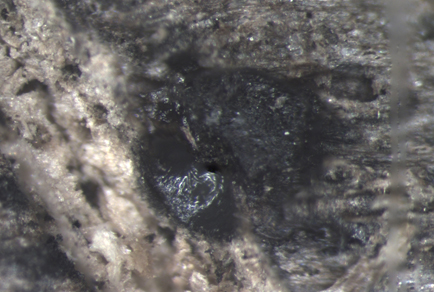

Abstract
Clonostachys (Bionectriaceae, Hypocreales) comprises fungi with diverse ecological roles and widespread distribution. We describe a novel species, Clonostachys mangrovei. Both sexual and asexual morphs are characterized, with the sexual morph being particularly significant, as most Clonostachys species are known only from their asexual states, which are often difficult to distinguish. Phylogenetic analysis based on a combined dataset of ITS, LSU, RPB-2, TEF, and TUB sequences places C. mangrovei in a well-supported clade, closely related to C. viticola. Although these two species share similar asexual characteristics, a common feature within the genus, this overlap underscores the morphological importance of the sexual morph and of molecular data for reliable species delimitation. Ecologically, C. mangrovei represents the first confirmed member of the genus adapted to mangrove environments, highlighting the ability of Clonostachys to extend beyond its predominantly terrestrial range and contributing to the growing recognition of fungal diversity in marine-influenced ecosystems. In addition, we report a new host and geographic record for C. farinosa, its first occurrence on Swietenia mahagoni in Thailand.
References
- Apurillo, C.C.S., Phukhamsakda, C., Hyde, K.D., Thiyagaraja, V. & Jones, E.B.G. (2025) New fungal genus, three novel species and one new record from mangroves, with reclassification of Melanconiella (Melanconiellaceae) species. MycoKeys 116: 25–52. https://doi.org/10.3897/mycokeys.116.137351
- Apurillo, C.C.S., Phukhamsakda, C., Mukhopadhyay, S., Gunarathne, A. & Jones, E.B.G. (2024) Nemania hydei sp. nov. (Xylariaceae) from Avicennia marina in Central Thailand. New Zealand Journal of Botany 62: 103–118. https://doi.org/10.1080/0028825X.2023.2289420
- Corda, A. (1839) Pracht-Flora Europaeischer Schimmelbildungen. A. C. J. Corda. Leipzic and Dresden, 1839. Folio. Annals and Magazine of Natural History 4: 200–201. https://doi.org/10.1080/00222933909512494
- Dias, A., Ruiz, N., Couzinet-Mossion, A., Bertrand, S., Duflos, M., Pouchus, Y.F., Barnathan, G., Nazih, H. & Wielgosz-Collin, G. (2015) The marine-derived fungus Clonostachys rosea, source of a rare conjugated 4-Me-6E,8E-hexadecadienoic acid reducing viability of MCF-7 breast cancer cells and gene expression of lipogenic enzymes. Marine Drugs 13: 4934–4948. https://doi.org/10.3390/md13084934
- Gonçalves, M.F.M., Vicente, T.F.L., Esteves, A.C. & Alves, A. (2020) Novel halotolerant species of Emericellopsis and Parasarocladium associated with macroalgae in an estuarine environment. Mycologia 112: 154–171. https://doi.org/10.1080/00275514.2019.1677448
- Hennings, P. (1897) Beiträge zur Pilzflora Südamerikas II. Hedwigia 36: 190–246.
- Hyde, K.D., Noorabadi, M., Thiyagaraja, V., He, M., Johnston, P., Wijesinghe, S., Armand, A. & Biketova, A.Yu. (2024) The 2024 Outline of Fungi and fungus-like taxa. Mycosphere 15: 5146–6239. https://doi.org/10.5943/mycosphere/15/1/25
- Jones, E.B.G., Pang, K.L., Abdel-Wahab, M.A., Scholz, B., Hyde, K.D., Boekhout, T., Ebel, R., Rateb, M.E., Henderson, L., Sakayaroj, J., Suetrong, S., Dayarathne, M.C., Kumar, V., Raghukumar, S., Sridhar, K.R., Bahkali, A.H.A., Gleason, F.H. & Norphanphoun, C. (2019) An online resource for marine fungi. Fungal Diversity 96: 347–433. https://doi.org/10.1007/s13225-019-00426-5
- Krauss, U., Ten Hoopen, M., Rees, R., Stirrup, T., Argyle, T., George, A., Arroyo, C., Corrales, E. & Casanoves, F. (2013) Mycoparasitism by Clonostachys byssicola and Clonostachys rosea on Trichoderma spp. from cocoa (Theobroma cacao) and implication for the design of mixed biocontrol agents. Biological Control 67: 317–327. https://doi.org/10.1016/j.biocontrol.2013.09.011
- Liu, Y.J., Whelen, S. & Hall, B.D. (1999) Phylogenetic relationships among ascomycetes: Evidence from an RNA polymerse II subunit. Molecular Biology and Evolution 16: 1799–1808. https://doi.org/10.1093/oxfordjournals.molbev.a026092
- O’Donnell, K. & Cigelnik, E. (1997) Two divergent intragenomic rDNA ITS2 types within a monophyletic lineage of the fungus Fusarium are nonorthologous. Molecular Phylogenetics and Evolution 7: 103–116. https://doi.org/10.1006/mpev.1996.0376
- Oh, S.Y. (2024) The complete mitochondrial genome of Clonostachys farinosa (Bionectriaceae, Hypocreales). Mitochondrial DNA Part B 9: 583–587. https://doi.org/10.1080/23802359.2024.2347510
- Parthasarathy, R., Chandrika, M., Sruthi, D., Yashavantha Rao, H.C. & Jayabaskaran, C. (2023) Clonostachys rosea, a marine algal endophyte, as an alternative source of chrysin and its anticancer effect. Archives of Microbiology 205: 275. https://doi.org/10.1007/s00203-023-03615-8
- Perera, R., Hyde, K., Maharachchikumbura, S., Jones, E., McKenzie, E., Stadler, M., Lee, H., Samarakoon, M., Ekanayaka, A., Camporesi, E., Liu, J. & Liu, Z. (2020) Fungi on wild seeds and fruits. Mycosphere 11: 2108–2480. https://doi.org/10.5943/mycosphere/11/1/14
- Rehner, S.A. & Buckley, E. (2005) A Beauveria phylogeny inferred from nuclear ITS and EF1-α sequences: evidence for cryptic diversification and links to Cordyceps teleomorphs. Mycologia 97: 84–98. https://doi.org/10.1080/15572536.2006.11832842
- Rossman, A.Y. (2014) Lessons learned from moving to one scientific name for fungi. IMA Fungus 5: 81–89. https://doi.org/10.5598/imafungus.2014.05.01.10
- Rossman, A.Y., Seifert, K.A., Samuels, G.J., Minnis, A.M., Schroers, H.J., Lombard, L., Crous, P.W., Põldmaa, K., Cannon, P.F., Summerbell, R.C., Geiser, D.M., Zhuang, W., Hirooka, Y., Herrera, C., Salgado-Salazar, C. & Chaverri, P. (2013) Genera in Bionectriaceae, Hypocreaceae, and Nectriaceae (Hypocreales) proposed for acceptance or rejection. IMA Fungus 4: 41–51. https://doi.org/10.5598/imafungus.2013.04.01.05
- Schroers, H.J. (2001) A monograph of Bionectria (Ascomycota, Hypocreales, Bionectriaceae) and its Clonostachys anamorphs. Centraalbureau voor Schimmelcultures, Utrecht, 214 pp.
- Schroers, H.J., Samuels, G.J., Seifert, K.A. & Gams, W. (1999) Classification of the mycoparasite Gliocladium roseum in Clonostachys as C. rosea, its relationship to Bionectria ochroleuca, and notes on other Gliocladium-like fungi. Mycologia 91: 365–385. https://doi.org/10.1080/00275514.1999.12061028
- Spegazzini, C. (1919) Fungi Costaricenses Nonnulli. Boletin de la Academia Nacional de Ciencias en Córdoba: 23–563.
- Toledo, A.V., Virla, E., Humber, R.A., Paradell, S.L. & Lastra, C.C.L. (2006) First record of Clonostachys rosea (Ascomycota: Hypocreales) as an entomopathogenic fungus of Oncometopia tucumana and Sonesimia grossa (Hemiptera: Cicadellidae) in Argentina. Journal of Invertebrate Pathology 92: 7–10. https://doi.org/10.1016/j.jip.2005.10.005
- Torcato, C., Gonçalves, M.F.M., Rodríguez-Gálvez, E. & Alves, A. (2020) Clonostachys viticola sp. nov., a novel species isolated from Vitis vinifera. International Journal of Systematic and Evolutionary Microbiology 70: 4321–4328. https://doi.org/10.1099/ijsem.0.004286
- Vilgalys, R. & Hester, M. (1990) Rapid genetic identification and mapping of enzymatically amplified ribosomal DNA from several Cryptococcus species. Journal of Bacteriology 172: 4238–4246. https://doi.org/10.1128/jb.172.8.4238-4246.1990
- Wang, Y., Tang, D.X., Luo, R., Wang, Y.B., Thanarut, C., Dao, V.M. & Yu, H. (2023) Phylogeny and systematics of the genus Clonostachys. Frontiers in Microbiology 14: 1117753. https://doi.org/10.3389/fmicb.2023.1117753
- White, T.J., Bruns, T., Lee, S. & Taylor, J. (1989) Amplification and direct sequencing of fungal ribosomal RNA genes for phylogenetics. CA Academic Press, San Diego, pp. 315–322. https://doi.org/10.1016/B978-0-12-372180-8.50042-1
- Zhao, L., Groenewald, J.Z., Hernández-Restrepo, M., Schroers, H.J. & Crous, P.W. (2023) Revising Clonostachys and allied genera in Bionectriaceae. Studies in Mycology 105: 205–266. https://doi.org/10.3114/sim.2023.105.03
- Zheng, C.J., Kim, C.J., Bae, K.S., Kim, Y.H. & Kim, W.G. (2006) Bionectins A−C, epidithiodioxopiperazines with anti-MRSA activity, from Bionectra byssicola F120. Journal of Natural Products 69: 1816–1819. https://doi.org/10.1021/np060348t