

Abstract
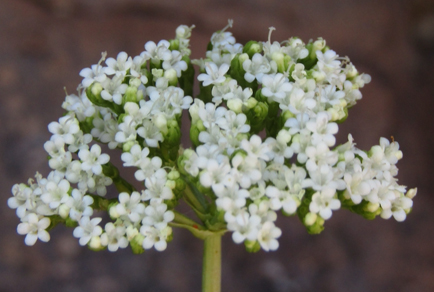
Valeriana, comprissing approximately 436 species, represents a successful evolutionary radiation within Dipsacales, with an important center of diversification in South America. In Chile, 46 species are currently recognized, 41.3% of which are endemic; two are reported as Endangered and one is probably extinct. The genus is mainly represented by herbaceous species, a calyx that is entire or modified into a pappus, a gamopetalous and pentamerous corolla, an inferior ovary, and an achene as indehiscent dry fruit. During botanical surveys in mountainous areas of Central Chile, specimens of a Valeriana restricted to crevices of steep rocky walls were found. Examination of herbarium material and relevant literature confirmed that it corresponds to a previously undescribed species, here named Valeriana umbellifera. This taxon is characterized by its perennial herbaceous habit, strictly saxicolous ecology, fleshy and glossy leaves arranged in a rosette, and a capituliform inflorescence with an umbel-like appearance. Its phylogenetic position was evaluated using molecular markers within the framework of previous analyses of Valeriana species from the southern Andes. According to IUCN criteria, we propose that the species be categorized as Endangered (EN) due to its restricted distribution, fragmented populations, and threats. The restricted distribution and ecological specialization of this new species underscore the conservation importance of rocky microhabitats in Central Chile, which are increasingly threatened by human activities.
References
- Bachman, S., Moat, J., Hill, A.W., de la Torre, J. & Scott, B. (2011) Supporting Red List threat assessments with GeoCAT: geospatial conservation assessment tool. ZooKeys 150: 117–126. https://doi.org/10.3897/zookeys.150.2109
- Bell, C.D., Kutschker, A. & Arroyo, M.T.K. (2012) Phylogeny and diversification of Valerianaceae (Dipsacales) in the southern Andes. Molecular Phylogenetics and Evolution 63 (3): 724–737. https://doi.org/10.1016/j.ympev.2012.02.015
- Ben Mahmoud, K., Mezzapesa, G.N., Abdelkefi, F. & Perrino, E.V. (2024) Nutritional value and functional properties of an underexploited Tunisian wild beet (Beta macrocarpa Guss.) in relation to soil characteristics. Euro-Mediterranean Journal for Environmental Integration 9: 705–720. https://doi.org/10.1007/s41207-024-00468-5
- Borsini, O.E. (1944) Valerianaceae. In: Descole, H.R. (Ed.) Genera et Species Plantarum Argentinarum 2. pp. 275–372.
- Borsini, O.E. (1966) Valerianáceas de Chile. Lilloa 32: 375–476.
- Briquet, J. (1914) Annuaire du Conservatoire et du Jardin Botaniques de Genève. Conservatoire Botanique Genève 17: 333.
- Cádiz-Véliz, A. (2021) Miersia putaendensis sp. nov. (Gilliesieae, Amaryllidaceae), a new species endemic to Central Chile. Phytotaxa 502 (3): 230–236. https://doi.org/10.11646/phytotaxa.502.3.2
- Cádiz-Véliz, A., Marín Román, N., Urbina-Casanova, R., García, N., Palma-Villalobos, B. & Sapaj-Aguilera, G. (2022) Rediscovery of Ivania juncalensis Al-Shehbaz (Thelypodieae; Brassicaceae), an endemic and threatened species from the Andes of Central Chile. Phytotaxa 558 (3): 276–282. https://doi.org/10.11646/phytotaxa.558.3.3
- Cádiz-Véliz, A., Palma-Villalobos, B., Villarroel, A.E. & Muñoz-Schick, M. (2023) Adiantum viscosum (Pteridaceae), a new species endemic to sclerophyllous forest of Central Chile. Phytotaxa 599: 183–192. https://doi.org/10.11646/phytotaxa.599.3.5
- Cádiz-Véliz, A., Quezada, P.N. & Moreira-Muñoz, A. (2023) Flora vascular de la cordillera de Putaendo (32° S, 70° O): Andes escasamente estudiados y amenazados de la Región de Valparaíso, Chile central. Gayana Botanica 80 (2): 158–178. [https://gayanabotanica.cl/index.php/gb/article/view/492]
- Candolle, A.P. de (1830) Prodromus systematis naturalis regni vegetabilis, sive, Enumeratio contracta ordinum generum specierumque plantarum huc usque cognitarium, juxta methodi naturalis, normas digesta. Vol. 4. Parisii: Sumptibus Sociorum Treuttel et Würtz, 683 pp. https://doi.org/10.5962/bhl.title.286
- Çelik, C. & Kırmızıbekmez, H. (2025) The genus Valeriana L.: ethnopharmacology, phytochemistry and biological activities—an updated review. Phytochemistry Reviews 24: 3337–3441. https://doi.org/10.1007/s11101-024-10061-x
- Cullings, K.W. (1992) Design and testing of a plant-specific PCR primer for ecological and evolutionary studies. Molecular Ecology 1: 233–240. https://doi.org/10.1111/j.1365-294X.1992.tb00182.x
- Doyle, J.J. & Doyle, J.L. (1987) A Rapid DNA Isolation Procedure for Small Quantities of Fresh Leaf Tissue. Phytochemical Bulletin 19: 11–15.
- Felsenstein, J. (1985) Confidence limits on phylogenies: an approach using the bootstrap. Evolution 39 (4): 783–791. https://doi.org/10.1111/j.1558-5646.1985.tb00420.x
- García, N., Cádiz-Véliz, A., Villalobos, M. & Morales, V. (2024) Taxonomic novelties in Haplopappus (Asteraceae, Astereae) from Chile. PhytoKeys 237: 201–220. https://doi.org/10.3897/phytokeys.237.114461
- García, N., Cuevas, C., Sepúlveda, J.E., Cádiz-Véliz, A. & Román, M.J. (2022) Two new species of Miersia and their phylogenetic placements alongside the recently described M. putaendensis (Gilliesieae, Allioideae, Amaryllidaceae). PhytoKeys 211: 107–126. https://doi.org/10.3897/phytokeys.211.87842
- Gay, C. (1847) Historia Física y Política de Chile. Flora de Chile 3 (2): 1–483.
- iNaturalist. (2025) Observation of Valeriana umbellifera. Available from: https://www.inaturalist.org/observations/198374652 (accessed 1 September 2025)
- IUCN (2022) Guidelines for using the IUCN Red List categories and criteria, Version 15.1. Standards and Petitions Committee. [https://www.iucnredlist.org/documents/RedListGuidelines.pdf]
- Katoh, K. & Standley, D.M. (2013) MAFFT multiple sequence alignment software version 7: improvements in performance and usability. Molecular Biology and Evolution 30 (4): 772–780. https://doi.org/10.1093/molbev/mst010
- Kozlov, A.M., Darriba, D., Flouri, T., Morel, B. & Stamatakis, A. (2019) RAxML-NG: a fast, scalable and user-friendly tool for maximum likelihood phylogenetic inference. Bioinformatics 35 (21): 4453–4455. https://doi.org/10.1093/bioinformatics/btz305
- Kutschker, A. (2008) Morfología del fruto en especies de Valeriana (Valerianaceae) de los Andes australes. Darwiniana 46 (1): 17–35. https://doi.org/10.14522/darwiniana.2014.461.287
- Kutschker, A. (2011) Revisión del género Valeriana (Valerianaceae) en Sudamérica austral. Gayana Botanica 68 (2): 244–296. https://doi.org/10.4067/S0717-66432011000200016
- Kutschker, A. & Morrone, J.J. (2012) Distributional patterns of the species of Valeriana (Valerianaceae) in southern South America. Plant Systematics and Evolution 298: 535–547. https://doi.org/10.1007/s00606-011-0564-6
- Larson, D.W., Matthes, U. & Kelly, P.E. (2000) Cliff ecology. Cambridge University Press, Cambridge, United Kingdom, 340 pp.
- Lavandero, N., Rosende, B. & Pérez, M.F. (2020) Leucheria cantillanensis (Nassauvieae, Asteraceae), a new species endemic to Central Chile. PhytoKeys 169: 99–113. https://doi.org/10.3897/phytokeys.169.57532
- Linnaeus, C. (1753) Species Plantarum, Vol. 1. Imprensis Laurentii Salvii, Stockholm, 560 pp.
- Luebert, F. & Pliscoff, P. (2017) Sinopsis Bioclimática y Vegetacional de Chile (2ª ed.). Editorial Universitaria, Santiago, 381 pp.
- March-Salas, M., Morales-Armijo, F., Hernández-Agüero, J.A., Estrada-Castillón, E., Sobrevilla-Covarrubias, A., Arévalo, J.R., Scheepens, J.F. & Lorite, J. (2023) Rock climbing affects cliff-plant communities by reducing species diversity and altering species coexistence patterns. Biodiversity and Conservation 32: 1617–1638. https://doi.org/10.1007/s10531-023-02598-5
- March-Salas, M., García, M.B., Lichter-Marck, I.H., Lorite, J. & Steinbauer, M.J. (2025) Cliff ecosystems: a critical yet uncharted frontier for research and conservation. Basic and Applied Ecology 83: 36–42. https://doi.org/10.1016/j.baae.2025.01.001
- Menegoz, K., Villarroel, A.E. & Lavandero, N. (2024) Phylogeny of Berberidopsidales based on nuclear and chloroplast loci, with the description of a new species of Berberidopsis endemic to Central Chile. Taxon 73 (3): 800–817.
- Mittermeier, R.A., Turner, W.R., Larsen, F.W., Brooks, T.M. & Gascon, C. (2011) Global biodiversity conservation: the critical role of hotspots. In: Zachos, F.E. & Habel, J.C. (Eds.) Biodiversity Hotspots. Springer, Berlin, Heidelberg, pp. 3–22. https://doi.org/10.1007/978-3-642-20992-5_1
- MMA (2023) ARClim: Atlas de riesgos climáticos. Available from: https://arclim.mma.gob.cl/ (accessed 23 July 2025)
- MMA (2025) Listado de especies clasificadas desde el 1° al 16° proceso de clasificación RCE (actualizado enero 2024). Available from: https://clasificacionespecies.mma.gob.cl (accessed 23 July 2025)
- Penneckamp, D.N. (2020) Valeriana nahuelbutae sp. nov. (Caprifoliaceae), a new endemic plant from Nahuelbuta mountain range in central-south Chile. Phytotaxa 441 (2): 217–220. https://doi.org/10.11646/phytotaxa.441.2.9
- Penneckamp, D.N., Susanna, A., Garcia-Jacas, N., Rojas, G., Mekis, L., Stuessy, T.F., Baeza, C.M., Novoa, P., Danton, P. & Perrier, C. (2022) A new species of the endemic genus Centaurodendron Johow (Asteraceae, Centaureinae) from Alejandro Selkirk Island, Juan Fernández Archipelago, Chile. Gayana Botánica 79 (1): 27–36. https://doi.org/10.4067/S0717-66432022000100027
- Perrino, E.V., Wagensommer, R.P., Mezzapesa, G.N. & Trani, A. (2024) Stachys italica Mill.: synecology, functional compounds and potential use of an Italian endemic taxon. Planta 260: 138. https://doi.org/10.1007/s00425-024-04571-3
- Philippi, R.A. (1858) Plantarum novarum Chilensium: centuria prima. Linnaea 28: 609–767. [https://www.biodiversitylibrary.org/page/115475#page/610/mode/1up]
- Philippi, R.A. (1864) Linnaea; Ein Journal für die Botanik in ihrem ganzen Umfange. Berlin 33 (1): 101. [https://www.biodiversitylibrary.org/page/118983#page/103/mode/1up]
- Philippi, R.A. (1872) Botánica: descripción de las plantas nuevas incorporadas últimamente en el herbario chileno. Anales de la Universidad de Chile 41: 663–746.
- R Core Team (2024) R: A language and environment for statistical computing. R Foundation for Statistical Computing, Vienna, Austria. [https://www.R-project.org/]
- Rafiee, F., Ejtehadi, H., Farzam, M., Zare, H. & Bashirzadeh, M. (2022) Changes in plant biodiversity facets of rocky outcrops and their surrounding rangelands across precipitation and soil gradients. Scientific Reports 12: 9022. https://doi.org/10.1038/s41598-022-13123-2
- Reiche, K. (1902) Flora de Chile, Vol. 3. Imprenta Cervantes, Santiago de Chile, pp. 211–245.
- Rodríguez, R., Marticorena, C., Alarcón, D., Baeza, C., Cavieres, L., Finot, V.L., Fuentes, N., Kiessling, A., Mihoc, M., Pauchard, A., Ruiz, E., Sánchez, P. & Marticorena, A. (2018) Catálogo de las plantas vasculares de Chile. Gayana Botanica 75 (1): 1–430. https://doi.org/10.4067/S0717-66432018000100001
- Rundel, P.W., Arroyo, M.T.K., Cowling, R.M., Keeley, J.E., Lamont, B.B. & Vargas, P. (2016) Mediterranean biomes: evolution of their vegetation, floras, and climate. Annual Review of Ecology, Evolution, and Systematics 47: 383–407. https://doi.org/10.1146/annurev-ecolsys-121415-032330
- Scherson, R.A., Thornhill, A.H., Urbina-Casanova, R., Freyman, W.A., Pliscoff, P.A. & Mishler, B.D. (2017) Spatial phylogenetics of the vascular flora of Chile. Molecular Phylogenetics and Evolution 112: 88–95. https://doi.org/10.1016/j.ympev.2017.04.021
- Smith, J.E. (1789–1791) Plantarum Icones hactenus ineditae, plerumque ad plantas in Herbario Linnaeano conservatas delineatae. Fasc. 1 (tt. 1–25), April–May 1789; Fasc. 2 (tt. 26–50), May 1790; Fasc. 3 (tt. 51–75), May–October 1791. London.
- SONAMI [Sociedad Nacional de Minería de Chile] (2025) Mapa minero de Chile. https://www.sonami.cl/mapaminero/ (Accessed 1 September 2025)
- Teillier, S., Lund, R., Zuloaga, F.O. & Biganzoli, F. (2020) Valeriana corynodes (Caprifoliaceae), nueva especie para la Flora de Chile. Darwiniana, nueva serie 8 (1): 410–413. https://doi.org/10.14522/darwiniana.2020.81.897
- Thiers, B. (2016) Index Herbariorum: A global directory of public herbaria and associated staff. New York Botanical Garden’s Virtual Herbarium. https://doi.org/10.1007/s12228-016-9423-7
- Vahl, M. (1805) Enumeratio plantarum 2. Copenhagen, Impenis auctoris, & prostat apud J.H. Schubothe.
- Villarroel, A.E., Menegoz, K. & Lavandero, N. (2021) Rayenia malalcurensis (Escalloniaceae), a new genus and species endemic to Central Chile. Phytotaxa 484 (1): 96–112. https://doi.org/10.11646/phytotaxa.484.1.4
- Villarroel, A.E., Menegoz, K., Le Quesne, C. & Moreno-González, R. (2022) Valeriana praecipitis (Caprifoliaceae), a species new to science and endemic to Central Chile. PhytoKeys 189: 81–98. https://doi.org/10.3897/phytokeys.189.73959
- Wagensommer, R.P. (2023) Floristic studies in the light of biodiversity knowledge and conservation. Plants 12 (16): 2973. https://doi.org/10.3390/plants12162973
- Wagensommer, R.P. & Venanzoni, R. (2021) Geranium lucarinii sp. nov. and re-evaluation of G. kikianum (Geraniaceae). Phytotaxa 489 (3): 252–262. https://doi.org/10.11646/phytotaxa.489.3.2
- Walpers, W.G. (1843) Novorum actorum Academiae Caesareae Leopoldino-Carolinae Germanicae Naturae Curiosorum 19 (Suppl. 1): 357.
- Walter, H.E., Cádiz-Véliz, A., Meriño, B.M., Villalobos-Barrantes, H.M. & Guerrero, P.C. (2024) Taxonomic dissection based on molecular evidence of the Eriosyce curvispina complex (Cactaceae): identifying nine endemic species from Central Chile. PhytoKeys 237: 117–146. https://doi.org/10.3897/phytokeys.237.107403
- Wang, H.X., Morales‐Briones, D.F., Moore, M.J., Wen, J. & Wang, H.F. (2021) A phylogenomic perspective on gene tree conflict and character evolution in Caprifoliaceae using target enrichment data, with Zabelioideae recognized as a new subfamily. Journal of Systematics and Evolution 59 (5): 897–914. https://doi.org/10.1111/jse.12745
- Winter, D.J. (2017) rentrez: an R package for the NCBI eUtils API. The R Journal 9 (2): 520–526. https://doi.org/10.32614/RJ-2017-058