

Abstract
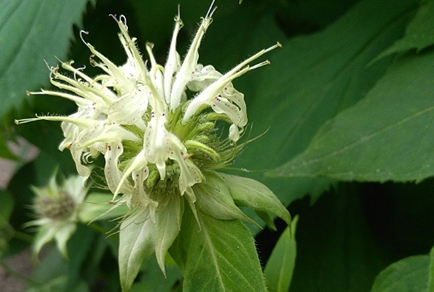
A new species of Monarda subg. Monarda is described, illustrated, and compared to its closest congeners. Monarda reedii sp. nov., from the Shale Barrens of Virginia and West Virginia, is compared to M. clinopodia, and also to M. bradburiana with which it has been confused, but from which it is distinctly different. Morphometric analyses using Principal Component Analysis are presented from forms of the variable M. clinopodia and samples of M. reedii. A map of its distribution is provided compared to sympatric populations of M. clinopodia.
References
- Alexander, P.J., Windham, M.D., Beck, J.B., Al-Shehbaz, I.A., Allphin, L. & Bailey, C.D. (2013) Molecular phylogenetics and taxonomy of the genus Boechera and related genera (Brassicaceae: Boechereae). Systematic Botany 38: 192–209. https://doi.org/10.1600/036364413X661917
- Bartgis, R.L. (1993) The limestone glades and barrens of West Virginia. Castanea 58: 69–89.
- Bebber, D.P., Carine, M.A., Wood, J.R., Wortley, A.H., Harris, D.J., Prance, G.T., Davidse, G., Paige, J., Pennington, T.D., Robson, N.K. & Scotland, R.W. (2010) Herbaria are a major frontier for species discovery. Proceedings of the National Academy of Science. U.S.A. 107: 22169–22171. https://doi.org/10.1073/pnas.1011841108
- Beck, L.C. (1826) Contributions towards the botany of the states of Illinois and Missouri. American Journal of Science, and Arts 10: 257–264.
- Braunschweig, S.H., Nilsen, E.T. & Wieboldt, T.F. (1999) The Mid-Appalachian Shale Barrens. In: Anderson, R.C., Fralish, J.S. & Baskin, J.M. (Eds.) Savannas, barrens, and rock outcrop plant communities of North America. Cambridge, Cambridge University Press, pp. 83–98. https://doi.org/10.1017/CBO9780511574627.006
- Coombs, G. (2016) Monarda for the Mid-Atlantic Region. Mt. Cuba Center, Research Report, Hockesin, Delaware, 16 pp.
- Duncan, W.H. (1959) A naturally occurring F1 hybrid of Monarda media and M. fistulosa. Rhodora 61: 302–305.
- Egler, F.E. (1973) The hybrid nature of “Monarda media Willd.” Castanea 38: 209–214.
- Fernald, M.L. (1943) Morphological differentiation of Clematis ochroleuca and allies. Rhodora 45: 401–412.
- Fleming, G.P., Patterson, K.D. & Taverna, K. (2017) The Natural Communities of Virginia: a Classification of Ecological Community Groups and Community Types. Third approximation. Version 3.0. Virginia Department of Conservation and Recreation, Division of Natural Heritage, Richmond, Virginia. Available from: http://www.dcr.virginia.gov/natural-heritage/natural-communities/ (accessed 9 November 2017)
- Floden, A. (2015) A new beebalm, Monarda austroappalachiana (Lamiaceae), from the Southern Appalachians. Phytoneuron 2015-28: 1–9.
- Fontaine, B., Perrard, A. & Bouchet, P. (2012) 21 years of shelf life between discovery and description of new species. Current Biology 22: R943–R944. https://doi.org/10.1016/j.cub.2012.10.029
- Fosberg, F.R. & Artz, L. (1953) The varieties of Monarda fistulosa L. Castanea 18: 128–130.
- Hawke, R.G. (1998) “Plant evaluation notes: Monarda and powdery mildew resistance,” Chicago Botanic Garden, 12: 1–4. Available from: https://www.chicagobotanic.org/downloads/planteval_notes/no12_monarda.pdf (accessed 11 November 2024)
- iNaturalist. (2025) iNaturalist. Available from: https://www.inaturalist.org (accessed 1 October 2025)
- IUCN. (2017) The IUCN Red List of Threatened Species. Version 2017-2. Available from: http://www.iucnredlist.org (accessed 14 September 2017)
- Keener, C.S. (1983) Distribution and biohistory of the endemic flora of the Mid-Appalachian shale barrens. The Botanical Review 49: 65–115. https://doi.org/10.1007/BF02861009
- Keener, C.S. (1967) A biosystemic study of Clematis subsection Integrifoliae (Ranunculaceae). Journal of the Elisha Mitchell Scientific Society 83: 19–38.
- Kimball, R.T., Crawford, D.J., Page, J.R. & Harmon, P.J. (2001) Inter-simple sequence repeat (ISSR) diversity within Monarda fistulosa var. brevis (Lamiaceae) and divergence between var. brevis and var. fistulosa in West Virginia. Brittonia 53: 511–518. https://doi.org/10.1007/BF02809651
- Lawson, S.K., Prabodh, S. & Setzer, W.N. (2021) The volatile phytochemistry of Monarda species growing in south Alabama. Plants 10: 482. https://doi.org/10.3390/plants10030482
- Linnaeus, C. (1753) Species Plantarum 1. Salvius, Stockholm, 560 pp.
- McClintock, E. & Epling, C. (1942) A review of the genus Monarda (Labiatae). University of California Publications in Botany 20: 147–194.
- NatureServe. (2022) NatureServe Explorer: An online encyclopedia of life [web application]. Version 7.1. NatureServe, Arlington, Virginia. Available from: http://explorer.natureserve.org (accessed 14 September 2022)
- Prather, L.A. & Keith, J.A. (2003) Monarda humilis (Lamiaceae), a new combination for a species from New Mexico, and a key to the species of section Cheilyctis. Novon 13: 104–109. https://doi.org/10.2307/3393572
- Prather, L.A., Monfils, A.K., Posto, A.L. & Williams, R.A. (2002) Monophyly and phylogeny of Monarda (Lamiaceae): Evidence from the internal transcribed spacer (ITS) region of nuclear ribosomal DNA. Systematic Botany 27: 127–137.
- Rafinesque, C.S. (1830) Medical Flora 2. Samuel C. Atkinson, Philadelphia, Pennsylvania, 764 pp.
- Scora, R.W. (1967) Interspecific relationships in the genus Monarda (Labiatae). University of California Publications in Botany 41: 1–71.
- Scora, R.W. (1966) The evolution of the genus Monarda (Labitae). Evolution 20: 185–190. https://doi.org/10.1111/j.1558-5646.1966.tb03354.x
- Sims, J. (1824) Botanical Magazine 51: pl. 2513.
- Singhurst, J.R. & Holmes, W.C. (2011) Monarda luteola (Lamiaceae): A new species from northeast Texas and southwest Arkansas. Phytoneuron 2011-41: 1–5.
- Steele, E.S. (1911) New or noteworthy plants from the eastern United States. Contributions from the United States National Herbarium 13: 359–374.
- Turner, B.L. (1994) Taxonomic treatment of Monarda (Lamiaceae) for Texas and Mexico. Phytologia 77: 56–79. https://doi.org/10.5962/bhl.part.5571
- Vanderhorst, J.P., Jeuck, J. & Gawler, S.C. (2007) Vegetation Classification and Mapping of New River Gorge National River, West Virginia. Technical Report NPS/NER/NRTR—2007/092. National Park Service, Philadelphia, PA.
- Virginia Botanical Associates. (2022) Digital atlas of the Virginia flora. Available from: http://www.vaplantatlas.org (accessed 14 October 2022)
- Waterfall, U.T. (1970) Monarda stipitatoglandulosa, a new species from Oklahoma. Rhodora 72: 502–504.
- Weakley, A.S. (2015) Flora of the southern and mid-Atlantic States, working draft of May 2015. University of North Carolina Herbarium, N.C. Botanical Garden, Chapel Hill, North Carolina.
- Weakley, A.S., Ludwig, J.C. & Townsend, J.F. (2012) The Flora of Virginia. Foundation of the flora of Virginia Project Inc., Richmond, Fort Worth: Botanical Research Institute of Texas Press, Ft. Worth, Texas, 1554 pp.
- Weakley, A.S., Poindexter, D.B., Leblond, R.J., Sorrie, B.A., Karlsson, C.H., Williams, P.J., Bridges, E.L., Orzell, S.L., Keener, B.R., Weeks, A., Noyes, R.D., Cruz, M.F., Diggs, J.T., Gann, G.D. & Floden, A.J. (2017) New combinations, rank changes, and nomenclatural and taxonomic comments in the vascular flora of the Southeastern United States II. Journal of the Botanical Research Institute of Texas 11: 289–323. https://doi.org/10.17348/jbrit.v11.i2.1071
- Wherry, E.T. (1930) A long lost Phlox. Journal of the Washington Academy Sciences 20: 25–28.
- Wherry, E.T. (1931) The eastern short-stemmed leather-flowers. Journal of the Washington Academy of Science 21: 194–198. https://doi.org/10.1007/978-1-4684-6222-7_21
- Whitten, W.M. (1981) Pollination ecology of Monarda didyma, M. clinopodia, and hybrids (Lamiaceae) in the southern Appalachian mountains. American Journal of Botany 68: 435–442. https://doi.org/10.1002/j.1537-2197.1981.tb06382.x