
Abstract
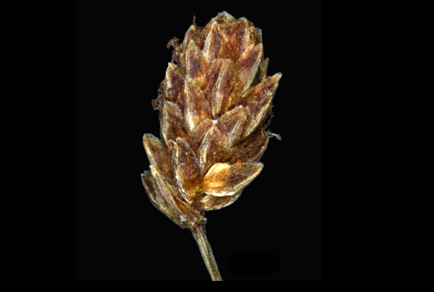
Bulbostylis tenella is a rare micro-endemic species, previously known only from the type collection. The last report of the species has appeared in the literature only through a nomenclatural combination published by C.B. Clarke in 1908, and the lack of available material led to it being overlooked in all subsequent studies. Here, we report the rediscovery of B. tenella, 117 years after its last citation in the literature, and provide a detailed description, lectotypification, conservation assessment, photographs, and a distribution map of the species.
References
- Bachman, S., Moat, J., Hill, A.W., De La Torre, J. & Scott, B. (2011) Supporting Red List threat assessments with GeoCAT: geospatial conservation assessment tool. ZooKeys 150: 117–126. https://doi.org/10.3897/zookeys.150.2109
- Biodiversity Heritage Library (2025) Bulletin of miscellaneous information. Additional Series 8: 28. Available from: https://www.biodiversitylibrary.org/page/33599991#page/32/mode/1up (accessed 5 January 2025)
- Brockway, L.H. (1979) Science and colonial expansion: The role of the British Royal Botanic Gardens. American Ethnologist 6: 449–465. https://doi.org/10.1525/ae.1979.6.3.02a00030
- Clarke, C.B. (1908) New genera and species of Cyperaceae. Bulletin of Miscellaneous Information, Royal Gardens, Kew. Additional Series 8: 28.
- Fearnside, P.M. (2016) Environmental and social impacts of hydroelectric dams in Brazilian Amazonia: Implications for the aluminum industry. World development 77: 48–65. https://doi.org/10.1016/j.worlddev.2015.08.015
- Funk, V.A., Richardson, K.S. & Ferrier, S. (2005) Survey-gap analysis in expeditionary research: Where do we go from here? Biological Journal of the Linnean Society 85: 549–567. https://doi.org/10.1111/j.1095-8312.2005.00520.x
- Gauthier, C. & Moran, E.F. (2018) Public policy implementation and basic sanitation issues associated with hydroelectric projects in the Brazilian Amazon: Altamira and the Belo Monte dam. Geoforum 97: 10–21. https://doi.org/10.1016/j.geoforum.2018.10.001
- Hoffmannsegg, J.C. Von & Link, H.F. (1809) Flore portugaise ou description de toutes les plantes qui croissent naturellement en Portugal. Berlin: Chez L’Auteur.
- International Plant Names Index (2025) Published on the Internet. The Royal Botanic Gardens, Kew, Harvard University Herbaria & Libraries and Australian National Herbarium. Available from: http://www.ipni.org (accessed 19 March 2025)
- IUCN Standards and Petitions Committee (2024) Guidelines for Using the IUCN Red List Categories and Criteria. Version 16. Prepared by the Standards and Petitions Committee. [https://www.iucnredlist.org/resources/redlistguidelines]
- JSTOR Global Plants (2025) Available from: http://plants.jstor.org/ (accessed 5 January 2025)
- Kunth, K.S. (1837) Enumeratio Plantarum Omnium Hucusque Cognitarum, vol. 2. pp. 592.
- Link, J.H.F. (1820) Jahrbücher der Gewächskunde, vol. 1 (3). pp. 80.
- Maciel-Silva, J.F., Prata, A.P.N., López, M.G. & Gil, A.S.B. (2022) Bulbostylis litoreamazonicola, a new species of Cyperaceae from the Brazilian Amazonian coast. Phytotaxa 530: 189–197. https://doi.org/10.11646/phytotaxa.530.2.5
- Martius (1837) Herbarium florae Brasiliensis. In: Beiblätter zur allgemeinen botanischen Zeitung 2. Leipzig.
- Nees, C.G. (1842) Cyperaceae. In: Martius, C.F. (Ed.) Flora Brasiliensis, enumeratio plantarum in Brasilia hactenus detectarum: quas suis aliorumque botanicorum studiis descriptas et methodo naturali digestas partim icone illustratas. Leipizig: München, pp. 1–226.
- Pataca, J.A. & Pinheiro, J.C. (2005) Museus de História Natural e Império: Coleções e Colecionadores no Brasil Imperial. Revista Brasileira de História da Ciência 1: 1–22.
- POWO (2025) Plants of the World Online. Facilitated by the Royal Botanic Gardens, Kew. Published on the Internet. Available from: https://powo.science.kew.org/ (accessed 10 December 2025)
- QGIS Development Team (2024) QGIS Geographic Information System (Version 3.40 “Bratislava”) [Software]. Open Source Geospatial Foundation. [https://qgis.org]
- Sioli, H. (1949) O rio Cupari I: topografia e hidrografia. Boletim Técnico do Instituto Agronômico do Norte 17: 1–49.
- Schlothauer, A. (2019) Kunstkammer Berlin. Kunst & Kontext 17: 84–96.
- Stresemann, E. (1950) Die brasilianischen Vogelsammlungen des Grafen von Hoffmannsegg aus den Jahren 1800-1812. Bonner zoologische Beiträge 1: 43–51; 2: 126–143.
- Stresemann, E. (1953) On a Collection of Birds from Georgia and Carolina Made about 1810 by John Abbot. The Auk 70: 113–117. https://doi.org/10.2307/4081141
- Thiers, B.M. (2025) Index herbariorum: a global directory of public herbaria and associated staff. New York Botanical Garden’s virtual herbarium. [http://sweetgum.nybg.org/science/ih/]
- Turland, N.J., Wiersema, J.H., Barrie, F.R., Greuter, W., Hawksworth, D.L., Herendeen, P.S., Knapp, S., Kusber, W.H., Li, D.Z., Marhold, K., May, T.W., Mcneill, J., Monro, A.M., Prado, J., Price, M.J. & Smith, G.F. (Eds.) (2018) International Code of Nomenclature for algae, fungi, and plants (Shenzhen Code). Regnum Vegetabile 159. Koeltz Botanical Books, Glashütten. https://doi.org/10.12705/Code.2018
- Velastegui-Montoya, A., Lima, A. & Adami, M. (2020) Multitemporal analysis of deforestation in response to the construction of the Tucuruí Dam. ISPRS International Journal of Geo-Information 9: 583. https://doi.org/10.3390/ijgi9100583