

Abstract
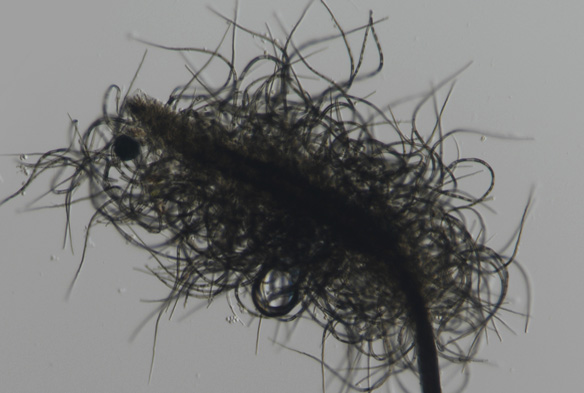
Cephalotrichum (Microascaceae) is a diverse genus with 72 currently recognized species found worldwide. It is characterized by the formation of dry-spores, indeterminate synnemata and enteroblastic percurrent conidiogenesis. Species of Cephalotrichum are endophytes, saprobes, and opportunistic pathogens in animals or humans. A strain of Cephalotrichum telluricum was isolated from the dung of a Guinea pig in Thailand. Maximum likelihood and Bayesian inference analysis of the combined internal transcribed spacer (ITS), large-subunit rDNA (LSU), elongation factor-1 alpha (tef1-α) and beta tubulin (tub2) sequence data revealed that the new isolate clustered with the ex-type of C. telluricum. Based on morphological and multigene phylogenetic evidence, we introduce the new strain as C. telluricum (MFLUCC 25-0237), report a novel host and geographical record from Guinea Pig dung, in northern Thailand.
References
- Abbott, S.P. (2000) Holomorph studies of the Microascaceae. Ph.D. dissertation. Department of Biological Sciences, University of Alberta, Canada.
- Abreu, R., Pereira, S., Ramos, A., Cunha, E., Reisinho, A., Marques, T. & Oliveira, M. (2020) Pet Rabbits (Oryctolagus Cuniculus) and Guinea Pigs (Cavia Porcellus) are Vehicles of Pathogenic and Allergenic Fungi. Journal of Microbiology 1–19. https://doi.org/10.21203/rs.3.rs-128988/v1
- Álvarez-Uría, A., Escribano, P., Parra-Blanco, V., Cano-Lira, J.F., Stchigel, A.M., Oarbeascoa, G. & Guinea, J. (2021) First report of an invasive infection by Cephalotrichum gorgonifer in a neutropenic patient with hematological malignancy under chemotherapy. Journal of Fungi 7: 1089. https://doi.org/10.3390/jof7121089
- Bell, A. (1983) Dung fungi: an illustrated guide to coprophilous fungi in New Zealand. A Bell, Victoria University Press.
- Bhunjun, C.S., Phukhamsakda, C., Hyde, K.D., McKenzie, E.H. & Saxena, R.K. (2024) Do all fungi have ancestors with endophytic lifestyles? Fungal Diversity 125: 73–98. https://doi.org/10.1007/s13225-023-00516-5
- Bills, G.F. & Gloer, J.B. (2016) Biologically active secondary metabolites from the fungi. Microbiology spectrum 4: 10–1128. https://doi.org/10.1128/microbiolspec.FUNK-0009-2016
- Bills, G., Martín, J., Collado, J., Platas, G., Overy, D., Tormo, J.R. & Crous, P.W. (2009) Measuring the distribution and diversity of antibiosis and secondary metabolites in filamentous fungi. SIMB News 133–147.
- Cai, L., Jeewon, R. & Hyde, K.D. (2006) Molecular systematics of Zopfiella and allied genera: evidence from multi-gene sequence analyses. Mycological Research 110: 359–368. https://doi.org/10.1016/j.mycres.2006.01.007
- Capella-Gutiérrez, S., Silla-Martínez, J.M. & Gabaldón, T. (2009) trimAl: a tool for automated alignment trimming in large-scale phylogenetic analyses. Bioinformatics 25: 1972–1973. https://doi.org/10.1093/bioinformatics/btp348
- Chaiwan, N., Gomdola, D., Wang, S., Monkai, J., Tibpromma, S., Doilom, M., Wanasinghe, D.N., Mortimer, P.E., Lumyong, S. & Hyde, K.D. (2021) An online database providing updated information of microfungi in the Greater Mekong Subregion. Mycosphere 12: 1513–1526. https://doi.org/10.5943/mycosphere/12/1/19
- Corda, A.C.J. (1829) In Sturn, J. Deutschlands Flora Abt. III. Die Pilze Deutschlands 2: 1–136.
- Das, K., You, Y.H., Lee, S.Y. & Jung, H.Y. (2020) A new species of Thelonectria and a new record of Cephalotrichum hinnuleum from Gunwi and Ulleungdo in Korea. Mycobiology 48: 341–350. https://doi.org/10.1080/12298093.2020.1807454
- Domsch, K.H., Gams, W. & Anderson, T.H. (2007) Compendium of soil fungi, 2nd edn. IHW Verlag, Eching, Germany.
- Doveri, F. (2004) Fungi Fimicoli Italici. Associazione Micologica Bresadola, Trento, Italy, 1104 pp.
- Hall, T.A. (1999) BioEdit: A user-friendly biological sequence alignment editor and analysis program for Windows 95/98/NT. Nucleic Acids Symposium Series 1: 95–98.
- Hyde, K.D., Noorabadi, M.T., Thiyagaraja, V., He, M.Q., Johnston, P.R., Wijesinghe, S.N., Armand, A., Biketova, A.Y., Chethana, K.W.T., Erdoğdu, M., Ge, Z.W., Groenewald, J.Z., Hongsanan, S., Kušan, I., Leontyev, D.V., Li, D.W., Lin, C.G., Liu, N.G., Maharachchikumbura, S.S.N., Matočec, N., May, T.W., McKenzie, E.H.C., Mešić, A., Perera, R.H., Phukhamsakda, C., Piątek, M., Samarakoon, M.C., Selcuk, F., Senanayake, I.C., Tanney, J.B., Tian, Q., Vizzini, A., Wanasinghe, D.N., Wannasawang, N., Wijayawardene, N.N., Zhao, R.L., Abdel-Wahab, M.A., Abdollahzadeh, J., Abeywickrama, P.D., Abhinav, Absalan, S., Acharya, K., Afshari, N., Afshan, N.S., Afzalinia, S., Ahmadpour, S.A., Akulov, O., Alizadeh, A., Alizadeh, M., Al-Sadi, A.M., Alves, A., Alves, V.C.S., Alves-Silva, G., Antonín, V., Aouali, S., Aptroot, A., Apurillo, C.C.S., Arias, R.M., Asgari, B., Asghari, R., Assis, D.M.A., Assyov, B., Atienza, V., Aumentado, H.D.R., Avasthi, S., Azevedo, E., Bakhshi, M., Bao, D.F., Baral, H.O., Barata, M., Barbosa, K.D., Barbosa, R.N., Barbosa, F.R., Baroncelli, R., Barreto, G.G., Baschien, C., Bennett, R.M., Bera, I., Bezerra, J.D.P., Bhunjun, C.S., Bianchinotti, M.V., Błaszkowski, J., Boekhout, T., Bonito, G.M., Boonmee, S., Boonyuen, N., Bortnikov, F.M., Bregant, C., Bundhun, D., Burgaud, G., Buyck, B., Caeiro, M.F., Cabarroi-Hernández, M., Cai M Feng, Cai, L,, Calabon, M.S., Calaça, F.J.S., Callalli, M., Câmara, M.P.S., Cano-Lira, J., Cao, B., Carlavilla, J.R., Carvalho, A., Carvalho, T.G., Castañeda-Ruiz, R.F., Catania, M.D.V., Cazabonne, J., Cedeño-Sanchez, M., Chaharmiri-Dokhaharani, S., Chaiwan, N., Chakraborty, N., Cheewankoon, R., Chen, C., Chen, J., Chen, Q., Chen, Y.P., Chinaglia, S., Coelho-Nascimento, C.C., Coleine, C., CostaRezende, D.H., Cortés-Pérez, A., Crouch, J.A., Crous, P.W., Cruz, R.H.S.F., Czachura, P., Damm, U., Darmostuk, V., Daroodi, Z., Das, K., Das, K., Davoodian, N., Davydov, E.A., da Silva, G.A., da Silva, I.R., da Silva, R.M.F., da Silva, Santos, A.C., Dai, D,Q,, Dai, Y.C., de Groot Michiel, D., De Kesel, A., De Lange, R., de Medeiros, E.V., de Souza, C.F.A., de Souza, F.A., dela Cruz, T.E.E., Decock, C., Delgado, G., Denchev, C.M., Denchev, T.T., Deng, Y.L., Dentinger, B.T.M., Devadatha, B., Dianese, J.C., Dima, B., Doilom, M., Dissanayake, A.J., Dissanayake, D.M.L.S., Dissanayake, L.S., Diniz, A.G., Dolatabadi, S., Dong, J.H., Dong, W., Dong, Z.Y., Drechsler-Santos, E.R., Druzhinina, I.S., Du, T.Y., Dubey, M.K., Dutta, A.K., Elliott, T.F., Elshahed, M.S., Egidi, E., Eisvand, P., Fan, L., Fan, X., Fan, X.L., Fedosova, A.G., Ferro, L.O., Fiuza, P.O., Flakus, A.W., Fonseca, E.O., Fryar, S.C., Gabaldón, T., Gajanayake, A.J., Gannibal, P.B., Gao, F., GarcíaSánchez, D., García-Sandoval, R., Garrido-Benavent, I., Garzoli, L., Gasca-Pineda, J., Gautam, A.K., Gené, J., Ghobad-Nejhad, M., Ghosh, A., Giachini, A.J., Gibertoni, T.B., Gentekaki, E., Gmoshinskiy, V.I., GóesNeto, A., Gomdola, D., Gorjón, S.P., Goto, B.T., Granados-Montero, M.M., Griffith, G.W., Groenewald, M., Grossart, H.P., Gu, Z.R., Gueidan, C., Gunarathne, A., Gunaseelan, S., Guo, S.L., Gusmão, L.F.P., Gutierrez, A.C., Guzmán-Dávalos, L., Haelewaters, D., Haituk, H., Halling, R.E., He, S.C., Heredia, G., HernándezRestrepo, M., Hosoya, T., Hoog, S.D., Horak, E., Hou, C.L., Houbraken, J., Htet, Z.H., Huang, S.K., Huang, W.J., Hurdeal, V.G., Hustad, V.P., Inácio, C.A., Janik, P., Jayalal, R.G.U., Jayasiri, S.C., Jayawardena, R.S., Jeewon, R., Jerônimo, G.H., Jin, J., Jones, E.B.G., Joshi, Y., Jurjević, Ž., Justo, A,, Kakishima, M., Kaliyaperumal, M., Kang, G.P., Kang, J.C., Karimi, O., Karunarathna, S.C., Karpov, S.A., Kezo, K., Khalid, A.N., Khan, M,K,, Khuna, S., Khyaju, S., Kirchmair, M., Klawonn, I., Kraisitudomsook, N., Kukwa, M., Kularathnage, N.D., Kumar, S., Lachance, M.A., Lado, C., Latha, K.P.D., Lee, H.B., Leonardi, M., Lestari, A.S., Li, C., Li, H., Li, J., Li, Q., Li, Y., Li, Y.C., Li, Y.X., Liao, C.F., Lima, J.L.R., Lima, J.M.S., Lima, N.B., Lin, L., Linaldeddu, B.T., Linn, M.M., Liu, F., Liu, J.K., Liu, J.W, Liu, S., Liu, S.L., Liu, X.F., Liu, X.Y., Longcore, J.E., Luangharn, T., Luangsa-ard, J.J., Lu, L., Lu, Y.Z., Lumbsch, H.T., Luo, L., Luo, M., Luo, Z.L., Ma, J., Madagammana, A.D., Madhushan, A., Madrid, H., Magurno, F., Magyar, D., Mahadevakumar, S., Malossom, E., Malysh, J.M., Mamarabadi, M., Manawasinghe, I.S., Manfrino, R.G., Manimohan, P., Mao, N., Mapook, A., Marchese, P., Marasinghe, D.S., Mardones, M., Marin-Felix, Y., Masigol, H., Mehrabi, M., MehrabiKoushki, M., Meiras-Ottoni, A., de Melo, R.F.R., Mendes-Alvarenga, R.L., Mendieta, S., Meng, Q.F., Menkis, A., Menolli, J.N., Mikšík, M., Miller, S.L., Moncada, B., Moncalvo, J.M., Monteiro, J.S., Monteiro, M., Mora-Montes, H.M., Moroz, E.L., Moura, J.C., Muhammad, U., Mukhopadhyay, S., Nagy, G.L., Najam, ul Sehar, A., Najafiniya, M., Nanayakkara, C.M., Naseer, A., Nascimento, E.C.R., Nascimento, S.S., Neuhauser, S., Neves, M.A., Niazi, A.R., Nie, Yong, Nilsson, R.H., Nogueira, P.T.S., Novozhilov, Y.K., Noordeloos, M., Norphanphoun, C., Nuñez Otaño, N., O’Donnell, R.P., Oehl, F., Oliveira, J.A., Oliveira, Junior, I., Oliveira, N.V.L., Oliveira, P.H.F., Orihara, T., Oset, M., Pang, K.L., Papp, V., Pathirana, L.S., Peintner, U., Pem, D., Pereira, O.L., Pérez-Moreno, J., Pérez-Ortega, S., Péter, G., Pires-Zottarelli, C.L.A., Phonemany, M., Phongeun, S., Pošta, A., Prazeres, J.F.S.A., Quan, Y., Quandt, C.A., Queiroz, M.B., Radek, R., Rahnama, K., Raj, K.N.A., Rajeshkumar, K.C., Rajwar Soumyadeep, Ralaiveloarisoa, A.B., Rämä, T., Ramírez-Cruz, V., Rambold, G., Rathnayaka, A.R., Raza, M., Ren, G.C., Rinaldi, A.C., Rivas-Ferreiro, M., Robledo, G.L., Ronikier, A., Rossi, W., Rusevska, K., Ryberg, M., Safi, A., Salimi, F., Salvador-Montoya, C.A., Samant, B., Samaradiwakara, N.P., Sánchez-Castro, I., Sandoval-Denis, M., Santiago, A.L.C.M.A., Santos, A.C.D.S., Santos, L.A. dos, Sarma, V.V., Sarwar, S.. Savchenko, A., Savchenko, K., Saxena, R.K. & Schoutteten, N. (2024) The 2024 Outline of Fungi and fungus-like taxa. Mycosphere 15: 5146–6239. https://doi.org/10.5943/mycosphere/15/1/25
- Index Fungorum (2025) Available from: https://www.indexfungorum.org/names/Names.asp (accessed 12 January 2025)
- Jeamjitt, O., Manoch, L., Visarathanonth, N. & Chamswarng, C. (2006) Diversity and distribution of hyphomycetes from dung in Thailand. Agriculture and Natural Resources 40: 890–901.
- Jiang, J.R., Cai, L. & Liu, F. (2017) Oligotrophic fungi from a carbonate cave, with three new species of Cephalotrichum. Mycology 8: 164–177. https://doi.org/10.1080/21501203.2017.1366370
- Lackner, M., Sybren de Hoog, G., Yang, L., Moreno, L.F., Ahmed, S.A., Andreas, F., Kaltseis, J., Nagl, M., Lass-Flörl, C., Risslegger, B., Rambach, G., Speth, C., Robert, V., Buzina, W., Chen, S., Bouchara, J.P., Cano-Lira, J.F., Guarro, J., Gené, J., Silva, F.F., Haido, R., Haase, G., Havlicek, V., Garcia-Hermoso, D., Meis, J.F., Hagen, F., Kirchmair, M., Rainer, J., Schwabenbauer, K., Zoderer, M., Meyer, W., Gilgado, F., Schwabenbauer, K., Vicente, V.A., Piecková, E., Regenermel, M., Rath, P.M., Steinmann, J., de Alencar, X.W., Symoens, F., Tintelnot, K., Ulfig, K., Velegraki, A., Tortorano, A.M., Giraud, S., Mina, S., Hohenwarter, K.R., Hernando, F.L., Ramirez-Garcia, A., Pellon, A., Kaur, J., Bergter, E.B., de Meirelles, J.V., da Silva, I.D. & Delhaes, L. (2014) Proposed nomenclature for Pseudallescheria, Scedosporium and related genera. Fungal Diversity 67: 1–10. https://doi.org/10.1007/s13225-014-0295-4
- Li, X.L., Ojaghian, M.R., Zhang, J.Z. & Zhu, S.J. (2017) A new species of Scopulariopsis and its synergistic effect on pathogenicity of Verticillium dahliae on cotton plants. Microbiological research 201: 12–20. https://doi.org/10.1016/j.micres.2017.04.006
- Link, H.F. (1809) Observationes in ordines plantarum naturales. Berlinische Magazin 1: 1–33.
- Liu, N.G., Hyde, K.D., Sun, Y.R., Bhat, D.J., Jones, E.G., Jumpathong, J., Lin, C.G., Lu, Y.Z., Yang, J., Liu, L.L. & Liu, Z.Y. (2024) Notes, outline, taxonomy and phylogeny of brown-spored hyphomycetes. Fungal Diversity 129: 1–281. https://doi.org/10.1007/s13225-024-00539-6
- Lokare, P. & Fatima, S. (2020) Study of diversity of coprophilous fungi from selected dung sample. Research Interventions and Advancements in Plant Sciences 259.
- Lord, E., Collins, C., deFrance, S., LeFebvre, M.J., Pigière, F., Eeckhout, P., Erauw, C., Fitzpatrick, S.M., Healy, P.F., Martínez-Polanco, M.F. & Garcia, J.L. (2020) Ancient DNA of guinea pigs (Cavia spp.) indicates a probable new center of domestication and pathways of global distribution. Scientific reports 10: 8901. https://doi.org/10.1038/s41598-020-65784-6
- Malloch, D. (1970) New concepts in the Microascaceae illustrated by two new species. Mycologia 62: 727–740. https://doi.org/10.1080/00275514.1970.12019019
- Mamaghani, N.A., Saremi, H., Javan-Nikkhah, M., De Respinis, S., Pianta, E. & Tonolla, M. (2022) Endophytic Cephalotrichum spp. from Solanum tuberosum (potato) in Iran–a polyphasic analysis. Sydowia 74: 287–301. https://doi.org/10.12905/0380.sydowia74-2022-0287
- Manoch, L., Chana, C. & Athipunyakom, P. (1999) Diversity of coprophilous fungi in Thailand. In: Proceedings of the International Conference on Asean Network on Microbial Research. Chiang Mai, Thailand, pp. 675–688.
- Mhmoud, N.A., Siddig, E.E., Nyuykonge, B., Bakhiet, S.M., van de Sande, W.W. & Fahal, A.H. (2021) Mycetoma caused by Microascus gracilis: a novel agent of human eumycetoma in Sudan. Transactions of The Royal Society of Tropical Medicine and Hygiene 115: 426–430. https://doi.org/10.1093/trstmh/trab010
- Miller, M.A., Pfeiffer, W. & Schwartz, T. (2010) Creating the CIPRES Science Gateway for inference of large phylogenetic trees. In: 2010 Gateway Computing Environments Workshop (GCE). Presented at the 2010 Gateway Computing Environments Workshop (GCE), IEEE, New Orleans, LA, USA. 1–8. https://doi.org/10.1109/GCE.2010.5676129
- Miossec, C., Morio, F., Lepoivre, T., Le Pape, P., Garcia-Hermoso, D., Gay-Andrieu, F., Haloun, A., Treilhaud, M., Leclair, F. & Miegeville, M. (2011) Fatal invasive infection with fungemia due to Microascus cirrosus after heart and lung transplantation in a patient with cystic fibrosis. Journal of Clinical Microbiology 49: 2743–2747. https://doi.org/10.1128/JCM.00127-11
- Mohammedi, I., Piens, M.A., Audigier-Valette, C., Gantier, J.C., Argaud, L., Martin, O. & Robert, D. (2004) Fatal Microascus trigonosporus (anamorph Scopulariopsis) pneumonia in a bone marrow transplant recipient. European Journal of Clinical Microbiology and Infectious Diseases 23: 215–217. https://doi.org/10.1007/s10096-003-1096-y
- Morton, F.J. & Smith, G. (1963) The genera Scopulariopsis bainier, Microascus zukal and Doratomyces corda. Mycological papers 86: 1–96.
- National Research Council, Committee on Animal Nutrition & Subcommittee on Laboratory Animal Nutrition. (1995) Nutrient requirements of laboratory animals. National Research Council (US) Subcommittee on Laboratory Animal Nutrition. Washington, 4th edn, National Academies Press (US).
- Nguyen, L.T., Schmidt, H.A., Von Haeseler, A. & Minh, B.Q. (2015) IQ-TREE: a fast and effective stochastic algorithm for estimating maximum-likelihood phylogenies. Molecular biology and evolution 32: 268–274. https://doi.org/10.1093/molbev/msu300
- Peterson, R., Grinyer, J. & Nevalainen, H. (2011) Secretome of the coprophilous fungus Doratomyces stemonitis C8, isolated from koala feces. Applied and environmental microbiology 77: 3793–3801. https://doi.org/10.1128/AEM.00252-11
- Rehner, S.A. & Buckley, E. (2005) A Beauveria phylogeny inferred from nuclear ITS and EF1-α sequences: evidence for cryptic diversification and links to Cordyceps teleomorphs. Mycologia 97: 84–98. https://doi.org/10.1080/15572536.2006.11832842
- Richardson, M.J. & Watling, R. (1997) Keys to Fungi on Dung. Stourbridge, UK: British Mycological Society.
- Richardson, M.J. (2001) Diversity and occurrence of coprophilous fungi. Mycological Research 105: 387–402. https://doi.org/10.1017/S0953756201003884
- Ronquist, F., Teslenko, M., Van Der Mark, P., Ayres, D.L., Darling, A., Höhna, S., Larget, B., Liu, L. & Huelsenbeck, J.P. (2012) MrBayes 3.2: efficient Bayesian phylogenetic inference and model choice across a large model space. Systematic biology 61: 539–542. https://doi.org/10.1093/sysbio/sys029
- Sandoval-Denis, M., Gené, J., Sutton, D.A., Cano-Lira, J.F., De Hoog, G.S., Decock, C.A., Wiederhold, N.P. & Guarro, J. (2016a) Redefining Microascus, Scopulariopsis and allied genera. Persoonia-molecular phylogeny and evolution of fungi 36: 1–36. https://doi.org/10.3767/003158516X688027
- Sandoval-Denis, M., Guarro, J., Cano-Lira, J.F., Sutton, D.A., Wiederhold, N.P., De Hoog, G.S., Abbott, S.P., Decock, C., Sigler, L. & Gené, J. (2016b) Phylogeny and taxonomic revision of Microascaceae with emphasis on synnematous fungi. Studies in Mycology 83: 193–233. https://doi.org/10.1016/j.simyco.2016.07.002
- Sandoval-Denis, M., Sutton, D.A., Fothergill, A.W., Cano-Lira, J., Gené, J., Decock, C.A., De Hoog, G.S. & Guarro, J. (2013) Scopulariopsis, a poorly known opportunistic fungus: spectrum of species in clinical samples and in vitro responses to antifungal drugs. Journal of Clinical Microbiology 51: 3937–3943. https://doi.org/10.1128/JCM.01927-13
- Senanayake, I.C., Rathnayaka, A.R., Marasinghe, D.S., Calabon, M.S., Gentekaki, E., Lee, H.B., Hurdeal, V.G., Pem, D., Dissanayake, L.S. & Wijesinghe, S.N. (2020) Morphological approaches in studying fungi: collection, examination, isolation, sporulation and preservation. Mycosphere 11: 2678–2754. https://doi.org/10.5943/mycosphere/11/1/20
- Shao, C.L., Xu, R.F., Wang, C.Y., Qian, P.Y., Wang, K.L. & Wei, M.Y. (2015) Potent antifouling marine dihydroquinolin-2 (1 H)-one-containing alkaloids from the gorgonian coral-derived fungus Scopulariopsis sp. Marine Biotechnology 17: 408–415. https://doi.org/10.1007/s10126-015-9628-x
- Skóra, M., Bulanda, M. & Jagielski, T. (2015) In vitro activities of a wide panel of antifungal drugs against various Scopulariopsis and Microascus species. Antimicrobial agents and chemotherapy 59: 5827–5829. https://doi.org/10.1128/AAC.00978-15
- Somrithipol, S., Jones, E., Tantichareon, M. & Hyde, K.D. (2004) Coprophilous fungi. In: Thai fungal diversity. Biotec, Thailand, pp. 119–128.
- Sande, W.V.D., Fahal, A., Verbrugh, H. & Belkum, A.V. (2007) Polymorphisms in genes involved in innate immunity predispose toward mycetoma susceptibility. The Journal of Immunology 179: 3065–3074. https://doi.org/10.4049/jimmunol.179.5.3065
- Thilagam, L., Nayak, B.K. & Nanda, A. (2015) Isolation and enumeration of saprophytic and coprophilous fungi from country cow dung. Journal of Chemical and Pharmaceutical Research 7: 474–477.
- Vilgalys, R. & Hester, M. (1990) Rapid genetic identification and mapping of enzymatically amplified ribosomal DNA from several Cryptococcus species. Journal of bacteriology 172: 4238–4246. https://doi.org/10.1128/jb.172.8.4238-4246.1990
- White, T.J., Bruns, T., Lee, S.J.W.T. & Taylor, J. (1990) Amplification and direct sequencing of fungal ribosomal RNA genes for phylogenetics. PCR protocols: a guide to methods and applications 18: 315–322. https://doi.org/10.1016/B978-0-12-372180-8.50042-1
- Woudenberg, J.H.C., Meijer, M., Houbraken, J. & Samson, R.A. (2017a) Scopulariopsis and scopulariopsis-like species from indoor environments. Studies in Mycology 88: 1–35. https://doi.org/10.1016/j.simyco.2017.03.001
- Woudenberg, J.H.C., Sandoval-Denis, M., Houbraken, J., Seifert, K.A. & Samson, R.A. (2017b) Cephalotrichum and related synnematous fungi with notes on species from the built environment. Studies in Mycology 88: 137–159. https://doi.org/10.1016/j.simyco.2017.09.001
- Yasanthika, W.A.E., Chethana, K.W.T., Fatimah Al-Otibi, Wanasinghe, D.N., Tennakoon, D.S., Samarakoon, M.C., Bhat, D.J., Ren, G.C. & de Silva, N.I. (2025) Genera of soil Ascomycota and an account on of soil-inhabiting species isolated from Thailand. Mycosphere 16: 1530–1860. https://doi.org/10.5943/mycosphere/16/1/10
- Zhu, H., Li, D., Yan, Q., An, Y., Huo, X., Zhang, T., Zhang, M., Wang, C., Xia, M., Ma, X. & Zhang, Y. (2019) α-Pyrones, secondary metabolites from fungus Cephalotrichum microsporum and their bioactivities. Bioorganic Chemistry 83: 129–134. https://doi.org/10.1016/j.bioorg.2018.10.022
- Zutz, C., Bacher, M., Parich, A., Kluger, B., Gacek-Matthews, A., Schuhmacher, R., Wagner, M., Rychli, K. & Strauss, J. (2016) Valproic acid induces antimicrobial compound production in Doratomyces microspores. Frontiers in microbiology 7: 510. https://doi.org/10.3389/fmicb.2016.00510