

Abstract
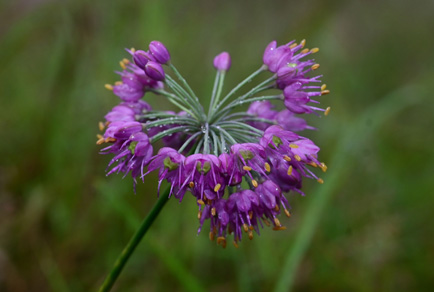
A new species of Allium L. (Amaryllidaceae) from Zhejiang, eastern China, namely A. paludicola, was described and illustrated. Morphological analysis indicates this new species is similar to A. longistylum, but differs in having white tunic; taller plants, with leaves and scapes 35–80 cm long; lateral scape; mountain herbaceous swamp habitat. Molecular phylogenetic analyses support it as a new species and suggest it is closely related to A. longistylum.
References
- Amiryousefi, A., Hyvönen, J. & Poczai, P. (2018) IRscope: An online program to visualize the junction sites of chloroplast genomes. Bioinformatics 34 (17): 3030–3031. https://doi.org/10.1093/bioinformatics/bty220
- APG Ⅲ. (2009) An update of the Angiosperm Phylogeny Group classification for the orders and families of flowering plants: APG Ⅲ. Botanical Journal of the Linnean Society 161: 105–121.
- Baasanmunkh, S., Jang, J.E., Duchoslav, M. & Choi, H.J. (2018) Cytotype distribution and ecology of Allium thunbergii (= A. sacculiferum) with a special reference to South Korean populations. Korean Journal of Plant Taxonomy 48: 278–288. https://doi.org/10.11110/kjpt.2018.48.4.278
- Baker, J.G. (1874) On new and little-kown capsular gamophyllous Liliaceae. Journal of Botany, British and Foreign 12 (142): 294.
- Brullo, S., Pavone, P. & Salmeri, S. (1991) Allium kollmannianum, a new species from Israel. Flora Mediterranea 1: 15–20.
- Cheremushkina, V.A. (1992) Evolution of life forms of species in subgenus Rhizirideum (Koch) Wendelbo, genus Allium L. In: Hanelt, P., Hammer, K. & Knüpffer, H. (Eds.) The genus Allium: taxonomic problems and genetic resources. Institut für Pflanzengenetik und Kulturpflanzenforschung, Gatersleben, Germany, pp. 27–34.
- Choi, H.J. & Oh, B.U. (2011) A partial revision of Allium (Amaryllidaceae) in Korea and north-eastern China. Botanical Journal of the Linnean Society 167: 153–211. https://doi.org/10.1111/j.1095-8339.2011.01166.x
- Dale, W., McNeal, J.R. & Jacobsen, T.D. (2002) Allium. In: Kiger, E. (Ed.) Flora of North America. Vol. 26. Oxford University Press, Oxford, pp. 244–275.
- Daniell, H., Lin, C.S., Yu, M. & Chang, W.J. (2016) Chloroplast genomes: diversity, evolution, and applications in genetic engineering. Genome Biol 17: 134. https://doi.org/10.1186/s13059-016-1004-2
- Darling, A.C., Mau, B., Blattner, F.R. & Perna, N.T. (2004) Mauve: multiple alignment of conserved genomic sequence with rearrangements. Genome Research 14: 1394–1403. https://doi.org/10.1101/gr.2289704
- Don, G. (1827) A Monograph of the Genus Allium. Memoirs of the Wernerian Natural History Society 6: 83.
- Fernández Prieto, J.A. & Cires, E. (2013) Phylogenetic placement of DethawiaMeum, and Rivasmartinezia (Apioideae, Apiaceae): Evidence from nuclear and plastid DNA sequences. Plant Biosystems - An International Journal Dealing with All Aspects of Plant Biology 148 (5): 975–987. https://doi.org/10.1080/11263504.2013.819818
- Friesen, N. (1995) The genus Allium L. in the flora of Mongolia. Feddes Repertorium—Journal of Botanical Taxonomy and Geobotany 106: 59–81.
- Friesen, N., Fritsch, R.M. & Blattner, F.R. (2006) Phylogeny and New Intrageneric Classifification of Allium (Alliaceae) Based on Nuclear Ribosomal DNA ITS Sequences. Aliso: A Journal of Systematic and Floristic Botany 22 (1): 372–395. https://doi.org/10.5642/aliso.20062201.31
- Fritsch, R.M. & Friesen, N. (2009) Allium oreotadzhikorum and A. vallivanchense, two new species of Allium subg. Polyprason (Alliaceae) from the Central Asian republic Tajikistan. Feddes Repertorium – Journal of Botanical Taxonomy and Geobotany 20: 321–331.
- Fritsch, R.M., Blattner, F.R. & Gurushidze, M. (2010) New classification of Allium L. subg. Melanocrommyum (Webb & Berthel.) Rouy (Alliaceae) based on molecular and morphological characters. Phyton 49: 145–220.
- Govaerts, R., Kington, S., Friesen, N., Fritsch, R., Snijman, D., Marcucci, R., Silverstone-Sopkin, P. & Brullo, S. (2024) World checklist of Amaryllidaceae. Facilitated by the Royal Botanic Gardens, Kew. [https://wcsp.science.kew.org/]
- Hanelt, P. & Fritsch, R.M. (1994) Notes on some infrageneric taxa in Allium L. Kew Bulletin 49: 559–564.
- Herden, T., Hanelt, P. & Friesen, N. (2016) Phylogeny of Allium L. subgenus Anguinum (G. Don. ex W.D.J. Koch) N. Friesen (Amaryllidaceae). Molecular Phylogenetics and Evolution 95: 79–93. https://doi.org/10.1016/j.ympev.2015.11.004
- Huang, D.Q., Zhen, A.G. & Zhu, X.X. (2021) Allium yingshanense, a new species from the Dabie Mountains (east-central China), and taxonomic remarks on the related species. Phytotaxa 498: 227–241. https://doi.org/10.11646/phytotaxa.498.4.1
- Jie, L.M., Liu, J.Q., Guo, X.L., Xiao, Q.Y. & Jin, H.X. (2019) Taxonomic revision of Allium cyathophorum (Amaryllidaceae). Phytotaxa 415: 240–246. https://doi.org/10.11646/phytotaxa.415.4.9
- Jin, J.J., Yu, W.B., Yang, J.B., Song, Y., dePamphilis, C.W., Yi, T.S. & Li, D.Z. (2020) GetOrganelle: a fast and versatile toolkit for accurate de novo assembly of organelle genomes. Genome Biology 21: 241. https://doi.org/10.1186/s13059-020-02154-5
- Kalyaanamoorthy, S., Minh, B.Q., Wong, T.K.F., Haeseler, A.V. & Jermiin, L.S. (2017) ModelFinder: fast model selection for accurate phylogenetic estimates. Nature Methods 14: 587–589. https://doi.org/10.1038/nmeth.4285
- Kearse, M., Moir, R., Wilson, A., Stones-Havas, S., Cheung, M., Sturrock, S., Buxton, S., Cooper, A., Markowitz, S., Duran, C., Thierer, T., Ashton, B., Meintjes, P. & Drummond, A. (2012) Geneious Basic: an integrated and extendable desktop software platform for the organization and analysis of sequence data. Bioinformatics 28: 1647–1649. https://doi.org/10.1093/bioinformatics/bts199
- Khassanov, F.O., Öztürk, M., Secmen, Ö. & Görk, G. (1997) Conspectus of the wild growing Allium species of Middle Asia. In: Öztürk, M.A. (Ed.) Plant life in Southwest and Central Asia. Turkey Ege University Press, Izmir, pp. 141–159.
- Khassanov, F.O. (2018) Taxonomical and Ethnobotanical Aspects of Allium Species from Middle Asia with Particular Reference to Subgenus Allium. In: Shigyo, M., Khar, A & Abdelrahman, M. (Eds.) The Allium Genomes. Compendium of Plant Genomes. Springer, Cham, pp. 11–21. https://doi.org/10.1007/978-3-319-95825-5_2
- Kovtonyuk, N.K., Barkalov, V.J.U. & Friesen, N.V. (2009) Synopsis of the family Alliaceae Borkh. (Onions) of Asian part of Russia. Turczaninowia 12: 31–39. [in Russian]
- Li, M.J., Liu, J.Q., Guo, X.L., Xiao, Q.Y. & He, X.J. (2019) Taxonomic revision of Allium cyathophorum (Amaryllidaceae). Phytotaxa 415: 240–246. https://doi.org/10.11646/phytotaxa.415.4.9
- Li, Q.Q., Zhou, S.D., He, X.J., Yu, Y., Zhang, Y.C. & Wei, X.Q. (2010) Phylogeny and biogeography of Allium (Amaryllidaceae: Allieae) based on nuclear ribosomal internal transcribed spacer and chloroplast rps16 sequences, focusing on the inclusion of species endemic to China. Annals of Botany 106: 709–733. https://doi.org/10.1093/aob/mcq177
- Linnaeus, C. (1753) Species Plantarum 1. Laurentius Salvius, Holmiae [Stockholm], pp. 294–302. https://doi.org/10.5962/bhl.title.669
- Mathew, B. (1996) A review of Allium section Allium. Royal Botanic Gardens, Kew, Richmond, Surrey, UK, 176 pp.
- Maximowicz, C.J. (1859) Primitiae Florae Amurensis. Buchdruckerei der kaiserlichen Akademie der Wissenschaften, St. Petersburg, 281 pp.
- Minh, B.Q., Schmidt, H.A., Chernomor, O., Schrempf, D., Woodhams, M.D., von Haeseler, A. & Lanfear, R. (2020) IQ-TREE 2: New models and efficient methods for phylogenetic inference in the genomic era. Molecular Biology Evolution 37: 1530–1534. https://doi.org/10.1093/molbev/msaa015
- Nguyen, N.H., Driscoll, H.E. & Specht, C.D. (2008) A molecular phylogeny of the wild onions (Allium; Alliaceae) with a focus on the western North American center of diversity. Molecular Phylogenetics and Evolution 47 (3): 1157–1172. https://doi.org/10.1016/j.ympev.2007.12.006
- Rambaut, A. (2018) Figtree ver 1.4.4. Institute of Evolutionary Biology, University of Edinburgh, Edinburgh.
- Seregin, A.P., Anačkov, G. & Friesen, N. (2015) Molecular and morphological revision of the Allium saxatile group (Amaryllidaceae): geographical isolation as the driving force of underestimated speciation. Botanical Journal of the Linnean Society 178: 67–101. https://doi.org/10.1111/boj.12269
- She, S.Q., Zhang, Y., Yang, J., Pang, C.M., Xu, Y.L. & Chen, Z.H. (2023) Allium tianmuense, a new species from Tianmu Mountain (Zhejiang, Southeast China). Phytotaxa 595 (2): 225–235. https://doi.org/10.11646/phytotaxa.595.2.9
- Shukherdorj, B., Jang, J.E., Duchoslav, M. & Choi, H.J. (2018) Cytotype distribution and ecology of Allium thunbergii (= A. sacculiferum) with a special reference to South Korean populations. Korean Journal of Plant Taxonomy 48: 278–288. https://doi.org/10.11110/kjpt.2018.48.4.278
- Xie, D.F., Xie, F.M., Jia, S.B., Li, H., Yang, X., Zhang, X.Y., Zhou, S.D. & He, X.J. (2020) Allium xinlongense (Amaryllidaceae, Allioideae), a new species from western Sichuan. Phytotaxa 432: 274–282. https://doi.org/10.11646/phytotaxa.432.3.4
- Xu, J.M. & Kamelin, R.V. (2000) Allium L. In: Wu, C.Y. & Raven, P.H. (Eds.) Flora of China 24. Science Press, Beijing & Missouri Botanical Garden, St. Louis, pp. 165–202.
- Zhang, L.P., Song, Y., Li, J.P., Liu, J.J., Zhang, Z., Xu, Y.Y., Fan, D.UY., Liu, M.Y., Ren, Y., He, J., Song, S.R., Xu, W.P., Liu, H.F., Xi, X.J. & Ma, C. (2024) Identification, comparative and phylogenetic analysis of eight Vitis species based on the chloroplast genome revealed their contribution to heat tolerance in grapevines. Scientia Horticulturae 327: 112833. https://doi.org/10.1016/j.scienta.2023.112833