

Abstract
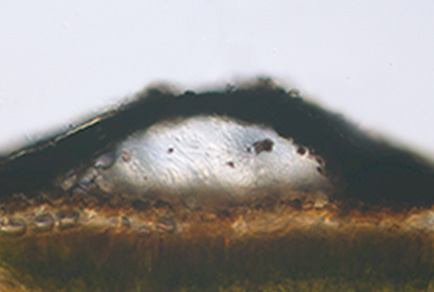
Neophyllachora species are parasitic on the leaves of dicotyledonous plants. In this study, a new species of Neophyllachora, N. tongbiguanensis, was introduced from Yunnan Province, China, based on morpho-molecular analyses. A multi-gene phylogenetic analysis (based on large subunit rRNA, internal transcribed spacer region, and small subunit rRNA) was conducted using Maximum Likelihood (ML) and Bayesian Inference (BI) methods to clarify its taxonomic position. Our study provides a detailed description, illustrations, and a phylogenetic tree showing the position of this new species. The key to the species of Neophyllachora is also provided. These findings enrich the taxonomic diversity of Neophyllachora and provide valuable morphological and molecular data for its classification.
References
- Barr, M.E. (1983) The Ascomycete Connection. Mycologia 75: 1–13.
- Cannon, P.F. (1991) A Revision of Phyllachora and Some Similar Genera on the Host Family Leguminosae. CABI, Wallingford, UK, 302 pp.
- Dayarathne, M.C., Maharachchikumbura, S.S.N., Jones, E.B.G., Goonasekara, I.D., Bulgakov, T.S., Al-Sadi, A.M., Hyde, K.D., Lumyong, S. & McKenzie, E.H.C. (2017) Neophyllachora gen. nov. (Phyllachorales), three new species of Phyllachora from Poaceae and resurrection of Polystigmataceae (Xylariales). Mycosphere 8: 1598–1625. https://doi.org/10.5943/mycosphere/8/10/2
- Haituk, S., Karunarathna, A., Harishchandra, D.L., Arayapichart, S., Nakashima, C., Kodsueb, R., Monkhung, S. & Cheewangkoon, R. (2025) Morphology and molecular phylogenetic characterization of novel tar spot Disease-Causing Fungi on Fabaceae Trees in Thailand. Forests 16: 556–569. https://doi.org/10.3390/f16040556
- Hall, T.A. (1999) BioEdit: a user–friendly biological sequence alignment program for Windows 95/98/NT. Nucleic Acids Symposium Series 41: 95–98. https://doi.org/10.1021/bk-1999-0734.ch008
- Hyde, K.D., Cannon, P.F. & Barr, M.E. (1997) Phaeochoraceae, a new family from palms. Systema Ascomycetum 15: 117–120.
- Kirk, P.M., Cannon, P.F., Minter, D.W. & Stalpers, J.A. (2008) Dictionary of Fungi, 10th ed. CABI, London, UK, 527 pp.
- Katoh, K., Rozewicki, J. & Yamada, K.D. (2019) MAFFT online service: multiple sequence alignment, interactive sequence choice and visualization. Bioinformatics 20: 1160–1166. https://doi.org/10.1093/bib/bbx108
- Li, J.C., Wu, H.X., Li, Y., Li, X.H., Song, J.Y., Suwannarach, N. & Wijayawardene, N.N. (2022) Taxonomy, phylogenetic and ancestral area reconstruction in Phyllachora, with four novel species from Northwestern China. Journal of Fungi 8: 520–539. https://doi.org/10.3390/jof8050520
- Li, J.C., Wu, H.X. & Song, J.Y. (2023) Two new Phyllachora species in Southwest China. Phytotaxa 578: 275–285. https://doi.org/10.11646/phytotaxa.578.3.5
- Li, X., Wu, S., Wang, C., Feng, Y., Zhao, C., Chen, Z.Q., Yu, J.F., Luo, R., Promputtha, I. & Sun, D.F. (2019) Two new species of Phyllachora (Phyllachoraceae; Phyllachorales) on bamboo from China. Phytotaxa 425: 78–86. https://doi.org/10.11646/phytotaxa.425.2.2
- Literatus, I.C.E., Maharachchikumbura, S.S.N., Withee, P., Haituk, S., Tamakaew, N., Nguanhom, J., Monkhung, S., Thiyagaraja, V. & Cheewangkoon, R. (2023) Taxonomic and phylogenetic appraisal of a new holomorphic Neophyllachora species from Chiang Mai, Thailand. Phytotaxa 600: 259–271. https://doi.org/10.11646/phytotaxa.600.5.1
- Maharachchikumbura, S., Hyde, K.D., Jones, E., Mckenzie, E. & Wijayawardene, N.N. (2016) Families of Sordariomycetes. Fungal Diversity 79: 1–317. https://doi.org/10.1007/s13225-016-0369-6
- Mardones, M., Trampe-Jaschik, T., Hofmann, T.A. & Piepenbring, M. (2017a) Contribution to the phylogeny and a new species of Coccodiella (Phyllachorales). Mycological Progress 17: 205–213. https://doi.org/10.1007/s11557-017-1353-6
- Mardones, M., Trampe-Jaschik, T., Oster, S., Elliott, M. & Piepenbring, M. (2017b) Phylogeny of the order Phyllachorales (Ascomycota, Sordariomycetes): among and within order relationships based on five molecular loci. Persoonia 39: 74–90. https://doi.org/10.3767/persoonia.2017.39.04
- Mardones, M., Trampe-Jaschik, T. & Piepenbring, M. (2020) Phylogenetics and taxonomy of Telimenaceae (Phyllachorales) from Central America. Mycological Progress 19: 1587–1599. https://doi.org/10.1007/s11557-020-01649-6
- Miller, J.H. (1928) Biologic Studies in the Sphaeriales—I. Mycologia 20: 187–213. https://doi.org/10.2307/3753911
- Miller, M.A., Pfeiffer, W. & Schwartz, T. (2010) Creating the CIPRES Science Gateway for inference of large phylogenetic trees. In: Miller, M.A., Pfeiffer, W. & Schwartz, T. (Eds.) 2010 Gateway Computing Environments Workshop. IEEE, New Orleans, Louisiana, USA, pp. 1–8.
- Paradis, E. & Schliep, K. (2019) APE 5.0: An environment for modern phylogenetics and evolutionary analyses in R. Bioinformatics 35: 526–528. https://doi.org/10.1093/bioinformatics/bty633
- Pearce, C.A., Reddell, P. & Hyde, K.D. (1999) A revision of Phyllachora (Ascomycotina) on hosts in the angiosperm family Asclepiadaceae, including P. gloriana sp. nov. on Tylophora benthamii from Australia. Fungal Diversity 3: 123–138.
- Santos, M.D., Fonseca, M.E., Boiteux, L.S. & Dianese, J.C. (2012) First approach to molecular phylogeny within the genus Phyllachora. Advancing the Science of Plant Pathology 77-P.
- Santos, M.D., Fonseca, M.E., Boiteux, L.S., Câmara, P.E.A.S. & Dianese, J.C. (2016) ITS–phylogeny and taxonomy of Phyllachora species on native Myrtacae from the Brazilian Cerrado. Mycologia 108: 1141–1164. https://doi.org/10.3852/16-025
- Su, P.W., Liao, Y.C., Jin, Y., Chen, Y.P., Madhushan, A., Liu, J.K. & Maharachchikumbura, S.S.N. (2025) Five New Phyllachora Species from Tar Spot Fungi on Poaceae in Sichuan, China. Journal of Fungi 11: 208–237. https://doi.org/10.3390/jof11030208
- Sun, Q.R., Xu, X.L., Zeng, Z., Deng, Y., Liu, F., Gao, L.P., Wang, F.H., Yan, Y.Q., Liu, Y.G. & Yang, C.L. (2024) Six Species of Phyllachora with Three New Taxa on Grass from Sichuan Province, China. Journal of Fungi 10: 588–604. https://doi.org/10.3390/jof10080588
- Tennakoon, D.S., Kuo, C.H., Maharachchikumbura, S.S.N., Thambugala, K.M., Gentekaki, E., Phillips, A.L., Bhat, D.J., Wanasinghe, D.N., de Silva, N.I., Promputtha, I. & Hyde, K.D. (2021) Taxonomic and phylogenetic contributions to Celtis formosana, Ficus ampelas, F. septica, Macaranga tanarius and Morus australis leaf litter inhabiting microfungi. Fungal Diversity 108: 1–215. https://doi.org/10.1007/s13225-021-00474-w
- Theissen, F. & Sydow, H. (1915) Die Dothideales. Annales Mycologici 13: 147–746.
- Vilgalys, R. & Sun, B.L. (1994) Ancient and recent patterns of geographic speciation in the oyster mushroom Pleurotus revealed by phylogenetic analysis of ribosomal DNA sequences. Proceedings of the National Academy of Sciences of the United States of America 91: 4599–4603. https://doi.org/10.1073/pnas.91.10.4599
- White, T.J., Bruns, S., Lee, S. & Taylor, J. (1990) In: Michael, A. & David, H. (Eds.) PCR Protocols. Academic Press, London, UK, pp. 315–322. https://doi.org/10.1016/B978-0-12-372180-8.50042-1
- Wijayawardene, N.N., Hyde, K.D., Dai, D.Q., Sánchez-García, M. & Goto, B.T. (2022) Outline of Fungi and fungus-like taxa. Mycosphere 13: 53–453. https://doi.org/10.5943/mycosphere/13/1/2
- Wu, H.X., Li, Y.M., Ariyawansa, H.A., Li, W.J. & Hyde, K.D. (2014) A new species of Microthyrium from Yunnan, China. Phytotaxa 176: 213–218. https://doi.org/10.11646/phytotaxa.176.1.21
- Yang, C.L., Xu, X.L., Liu, Y.G., Hyde, K.D. & McKenzie, E.H.C. (2019) A new species of Phyllachora (Phyllachoraceae, Phyllachorales) on Phyllostachys heteroclada from Sichuan, China. Phytotaxa 392: 186–196. https://doi.org/10.11646/phytotaxa.392.3.2