

Abstract
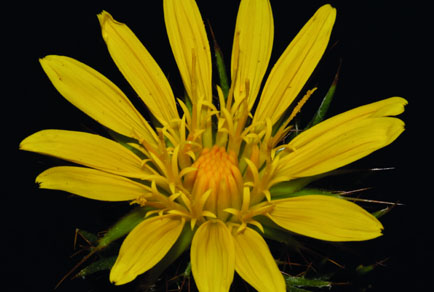
Berkheya angusta is a woody, spinescent shrub currently classified as Vulnerable in the Red List of South African Plants. The species was described in 1899 by Rudolf Schlechter from a gathering at Elandskloof near Napier in the Western Cape province, South Africa, but was not encountered again for 110 years. The name has long been misapplied to superficially similar species of the closely related genus Cullumia, while plants of B. angusta have been misidentified as Cullumia species. Given this confusion, the paucity of information on its distribution and prevalence, and the need for reassessment of its conservation status, we here provide a full descriptive treatment of B. angusta and clarify its discrimination from morphologically similar species to ensure reliable identification. The species is known from a restricted area in the Overberg District of the Western Cape province. This study will enable a meaningful reappraisal of the conservation status of B. angusta, and will assist in improving the quality and rigour of future contributions of data on B. angusta to citizen science platforms, thereby expanding knowledge of the species.
References
- Adanson, M. (1763) Familles des plantes 2. Vincent, Paris, 640 pp. https://doi.org/10.5962/bhl.title.271
- Aiton, W.T. (1813) Hortus kewensis; or, a catalogue of the plants cultivated in the Royal Botanic Garden at Kew by the late William Aiton (ed. 2) 5. Longman, Hurst, Rees, Orme, and Brown, London, 568 pp. https://doi.org/10.5962/bhl.title.105339
- Bennet, A. & Krebs, J. (1987) Seed dispersal by ants. Trends in Ecology and Evolution 2 (10): 291–292. https://doi.org/10.1016/0169-5347(87)90078-4
- Bergh, N.G. & Helme, N.A. (2014) A new species of Berkheya (Asteraceae, Arctotideae) from the Northern Cape, South Africa. Bothalia 44 (1): a123 [5 pp.]. https://doi.org/10.4102/abc.v44i1.123
- Bond, W.J. & Slingsby, P. (1983) Seed dispersal by ants in shrublands of the Cape Province and its evolutionary implications. South African Journal of Science 79 (6): 231–233. [https://hdl.handle.net/10520/AJA00382353_2316]
- Bürger, M. & Chory, J. (2024) Identification challenges of Castilleja (Orobanchaceae) on iNaturalist. PLoS One 19 (10): e0311088. https://doi.org/10.1371/journal.pone.0311088
- Candolle, A.P. de. (1838 [dated 1837]) Prodromus systematis naturalis regni vegetabilis, sive enumeratio contracta ordinum, generum, specierumque plantarum huc usque cognitarum, juxta methodi naturalis normas digesta 6. Treuttel & Würtz, Paris, 687 pp. [https://www.wikidata.org/entity/Q51522727]
- Cassini, H. (1818) Aperçu des genres ou sous-genres nouveaux formés par M. Henri Cassini dans la famille des Synanthérees. Bulletin des Sciences par la Société Philomatique de Paris 1818: 30–34. [https://www.biodiversitylibrary.org/item/26554#page/38/mode/1up]
- Cassini, H. (1819) Sixième mémoire sur la famille des Synanthérées, contenant les caractères des tribus. Journal de Physique, de Chimie, d’Histoire Naturelle et des Arts 88: 150–163. [https://www.biodiversitylibrary.org/item/29607#page/164/mode/1up]
- Cassini, H. (1820) Evopis. In: Cuvier, G.-F. (Ed.) Dictionnaire des Sciences Naturelles, ed. 2, 16. Le Normant, Paris, pp. 65–67. [https://www.biodiversitylibrary.org/item/74507#page/71/mode/1up]
- Druce, G.C. (1917) Nomenclatural notes: chiefly African and Australian. Botanical Society and Exchange Club of the British Isles Report 4 (Suppl. 2): 601–653.
- Dumont de Courset, G.L.M. (1801) Le botaniste cultivateur, ou description, culture et usage de la plus grande partie des plantes étrangères, naturalisées et indigènes, cultivées en France et en Angleterre, rangées suivant la méthode de Jussieu 2. J.J. Fuchs, Paris, 826 pp. [https://m3c.universita.corsica/s/fr/item/3446]
- Edwards, D. & Leistner, O.A. (1971) A degree reference system for citing biological records in southern Africa. Mitteilungen der Botanischen Staatssammlung München 10: 501–509. [https://biostor.org/reference/185348]
- Ehrhart, F. (1784) Berkheya, eine Pflanzengattung. Neues Magazin für Aerzte 6: 303–307. [https://mdz-nbn-resolving.de/details:bsb10083828]
- Ehrhart, F. (1788) Beiträge zur Naturkunde, und den damit verwandten Wissenschaften, besonders der Botanik, Chemie, Haus- und Landwirthschaft, Arzneigelehrtheit und Apothekerskunst 3. Schmidtische Buchhandlung, Hannover, 183 pp. https://doi.org/10.5962/bhl.title.44806
- Funk, V.A. & Chan, R. (2008) Phylogeny of the spiny African daisies (Compositae, tribe Arctotideae, subtribe Gorteriinae) based on trnL-F, ndhF, and ITS sequence data. Molecular Phylogenetics and Evolution 48 (1): 47–60. https://doi.org/10.1016/j.ympev.2008.03.035
- Funk, V.A., Chan, R. & Keeley, S.C. (2004) Insights into the evolution of the tribe Arctoteae (Compositae: subfamily Cichorioideae s.s) using trnL-F, ndhF, and ITS. Taxon 53 (3): 637–655. https://doi.org/10.2307/4135440
- Gaertner, J. (1791) De fructibus et seminibus plantarum 2. Typis Guilielmi Henrici Schrammii, Tubingae, 520 pp. [https://bibdigital.rjb.csic.es/idurl/1/10346]
- Glen, H.F. & Germishuizen, G. (compilers) (2010) Botanical exploration of southern Africa, ed. 2. Strelitzia 26. South African National Biodiversity Institute, Pretoria, 489 pp.
- Harvey, W.H. (1865) Compositae. In: Harvey, W.H. & Sonder, O.W. (Eds.) Flora capensis, being a systematic description of the plants of the Cape Colony, Caffraria and Port Natal 3. Lovell Reeve & Co., London, pp. 44–530. [https://www.biodiversitylibrary.org/item/15235#page/50/mode/1up]
- Herman, P.P.J. & Zinnecker-Wiegand, U. (2022) A taxonomic revision of the genus Zyrphelis (Asteraceae, Astereae) in South Africa. Strelitzia 45. South African National Biodiversity Institute, Pretoria, 249 pp.
- Hilliard, O.M. & Burtt, B.L. (1975) Notes on some plants of southern Africa chiefly from Natal. IV. Notes from the Royal Botanic Garden, Edinburgh 34 (1): 73–100. https://doi.org/10.24823/nrbge.1975.3013
- Hilliard, O.M. & Burtt, B.L. (1985) Notes on some plants of southern Africa chiefly from Natal. XI. Notes from the Royal Botanic Garden, Edinburgh 42 (2): 227–260. https://doi.org/10.24823/nrbge.1985.3382
- Hilliard, O.M. & Burtt, B.L. (1989) Notes on some plants of southern Africa chiefly from Natal. XV. Notes from the Royal Botanic Garden, Edinburgh 45 (2): 179–223. https://doi.org/10.24823/nrbge.1989.3523
- Houttuyn, M. (1779) Natuurlyke historie of uitvoerige beschryving der dieren, planten, en mineraalen, volgens het samenstel van den heer Linnæus 2 (10). De Erven van F. Houttuyn, Amsterdam, 828 pp. https://doi.org/10.5962/bhl.title.66921
- IUCN. (2012) IUCN Red List categories and criteria: version 3.1, ed. 2. IUCN, Gland and Cambridge, 32 pp.
- Jeffrey, C. (2007) Introduction with key to tribes. In: Kadereit, J.W. & Jeffrey, C. (Eds.) The families and genera of vascular plants 8. Springer-Verlag, Berlin, pp. 61–87.
- Jessop, J.P. (1964) Itinerary of Rudolf Schlechter’s collection trips in southern Africa. Journal of South African Botany 30: 129–142. [https://biostor.org/reference/288701]
- Jussieu, A.L. de. (1789) Genera plantarum secundum ordines naturales disposita, juxta methodum in horto regio parisiensi exaratam. Apud viduam Herissant et Theophilum Barrois, Parisiis, 498 pp. https://doi.org/10.5962/bhl.title.284
- Karis, P.O. (2006) Morphological data indicates two major clades of the subtribe Gorteriinae (Asteraceae—Arctotideae). Cladistics 22 (3): 199–221. https://doi.org/10.1111/j.1096-0031.2006.00109.x
- Karis, P.O. (2007) Tribe Arctotideae Cass. In: Kadereit, J.W. & Jeffrey, C. (Eds.) The families and genera of vascular plants 8. Springer-Verlag, Berlin, pp. 200–206.
- Karis, P.O., Funk, V.A., McKenzie, R.J., Barker, N.P. & Chan, R. (2009) Arctotideae. In: Funk, V.A., Susanna, A., Stuessy, T. & Bayer, R. (Eds.) Systematics, evolution, and biogeography of the Compositae. International Association of Plant Taxonomists, Vienna, pp. 407–432.
- Katinas, L. (2025) Trichomes in Asteraceae: names standardization and a unified classification. Botanical Review 91 (1): 1–50. https://doi.org/10.1007/s12229-024-09311-6
- Koekemoer, M. (1996) An overview of the Asteraceae of southern Africa. In: Hind, D.J.N. & Beentje, H.J. (Eds.) Compositae: systematics. Royal Botanic Gardens, Kew, pp. 95–110.
- Lengyel, S., Gove, A.D., Latimer, A.M., Majer, J.D. & Dunn, R.R. (2010) Convergent evolution of seed dispersal by ants, and phylogeny and biogeography in flowering plants: a global survey. Perspectives in Plant Ecology, Evolution and Systematics 12 (1): 43–55. https://doi.org/10.1016/j.ppees.2009.08.001
- Lessing, C.F. (1832) Synopsis generum compositarum earumque dispositionis novae tentamen monographiis multarum capensium interjectis. Dunckeri & Humblotii, Berolini, 473 pp. https://doi.org/10.5962/bhl.title.51470
- L’Héritier de Brutelle, C.-L. (1786) Stirpes novæ descriptionibus et iconibus illustratæ 3. Philippi-Dionysii Pierres, Parisiis, 184 pp. [https://bibdigital.rjb.csic.es/idurl/1/13111]
- Linnaeus, C. (1753) Species plantarum exhibentes plantas rite cognitas, ad genera relatas, cum differentiis specificis, nominibus trivialibus, synonymis selectis, locis natalibus, secundum systema sexuale digestas. Laurentii Salvii, Holmiae, 1200 pp. https://doi.org/10.5962/bhl.title.37656
- Linnaeus filius, C. (1782 [dated 1781]) Supplementum plantarum systematis vegetabilium editionis decimae tertiae, generum plantarum editiones sextae, et specierum plantarum editionis secundae. Orphanotrophei, Brunsvigæ, 468 pp. https://doi.org/10.5962/bhl.title.555
- López-Guillén, E., Herrera, I., Bensid, B., Gómez-Bellver, C., Ibáñez, N., Jiménez-Mejías, P., Mairal, M., Mena-García, L., Nualart, N., Utjés-Mascó, M. & López-Pujol, J. (2024) Strengths and challenges of using iNaturalist in plant research with focus on data quality. Diversity 16 (1): 42. https://doi.org/10.3390/d16010042
- Lucas, A.M. (2007) Mixing private and public: or, did the State pay twice for specimens in Herbarium Hookerianum? Annals of Natural History 34 (2): 357–359. https://doi.org/10.3366/anh.2007.34.2.357
- Manning, J.C. & Goldblatt, P. (2012) Berkheya jardineana (Arctotideae–Gorteriinae), a new dwarf perennial from the Swartruggens, Western Cape. Bothalia 42 (1): 57–59. https://doi.org/10.4102/abc.v42i1.31
- Manning, J.C., Karis, P.O., Goldblatt, P. & Helme, N.A. (2010) Berkheya chrysanthemoides and Heterorhachis hystrix, two new species of Arctotideae–Gorteriinae from the Southwestern Cape. Bothalia 40 (2): 185–190. https://doi.org/10.4102/abc.v40i2.217
- Martius, K.F.P. von (1837) Herbarium florae brasiliensis. Flora 20 (2, Beibl.): 1–128. [https://www.biodiversitylibrary.org/item/929#page/387/mode/1up]
- McKenzie, R.J., Samuel, J., Muller, E.M., Skinner, A.K.W. & Barker, N.P. (2005) Morphology of cypselae in subtribe Arctotidinae (Compositae–Arctotideae) and its taxonomic implications. Annals of the Missouri Botanical Garden 92 (4): 569–594. [https://www.jstor.org/stable/40035740]
- Merrill, E.D. (1938) A critical consideration of Houttuyn’s new genera and new species of plants, 1773–1783. Journal of the Arnold Arboretum 19 (4): 291–375. [https://biostor.org/reference/176736]
- Mucina, L. & Rutherford, M.C. (Eds.) (2006) The vegetation of South Africa, Lesotho and Swaziland. Strelitzia 19. South African National Biodiversity Institute, Pretoria, 807 pp.
- Necker, N.J. de. (1790) Elementa botanica genera genuina, species naturales omnium vegetabilium detectorum eorumque characteres diagnosticos ec peculiares exhibentia, secundum systema omologium seu naturale, evulgata 1. Apud Bossange et Soc. Bibliopol, Parisiis, 389 pp. https://doi.org/10.5962/bhl.title.4452
- Phaliso, N. (2013) A systematic study of Berkheya and allies (Compositae). MSc thesis, Rhodes University, Grahamstown, South Africa, 122 pp. [http://hdl.handle.net/10962/d1003054]
- Phaliso, N., McKenzie, R.J., Netnou-Nkoana, N.C., Karis, P.O. & Barker, N.P. (2016) Reassessing taxonomic relationships in the Berkheya clade (Asteraceae, Arctotideae–Gorteriinae): the utility of achene morphology. Phytotaxa 246 (1): 1–22. https://doi.org/10.11646/phytotaxa.246.1.1
- Probst, R. (1928) Dritter Beitrag zur Adventivflora von Solothurn und Umgebung. Mitteilungen der Naturforschenden Gesellschaft in Solothurn 8 (Ber. 20): 41–82. https://doi.org/10.5169/seals-543232
- Raimondo, D., Turner, R.C. & Von Staden, L. (2012) Berkheya angusta Schltr. National Assessment: Red List of South African Plants. South African National Biodiversity Institute, Pretoria. Available from: http://redlist.sanbi.org/species.php?species=3077-5 (accessed 18 February 2025)
- Rebelo, A.G., Boucher, C., Helme, N., Mucina, L. & Rutherford, M.C. (2006) Fynbos Biome. In: Mucina, L. & Rutherford, M.C. (Eds.) The vegetation of South Africa, Lesotho and Swaziland. Strelitzia 19. South African National Biodiversity Institute, Pretoria, pp. 52–219.
- Rehder, A., Weatherby, C.A., Mansfield, R. & Green, M.L. (1935) XXXVI—Conservation of later generic homonyms. Bulletin of Miscellaneous Information, Royal Botanic Gardens, Kew 1935 (6/9): 341–544. https://doi.org/10.2307/4107078
- Rickett, H.W. & Stafleu, F.A. (1960) Nomina generica conservanda et rejicienda Spermatophytorum VI. Taxon 9 (5): 153–161. https://doi.org/10.2307/1217386
- Roessler, H. (1959) Revision der Arctotideae–Gorteriinae (Compositae). Mitteilungen der Botanische Staatssammlung München 3: 71–500. [https://www.biodiversitylibrary.org/page/15216142]
- Roessler, H. (1960) Eine neue Berkheya aus Transvaal. Mitteilungen der Botanischen Staatssammlung München 3: 519–520. [https://biostor.org/reference/185186]
- Roessler, H. (1973) Nachträge zur Bearbeitung der Arctotideae–Gorteriinae (Compositae). Mitteilungen der Botanischen Staatssammlung München 11: 91–99. [https://biostor.org/reference/185366]
- Roque, N., Keil, D.J. & Susanna, A. (2009) Illustrated glossary of Compositae. In: Funk, V.A., Susanna, A., Stuessy, T. & Bayer, R. (Eds.) Systematics, evolution, and biogeography of the Compositae. International Association of Plant Taxonomists, Vienna, pp. 781–806.
- SANBI. (2025) Red List of South African Plants. Available from: http://redlist.sanbi.org/redcat.php (accessed 22 February 2025)
- Schlechter, R. (1899) Plantae Schlechterianae novae vel minus cognitae describuntur. II. Botanische Jahrbücher für Systematik, Pflanzengeschichte und Pflanzengeographie 27: 86–220. [https://www.biodiversitylibrary.org/item/687#page/92/mode/1up]
- Schreber, J.C.D. (1789) Genera plantarum eorumque characteres naturales secundum numerum, figuram, situm, & proportionem omnium fructificationis partium (ed. 8[a]) 1. Sumtu Varrentrappii & Wenneri, Francofurti ad Moenum, 872 pp.
- Stearn, W.T. (1992) Botanical Latin, ed. 4. David & Charles, Newton Abbot, 546 pp.
- Tadesse, M. (2004) Asteraceae (Compositae). In: Hedberg, I., Friis, I. & Edwards, S. (Eds.) Flora of Ethiopia and Eritrea 4 (2). National Herbarium, Addis Ababa; Uppsala University, Uppsala, 408 pp.
- Thiers, B. (2025) Index Herbariorum: a global directory of public herbaria and associated staff. New York Botanical Garden’s Virtual Herbarium. Available from: https://sweetgum.nybg.org/science/ih/ (accessed 18 February 2025)
- Thom, G. (1824) Letter addressed to Professor Hooker, University of Glasgow, 5 March 1824. Royal Botanic Gardens, Kew: Archives: Directors’ Correspondence 58/216. [http://plants.jstor.org/stable/10.5555/al.ap.visual.kadc7627]
- Thunberg, C.P. (1798) Genera nova plantarum 9. Johan. Fredr. Edman, Upsaliæ, 12 pp. [https://bibdigital.rjb.csic.es/idurl/1/14509]
- Thunberg, C.P. (1800) Prodromus plantarum capensium: quas in promontorio bonæ spei Africes, annis 1772–1775, collegit Carol. Pet. Thunberg 2. J. Edman, Upsaliæ, 191 pp. https://doi.org/10.5962/bhl.title.84
- Turland, N.J., Wiersema, J.H., Barrie, F.R., Gandhi, K.N., Gravendyck, J., Greuter, W., Hawksworth, D.L., Herendeen, P.S., Klopper, R.R., Knapp, S., Kusber, W.-H., Li, D.-Z., May, T.W., Monro, A.M., Prado, J., Price, M.J., Smith, G.F. & Zamora Señoret, J.C. (2025) International Code of Nomenclature for algae, fungi, and plants (Madrid Code). Regnum Vegetabile 162. University of Chicago Press, Chicago, 288 pp. https://doi.org/10.7208/chicago/9780226839479.001.0001
- Vahl, M. (1791) Om Perdicium og dens arter, og om en ny slaegt Rohria, henhørende til Compositas. Skrivter af Naturhistorie-Selskabet 1 (2): 1–17. [https://www.biodiversitylibrary.org/item/254423#page/271/mode/1up]
- Walpers, G.G. (1847) Repertorium botanices systematicae 6. Sumtibus Friderici Hofmeister, Lipsiae, 834 pp. [https://bibdigital.rjb.csic.es/idurl/1/11517]
- Zahlbruckner, A. (1910) Plantae Pentherianae. Aufzählung der von Dr. A. Penther und in seinem Auftrage von P. Krook in SüdAfrika gesammelten Pflanzen. Pars IV. Annalen des K. K. Naturhistorischen Hofmuseums 24: 293–316. [https://www.biodiversitylibrary.org/page/5922630]