

Abstract
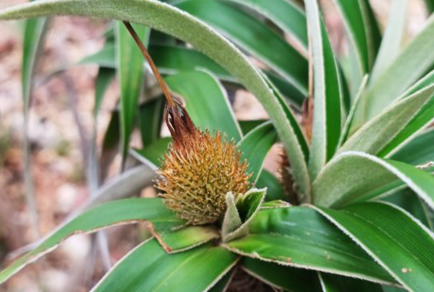
Four new species of Vellozia (Velloziaceae) from the Cerrado of Central Brazil are here described and illustrated: Vellozia aroejariensis, from Chapada dos Guimarães in Mato Grosso, and V. glocimarii, V. nana, and V. veadeirensis, from northern Goiás, Brazil. We provide a detailed morphological description of each species, emphasizing the features that set them apart from closely related species within the genus. These distinctions are further discussed in the diagnosis and comments section. We also provide information on their geographical distribution, habitat, geological context, phenology, and preliminary conservation assessment. Field images offer visual support for the descriptions. All four species are narrow endemics, restricted to specific rocky outcrops habitats. This study contributes to a deeper understanding of Vellozia diversity and emphasizes the critical role of Cerrado rocky outcrops to plant endemism and conservation.
References
- Albisetti, C. & Venturelli, Â.J. (1962) Enciclopédia Bororo - volume I. Museu Regional Dom Bosco, Campo Grande.
- Alcantara, S., Ree, R.H. & Mello-Silva, R. (2018) Accelerated diversification and functional trait evolution in Velloziaceae reveal new insights into the origins of the campos rupestres’ exceptional floristic richness. Annals of Botany 122: 165–180. https://doi.org/10.1093/aob/mcy063
- Alvares, C.A., Stape, J.L., Sentelhas, P.C., Gonçalves, J.L. de M. & Sparovek, G. (2013) Köppen’s climate classification map for Brazil. Meteorologische Zeitschrift 22: 711–728. https://doi.org/10.1127/0941-2948/2013/0507
- Antar, G.M., Harley, R.M., Pastore, J.F.B., Demarco, D. & Sano, P.T. (2022) Leaf venation reveals its potential for the taxonomy of Hyptidendron Harley (Lamiaceae – Hyptidinae) and supports the recognition of a new species, Hyptidendron cerradoense. Acta Botanica Brasilica 36: e2021abb0183. https://doi.org/10.1590/0102-33062021abb0183
- Ayensu, E.S. (1973) Biological and Morphological Aspects of the Velloziaceae. Biotropica 5: 135. https://doi.org/10.2307/2989806
- Beentje, H. (2010) The Kew Plant Glossary: An Illustrated Dictionary of Plant Terms. Royal Botanic Gardens, Kew, pp. 248–253.
- Bitencourt, C., Rapini, A., Santos, L.D. & Marco Junior, P. (2016) The worrying future of the endemic flora of a tropical mountain range under climate change. Flora - Morphology, Distribution, Functional Ecology of Plants 218: 1–10. https://doi.org/10.1016/j.flora.2015.11.001
- Borghi, L. & Moreira, M.I.C. (2002) Caverna Aroe Jari, Chapada dos Guimarães, MT - Raro exemplo de caverna em arenito. In: Schobbenhaus, C., Campos, D.A., Queiroz, E.T., Winge, M. & Berbert-Born, M.L.C. (Eds.) Sítios Geológicos e Paleontológicos do Brasil. Brasília: DNPM; CPRM; Comissão Brasileira de Sítios Geológicos e Paleobiológicos – SIGEP, pp. 481–489.
- Bugado, R.E., Shrestha, N., Magri, R.A., Prado, J. & Lopes, J.C. (2025) Vanishing ecosystems: The looming threat of climate change on an iconic genus Vellozia in the Brazilian campos rupestres. Global Ecology and Conservation 58: e03439. https://doi.org/10.1016/j.gecco.2025.e03439
- Cabral, A., Magri, R.A. & Lopes, J.C. (2021) Vellozia inselbergae (Velloziaceae), a new species from the Brazilian Atlantic Forest inselbergs. Phytotaxa 497: 138–146. https://doi.org/10.11646/phytotaxa.497.2.6
- Cabral, A., Magri, R.A. & Lopes, J.C. (2022) Increasing knowledge on the diversity of canelas-de-ema in the campo rupestre: two new species of Vellozia (Velloziaceae) from the southern Espinhaço Range, Brazil. Plant Ecology and Evolution 155: 343–352. https://doi.org/10.5091/plecevo.94326
- Callaghan, C.T., Mesaglio, T., Ascher, J.S., Brooks, T.M., Cabras, A.A., Chandler, M., Cornwell, W.K., Cristóbal Ríos-Málaver, I., Dankowicz, E., Urfi Dhiya’ulhaq, N., Fuller, R.A., Galindo-Leal, C., Grattarola, F., Hewitt, S., Higgins, L., Hitchcock, C., James Hung, K.-L., Iwane, T., Kahumbu, P., Kendrick, R., Kieschnick, S.R., Kunz, G., Lee, C.C., Lin, C.-T., Loarie, S., Norman Medina, M., McGrouther, M.A., Miles, L., Modi, S., Nowak, K., Oktaviani, R., Waswala Olewe, B.M., Pagé, J., Petrovan, S., Saari, C., Seltzer, C.E., Seregin, A.P., Sullivan, J.J., Sumanapala, A.P., Takoukam, A., Widness, J., Willmott, K., Wüster, W. & Young, A.N. (2022) The benefits of contributing to the citizen science platform iNaturalist as an identifier. PLOS Biology 20: e3001843. https://doi.org/10.1371/journal.pbio.3001843
- Campos, J.E.G., Dardenne, M.A., Freitas-Silva, F.H. & Martins-Ferreira, M.A.C. (2013) Geologia do Grupo Paranoá na porção externa da Faixa Brasília. Brazilian Journal of Geology 43: 461–476. https://doi.org/10.5327/Z2317-48892013000300004
- Carvalho Júnior, O.A., Guimarães, R.F., Martins, É.D.S. & Gomes, R.A.T. (2015) Chapada dos Veadeiros: The Highest Landscapes in the Brazilian Central Plateau. In: Vieira, B.C., Salgado, A.A.R. & Santos, L.J.C. (eds.) Landscapes and Landforms of Brazil. World Geomorphological Landscapes. Springer Netherlands, Dordrecht, pp. 221–230.
- Carvalho-Sobrinho, J.G., Mota, A.C. & Queiroz, L.P. (2015) Eriotheca estevesiae (Malvaceae: Bombacoideae): A new species from the cerrado vegetation of Brazil. Brittonia 67: 29–36. https://doi.org/10.1007/s12228-014-9350-4
- Cavalcanti, T.B. (2004) Novos táxons, novos status, novo sinônimo e lectotipificações em Diplusodon Pohl (Lythraceae). Boletim de Botânica 22: 1. https://doi.org/10.11606/issn.2316-9052.v22i1p1-13
- Cavalcanti, T.B. & Graham, S.A. (2005) New Taxa in Lythraceae from Latin America. Novon 15: 59–68.
- Conceição, A.A., Rapini, A., do Carmo, F.F., Brito, J.C., Silva, G.A., Neves, S.P.S. & Jacobi, C.M. (2016) Rupestrian Grassland Vegetation, Diversity, and Origin. In: Fernandes, G.W. (ed.) Ecology and Conservation of Mountaintop grasslands in Brazil. Springer International Publishing, Cham, pp. 105–127.
- Corlett, R.T. & Westcott, D.A. (2013) Will plant movements keep up with climate change? Trends in Ecology & Evolution 28: 482–488. https://doi.org/10.1016/j.tree.2013.04.003
- Edições do Senado Federal (2003) Missão Rondon: apontamentos sobre os trabalhos realizados pela Comissão de linhas telegráficas estratégicas de Mato Grosso ao Amazonas, sob a direção do coronel de engenharia Cândido Mariano da Silva Rondon, de 1907 a 1915. Senado Federal, Conselho Editorial, Brasília, 284 pp.
- Faria, J.E.Q. & Proença, C.E.B. (2012) Eugenia pyrifera (Myrtaceae), a new species from the cerrado vegetation of Goiás, Brazil. Kew Bulletin 67: 245–249. https://doi.org/10.1007/s12225-012-9344-x
- Fick, S.E. & Hijmans, R.J. (2017) WorldClim 2: new 1‐km spatial resolution climate surfaces for global land areas. International Journal of Climatology 37: 4302–4315. https://doi.org/10.1002/joc.5086
- Flora e Funga do Brasil (2025) Velloziaceae. In: Flora e Funga do Brasil. Available from: https://floradobrasil.jbrj.gov.br/FB245 (accessed 16 January 2025)
- Gomes‐da‐Silva, J. & Forzza, R.C. (2021) Two centuries of distribution data: detection of areas of endemism for the Brazilian angiosperms. Cladistics 37: 442–458. https://doi.org/10.1111/cla.12445
- Henrard, J.T. (1937) Velloziaceae Americanae nonnullae novae vel minus cognitae. Blumea 2: 340–384.
- IUCN (2024) The IUCN Red List of Threatened Species. Version 2024-1. Available from: https://www.iucnredlist.org (accessed 3 September 2024)
- IUCN Standards and Petitions Committee (2012) IUCN Red List categories and criteria, version 3.1 (Second edition). 2nd ed. Gland, Switzerland and Cambridge, UK, 32 pp.
- Kubitzki, K. (1998) Velloziaceae. In: The Families and Genera of Vascular Plants - III Flowering Plants - Monocotyledons - Lilianae (except Orchidaceae). Kubitzki, K., Hamburg, Germany, pp. 478.
- Kunth, C.S. (1821) Byrsonima. In: Voyage de Humboldt et Bonpland. Nova Genera et Species Plantarum. Vol. 5 (21). Gide, Paris, pp. 147–153. https://doi.org/10.5962/bhl.title.640
- Kunth, C.S. (1825) Bromeliaceae. In: Voyage de Humboldt et Bonpland. Nova Genera et Species Plantarum. Vol. 7 (32). Gide, Paris, pp. 155. https://doi.org/10.5962/bhl.title.640
- Lindman, C.A.M. (1900) List of Regnellian Cyperaceae. Bihang till Kongl. Svenska vetenskaps-akademiens handlingar 26 (3; 9): 17.
- Magri, R.A., Cabral, A., Prado, J. & Lopes, J.C. (2024a) Two new critically endangered species of Vellozia (Velloziaceae) from the Campos Rupestres of Espinhaço Range, Brazil. Phytotaxa 652: 1–9. https://doi.org/10.11646/phytotaxa.652.1.1
- Magri, R.A., Luebert, F., Cabral, A., Alcantara, S., Lohmann, L.G., Prado, J. & Lopes, J.C. (2024b) Historical biogeography of Vellozia (Velloziaceae) reveals range expansion in South American mountaintops after climatic cooling events and increased diversification rates after the occupation of Southern Espinhaço Province. Botanical Journal of the Linnean Society 207 (2): 115–127. https://doi.org/10.1093/botlinnean/boae072
- Mello-Silva, R. (1991) A New Species of Vellozia from the Espinhaco Range, Brazil, with Some Considerations on the Section Xerophytoides. Kew Bulletin 46: 321. https://doi.org/10.2307/4110605
- Mello-Silva, R. (1996) Revisão das Vellozia Tubifloras (Vellozia sect. Radia) e Caracteres para o aprimoramento da Filogenia de Velloziaceae. Universidade de São Paulo.
- Mello-Silva, R. (1997) Vellozia sessilis L.B.Sm. ex Mello-Silva (Velloziaceae), espécie nova de Goiás, Brazil. Boletim de Botânica da Universidade de São Paulo 16: 65–69.
- Mello-Silva, R. (2004) Novitates Velloziacearum florae phanerogamicae Sancti Pauli. Revista Brasileira de Botânica 27: 453–462. https://doi.org/10.1590/S0100-84042004000300006
- Mello-Silva, R. (2005a) Morphological analysis, phylogenies and classification in Velloziaceae. Botanical Journal of the Linnean Society 148: 157–173. https://doi.org/10.1111/j.1095-8339.2005.00399.x
- Mello-Silva, R. (2005b) Velloziaceae. In: Wanderley, M.G.L., Shepherd, G.J., Melhem, T.S., Martins, S.E., Kirizawa, M. & Giulietti, A.M. (eds.) Flora fanerogâmica do Estado São Paulo. Instituto de Botânica, São Paulo, pp. 371–376.
- Mello-Silva, R. (2009) Flora de Grão-Mogol, Minas Gerais: Velloziaceae. Boletim de Botânica 27: 109–118. https://doi.org/10.11606/issn.2316-9052.v27i1p109-118
- Mello-Silva, R. (2010) Circumscribing Vellozia hirsuta and V. tubiflora (Velloziaceae). Hoehnea 37: 617–646. https://doi.org/10.1590/S2236-89062010000300009
- Mello-Silva, R. (2017) New names, species and synonyms in a changing Velloziaceae world. Phytotaxa 309: 35. https://doi.org/10.11646/phytotaxa.309.1.3
- Mello-Silva, R. (2018) Flora das cangas da Serra dos Carajás, Pará, Brasil: Velloziaceae. Rodriguésia 69: 259–262. https://doi.org/10.1590/2175-7860201869125
- Mello-Silva, R. (2020) Velloziaceae. In: Cavalcanti, T.B. & Amaral-Lopes, A.C. (eds.) Flora do Distrito Federal, Brasil. Embrapa, Brasília, DF, pp. 187–200.
- Mello-Silva, R. & Menezes, N.L. (1987) Duas espécies novas de Velloziaceae de Minas Gerais. Acta Botanica Brasilica 1: 195–207. https://doi.org/10.1590/S0102-33061987000300019
- Mello-Silva, R. & Menezes, N.L. (1999) Two New Brazilian Velloziaceae, Vellozia auriculata and Vellozia gigantea, and a Key to the Related Dracenoid Species of Vellozia. Novon 9: 536–541. https://doi.org/10.2307/3392159
- Mello-Silva, R. & Menezes, N.L. (2014) Velloziaceae in honorem appellatae. Phytotaxa 175: 085–096. https://doi.org/10.11646/phytotaxa.175.2.3
- Mello-Silva, R., Santos, D.Y.A.C., Salatino, M.L.F., Motta, L.B., Cattai, M.B., Sasaki, D., Lovo, J., Pita, P.B., Rocini, C., Rodrigues, C.D.N., Zarrei, M. & Chase, M.W. (2011) Five vicarious genera from Gondwana: the Velloziaceae as shown by molecules and morphology. Annals of Botany 108: 87–102. https://doi.org/10.1093/aob/mcr107
- Mello-Silva, R. & Sasaki, D. (2016) Revision of the Brazilian Hemispheric Ovary Clade of Vellozia (Velloziaceae) with the New V. religiosa. Annals of the Missouri Botanical Garden 101: 553–567. https://doi.org/10.3417/2011063
- Menezes, N.L. (1980) Nova Espécie e Novas Combinações do Gênero Pleurostima Raf. (Velloziaceae). Boletim de Botânica 8: 65–69. https://doi.org/10.11606/issn.2316-9052.v8i0p65-69
- Montserrat, L. & Mello-Silva, R. (2013) Velloziaceae do Parque Estadual de Ibitipoca, Minas Gerais, Brasil. Boletim de Botânica 31: 131–139. https://doi.org/10.11606/issn.2316-9052.v31i2p131-139
- Moreira, M.L.O., Moreton, L.C., Araújo, V.A., Lacerda Filho, J.V. & Costa, H.F. (2008) Geologia do estado de Goiás e Distrito Federal.
- Munhoz, C.B.R. & Proença, C.E.B. (1998) Composição florística do município de Alto Paraíso de Goiás na Chapada dos Veadeiros. Bol. Herb. Ezechias Paulo Heringer 3: 102–150.
- Naudin, C.V. (1844) Additions a la Flore du Brésil Méridional. In: Annales des Sciences Naturalles. Paris, Botanique, Sér. 3, 2: p. 156.
- Oliveira, P.E., Gibbs, P.E. & Bianchi, M. (1991) Pollination and Breeding System of Vellozia squamata (Liliales: Velloziaceae): A Species of the Brazilian Cerrados. Botanica Acta 104: 392–398. https://doi.org/10.1111/j.1438-8677.1991.tb00247.x
- Oliveira, R.C. & Rua, G.H. (2005) A New Species of Paspalum (Poaceae, Paniceae) from Central Brazil. Systematic Botany 30: 530–532. https://doi.org/10.1600/0363644054782288
- Orlandini, P., Cordeiro, I., Silva, M.J. & Souza, V. (2022) Phyllanthus chapadensis, a new phyllocladiferous Phyllanthus (Phyllanthaceae) from the Chapada dos Veadeiros, Goiás, Brazil. Phytotaxa 532: 169–175. https://doi.org/10.11646/phytotaxa.532.2.5
- Padilha, P., Brum, F.T., Mello‐Silva, R., Sacramento, I. & Alcantara, S. (2024) Similar, but Not the Same: Time and Mode of Climatic Niche Evolution in a Highly Endemic Lineage. Journal of Biogeography 52 (3): 571–586. https://doi.org/10.1111/jbi.15048
- Pereira, C.C. & Fernandes, G.W. (2022) Cerrado Rupestre is not Campo Rupestre: The unknown and threatened savannah on rocky outcrops. Nature Conservation 49: 131–136. https://doi.org/10.3897/natureconservation.49.89237
- Pohl, J.E. (1828) Plantarum brasiliae icones et descriptiones hactenus ineditae: Iussu et auspiciis Francisci Primi, imperatoris et regis augustissimi. Vol. 1. Vindobonae, Wien. https://doi.org/10.5962/bhl.title.451
- Porembski, S. (2006) Vegetative Architecture of Desiccation-tolerant Arborescent Monocotyledons. Aliso 22: 129–134. https://doi.org/10.5642/aliso.20062201.10
- QGIS Development Team (2024) QGIS Geographic Information System. QGIS Geographic Information System. [http://qgis.org]
- Ribeiro, J.F. & Walter, B.M.T. (2008) As principais fitofisionomias do Cerrado. In: Sano, S.M., Almeida, S.P. & Ribeiro, J.F. (eds.) Cerrado: ecologia e flora. Embrapa Cerrados, Planaltina, pp. 151–212.
- Romero, R., Fontelas, J.C., Versiane, A.F.A. & De-Paula, O.C. (2019) Microlicia longirostrata, a new species of Melastomataceae from Goiás in central Brazil. Systematic Botany 44: 349–354. https://doi.org/10.1600/036364419X15562052252180
- Sano, E.E., Rodrigues, A.A., Martins, E.S., Bettiol, G.M., Bustamante, M.M.C., Bezerra, A.S., Couto, A.F., Vasconcelos, V., Schüler, J. & Bolfe, E.L. (2019) Cerrado ecoregions: A spatial framework to assess and prioritize Brazilian savanna environmental diversity for conservation. Journal of Environmental Management 232: 818–828. https://doi.org/10.1016/j.jenvman.2018.11.108
- Santos, D., Amorim, C., Da Silva, M.J. & Buril, M.T. (2022) A New Species of Evolvulus (Convolvulaceae): A Rare and Threatened Species from the Brazilian Cerrado, a Neotropical Biodiversity Hotspot. Systematic Botany 47: 1094–1099. https://doi.org/10.1600/036364422X16674053033868
- Schindler, B., Figueira, M., Noronha, S.E., Matias, R.A.M., Alves-da-Silva, D. & Simon, M.F. (2025) From the field to the laboratory: a multidisciplinary approach to conserving the microendemic Vellozia sessilis in Chapada dos Veadeiros, Brazil. Annals of Botany: mcaf244. https://doi.org/10.1093/aob/mcaf244
- Schultes, J.A. & Schultes, J.H. (1829) Systema Vegetabilium. Vol. 7. Pt. 1. p. 293. https://doi.org/10.5962/bhl.title.825
- Schultes, J.A. & Schultes, J.H. (1830) Systema Vegetabilium. Vol. 7. Pt. 2. pp. 45–107. https://doi.org/10.5962/bhl.title.825
- Seubert, M.A. (1847) Flora Brasiliensis: enumeratio plantarum in Brasilia hactenus detectarum: quas suis aliorumque botanicorum studiis descriptas et methodo naturali digestas partim icone illustratas. Fleischer, Leipzig, pp. 65–84.
- Silveira, F.A.O., Negreiros, D., Barbosa, N.P.U., Buisson, E., Carmo, F.F., Carstensen, D.W., Conceição, A.A., Cornelissen, T.G., Echternacht, L., Fernandes, G.W., Garcia, Q.S., Guerra, T.J., Jacobi, C.M., Lemos-Filho, J.P., Le Stradic, S., Morellato, L.P.C., Neves, F.S., Oliveira, R.S., Schaefer, C.E., Viana, P.L. & Lambers, H. (2016) Ecology and evolution of plant diversity in the endangered campo rupestre: a neglected conservation priority. Plant and Soil 403: 129–152. https://doi.org/10.1007/s11104-015-2637-8
- Simon, M.F. & Proença, C. (2000) Phytogeographic patterns of Mimosa (Mimosoideae, Leguminosae) in the Cerrado biome of Brazil: an indicator genus of high-altitude centers of endemism? Biological Conservation 96: 279–296. https://doi.org/10.1016/S0006-3207(00)00085-9
- Smith, L.B. (1962) A Synopsis of the American Velloziaceae. Contributions from the United States National Herbarium 35: 251–292.
- Smith, L.B. (1986) Notulae Brasilianae - II. Bradea 4: 211–214.
- Smith, L.B. & Ayensu, E.S. (1976) A Revision of American Velloziaceae. Smithsonian Contributions to Botany 30: 1–172. https://doi.org/10.5479/si.0081024X.30
- Soares, A.D.S., Harley, R.M., Pastore, J.F.B. & Jardim, J.G. (2022) Novelties in Oocephalus (Hyptidinae, Lamiaceae) from Central Brazil: Two new species from Chapada dos Veadeiros National Park. Systematic Botany 47: 525–532. https://doi.org/10.1600/036364422X16512564801588
- Sousa-Baena, M.S. & Menezes, N.L. (2019) Comparative developmental anatomy of ovary and fruit in Brazilian Velloziaceae. Botanical Journal of the Linnean Society 191: 236–260. https://doi.org/10.1093/botlinnean/boz040
- Stríkis, N.M., Buarque, P.F.S.M., Cruz, F.W., Bernal, J.P., Vuille, M., Tejedor, E., Santos, M.S., Shimizu, M.H., Ampuero, A., Du, W., Sampaio, G., Sales, H.D.R., Campos, J.L., Kayano, M.T., Apaèstegui, J., Fu, R.R., Cheng, H., Edwards, R.L., Mayta, V.C., Francischini, D.D.S., Arruda, M.A.Z. & Novello, V.F. (2024) Modern anthropogenic drought in Central Brazil unprecedented during last 700 years. Nature Communications 15: 1728. https://doi.org/10.1038/s41467-024-45469-8
- Teodoro, G.S., Lambers, H., Nascimento, D.L., Costa, P.B., Flores‐Borges, D.N.A., Abrahão, A., Mayer, J.L.S., Sawaya, A.C.H.F., Ladeira, F.S.B., Abdala, D.B., Pérez, C.A. & Oliveira, R.S. (2019) Specialized roots of Velloziaceae weather quartzite rock while mobilizing phosphorus using carboxylates. Functional Ecology 33: 762–773. https://doi.org/10.1111/1365-2435.13324
- Trovó, M., Leite, W.P., Tajima, A.S., Tessari, G.M., Ramos, R., Gonçalves‐Esteves, V. & Coan, A.I. (2024) Taxonomy, anatomy and palynology of Paepalanthus fonsecae (Eriocaulaceae), a new species from central Brazil. Nordic Journal of Botany 2025: e04528. https://doi.org/10.1111/njb.04528
- Vandelli, D. (1788) Florae lusitanicae et brasiliensis specimen. Typographica Academico-Regia, Coimbra. https://doi.org/10.5962/bhl.title.51092
- Vasconcelos, M.F. (2011) O que são campos rupestres e campos de altitude nos topos de montanha do leste do Brasil? Brazilian Journal of Botany 34: 241–246. https://doi.org/10.1590/S0100-84042011000200012