
Abstract
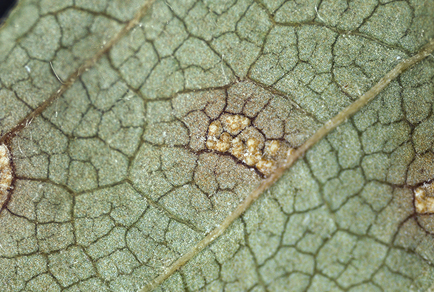
Two genera of rust fungi, Quasipucciniastrum and Aculeastrum, have recently been described within the family Coleosporiaceae. However, their taxonomic status as separate, independent genera remained a matter of debate. In the present study, we investigated the taxonomy of Quasipucciniastrum and Aculeastrum using morphological and molecular (nuc rDNA 5.8S-ITS2 [ITS barcode] and partial nuc 28S rDNA D1–D3 regions [28S]) data, including a detailed study of the type collections of Pucciniastrum potentillae and Thekopsora agrimoniae. Based on type specimen examination, Asian species Q. potentillae is considered synonym of Q. ochraceum. Furthermore, as the main outcome of our phylogenetic study, we synonymize Quasipucciniastrum and Aculeastum with the genus Thekopsora, and propose a new nomenclatural combination Thekopsora arctica.
References
- Aime, M.C. (2006) Toward resolving family-level relationships in rust fungi (Uredinales). Mycoscience 47 (3): 112–122. https://doi.org/10.1007/S10267-006-0281-0
- Aime, M.C., Bell, C.D. & Wilson, A.W. (2018) Deconstructing the evolutionary complexity between rust fungi (Pucciniales) and their plant hosts. Studies in Mycology 89: 143–152. https://doi.org/10.1016/j.simyco.2018.02.002
- Aime, M.C. & McTaggart, A.R. (2021) A higher-rank classification for rust fungi, with notes on genera. Fungal Systematics and Evolution 7: 21–47. https://doi.org/10.3114/fuse.2021.07.02
- Alfaro, M.E., Zoller, S. & Lutzoni, F. (2003) Bayes or bootstrap? A simulation study comparing the performance of Bayesian Markov chain Monte Carlo sampling and bootstrapping in assessing phylogenetic confidence. Molecular Biology and Evolution 20: 255–266. https://doi.org/10.1093/molbev/msg028
- Beenken, L., Zoller, S. & Berndt, R. (2012) Rust fungi on Annonaceae II: The genus Dasyspora Berk. et M.A. Curtis. Mycologia 104 (3): 659–681. https://doi.org/10.3852/11-068
- Bubner, B., Buchheit, R., Friedrich, F., Kummer, V. & Scholler, M. (2019) Species identification of European forest pathogens of the genus Milesina (Pucciniales) using urediniospore morphology and molecular barcoding including M. woodwardiana sp. nov. Mycokeys 48: 1–40. https://doi.org/10.3897/mycokeys.48.30350
- Capella-Gutierrez, S., Silla-Martinez, J.M. & Gabaldon, T. (2009) TrimAl, a tool for automated alignment trimming in large-scale phylogenetic analyses. Bioinformatics 25: 1972–1973. https://doi.org/10.1093/bioinformatics/btp348
- Chattopadhyay, A., Tiwari, K.K., Bhushan, K. & Pratap, D. (2017) Genic molecular markers in Fungi: availability and utility for bioprospection. In: Singh, B.P. & Gupta, V.K. (Eds.) Molecular markers in mycology. Fungal Biology. Springer, Cham, pp. 151–176. https://doi.org/10.1007/978-3-319-34106-4_7
- Feau, N., Vialle, A., Allaire, M., Maier, W. & Hamelin, R.C. (2011) DNA barcoding in the rust genus Chrysomyxa and its implications for the phylogeny of the genus. Mycologia 103 (6): 1250–1266. https://doi.org/10.3852/10-426
- Gäumann, E. (1959) Die Rostpilze Mitteleuropas mit besonderer Berücksichtigung der Schweiz. Büchler, Bern, 1407 pp.
- He, M.Q., Cao, B., Liu, F., Boekhout, T., Denchev, T.T., Schoutteten, N., Denchev, C.M., Kemler, M., Gorjón, S.P., Begerow, D., Valenzuela, R., Davoodian, N., Niskanen, T., Vizzini, A., Redhead, S.A., Ramírez.Cruz, V., Papp, V., Dudka, V.A., Dutta, A.K., García.Sandoval, R., Liu, X.Z., Kijpornyongpan, T., Savchenko, A., Tedersoo, L., Theelen, B., Trierveiler-Pereira, L., Wu, F., Zamora, J.C., Zeng, X.Y., Zhou, L.W., Liu, S.L., Ghobad-Nejhad, M., Giachini, A.J., Li, G.J., Kakishima, M., Olariaga, I., Haelewaters, D., Sulistyo, B., Sugiyama, J., Svantesson, S., Yurkov, A., Alvarado, P., Antonín, V., da Silva, A.F., Druzhinina, I., Gibertoni, T.B., Guzmán-Dávalos, L., Justo, A., Karunarathna, S.C., Galappaththi, M.C.A., Toome-Heller, M., Hosoya, T., Liimatainen, K., Márquez, R., Mešić, A., Moncalvo, J.M., Nagy, L.G., Varga, T., Orihara, T., Raymundo, T., Salcedo, I., Silva-Filho, A.G.S., Tkalčec, Z., Wartchow, F., Zhao, C.L., Bau, T., Cabarroi-Hernández, M., Cortés-Pérez, A., Decock, C., De Lange, R., Weiss, M., Menolli Jr., N., Nilsson, R.H., Fan, Y.G., Verbeken, A., Gafforov, Y., Meiras-Ottoni, A., Mendes-Alvarenga, R.L., Zeng, N.K., Wu, Q., Hyde, K.D., Kirk, P.M. & Zhao, R.L. (2024) Phylogenomics, divergence times and notes of orders in Basidiomycota. Fungal Diversity 126: 127–406. https://doi.org/10.1007/s13225-024-00535-w
- Hillis, D.M. & Bull, J.J. (1993) An empirical test of bootstrapping as a method for assessing confidence in phylogenetic analysis. Systematic Biology 42: 182–192. https://doi.org/10.1093/sysbio/42.2.182
- Katoh, K., Rozewicki, J. & Yamada, K.D. (2019) MAFFT online service: multiple sequence alignment, interactive sequence choice and visualization. Briefings in Bioinformatics 20 (4): 1160–1166. https://doi.org/10.1093/bib/bbx108
- Letunic, I. & Bork, P. (2019) Interactive Tree Of Life (iTOL) v4: Recent updates and new developments. Nucleic Acids Research 47: W256–W259. https://doi.org/10.1093/nar/gkz239
- Liang, Y.-M., Kakishima, M. & Tian, C.-M. (2006) Phylogenetic relationships on 14 morphologically similar species of Pucciniastrum in Japan based on rDNA sequence data. Mycoscience 47 (3): 137–144. https://doi.org/10.1007/S10267-006-0284-X
- McTaggart, A.R. & Aime, M.C. (2018) The species of Coleosporium (Pucciniales) on Solidago in North America. Fungal Biology 122 (8): 800–809. https://doi.org/10.1016/j.funbio.2018.04.007
- Matheny, P.B., Wang, Z., Binder, M., Curtis, J.M., Lim, Y.W., Nilsson, R.H., Hughes, K.W., Hofstetter, V., Ammirati, J.F., Schoch, C.L., Langer, E., Langer, G., McLaughlin, D.J., Wilson, A.W., Frøslev, T., Ge, Z.-W., Kerrigan, R.W., Slot, J.C., Yang, Z.-L., Baroni, T.J., Fischer, M., Hosaka, K., Matsuura, K., Seidl, M.T., Vauras, J. & Hibbett, D.S. (2007) Contributions of rpb2 and tef1 to the phylogeny of mushrooms and allies (Basidiomycota, Fungi). Molecular Phylogenetics and Evolution 43 (2): 430–451. https://doi.org/10.1016/j.ympev.2006.08.024
- Rambaut, A., Drummond, A.J., Xie, D., Baele, G. & Suchard, M.A. (2018) Posterior summarisation in Bayesian phylogenetics using Tracer 1.7. Systematic Biology 67: 901–904. https://doi.org/10.1093/sysbio/syy032
- Qi, X.-H., Cai, L. & Zhao, P. (2019) Quasipucciniastrum agrimoniae, gen. et sp. nov. on Agrimonia (Rosaceae) from China. Mycology 10: 141–150. https://doi.org/10.1080/21501203.2019.1610522
- Ronquist, F., Teslenko, M., van der Mark, P., Ayres, D.L., Darling, A., Höhna, S., Larget, B., Liu, L., Suchard, M.A. & Huelsenbeck, J.P. (2012) MrBayes 3.2: Efficient Bayesian phylogenetic inference and modelchoice across a large model space. Systematic Biology 61: 539–542. https://doi.org/10.1093/sysbio/sys029
- Scholler, M., Braun, U., Buchheit, R., Schulte, T. & Bubner, B. (2022) Studies on European rust fungi, Pucciniales: molecular phylogeny, taxonomy, and nomenclature of miscellaneous genera and species in Pucciniastraceae and Coleosporiaceae. Mycological Progress 21: 64. https://doi.org/10.1007/s11557-022-01810-3
- Tamura, K., Stecher, G. & Kumar, S. (2021) MEGA11: Molecular Evolutionary Genetics Analysis version 11. Molecular Biology and Evolution 38: 3022–3027. https://doi.org/10.1093/molbev/msab120
- Tekpinar, A.D. & Kalmer, A. (2019) Utility of various molecular markers in fungal identification and phylogeny. Nova Hedwigia 109 (1-2): 187–224. https://doi.org/10.1127/nova_hedwigia/2019/0528
- Trifinopoulos, J., Nguyen, L.-T., von Haeseler, A. & Minh, B.Q. (2016) W-IQ-TREE: a fast online phylogenetic tool for maximum likelihood analysis. Nucleic Acids Research 44: W232–W235. https://doi.org/10.1093/nar/gkw256
- Vilgalys, R. & Hester, M. (1990) Rapid genetic identification and mapping of enzymatically amplified ribosomal DNA from several Cryptococcus species. Journal of Bacteriology 172: 4239–4246. https://doi.org/10.1128/jb.172.8.4238-4246.1990
- Vu, D., Groenewald, M., de Vries, M., Gehrmann, T., Stielow, B., Eberhardt, U., Al-Hatmi, A., Groenewald, J.Z., Cardinali, G., Houbraken, J., Boekhout, T., Crous, P.W., Robert, V. & Verkley, G.J.M. (2018) Large-scale generation and analysis of filamentous fungal DNA barcodes boosts coverage for kingdom fungi and reveals thresholds for fungal species and higher taxon delimitation. Studies in Mycology 92: 135–154. https://doi.org/10.1016/j.simyco.2018.05.001
- Wilson, A.W., Beckerman, J.L. & Aime, M.C. (2014) First Report of the White Pine Blister Rust Fungus, Cronartium ribicola, on Ribes odoratum in Indiana. Plant Disease 98 (2): 277. https://doi.org/10.1094/PDIS-04-13-0442-PDN
- Yang, T., Tian, C.-M., Liang, Y.-M. & Kakishima, M. (2014) Thekopsora ostryae (Pucciniastraceae, Pucciniales), a new species from Gansu, northwestern China. Mycoscience 55: 246–251. https://doi.org/10.1016/j.myc.2013.09.005
- Zhao, P., Liu, F., Huang, J.E., Zhou, X., Qi, X.H., Duan, W.J. & Cai, L. (2022) Cronartium rust (Pucciniales, Cronartiaceae): species delineation,diversity and host alternation. Mycosphere 13 (1): 672–723. https://doi.org/10.5943/mycosphere/13/1/7