

Abstract
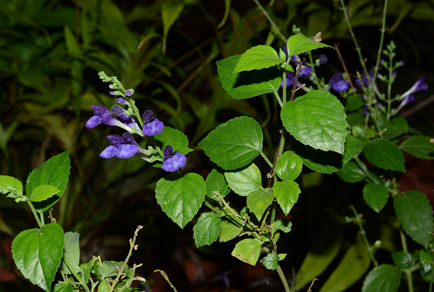
Based on critical examination of herbarium specimens (including type material) and careful observations on living plants, we demonstrate that Scutellaria formosana (Lamiaceae), previously regarded as a native of Taiwan or Hainan provinces, China, but actually from Hong Kong, and its variety, S. formosana var. pubescens, described from Hainan, are conspecific with S. stenosiphon, a species considered endemic to the Luofu Shan in Guangdong province, China, and S. javanica, a species widely distributed in Southeast Asia and China, respectively. We therefore reduce S. formosana to the synonymy of S. stenosiphon, and S. formosana var. pubescens to the synonymy of S. javanica herein. The distribution of S. stenosiphon and S. javanica in China is clarified. A distribution map of S. stenosiphon is also provided.
References
- Bartolucci, F., Domina, G., Ardenghi, N.M.G., Bacaro, G., Bacchetta, G., Ballarin, F., Banfi, E., Barberis, G., Beccarisi, L., Bernardo, L., Bonari, G., Bonini, F., Brullo, S., Buono, S., Buono, V., Calbi, M., Caldararo, F., Calvia, G., Cancellieri, L., Cannavò, S., Dagnino, D., Esposito, A., Fascetti, S., Filibeck, G., Fiorini, G., Forte, L., Galasso, G., Gestri, G., Gigante, D., Gottschlich, G., Gubellini, L., Hofmann, N., Lastrucci, L., Lonati, M., Lorenz, R., Lunardi, L., Magrini, S., Mainetti, A., Maiorca, G., Mereu, G., Messa Ballarin, R.T., Minuto, L., Mossini, S., Musarella, C.M., Nimis, P.L., Passalacqua, N.G., Peccenini, S., Petriglia, B., Podda, L., Potenza, G., Ravetto Enri, S., Roma-Marzio, F., Rosati, L., Ruggero, A., Spampinato, G., Stinca, A., Tiburtini, M., Tietto, C., Tomaselli, V., Turcato, C., Viciani, D. & Wagensommer, R.P. (2019) Notulae to the Italian native vascular flora: 8. Italian Botanist 8: 95–116. https://doi.org/10.3897/italianbotanist.8.48626
- Bentham, G. (1834) Labiatarum Genera et Species. James Moyes, London, 783 pp.
- Casella, F., Vurro, M., Valerio; F., Perrino, E.V., Mezzapesa, G.N. & Boari, A. (2023) Phytotoxic Effects of Essential Oils from Six Lamiaceae Species. Agronomy 13: 257. https://doi.org/10.3390/agronomy13010257
- Brown, N.E. (1894) New or noteworthy plants. The Gardeners' Chronicle 16: 212.
- Di Pietro, R., Di Marzio, P., Medagli, P., Misano, G., Silletti, G.N., Wagensommer, R.P. & Fortini, P. (2016) Evidence from multivariate morphometric study of the Quercus pubescens complex in southeast Italy. Botanica Serbica 40 (1): 83–100.
- Dunn, S.T. (1913) Notes on Chinese Labiatae. Notes from the Royal Botanic Garden, Edinburgh 8: 153–171. https://doi.org/10.24823/nrbge.1913.2247
- Dunn, S.T. (1915) A key to the Labiatae of China. Notes from the Royal Botanic Garden, Edinburgh 6: 127–208. https://doi.org/10.24823/nrbge.1915.2218
- Dunn, S.T. & Tutcher, W.J. (1912) Labiatae. Bulletin of Miscellaneous Information. Additional Series 10: 205–212. https://doi.org/10.2307/4111791
- Engels, M.E., Dias, D.C. & Koch, A.K. (2020) Increased morphological variation and a new record of Vanilla labellopapillata (Orchidaceae) from the Mato Grosso State, Brazil. Phytotaxa 472 (1): 63–68. https://doi.org/10.11646/phytotaxa.472.1.8
- Forbes, F.B. & Hemsley, W.B. (1890) An enumeration of all the plants known from China proper, Formosa, Hainan, Corea, the Luchu Archipelago, and the Island of Hong Kong, together with their distribution and synonymy. The Journal of the Linnean Society, Botany 26: 121–316. https://doi.org/10.1111/j.1095-8339.1890.tb00106.x
- Groff, G.W., Ding, E. & Groff, E.H. (1924) An enumeration of the McClure collection of Hainan plants. The Lingnaam Agricultural Review 2: 115–139.
- Hayata, B. (1919) Icones Plantarum Formosanarum 8. Bureau of Productive Industries, Government of Formosa, Taihoku, 164 pp.
- He, H.Z. & Chen, H.B. (1989) Labiatae. In: Lin, L.G. (Ed.) Flora Fujianica, vol. 4. Fujian Science & Technology Press, Fuzhou, pp. 552–630.
- Hooker, J.D. (1896) Scutellaria formosana. Curtis’s Botanical Magzine 122: tab. 7458.
- Hornung-Leoni, C. & Sosa, V. (2005) Morphological variation in Puya (Bromeliaceae): an allometric study. Plant Systematics and Evolution 256: 35–53. https://doi.org/10.1007/s00606-005-0302-z
- Junghuhn, F.W. (1853) Java, deszelfs gedaante, bekleeding en inwendige structuur. P.N. van Kampen, Amsterdam, 770 pp.
- Kudo, Y. (1929) Labiatarum Sino-Japonicarum prodromus. Memoirs of the Faculty of Science and Agricultrue, Taihoku Imperial University 2: 37–311.
- Laface, V.L.A., Musarella, C.M., Tavilla, G., Sorgonà, A., Cano-Ortiz, A., Quinto Canas, R. & Spampinato, G. (2023) Current and Potential Future Distribution of Endemic Salvia ceratophylloides Ard. (Lamiaceae). Land 12: 247. https://doi.org/10.3390/land12010247
- Léveillé, H. (1911) Decades plantarum novarum. XLIX–LI. Repertorium Specierum Novarum Regni Vegetabilis 9: 218–224. https://doi.org/10.1002/fedr.19110091308
- Li, H.W. & Hedge, I.C. (1994) Lamiaceae. In: Wu, Z.Y., Raven, P.H. & Hong, D.Y. (Eds.) Flora of China, vol. 17. Science Press, Beijing & Missouri Botanical Garden Press, St. Louis, pp. 50–299.
- Linnaeus, C. (1753) Species Plantarum. Laurentii Salvii, Holmiae, 1200 pp.
- Lo, H.S. (1995) Scutellaria Linn. In: Wu, T.L. (Ed.) Flora of Guangdong, vol. 3. Guangdong Science and Technology Press, Guangzhou, pp. 400–406.
- Masamune, G. (1943) Flora Kainantensis. Plant Taxonomic Laboratory, Faculty of Sciences, Taipei Imperial University, Taipei, 443 pp.
- Merrill, E.D. (1927) An enumeration of Hainan plants. Lingnan Science Journal 5: 1–186.
- Nayak, S., Agrawala, D., Singh Jala, J., Maity, D. & Choudhury, S. (2022) Exclusion of two Bulbophyllum species from Orchid Flora of India. Nelumbo 64 (2): 192–198. https://doi.org/10.20324/nelumbo/v64/2022/172589
- Perrino, E.V., Wagensommer, R.P., Mezzapesa, G.N. & Trani, A. (2024) Stachys italica Mill.: synecology, functional compounds and potential use of an Italian endemic taxon. Planta 260 (138): 1–19. https://doi.org/10.1007/s00425-024-04571-3
- Shang, X., He, X., He, X., Li, M., Zhang, R., Fan, P. & Jia, Z. (2010) The genus Scutellaria an ethnopharmacological and phytochemical review. Journal of Ethnopharmacology 128 (2): 279–313. https://doi.org/10.1016/j.jep.2010.01.006
- Shomurodov, H.F., Khuzhanazarov, U.E., Beshko, N.Y., Akhmadalieva, B. & Sharipova, V.K.A. (2017) Demographic structure of populations of Salvia lilacinocoerulea Nevski, a rare species endemic to the Western Pamir-Alay (Uzbekistan, Turkmenistan). American Journal of Plant Science 8: 1411.
- Thiers, B. (2025) Index Herbariorum: A global directory of public herbaria and associated staff. New York Botanical Garden’s Virtual Herbarium. Available from: http://sweetgum.nybg.org/ih/ (accessed 31 October 2025)
- Vaniot, M.E. (1904) Plantae Bodinierianae Faurieanae & Cavalerienses Labiées. Bulletin de l’Académie Internationale de Géographie Botanique 14: 165–196.
- Wagensommer, R.P. (2023) Floristic studies in the light of biodiversity knowledge and conservation. Plants 12 (16): 2973. https://doi.org/10.3390/books978-3-0365-9562-7
- Wallich, N. (1830) Plantae Asiaticae Rariores; or Descriptions and Figures of a Select Number of Unpublished East Indian Plants, vol. 1. Treuttel and Würtz, London, 84 pp. https://doi.org/10.5962/bhl.title.468
- Wei, F.N., Chen, J., Wei, Y.G. & Yan, K.J. (2017) Lamiaceae. In: Li, S.G. (Ed.) Flora of Guangxi, vol. 4. Guangxi Science & Technology Publishing House, Nanning, pp. 910–993.
- Wu, C.Y. (1984) Index Florae Yunnanensis, vol. 2. Yunnan People’s Publishing House, Kunming, pp. 1071–2259.
- Wu, C.Y. & Li, H.W. (1977a) Labiatae. In: Anonymous (Ed.) Flora Hainanica, vol. 4. Science Press, Beijing, pp. 26–57.
- Wu, C.Y. & Li, H.W. (1977b) Scutellaria Linn. In: Wu, C.Y. & Li, H.W. (Eds.) Flora Reipublicae Popularis Sinicae, vol. 65 (2). Science Press, Beijing, pp. 124–248.
- Wu, C.Y. & Li, H.W. (1977b) Scutellaria Linn. In: Wu, C.Y. (Ed.) Flora Yunnanica, vol. 1. Science Press, Beijing, pp. 537–567.
- Yeddes, W., Wannes, W.A., Hammami, M., Smida, M., Chebbi, A., Marzouk, B. & Tounsi, M.S. (2018) Effect of environmental conditions on the chemical composition and antioxidant activity of essential oils from Rosmarinus officinalis L. growing wild in Tunisia. Journal of Essential Oil Bearing Plants 21 (4): 972–986. https://doi.org/10.1080/0972060X.2018.1533433