

Abstract
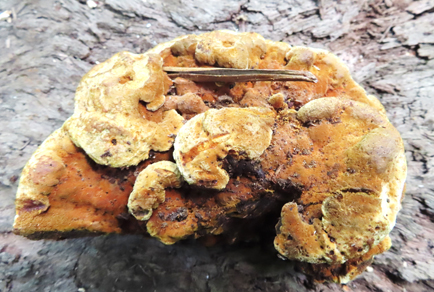
Fulvifomes is a monophyletic genus of Hymenochaetaceae (Basidiomycota), with a cosmopolitan distribution and ecological importance. Specimens of Fulvifomes were collected from floodplain forest islands in the Brazilian Amazon. Morphological and molecular phylogenetic analyses revealed a new species, Fulvifomes paraensis sp. nov., mainly characterized by its pileate basidioma, broadly attached to dimidiate, hyphal system monomitic in context to subdimitic in trama, and basidiospores broadly ellipsoid to subglobose. This species was found on dead trunks of Mora paraensis, a tree species that is endemic to floodplain areas of the eastern Amazon. Additionally, Fulvifomes kawakamii is reported for the first time in floodplain forests. Notes and illustrations for these two species, and an identification key for the species of Fulvifomes with molecular data from Brazil are provided.
References
- Almeida, S.S., Amaral, D.D. & Silva, A.S.L. (2004) Análise florística e estrutura de florestas de várzea no estuário amazônico. Acta Amazônica 34 (4): 513–524.
- Baltazar, J.M. & Gibertoni, T.B. (2010) New combinations in Phellinus s.l. and Inonotus s.l. Mycotaxon 111: 205–208.
- Bondartseva, M.A., Herrera Figueroa, S., Sandoval, D. & Cejas, F. (1992) Taxonomical problems of the Cuban Hymenochaetaceous fungi. Mikologiya i fitopatologiya 26 (1): 3–14.
- Campos-Santana, M., Robledo, G., Decock, C. & Silveira, R.M.B. (2015) Diversity of the poroid Hymenochaetaceae (Basidiomycota) from the Atlantic Forest and Pampa in Southern Brazil. Cryptogamie Mycologie 36 (1): 43–78.
- Carim, M.J.V., Wittmann, F.K., Piedade, M.T.F., Guimarães, J.R.S. & Tostes, L.C.L. (2017) Composition, diversity, and structure of tidal “Várzea” and “Igapó” floodplain forests in eastern Amazonia, Brazil. Brazilian Journal of Botany 40 (1): 115–124. https://doi.org/10.1007/s40415-016-0315-6
- Castro, C.C. de, Gutiérrez, A.H. & Sotão, H.M.P. (2012) Fungos conidiais em Euterpe oleracea Mart. (açaizeiro) na Ilha do Combu, Pará-Brasil. Acta Botanica Brasilica 26: 761–771.
- Cattanio, J.H., Anderson, A.B. & Carvalho, M.S. (2002) Floristic composition and topographic variation in a tidal floodplain forest in the Amazon Estuary. Revista Brasileira de Botânica 25 (4): 419–430.
- Chen, J., Yuan, Y., Luo, K.Y. & Vlasák, J. (2025) Two new species of Fulvifomes (Hymenochaetales, Basidiomycota) from South America. MycoKeys 119: 263–279. https://doi.org/10.3897/mycokeys.119.158957
- Ducke, A. (1915) Dimorphandra paraensis. Archivos do Jardim Botânico do Rio de Janeiro 1: 21.
- Ducke, A. (1925) Mora paraensis. Archivos do Jardim Botânico do Rio de Janeiro 4: 45.
- Fidalgo, O. & Bononi, V.L. (1989) Guia de coleta, preservação e herborização de material botânico. Instituto de Botânica, São Paulo.
- Flora e Funga do Brasil. (2024) Fulvifomes Murrill. Jardim Botânico do Rio de Janeiro. Available from: https://floradobrasil.jbrj.gov.br/FB92911 (accessed 1 October 2024)
- Gaertner, C.F. (1805) Supplementum Carpologiae: seu continuatio operis Josephi Gaertner de fructibus et seminibus plantarum. Vol. 47. G.C. Nauk, Leipzig, pp. 186.
- GBIF. (2024) Fulvifomes Murrill in Brazil. Available from: https://www.gbif.org/occurrence/taxonomy?q=Fulvifomes (accessed 17 October 2024)
- Gilbertson, R.L. & Ryvarden, L. (1986) North American Polypores (Vol. 1). Fungiflora, Oslo.
- Gilbertson, R.L. & Ryvarden, L. (1987) North American Polypores. Fungifora, Oslo, 885 pp.
- Hall, T.A. (1999) BioEdit: a user-friendly biological sequence alignment editor and analysis program for Windows 95/98/NT. Nucleic Acids Symposium Series 41: 95–98.
- Hattori, T., Ota, Y. & Sotome, K. (2022) Two new species of Fulvifomes (Basidiomycota, Hymenochaetaceae) on threatened or near threatened tree species in Japan. Mycoscience 63: 131–141. https://doi.org/10.47371/mycosci.2022.04.002
- Hattori, T., Sakayaroj, J., Jones, E.B.G., Suetrong, S., Preedanon, S. & Klaysuban, A. (2014) Three species of Fulvifomes (Basidiomycota, Hymenochaetales) associated with rots on mangrove tree Xylocarpus granatum in Thailand. Mycoscience 55: 344–354. https://doi.org/10.1016/j.myc.2014.01.001
- Jayawardena, R.S., Hyde, K.D., Jeewon, R., Ghobad-Nejhad, M., Wanasinghe, D.N., Liu, N. & Abeywikrama, P. (2019) One stop shop II: taxonomic update with molecular phylogeny for important phytopathogenic genera: 26–50. Fungal Diversity 94 (1): 41–129.
- Ji, X.H., Dai, Y.C. & Vlasák, J. (2017) Two new species of Fulvifomes (Hymenochaetales, Basidiomycota) from America. MycoKeys 22: 1–13.
- Jordão, V.M.M. & Sampaio, D. (2020) Mora in Flora do Brasil 2020. Jardim Botânico do Rio de Janeiro. Available from: https://floradobrasil2020.jbrj.gov.br/FB83485 (accessed 17 October 2024)
- Junk, W.J., Piedade, M.T.F., Schöngart, J., Cohn-Haft, M., Adeney, J.M. & Wittmann, F. (2011) A classification of major naturally-occurring Amazonian lowland wetlands. Wetlands 31: 623–640.
- Kalyaanamoorthy, S., Minh, B.Q., Wong, T.K., Von Haeseler, A. & Jermiin, L.S. (2017) ModelFinder: fast model selection for accurate phylogenetic estimates. Nature Methods 14 (6): 587–589. https://doi.org/10.1038/nmeth.4285
- Katoh, K. & Standley, D.M. (2013) MAFFT multiple sequence alignment software version 7: improvements in performance and usability. Molecular Biology and Evolution 30: 772–780. https://doi.org/10.1093/molbev/mst010
- Kearse, M., Moir, R., Wilson, A., Stones-Havas, S., Cheung, M., Sturrock, S., Buxton, S., Cooper, A., Markowitz, S., Duran, C., Thierer, T., Ashton, B., Meintjes, P. & Drummond, A. (2012) Geneious Basic: an integrated and extendable desktop software platform for the organization and analysis of sequence data. Bioinformatics 28: 1647–1649.
- Koidzumi, G. (1917) Morus boninensis. Botanical Magazine (Tokyo) 31: 38.
- Kornerup, A. & Wanscher, J.H. (1978) Methuen handbook of colour (3rd ed.). Eyre Methuen.
- Larsen, M.J., Lombard, F.F. & Hodges, C.S. (1985) Hawaiian forest fungi V. A new species of Phellinus (Hymenochaetaceae) causing decay of Casuarina and Acacia. Mycologia 77 (3): 345–352.
- Larsen, M. & Cobb-Poulle, L.A. (1990) Phellinus (Hymenochaetaceae): A survey of the world taxa. Synopsis Fungorum 3: 1–206. https://doi.org/10.2307/3760175
- Larsson, K.H., Parmasto, E., Fischer, M., Langer, E., Nakasone, K.K. & Redhead, S.A. (2006) Hymenochaetales: a molecular phylogeny for the hymenochaetoid clade. Mycologia 98: 926–936. https://doi.org/10.1080/15572536.2006.11832622
- Lemoine, F., Correia, D., Lefort, V., Doppelt-Azeroual, O., Mareuil, F., Cohen-Boulakia, S. & Gascuel, O. (2019) NGPhylogeny.fr: new generation phylogenetic services for non-specialists. Nucleic Acids Research 47: W260–W265. https://doi.org/10.1093/nar/gkz303
- Letunic, I. & Bork, P. (2024) Interactive Tree of Life (iTOL) v6: recent updates to the phylogenetic tree display and annotation tool. Nucleic Acids Research 52: W78–W82. https://doi.org/10.1093/nar/gkae268
- Léveillé, J.H. (1844) Champignons exotiques. Annales des Sciences Naturelles. Botanique 2: 167–221.
- Lima-Júnior, N.C., Gibertoni, T.B. & Malosso, E. (2014) Delimitation of some neotropical laccate Ganoderma (Ganodermataceae): molecular phylogeny and morphology. Revista de Biologia Tropical 62: 1197–1208.
- Linnaeus, C. (1759) Amoenitates Academicae. 4: 143.
- Malhi, Y., Wood, D., Baker, T.R., Wright, J., Phillips, O.L., Cochrane, T., Meir, P., Chave, J., Almeida, S., Arroyo, L., Higuchi, N., Killeen, T.J., Laurance, S.G., Laurance, W.F., Lewis, S.L., Monteagudo, A., Neill, D.A., Núñez Vargas, P., Pitman, N.C.A., Quesada, C.A., Salomão, R., Silva, J.N.M., Torres Lezama, A., Terborgh, J., Vásquez Martínez, R. & Vinceti, B. (2006) The regional variation of aboveground live biomass in old-growth Amazonian forests. Global Change Biology 12: 1107–1138.
- Martínez, M., Salvador-Montoya, C.A., de Errasti, A., Popoff, O.F. & Rajchenberg, M. (2023) Fulvifomes wrightii (Hymenochaetales), a new species related to F. robiniae from Argentina and Paraguay. Fungal Systematics and Evolution 12: 47–57. https://doi.org/10.3114/fuse.2023.12.03
- Maués, B.A.R., Jardim, M.A.G., Batista, F.B., Medeiros, T.D.S. & Quaresma, A.C. (2011) Composição florística e estrutura do estrato inferior da floresta de várzea na área de proteção ambiental Ilha do Combu, município de Belém, Estado do Pará. Revista Árvore 35: 669–677. https://doi.org/10.1590/S0100-67622011000400011
- Millennium Ecosystem Assessment (2005) Ecosystems and human wellbeing: wetlands and water. Available from: http://www.unep.org/maweb/documents/document.358.aspx.pdf (accessed 1 October 2024)
- Miller, P. (1754) The Gardeners Dictionary, Abridged 4 (1): 25.
- Miller, M.A., Pfeiffer, W. & Schwartz, T. (2011) The CIPRES science gateway: a community resource for phylogenetic analyses. Proceedings of the 2011 TeraGrid Conference: Extreme Digital Discovery 41: 1–8. https://doi.org/10.1145/2016741.2016785
- Moncalvo, J.M., Lutzoni, F.M., Rehner, S.A., Johnson, J. & Vilgalys, R. (2000) Phylogenetic relationships of agaric fungi based on nuclear large subunit ribosomal DNA sequences. Systematic Biology 49: 278–305.
- Montagne, J.P.F.C. (1842) Cryptogamae nilgherienses seu plantarum cellularium in montibus peninsulae indicae Neel-Gherries dictis a cl. Perrottet collectarum enumeratio. Annales des Sciences Naturelles. Botanique. Sér. 2 18: 12–23.
- Montagne, J.P.F.C. (1856) Septième centurie de plantes cellulaires nouvelles, tant indigènes qu’exotiques. Annales des Sciences Naturelles Botanique 5: 333–374.
- Murrill, W.A. (1907) Some Philippine Polyporaceae. Bulletin of the Torrey Botanical Club 34: 465–481.
- Murrill, W.A. (1908) Polyporaceae, Part 2. North American Flora 9 (2): 73–131.
- Murrill, W.A. (1914) North American Polypores. The New Era Printing Company, New York.
- Murrill, W.A. (1915) Tropical Polypores. USA, New York, 113 pp.
- Neves, M.A., Baseia, I.G., Drechsler-Santos, E.R. & Góes-Neto, A. (2013) Guide to the common fungi of the semiarid region of Brazil. TECC Editora.
- Nguyen, L.T., Schmidt, H.A., Von Haeseler, A. & Minh, B.Q. (2015) IQ-TREE: a fast and effective stochastic algorithm for estimating maximum-likelihood phylogenies. Molecular Biology and Evolution 32 (1): 268–274. https://doi.org/10.1093/molbev/msu300
- Núñez, M. & Ryvarden, L. (2000) East Asian polypores (Vol. 1). Synopsis Fungorum 13: 1–168.
- Oliveira, V.R.T., Lima, V.X., Oliveira-Filho, J.R.C. & Gibertoni, T.B. (2022) Three new species of Fulvifomes (Hymenochaetales, Basidiomycota) from Brazil. Sydowia 75: 1–12. https://doi.org/10.12905/0380.sydowia75-2022-0001
- Olou, B.A., Ordynets, A. & Langer, E. (2019) First new species of Fulvifomes (Hymenochaetales, Basidiomycota) from tropical Africa. Mycological Progress 18 (12): 1383–1393. https://doi.org/10.1007/s11557-019-01536-9
- Romell, L. (1901) Hymenomycetes Austro-Americani in itinere Regnelliano primo collecti. Bihang till Kongliga Svenska Vetenskaps-Akademiens Handlingar 26 (16): 3–61.
- Ronquist, F., Teslenko, M., van der Mark, P., Ayres, D.L., Darling, A., Höhna, S., Larget, B., Liu, L., Suchard, M.A. & Huelsenbeck, J.P. (2012) MrBayes 3.2: Efficient Bayesian phylogenetic inference and model choice across a large model space. Systematic Biology 61: 539–542. https://doi.org/10.1093/sysbio/sys029
- Ryvarden, L. (2004) Neotropical Polypores 1. Introduction, Hymenochaetaceae and Ganodermataceae. Synopsis Fungorum 19: 1–227.
- Ryvarden, L. & Johansen, I. (1980) A Preliminary Polypore Flora of East Africa. Fungifora, Oslo, 636 pp.
- Salvador-Montoya, C.A., Popoff, O.F., Reck, M. & Drechsler-Santos, E.R. (2018) Taxonomic delimitation of Fulvifomes robiniae (Hymenochaetales, Basidiomycota) and related species in America: F. squamosus sp. nov. Plant Systematics and Evolution 304: 445–459. https://doi.org/10.1007/s00606-017-1487-7
- Salvador-Montoya, C.A., Martínez, M. & Drechsler-Santos, E.R. (2022) Taxonomic update of species closely related to Fulvifomes robiniae in America. Mycological Progress 21: 95. https://doi.org/10.1007/s11557-022-01843-8
- Santos, S.R.M., Miranda, I.S. & Tourinho, M.M. (2004) Análise florística e estrutural de sistemas agroflorestais das várzeas do rio Juba, Cametá, Pará. Acta Amazonica 34 (2): 251–263.
- Santos, V.S., Batista, A.P.B., Aparício, P.S. & Aparício, W.C.S. (2012) Dinâmica floresta de espécies arbóreas em uma floresta de várzea na cidade de Macapá, AP, Brasil. Revista Verde de Agroecologia e Desenvolvimento Sustentável 7 (4): 207–213.
- Schöngart, J., Wittmann, F., Worbes, M. (2010) Biomass and Net Primary Production of Central Amazonian Floodplain Forests. In: Junk, W.J., Piedade, M.T.F. & Wittmann, F. (Eds.) Amazonian Floodplain Forests: Ecophysiology, Biodiversity and Sustainable Management. Ecological Studies 210: 347–388.
- Sedell, J.R., Reeves, G.H., Hauer, F.R., Stanford, J.A. & Hawkins, C.P. (1990) Role of refugia in recovery from disturbances: Modern fragmented and disconnected river systems. Environmental Management 14: 711–724.
- Singer, R. (1988) The role of fungi in periodically inundated Amazonian forests. Vegetatio 78: 27–30.
- Stamatakis, A. (2014) RAxML Version 8: A tool for phylogenetic analysis and post-analysis of large phylogenies. Bioinformatics. https://doi.org/10.1093/bioinformatics/btu033
- Tamura, K., Stecher, G. & Kumar, S. (2021) MEGA11: Molecular Evolutionary Genetics Analysis Version 11. Molecular Biology and Evolution 38 (7): 3022–3027. https://doi.org/10.1093/molbev/msab120
- Teixeira, A.R. (1995) Método para estudo das hifas do basidiocarpo de fungos poliporáceos. Instituto de Botânica, São Paulo.
- Trifinopoulos, J., Nguyen, L.-T., Von Haeseler, A. & Minh, B.Q. (2016) W-IQ-TREE: a fast online phylogenetic tool for maximum likelihood analysis. Nucleic Acids Research 44 (W1): W232–W235. https://doi.org/10.1093/nar/gkw256
- Wagner, T. & Fischer, M. (2002) Proceedings towards a natural classification of the worldwide taxa Phellinus s.l. and Inonotus s.l., and phylogenetic relationships of allied genera. Mycologia 94: 998–1016. https://doi.org/10.1080/15572536.2003.11833156
- White, T.J., Bruns, T., Lee, S. & Taylor, J.W. (1990) Amplification and direct sequencing of fungal ribosomal RNA genes for phylogenetics. In: Innis, M.A., Gelfand, D.H., Sninsky, J.J. & White, T.J. (Eds.) PCR protocols: a guide to methods and applications. Academic Press, pp. 315–322.
- Willdenow, C.L. (1806) Species Plantarum. Vol. 4 (4). Berolini: G.C. Nauk., pp. 1080.
- Wittmann, F., Schöngart, J., Montero, J.C., Motzer, T., Junk, W.J., Piedade, M.T.F., Queiroz, H.L. & Worbes, M. (2006) Tree species composition and diversity gradients in white-water forests across the Amazon basin. Journal of Biogeography 33: 1334–1347. https://doi.org/10.1111/j.1365-2699.2006.01495.x
- Wittmann, F., Householder, E., Piedade, M.T.F., Assis, R.L., Schöngart, J., Parolin, P. & Junk, W.J. (2013) Habitat specificity, endemism and the neotropical distribution of Amazonian white‐water floodplain trees. Ecography 36 (6): 690–707. https://doi.org/10.1111/j.1600-0587.2012.07723.x
- Wittmann, F., Householder, J.E., Piedade, M.T.F., Schöngart, J., Demarchi, L.O., Quaresma, A.C. & Junk, W.J. (2022) A Review of the Ecological and Biogeographic Differences of Amazonian Floodplain Forests. Water 14: 3360. https://doi.org/10.3390/w14213360
- Wu, F., Zhou, L.W., Vlasák, J. & Dai, Y.C. (2022) Global diversity and systematics of Hymenochaetaceae with poroid hymenophore. Fungal Diversity 113: 1–192. https://doi.org/10.1007/s13225-021-00496-4
- Zhou, L.W. (2014a) Fulvifomes hainanensis sp. nov. and F. indicus comb. nov. (Hymenochaetales, Basidiomycota) evidenced by a combination of morphology and phylogeny. Mycoscience 55: 70–77. https://doi.org/10.1016/j.myc.2013.05.006
- Zhou, L.W. (2014b) Notes on the taxonomic positions of some Hymenochaetaceae (Basidiomycota) species with colored basidiospores. Phytotaxa 177: 183–187. https://doi.org/10.1164/phytotaxa.177.3.7
- Zhou, L.W. (2015) Fulvifomes imbricatus and F. puberulus spp. nov. (Hymenochaetales, Basidiomycota) from tropical and subtropical areas of China. Phytotaxa 205: 228–234. https://doi.org/10.11646/phytotaxa.205.3.3
- Zhou, M., Ji, X.-H., Liu, H.-G., Miller, K., Yuan, Y. & Vlasák, J. (2023) Two new species of Hymenochaetaceae from tropical Asia and America. Frontiers in Cellular and Infection Microbiology 12: 1100044. https://doi.org/10.3389/fcimb.2022.1100044