

Abstract
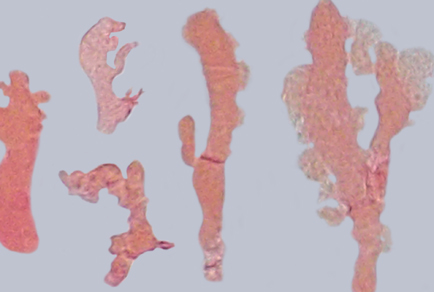
During an investigation of macrofungi in Yunnan Province, China, fruiting bodies of an interesting Tetrapyrgos species were collected growing on a piece of dead wood. This species is described and introduced as a new taxon (T. chukeatirotei), based on evidence from morphological and phylogenetic analysis of the nrITS sequence data. The new species is characterized by a hemispherical pileus, a pruinose surface with a brown center, greyish-yellow at the edges, and a pastel grey hue; the stipe is tapered downward and has a densely pruinose surface, which distinguishes it from other known species. A full description, illustrations, and phylogenetic analysis results of the new species, along with morphological comparisons to other species within this genus.
References
- Cai, J., Yu, W.-B., Zhang, T., Wang, H. & Li, D.-Z. (2019) China’s biodiversity hotspots revisited: A treasure chest for plants. Phytokeys 130: 1–24. https://doi.org/10.3897/phytokeys.130.38417
- Desjardin, D.E., Perry, B.A., Shay, J.E., Newman, D.S. & Randrianjohany, E. (2017) The type species of Tetrapyrgos and Campanella (Basidiomycota, Agaricales) are redescribed and epitypified. Mycosphere 8 (8): 977–985. https://doi.org/10.5943/mycosphere/8/8/1
- Deng, C.-Y., Gafforov, Y. & Chen, X. (2024) Additions to Tetrapyrgos (Marasmiaceae, Agaricales) in China. Nova Hedwigia 119 (1–2): 157–172. https://doi.org/10.1127/nova_hedwigia/2024/0968
- Feng, B. & Yang, Z. (2018) Studies on diversity of higher fungi in Yunnan, southwestern China: A review. Plant Diversity 40 (4): 165–171. https://doi.org/10.1016/j.pld.2018.07.001
- Glez-Peña, D., Gomez-Blanco, D., Reboiro-Jato, M., Fdez-Riverola, F. & Posada, D. (2010) ALTER: program-oriented conversion of DNA and protein alignments. Nucleic Acids Research 38: W14–W18. https://doi.org/10.1093/nar/gkq321
- Hall, T.A. (1999) BioEdit: a user-friendly biological sequence alignment editor and analysis program for Windows 95/98/NT. Nucleic Acids Symposium Series 41: 95–98. https://doi.org/10.1093/nar/gkq321
- He, M.-Q., Zhao, R.-L., Hyde, K.D., Begerow, D., Kemler, M., Yurkov, A., McKenzie, E.H.C., Raspé, O., Kakishima, M., Sánchez-Ramírez, S., Vellinga, E.C., Halling, R., Papp, V., Zmitrovich, I.V., Buyck, B., Ertz, D., Wijayawardene, N.N., Cui, B.-K., Schoutteten, N., Liu, X.-Z., Li, T.-H., Yao, Y.-J., Zhu, X.-Y., Liu, A.-Y., Li, G.-J., Zhang, M.-Z., Ling, Z.-L., Cao, B., Antonín, V., Boekhout, T., da Silva, B.D.B., De Crop, E., Decock, C., Dima, B., Dutta, A.K., Fell, J.W., Geml, J., Ghobad-Nejhad, M., Giachini, A.J., Gibertoni, T.B., Gorjón, S.P., Haelewaters, D., Hibbett, D.S., Karasiński, D., Kirk, P.M., Kõljalg, U., Kurtzman, C.P., Larsson, K.H., Leavitt, S.D., Letcher, P.M., Liimatainen, K., Liu, J.-K., Liu, Z.-B., Lodge, D.J., Luangsa-ard, J.J., Lücking, R., Lumbsch, H.T., Maharachchikumbura, S.S.N., Manamgoda, D.S., Martín, M.P., Minnis, A.M., Moncalvo, J.M., Mulè, G., Nagy, L.G., Nilsson, R.H., Noordeloos, M.E., Nuytinck, J., Orihara, T., Pawłowska, J., Peršoh, D., Pfliegler, W.P., Phillips, A.J.L., Popov, E.S., Rajchenberg, M., Robert, V., Rogers, J.D., Rosendahl, S., Ryman, S., Ryvarden, L., Spirin, V., Szöllősi, G., Tan, C.S., Taylor, A.F.S., Taylor, J.E., Thines, M., Uzunov, B., Vasco-Palacios, A.M., Verbeken, A., Vizzini, A., Wang, Y., Weir, B.-S., Weiss, M., White, M.M., Winka, K., Wurzbacher, C., Zamora, J.C., Zhang, Y., Zhao, C.-L. & Buyck, B. (2019) Notes, outline and divergence times of Basidiomycota. Fungal Diversity 99: 105–367. https://doi.org/10.1007/s13225-019-00435-4
- Honan, A.M., Desjardin, D.E. & Baroni, T.J. (2015) Towards a better understanding of Tetrapyrgos (Basidiomycota, Agaricales): New species, type studies, and phylogenetic inferences. Phytotaxa 231 (2): 101–132. https://doi.org/10.11646/phytotaxa.231.2.1
- Hongsanan, S., Phookamsak, R., Bhat, D.J., Wanasinghe, D.N., Promputtha, I., Suwannarach, N., Sandamali, D., Lumyong, S., Xu, J. & Xie, N. (2023) Exploring ascomycete diversity in Yunnan, China I: resolving ambiguous taxa in Phaeothecoidiellaceae and investigating conservation implications of fungi. Frontiers in Cellular and Infection Microbiology 13: 1252387. https://doi.org/10.3389/fcimb.2023.1252387
- Horak, E. (1968) Synopsis generum Agaricalium. Beiträge zur Kryptogamenflora der Schweiz 13: 1–741.
- Horak, E. (1983) Neufunde und Bemerkungen zu einem emendierten Gattungskonzept von Pterospora Métrod (Agaricales). Sydowia 36: 125–138.
- Horak, E. (1987) Tetrapyrgos Horak (nom. et gen. nov.) replacing Pterospora Métrod (1949; nom. preocc.). Sydowia 39: 101–103.
- Hu, Y., Karunarathna, S.C., Li, H., Galappaththi, M.C., Zhao, C.-L., Kakumyan, P. & Mortimer, P.E. (2022) The impact of drying temperature on basidiospore size. Diversity 14 (4): e239. https://doi.org/10.3390/d14040239
- Komura, D.L., Oliveira, J.J., Moncalvo, J., Margaritesco, S. & Zartman, C. (2020) Six new species of Tetrapyrgos (Basidiomycota, Agaricales, Marasmiaceae) from the Brazilian Amazon. Phytotaxa 440 (3): 193–214. https://doi.org/10.11646/phytotaxa.440.3.2
- Kornerup, A. & Wanscher, J.H. (1978) Methuen handbook of colour (3rd edn). Eyre Methuen, London, pp. 1–252.
- Katoh, K., Rozewicki, J. & Yamada, K. (2019) MAFFT online service: Multiple sequence alignment, interactive sequence choice and visualization. Briefings in Bioinformatics 20: 1160–1166. https://doi.org/10.1093/bib/bbx108
- Lu, W.-H., Nutaratat, P., Kumla, J., Tibpromma, S., Elgorban, A.M., Karunarathna, S.C. & Suwannarach, N. (2024) Morphological and molecular identification of two new Marasmiellus species (Omphalotaceae, Agaricales) from Thailand. MycoKeys 109: 31–48. https://doi.org/10.3897/mycokeys.109.129791
- Liu, X.-F., Tibpromma, S., Hughes, A.C., Chethana, K.W.T., Wijayawardene, N.N., Dai, D.-Q., Du, T.-Y., Elgorban, A.M., Stephenson, S.L., Suwannarach, N., Xu, J.-C., Lu, L., Xu, R.-F., Maharachchikumbura, S.S.N., Zhao, C.-L., Bhat, D.J., Sun, Y.M., Karunarathna, S.C. & Mortimer, P.E. (2023) Culturable mycota on bats in central southern Yunnan Province, China. Mycosphere 14 (1): 497–662. https://doi.org/10.5943/mycosphere/14/1/7
- Li, Y., Li, T.-H., Yang, Z.-L., Bau, T. & Dai, Y.-C. (2015) Atlas of Chinese Macrofungal Resources. Central China Farmers Publishing House, Zhengzhou.
- Métrod, G. (1949) Les Mycènes de Madagascar. Prodrome à une flore mycologique de Madagascar 3: 1–146.
- Miller, M.A., Pfeiffer, W. & Schwartz, T. (2012) The CIPRES Science Gateway: Enabling High-impact Science for Phylogenetics Researchers with Limited Resources. In: Proceedings of the 1st Conference of the Extreme Science and Engineering Discovery Environment: Bridging from the Extreme to the campus and beyond. Association for Computing Machinery, New York, Article No. 39, pp. 1–8. https://doi.org/10.1145/2335755.2335836
- Mi, X., Feng, G., Hu, Y., Zhang, J., Chen, L., Corlett, R.T., Hughes, A.C., Pimm, S., Schmid, B., Shi, S., Svenning, J.C. & Ma, K. (2021) The global significance of biodiversity science in China: an overview. National science review 8 (7): nwab032. https://doi.org/10.1093/nsr/nwab032
- Myers, N., Mittermeier, R.A., Mittermeier, C.G., da Fonseca, G.A. & Kent, J. (2000) Biodiversity hotspots for conservation priorities. Nature 403 (6772): 853–858. https://doi.org/10.1038/35002501
- Nylander, J.A.A. (2004) MrModeltest v2.0. Program distributed by the author, Evolutionary Biology Centre, Uppsala University, Sweden.
- Petersen, R.H. & Gordon, S.A. (1994) Mating systems in hymenomycetes: new reports and new species. Mycologia 86: 743–757. https://doi.org/10.1080/00275514.1994.12026479
- Petersen, R.H. & Hughes, K.W. (2024) Metacampanella gen. nov.: The Campanella dendrophora complex. Mycology 16 (1): 210–237. https://doi.org/10.1080/21501203.2024.2309898
- Rathnayaka, A.R., Tennakoon, D.S., Jones, G.E., Wanasinghe, D.N., Bhat, D.J., Priyashantha, A.H., Stephenson, S.L., Tibpromma, S. & Karunarathna, S.C. (2025) Significance of precise documentation of hosts and geospatial data of fungal collections, with an emphasis on plant-associated fungi. New Zealand Journal of Botany 63 (2–3): 462–489. https://doi.org/10.1080/0028825X.2024.2381734
- Redhead, S.A. (1989) A biogeographical overview of the Canadian mushroom flora. Canadian Journal of Botany 67: 3003–3062. https://doi.org/10.1139/b89-382
- Ronquist, F., Teslenko, M., Van Der Mark, P., Ayres, D.L., Darling, A., Höhna, S., Larget, B., Liu, L., Suchard, M.A. & Huelsenbeck, J.P. (2012) MrBayes 3.2: efficient Bayesian phylogenetic inference and model choice across a large model space. Systematic Biology 61: 539–542. https://doi.org/10.1093/sysbio/sys029
- Singer, R. (1975) The Agaricales in modern taxonomy. 3rd ed. J. Cramer, Vaduz, 912 pp.
- Singer, R. (1986) The Agaricales in modern taxonomy. 4th ed. Koeltz Scientific Books, Koenigstein, Germany, 981 pp.
- Stamatakis, A. (2006) RAxML-VI-HPC: Maximum likelihood-based phylogenetic analyses with thousands of taxa and mixed models. Bioinformatics 22: 2688–2690. https://doi.org/10.1093/bioinformatics/btl446
- Stamatakis, A., Ludwig, T. & Meier, H. (2005) RAxML-III: A fast program for maximum likelihood-based inference of large phylogenetic trees. Bioinformatics 21: 456–463. https://doi.org/10.1093/bioinformatics/bti191
- Stamatakis, A. (2014) RAxML version 8: a tool for phylogenetic analysis and post-analysis of large phylogenies. Bioinformatics 30: 1312–1313. https://doi.org/10.1093/bioinformatics/btu033
- Wang, J.-H., Cai, Y.-F., Zhang, L., Xu, C.-K. & Zhang, S.-B. (2018) Species Richness of the Family Ericaceae along an Elevational Gradient in Yunnan, China. Forests 9 (9): 511. https://doi.org/10.3390/f9090511