

Abstract
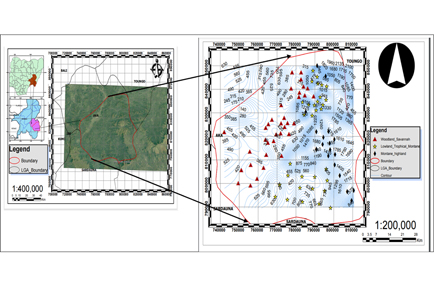
Protected Areas play a crucial role in biodiversity conservation and the prevention of biodiversity loss on a global scale. The Gashaka Gumti National Park (GGNP) is Nigeria’s largest and most biodiverse protected area, serving as a habitat for numerous endemic and endangered species. Despite its significance, limited research has been conducted on the park’s flora, and there is no comprehensive record of its vascular plant species. This gap prompted the development of an updated floristic checklist to guide conservation efforts. This study aimed to present a revised checklist of vascular plants in GGNP by synthesizing relevant sources, including field surveys, herbarium specimens, and existing literature from online databases. The findings documented a total of 1 018 plant species belonging to 126 families, with Fabaceae, Orchidaceae, and Rubiaceae being the most dominant. The majority of recorded taxa were trees, with native species constituting 95.2% of the flora. Importantly, the study identified 105 plant species that had not been previously recorded in Nigeria, highlighting the park’s contribution to understanding the botanical diversity of the country. However, the study also revealed a significant threat to the park’s ecosystem from invasive alien species. The conservation status of many taxa in the park remains unassessed according to the IUCN List of Threatened Species, emphasizing the need for further evaluations and conservation strategies. In conclusion, this study underscores the vital role of protected areas in biodiversity conservation and the urgent need for ongoing botanical research and conservation efforts in the region.
References
- Abiem, I., Saha, S., Manu, S.A. & Elisha, E.B. (2018) Woody vegetation composition and diversity in woodlands inside and outside a Forest Reserve in Jos, Nigeria. African Journal of Ecology 56 (2): 202–207. https://doi.org/10.1111/aje.12433
- Ai, Y.Y., Liu, Q., Hu, H.X., Shen, T., Mo, Y.X., Wu, X.F. & Song, L. (2023) Terrestrial and epiphytic orchids exhibit different diversity and distribution patterns along an elevation gradient of Mt. Victoria, Myanmar. Global Ecology and Conservation 42: e02408. https://doi.org/10.1016/j.gecco.2023.e02408
- Aigbe, H.I. & Nchor, A.A. (2021) Differential vegetation status of Okomu National Park and Okomu Forest Reserve, Edo State, Nigeria. African Journal of Agricultural Research 17 (4): 682–689.
- Akande, O.A., Ahmad, Y.A., Shuaib, A.B. & Jeje, C.A. (2019) Distribution and relative density of trees species in Kainji Lake National Park, Nigeria. World News of Natural Sciences 22: 52–61.
- Akinsoji, A. (1994) Vegetation of Gashaka Gumti National Park, Nigeria: A preliminary survey. Unpublished report submitted to the Nigerian Conservation Foundation, 120 pp.
- Akinsoji, A. (1996) The vegetation types and ethnobotanical studies of Gashaka Gumti National Park, Nigeria. Technical Report. Nigerian Conservation Foundation, Nigeria & WWF Project, 82 pp.
- Akinsoji, A. (2003) Montane vegetation of Chabbal Hendu in Gashaka Gumti National Park, Nigeria. Journal of Pure and Applied Science 6: 80–88.
- Akinsoji, A. (2005) A survey of montane epiphytes in Gashaka-Gumti National Park. Nigerian Journal of Botany 18: 35–45.
- Akinsoji, A. (2016) The composition and distribution of vascular epiphytes along altitudinal gradient in Gashaka Gumti national park, Nigeria. Ife Journal of Science 18 (3): 813–821.
- Akwaji, P.I., Oden, G.N., Onah, D.O., Okon, E.I., Ajikah, L.B. & Akomaye, F.A. (2022) Diversity, distribution, and conservation status of forest tree species in cross river state, Nigeria. Sustainability and Biodiversity Conservation 1 (1): 42–83. https://doi.org/10.5281/zenodo.7135046
- Al Musalami, A.A., Al Marshoudi, M.S., Farooq, S.A. & Al-Reasi, H.A. (2023) Allelopathic effects of the invasive species (Prosopis juliflora) on seedlings of two common arid plants: does free proline play roles? Journal of Arid Environments 211: a104931. https://doi.org/10.1016/j.jaridenv.2023.104931
- Alston, A.H. (1959) The ferns and fern-allies of West Tropical Africa: A supplement to the second edition of The Flora of West Tropical Africa. Crown Agents for Overseas Governments and Administrations, London, 89 pp.
- Amusa, T.O. & Jimoh, S.O. (2010) Ethnobotany and conservation of plant resources of Kainji Lake National Park, Nigeria. Ethnobotany Research and Applications 8: 181–194. [https://ethnobotanyjournal.org/index.php/era/article/view/349]
- Andrade, E.R., Jardim, J.G., Santos, B.A., Melo, F.P.L., Talora, D.C., Faria, D. & Cazetta, E. (2015) Effects of habitat loss on taxonomic and phylogenetic diversity of understory Rubiaceae in Atlantic Forest landscapes. Forest Ecology and Management 349: 73–84. https://doi.org/10.1016/j.foreco.2015.03.049
- Andrade, R.S. & Freitas, L. (2021) Impact of an IUCN national Red List of threatened flora on scientific attention. Endangered Species Research 46: 175–184. https://doi.org/10.3354/esr01154
- Barima, Y., Kouakou, K., Kouakou, A. & Sangne, Y. (2016) A survey of the floristic diversity of the National Park of Marahoué after the armed conflicts in Ivory Coast. Open Journal of Forestry 6 (4): 259–268. https://doi.org/10.4236/ojf.2016.64021
- Bello, A., Jamaladdeen, S., Elder, M.T., Yaradua, S.S., Kankara, S.S., Wagini, N.H. & Muasya, M. (2019) Threatened medicinal and economic plants of the Sudan Savanna in Katsina State, northwestern Nigeria. Bothalia-African Biodiversity & Conservation 49 (1): 1–17. https://doi.org/10.4102/abc.v49i1.2325
- Bello, A., Mukhtar, F.B. & Muellner-Riehl, A.N. (2021) Diversity and distribution of Nigerian legumes (Fabaceae). Phytotaxa 480 (2): 103–124. https://doi.org/10.11646/phytotaxa.480.2.1
- Bello, A., Stirton, C.H., Chimphango, S.B. & Muasya, A.M. (2022) Phylogenetic relationships and biogeography of Psoraleeae (Fabaceae). Botanical Journal of the Linnean Society 200 (1): 39–74. https://doi.org/10.1093/botlinnean/boac002
- Besi, E.E., Jia, L.S., Mustafa, M., Yong, C.S. & Go, R. (2021) Comparative floral surface micromorphology helps to discriminate between species of Paphiopedilum (Orchidaceae: Cypripedioideae) from Peninsular Malaysia. Lankesteriana 21 (1): 17–31. https://doi.org/10.15517/lank.v21i1.46714
- Borokini, I.T., Kortz, A., Anibaba, Q.A., Witt, A., Aigbokhan, E.I., Hejda, M. & Pyšek, P. (2023) Alien flora of Nigeria: taxonomy, biogeography, habitats, and ecological impacts. Biological Invasions 25 (12): 2677–3696. https://doi.org/10.1007/s10530-023-03140-1
- Borokini, I.T. (2014) A systematic compilation of endemic flora in Nigeria for conservation management. Journal of Threatened Taxa 6 (11): 6406–6426. https://doi.org/10.11609/JoTT.o4010.6406-26
- Braun, M., Schindler, S. & Essl, F. (2016) Distribution and management of invasive alien plant species in protected areas in Central Europe. Journal for Nature Conservation 33: 48–57. https://doi.org/10.1016/j.jnc.2016.07.002
- Chapman, J.D. & Chapman, H.M. (2001) The forests of Taraba and Adamawa States, Nigeria: an ecological account and plant species checklist. University of Canterbury, Christchurch, 146 pp.
- Chapman, H.M., Olson, S.M. & Trumm, D. (2004) An assessment of changes in the montane forests of Taraba State, Nigeria, over the past 30 years. Oryx 38 (3): 282–290. https://doi.org/10.1017/S0030605304000511
- Cheek, M., Hatt, S. & Onana, J.M. (2022) Vepris onanae (Rutaceae), a new Critically Endangered cloud-forest tree species, and the endemic plant species of Bali Ngemba Forest Reserve, Bamenda Highlands Cameroon. Kew Bulletin 77 (2): 435–449. https://doi.org/10.1007/s12225-022-10020-9
- Crews, T.E. (1999) The presence of nitrogen fixing legumes in terrestrial communities: Evolutionary vs ecological considerations. In: Townsend, A.R. (Ed.) New perspectives on nitrogen cycling in the temperate and tropical Americas: report of the international SCOPE nitrogen project. Springer, Dordrecht, pp. 233–246. https://doi.org/10.1007/978-94-011-4645-6_11
- Dagne, Y. & Birhanu, L. (2023) Floristic composition and plant community distribution along environmental gradients in Guard dry Afromontane Forest of Northwestern Ethiopia. BMC Ecology and Evolution 23 (1): a43. https://doi.org/10.1186/s12862-023-02154-6
- Dechoum, M.D.S., Sampaio, A.B., Ziller, S.R. & Zenni, R.D. (2018) Invasive species and the Global Strategy for Plant Conservation: how close has Brazil come to achieving Target 10? Rodriguésia 69: 1567–1576. https://doi.org/10.1590/2175-7860201869407
- Dunn, A. (1993) A preliminary survey of the forest animals of Gashaka Gumti National Park, Nigeria. Unpublished report for NPS, NCF and WWF-UK, pp. 231.
- Dunn, A. (1999) Gashaka Gumti National Park: A management plan for developing the park and its support zone. Unpublished report, NPS, NCF and WWF-UK, pp. 202.
- Dvorak, W.S. (2004) World view of Gmelina arborea: opportunities and challenges. New Forests 28: 111–126. https://doi.org/10.1023/B:NEFO.0000040940.32574.22
- Ellenberg, D. & Mueller-Dombois, D. (1974) Aims and methods of vegetation ecology. Wiley & Sons, New York, pp. 547.
- Fay, M.F. (2018) Orchid conservation: how can we meet the challenges in the twenty-first century? Botanical Studies 59: 1–6. https://doi.org/10.1186/s40529-018-0232-z
- Febnteh, E.B., Jatau, D.F. & Schombi, S.O. (2023) Assessment of the economic benefits of conservation activities at Kwano Chimpanzee Forest Habitat in Gashaka Gumti National Park (GGNP), Nigeria. Asian Journal of Research in Agriculture and Forestry 9 (3): 189–199. https://doi.org/10.9734/ajraf/2023/v9i3223
- Fletcher, R., Brooks, R., Lakoba, V., Sharma, G., Heminger, A., Dickinson, C. & Barney, J. (2019) Invasive plants negatively impact native, but not exotic, animals. Global Change Biology 25 (11): 3694–3705. https://doi.org/10.1111/gcb.14752
- Foxcroft, L.C., Moodley, D., Nichols, G.R. & Pyšek, P. (2023) Naturalized and invasive alien plants in the Kruger National Park, South Africa. Biological Invasions 25: 1–16. https://doi.org/10.1007/s10530-023-03098-0
- Green, A.A. (1988) An integrated management plan for Gashaka-Gumti Game Reserve, Gongola State, Nigeria. Unpublished draft report, Nigeria Conservation Foundation, 210 pp.
- Gumnior, M. & Sommer, V. (2012) Multi-scale, multi-temporal vegetation mapping and assessment of ecosystem degradation at Gashaka Gumti National Park (Nigeria). Journal of Environmental and Earth Sciences 4 (4): 397–412.
- Haq, S.M., Singh, B., Bashir, F., Farooq, A.J., Singh, B. & Calixto, E.S. (2021) Exploring and understanding the floristic richness, life-form, leaf-size spectra and phenology of plants in protected forests: A case study of Dachigam National Park in Himalaya, Asia. Acta Ecologica Sinica 41 (5): 479–490. https://doi.org/10.1016/j.chnaes.2021.07.010
- Hummel, C., Poursanidis, D., Orenstein, D., Elliott, M., Adamescu, M.C., Cazacu, C. & Hummel, H. (2019) Protected Area management: Fusion and confusion with the ecosystem services approach. Science of the Total Environment 651 (2): 2432–2443. https://doi.org/10.1016/j.scitotenv.2018.10.033
- Hutchinson, J. & Dalziel, J.M. (1927–1936) Flora of West Tropical Africa, Vols. 1 & 2. Crown Agents for the Colonies, London, pp. 523 & 651.
- Hutchinson, J. & Dalziel, J.M. (1954–1972) Flora of West Tropical Africa, Vols. 1–3 (2nd ed., revised by Keay, R.W.J. & Hepper, F.N.). Crown Agents for Overseas Governments and Administrations, London, pp. 828, 544 & 574.
- IUCN. (2022) The International Union for the Conservation of Nature Red List of Threatened Species. Available from: http://www.iucnredlist.org/ (accessed 18 April 2022)
- Julio, A., Carven Tandoc, W., Daniel Tipace, H., Franzine Vendivil, Y., Yanesa, Z., Tare, V.R. & Joseph Clemente, K. (2019) Allelopathic effect of Lantana camara and Chromolaena odorata leaf extracts on plant germination. Asian Journal of Agriculture and Biology 7 (2): 190–196.
- Kato-Noguchi, H. & Kato, M. (2023) Evolution of the secondary metabolites in invasive plant species Chromolaena odorata for the defense and allelopathic functions. Plants 12 (2): a521. https://doi.org/10.3390/plants12030521
- Keay, R.W.J., Onochie, C.F.A. & Stanfield, D.P. (1964) Nigerian Trees. Federal Department of Forest Research, Ibadan, 349 pp.
- Keay, R.W. (1989) Trees of Nigeria. Clarendon Press, Oxford, 400 pp. https://doi.org/10.1093/oso/9780198545606.001.0001
- Kent, M. (2011) Vegetation description and data analysis: a practical approach. John Wiley & Sons, Chichester, 263 pp.
- Kolongo, T.S.D., Decocq, G., Yao, C.Y.A., Blom, E.C. & Van Rompaey, R.S.A.R. (2006) Plant species diversity in the southern part of the Taï National Park (Côte d’Ivoire). Biodiversity and Conservation 15: 2123–2142. https://doi.org/10.1007/s10531-004-6686-1
- Kumar Rai, P. & Singh, J.S. (2020) Invasive alien plant species: Their impact on environment, ecosystem services and human health. Ecological Indicators 111: a106020. https://doi.org/10.1016/j.ecolind.2019.106020
- Layek, U., Das, A. & Das, U. (2022) Floral biology, floral volatile organic compounds and floral visitors of Chromolaena odorata, an invasive alien species in West Bengal, India. Biodiversitas Journal of Biological Diversity 23 (4): 2118–2129. https://doi.org/10.13057/biodiv/d230447
- Linder, H.P. (2014) The evolution of African plant diversity. Frontiers in Ecology and Evolution 2: a38. https://doi.org/10.3389/fevo.2014.00038
- McCarthy, C., Banfill, J. & Hoshino, B. (2021) National parks, protected areas and biodiversity conservation in North Korea: opportunities for international collaboration. Journal of Asia-Pacific Biodiversity 14 (3): 290–298. https://doi.org/10.1016/j.japb.2021.05.006
- Moya, R., Bond, B. & Quesada, H. (2014) A review of heartwood properties of Tectona grandis trees from fast-growth plantations. Wood Science and Technology 48: 411–433. https://doi.org/10.1007/s00226-014-0618-3
- Mubi, A.M. & Tukur, A.L. (2012) Species density and diversity along geomorphic gradient in Gashaka-Gumti National Park (GGNP). Ethiopian Journal of Environmental Studies and Management 5 (4): 511–518. https://doi.org/10.4314/ejesm.v5i4.S11
- Mirioba, J.N., Emitaro, W., Obwanga, B., Gaya, H., Leley, N., Otuoma, J. & Kawaka, F. (2024) Orchid species diversity across a forest disturbance gradient in West Mau Forest, Kenya. PLOS ONE 19 (8): e0307887. https://doi.org/10.1371/journal.pone.0307887
- Ngondya, I.B. & Munishi, L.K. (2022) Managing invasive plants through a nature-based approach in complex landscapes. Trends in Ecology & Evolution 37 (4): 284–288. https://doi.org/10.1016/j.tree.2022.01.003
- Nodza, G.I., Onuminya, T.O. & Ogundipe, O.T. (2022a) Preliminary conservation checklist of orchid of Gashaka Gumti National Park, Nigeria. Journal of Tropical Biology & Conservation (JTBC) 19: 29–46. https://doi.org/10.51200/jtbc.v19i.3936
- Nodza, G.I., Onuminya, T., Igbari, A.D. & Ogundipe, T.O. (2022b) Ethno-veterinary practice for the treatment of cattle diseases in the eastern highlands of Nigeria. Ethnobotany Research and Applications 24: 1–16. [https://ethnobotanyjournal.org/index.php/era/article/view/3861]
- Orwa, C. (2009) Agroforestree Database: a tree reference and selection guide, version 4. World Agroforestry Centre, Kenya. Available from: http://apps.worldagroforestry.org/treedb2/ (accessed 18 April 2022)
- Osabiya, O.S., Adeduntan, S.A. & Akinbi, O.J. (2022) A survey of tree species diversity in Akure Forest Reserve and Okomu National Park. Journal of Research in Forestry, Wildlife and Environment 14 (1): 119–127.
- POWO. (2025) Plants of the World Online database. Facilitated by the Royal Botanic Gardens, Kew. Available from: https://powo.science.kew.org (accessed 8 March 2025)
- Sainge, M.N., Nchu, F. & Peterson, A.T. (2020) Diversity, above-ground biomass, and vegetation patterns in a tropical dry forest in Kimbi-Fungom National Park, Cameroon. Heliyon 6 (1): e03290. https://doi.org/10.1016/j.heliyon.2020.e03290
- Sanford, W.W. (1969) The distribution of epiphytic orchids in Nigeria in relation to each other and geographic location and climate, type of vegetation, and tree species. Biological Journal of the Linnean Society 1 (3): 247–285. https://doi.org/10.1111/j.1095-8312.1969.tb00120.x
- Sewale, B. & Mammo, S. (2022) Analysis of floristic composition and plant community types in Kenech Natural Forest, Kaffa Zone, Ethiopia. Trees, Forests and People 7: a100170. https://doi.org/10.1016/j.tfp.2021.100170
- Silva de Miranda, P.L., Dexter, K.G., Swaine, M.D., De Oliveira-Filho, A.T., Hardy, O.J. & Fayolle, A. (2022) Dissecting the difference in tree species richness between Africa and South America. Proceedings of the National Academy of Sciences 119 (14): e 2112336119. https://doi.org/10.1073/pnas.2112336119
- Sommer, V. & Ross, C. (Eds.) (2011a) Primates of Gashaka. Socioecology and conservation in Nigeria’s Biodiversity Hotspot. Developments in Primatology: Progress and Prospects, vol. 35. Springer, New York, 450 pp. https://doi.org/10.1007/978-1-4419-7403-7
- Sommer, V. & Ross, C. (2011b). Exploring and protecting West Africa’s primates: the Gashaka Primate Project in context. In: Sommer, V. & Ross, C. (Eds.) Primates of Gashaka: Socioecology and conservation in Nigeria’s Biodiversity Hotspot. Developments in Primatology: Progress and Prospects, vol. 35. Springer, New York, pp. 1–37. https://doi.org/10.1007/978-1-4419-7403-7_1
- Sosef, M.S., Dauby, G., Blach-Overgaard, A., Van der Burgt, X., Catarino, L., Damen, T. & Couvreur, T.L. (2017) Exploring the floristic diversity of tropical Africa. BMC Biology 15: 1–23. https://doi.org/10.1186/s12915-017-0356-8
- Spear, D., Foxcroft, L.C., Bezuidenhout, H. & McGeoch, M.A. (2013) Human population density explains alien species richness in protected areas. Biological Conservation 159: 137–147. https://doi.org/10.1016/j.biocon.2012.11.022
- Steyn, H.M., Bester, S.P. & Bezuidenhout, H. (2013) An updated plant checklist for Tankwa Karoo National Park, South Africa. South African Journal of Botany 88: 247–251. https://doi.org/10.1016/j.sajb.2013.07.018
- Tang, X. & Adesina, J.A. (2022) Biodiversity conservation of National Parks and Nature-Protected Areas in West Africa: The case of Kainji National Park, Nigeria. Sustainability 14 (12): 7322. https://doi.org/10.3390/su14127322
- Torres-Leite, F., Cavatte, P.C., Garbin, M.L., Hollunder, R.K., Ferreira-Santos, K., Capetine, T.B., Soares, B.S. & Carrijo, T.T. (2019) Surviving in the shadows: Light responses of co-occurring Rubiaceae species within a tropical forest understory. Flora 261: a151487. https://doi.org/10.1016/j.flora.2019.151487
- Toukem, N.K., Yusuf, A.A., Dubois, T., Abdel-Rahman, E.M., Adan, M.S. & Mohamed, S.A. (2020) Landscape vegetation productivity influences population dynamics of key pests in small avocado farms in Kenya. Insects 11 (7): a424. https://doi.org/10.3390/insects11070424
- Wadasinghe, R.R., Kalansuriya, P., Attanayake, A.P. & Bandara, B.M.R. (2022) Ethnomedicinal uses, antidiabetic, antioxidant and anti-inflammatory activity of Gmelina arborea Roxb. and its bioactive compounds: a review. Jordan Journal of Chemistry 17 (3): 111–132. [https://jjc.yu.edu.jo/index.php/jjc/article/view/599]
- Wagner, V., Antunes, P.M., Irvine, M. & Nelson, C.R. (2017) Herbicide usage for invasive non‐native plant management in wildland areas of North America. Journal of Applied Ecology 54 (1): 198–204. https://doi.org/10.1111/1365-2664.12711
- Wang, Y., Wang, H., Ye, C., Wang, Z., Ma, C., Lin, D. & Jin, X. (2024) Progress in systematics and biogeography of Orchidaceae. Plant Diversity 46 (4): 425–434. https://doi.org/10.1016/j.pld.2024.05.002
- Ward, M., Saura, S., Williams, B., Ramírez-Delgado, J.P., Arafeh-Dalmau, N., Allan, J.R. & Watson, J.E. (2020) Just ten percent of the global terrestrial protected area network is structurally connected via intact land. Nature Communications 11 (1): a4563. https://doi.org/10.1038/s41467-020-18457-x
- Wardani, I.G.A.K., Amandita, F.Y., Moura, C.C. de M., Gailing, O. & Siregar, I.Z. (2022) Molecular taxonomy via DNA barcodes for species identification in selected genera of Fabaceae. Jurnal Pengelolaan Sumberdaya Alam Dan Lingkungan (Journal of Natural Resources and Environmental Management) 12 (1): 112–122. https://doi.org/10.29244/jpsl.12.1.112-122
- Yadav, V., Singh, N.B., Singh, H., Singh, A. & Hussain, I. (2016) Allelopathic invasion of alien plant species in India and their management strategies: a review. Tropical Plant Research 3 (1): 87–101.
- Yuan, L., Li, J.M., Yu, F.H., Oduor, A.M. & Van Kleunen, M. (2021) Allelopathic and competitive interactions between native and alien plants. Biological Invasions 23 (10): 3077–3090. https://doi.org/10.1007/s10530-021-02565-w
- Zhang, G., Hu, Y., Huang, M.Z., Huang, W.C., Liu, D.K., Zhang, D., Hu, H., Downing, J.L., Liu, Z.J. & Ma, H. (2023) Comprehensive phylogenetic analyses of Orchidaceae using nuclear genes and evolutionary insights into epiphytism. Journal of Integrative Plant Biology 65 (5): 1204–1225. https://doi.org/10.1111/jipb.13462