

Abstract
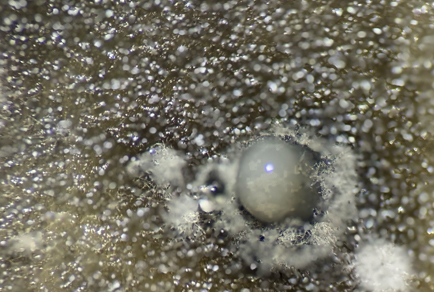
Colletotrichum, a genus within the phylum Ascomycota and family Glomerellaceae, comprises numerous species known for their pathogenicity on a broad range of host plants. During a fungal survey in southwestern China, four Colletotrichum strains were isolated from symptomatic branches of Heptapleurum heptaphyllum (Araliaceae) in Guizhou Province. Multilocus phylogenetic analyses, based on concatenated sequences of ITS, act, gapdh, β-tubulin, chs-1, his3, and cal, combined with morphological observations, revealed that one of these isolates represents a novel species within the C. dracaenophilum species complex. The new species, Colletotrichum guttulatum sp. nov., is described and illustrated herein. This study expands the known diversity of the Colletotrichum dracaenophilum complex and provides additional insight into the fungal biodiversity associated with Heptapleurum in southwestern China.
References
- Bhunjun, C.S., Phukhamsakda, C., Jayawardena, R.S., Jeewon, R., Promputtha, I. & Hyde, K.D. (2021) Investigating species boundaries in Colletotrichum. Fungal Diversity 107: 107–127. https://doi.org/10.1007/s13225-021-00471-z
- Cannon, P.F., Damm, U., Johnston, P.R. & Weir, B.S. (2012) Colletotrichum – Current status and future directions. Studies in Mycology 73: 181–213. https://doi.org/10.3114/sim0014
- Capella-Gutiérrez, S., Silla-Martínez, J.M. & Gabaldón, T. (2009) TrimAl: a tool for automated alignment trimming in large-scale phylogenetic analyses. Bioinformatics 25: 1972–1973. https://doi.org/10.1093/bioinformatics/btp348
- Crouch, J.A., Clarke, B.B., White Jr., J.F. & Hillman, B.I. (2009) Systematic analysis of the falcate-spored graminicolous Colletotrichum and a description of six new species from warm-season grasses. Mycologia 101: 717–732. https://doi.org/10.3852/08-230
- Damm, U., Cannon, P.F., Liu, F., Barreto, R.W., Guatimosim, E. & Crous, P.W. (2013) The Colletotrichum orbiculare species complex: Important pathogens of field crops and weeds. Fungal Diversity 61 (1): 29–59. https://doi.org/10.1007/s13225-013-0255-4
- Damm, U., Sato, T., Alizadeh, A., Groenewald, J.Z. & Crous, P.W. (2019) The Colletotrichum dracaenophilum, C. magnum and C. orchidearum species complexes. Studies in Mycology 92: 1–46. https://doi.org/10.1016/j.simyco.2018.04.001
- Govaerts, R., Nic Lughadha, E., Black, N., Turner, R. & Paton, A. (2021) The World Checklist of Vascular Plants, a continuously updated resource for exploring global plant diversity. Scientific Data 8: 215. https://doi.org/10.1038/s41597-021-00997-6
- Hall, T.A. (1999) BioEdit: A user-friendly biological sequence alignment editor and analysis program for Windows 95/98/NT. Nucleic Acids Symposium Series 41: 95–98. https://doi.org/10.14601/Phytopathol_Mediterr-14998u1.29
- Huson, D.H. (1998) SplitsTree: Analyzing and visualizing evolutionary data. Bioinformatics 14 (1): 68–73. https://doi.org/10.1093/bioinformatics/14.1.68
- Huson, D.H. & Bryant, D. (2006) Application of phylogenetic networks in evolutionary studies. Molecular Biology and Evolution 23 (2): 254–267. https://doi.org/10.1093/molbev/msj030
- Jayawardena, R.S., Hyde, K.D., Chen, Y.J., Dissanayake, A.J., Li, X.H. & Yan, J.Y. (2020) One stop shop IV: Taxonomic update with molecular phylogeny for important phytopathogenic genera: 76–100. Fungal Diversity 103: 87–218. https://doi.org/10.1007/s13225-020-00460-8
- Jiang, K., Li, Z., Zeng, X., Chen, X., Liang, S. & Zhang, W. (2025) Two new species of Colletotrichum (Glomerellales, Glomerellaceae) causing anthracnose on Epimedium sagittatum. MycoKeys 115: 363–381. https://doi.org/10.3897/mycokeys.115.144522
- Kalyaanamoorthy, S., Minh, B.Q., Wong, T.K.F., von Haeseler, A. & Jermiin, L.S. (2017) ModelFinder: Fast model selection for accurate phylogenetic estimates. Nature Methods 14: 587–589. https://doi.org/10.1038/nmeth.4285
- Katoh, K., Rozewicki, J. & Yamada, K.D. (2019) MAFFT online service: Multiple sequence alignment, interactive sequence choice and visualization. Briefings in Bioinformatics 20 (4): 1160–1166. https://doi.org/10.1093/bib/bbx108
- Kim, J.S., Hassan, O., Go, M.J. & Chang, T. (2021) First report of Colletotrichum aenigma causing anthracnose of grape (Vitis vinifera) in Korea. Plant Disease 105 (9): 2729. https://doi.org/10.1094/PDIS-11-20-2458-PDN
- Li, C., Liu, J.A. & Zhou, G.Y. (2021) First report that Colletotrichum aenigma causes leaf spots on Aquilaria sinensisin China. Plant Disease 105 (11): 3302. https://doi.org/10.1094/PDIS-11-20-2381-PDN
- Liu, F., Ma, Z.Y., Hou, L.W., Diao, Y.Z., Wu, W.P., Damm, U., Song, S. & Cai, L. (2022) Updating species diversity of Colletotrichum, with a phylogenomic overview. Studies in Mycology 101: 1–56. https://doi.org/10.3114/sim.2022.101.01
- Liu, F., Weir, B.S., Damm, U., Crous, P.W., Wang, Y., Liu, B., Wang, M., Zhang, M. & Cai, L. (2015) Unravelling Colletotrichum species associated with Camellia: Employing ApMat and GS loci to resolve species in the C. gloeosporioides complex. Persoonia 35: 63–86. https://doi.org/10.3767/003158515X687597
- Liu, L., Zhang, L., Qiu, P., Wang, Y., Liu, Y., Li, Y., Gao, J. & Hsiang, T. (2020) Leaf spot of Polygonatum odoratumcaused by Colletotrichum spaethianum. Journal of General Plant Pathology 86 (2): 157–161. https://doi.org/10.1007/s10327-019-00903-4
- Liu, Y., Tan, X., Zhao, J., Niu, Y., Hsiang, T., Yu, Z. & Qin, W. (2024) Diversity of Colletotrichum species associated with anthracnose on Euonymus japonicus and their sensitivity to fungicides. Frontiers in Plant Science 15: 1411625. https://doi.org/10.3389/fpls.2024.1411625
- Lu, Y., Zhang, W., Hu, X., He, C., Liang, Y., Huang, X., Yi, K. & Wu, W. (2025) Diversity and pathogenicity of Colletotrichum species causing coffee anthracnose in China. Microorganisms 13 (3): 512. https://doi.org/10.3390/microorganisms13030512
- Ma, X., Nontachaiyapoom, S., Jayawardena, R.S., Yde, K.D., Gentekaki, E., Zhou, S., Qian, Y., Wen, T. & Kang, J. (2018) Endophytic Colletotrichum species from Dendrobium spp. in China and Northern Thailand. MycoKeys 43: 23–57. https://doi.org/10.3897/mycokeys.43.25081
- Marin-Felix, Y., Groenewald, J.Z., Cai, L., Chen, Q., Marincowitz, S., Barnes, I., Bensch, K., Braun, U., Camporesi, E., Damm, U., de Beer, Z.W., Dissanayake, A., Edwards, J., Giraldo, A., Hernández-Restrepo, M., Hyde, K.D., Jayawardena, R.S., Lombard, L., Luangsa-Ard, J., McTaggart, A.R., Rossman, A.Y., Sandoval-Denis, M., Shen, M., Shivas, R.G., Tan, Y.P., van der Linde, E.J., Wingfield, M.J., Wood, A.R., Zhang, J.Q., Zhang, Y. & Crous, P.W. (2017) Genera of phytopathogenic fungi: GOPHY 1. Studies in Mycology 86: 99–216. https://doi.org/10.1016/j.simyco.2017.04.002
- Minh, B.Q., Nguyen, M.A. & von Haeseler, A. (2013) Ultrafast approximation for phylogenetic bootstrap. Molecular Biology and Evolution 30 (5): 1188–1195. https://doi.org/10.1093/molbev/mst024
- Nguyen, L.T., Schmidt, H.A., von Haeseler, A. & Minh, B.Q. (2015) IQ-TREE: A fast and effective stochastic algorithm for estimating maximum-likelihood phylogenies. Molecular Biology and Evolution 32 (1): 268–274.
- Norphanphoun, C., Raspé, O., Jeewon, R., Wen, T.C. & Hyde, K.D. (2018) Morphological and phylogenetic characterisation of novel Cytospora species associated with mangroves. MycoKeys 38: 93–120. https://doi.org/10.3897/mycokeys.38.27099
- Quaedvlieg, W., Binder, M., Groenewald, J.Z., Summerell, B.A., Carnegie, A.J., Burgess, T.I. & Crous, P.W. (2014) Introducing the consolidated species concept to resolve species in the Teratosphaeriaceae. Persoonia 33: 1–40. https://doi.org/10.3767/003158514X681981
- Rambaut, A. (2018) FigTree v1.4.4. Institute of Evolutionary Biology, University of Edinburgh. [http://tree.bio.ed.ac.uk/software/figtree/]
- Ronquist, F., Teslenko, M., van der Mark, P., Ayres, D.L., Darling, A., Höhna, S., Larget, B., Liu, L., Suchard, M.A. & Huelsenbeck, J.P. (2012) MrBayes 3.2: Efficient Bayesian phylogenetic inference and model choice across a large model space. Systematic Biology 61 (3): 539–542. https://doi.org/10.1093/sysbio/sys029
- Schena, L., Mosca, S., Cacciola, S.O., Faedda, R., Sanzani, S.M., Agosteo, G.E., Sergeeva, V. & Lio, G.M. (2014) Species of the Colletotrichum gloeosporioides and C. boninense complexes associated with olive anthracnose. Plant Pathology 63 (2): 437–446. https://doi.org/10.1007/s13225-013-0249-2
- Tao, G., Liu, Z.Y., Liu, F., Zhang, C.L., Gao, Y.H. & Cai, L. (2013) Endophytic Colletotrichum species from Bletilla ochracea (Orchidaceae), with descriptions of seven new species. Fungal Diversity 61: 139–164. https://doi.org/10.1007/s13225-013-0256-3
- Weir, B.S., Johnston, P.R. & Damm, U. (2012) The Colletotrichum gloeosporioides species complex. Studies in Mycology 73: 115–180. https://doi.org/10.3114/sim0011
- White, T.J., Bruns, T., Lee, S. & Taylor, J. (1990) Amplification and direct sequencing of fungal ribosomal RNA genes for phylogenetics. In: Innis, M.A., Gelfand, D.H., Sninsky, J.J. & White, T.J. (Eds.) PCR Protocols: A Guide to Methods and Applications. Academic Press, pp. 315–322.
- Xiang, C.-Y., Gao, F., Jakovlić, I., Lei, H.-P., Hu, Y., Zhang, H., Zou, H., Wang, G.-T. & Zhang, D. (2023) Using PhyloSuite for molecular phylogeny and tree-based analyses. iMeta 2 (2): e87. https://doi.org/10.1002/imt2.87
- Yu, Z., Jiang, X., Zheng, H., Zhang, H. & Qiao, M. (2022) Fourteen new species of foliar Colletotrichum associated with the invasive plant Ageratina adenophora and surrounding crops. Journal of Fungi 8 (2): 185. https://doi.org/10.3390/jof8020185
- Zhang, D., Gao, F., Jakovlić, I., Zou, H., Zhang, J., Li, W.X. & Wang, G.T. (2020) PhyloSuite: An integrated and scalable desktop platform for streamlined molecular sequence data management and evolutionary phylogenetics studies. Molecular Ecology Resources 20 (1): 348–355. https://doi.org/10.1111/1755-0998.13096
- Zhang, Q., Li, C., Hyde, K.D., Wang, Y., Nizamani, M.M., Yang, Y.Q., Jayawardena, R.S. & Fen, Y. (2023) Genome-scale and multi-gene phylogenetic analyses of Colletotrichum spp. host preference and associated with medicinal plants. Mycosphere 14 (2): 1–106. https://doi.org/10.5943/mycosphere/14/si2/1
- Zhou, S., Qiao, L., Jayawardena, R.S., Hyde, K.D., Ma, X., Wen, T. & Kang, J. (2019) Two new endophytic Colletotrichum species from Nothapodytes pittosporoides in China. MycoKeys 49: 1–14. https://doi.org/10.3897/mycokeys.49.31904