

Abstract
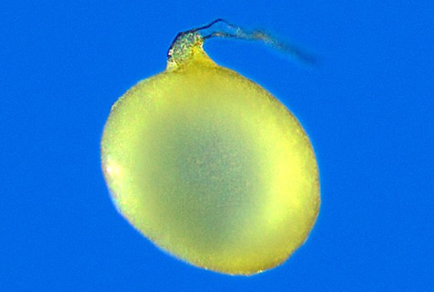
A new species of Funneliformis (Glomerales, Glomeromycota), was isolated from rhizosphere soil of Uncaria rhynchophylla in the Huaxi District of Guiyang City, China. Phylogenetic analyses based on nuclear rDNA sequences (spanning the partial small subunit, whole internal transcribed spacer, and partial large subunit segment; 18S-ITS-28S) and the largest subunit of RNA polymerase II (RPB1) confirmed that this isolate represents an undescribed species. Morphological and molecular data support its recognition as a distinct species, here proposed as F. huaxica sp. nov. The fungus forms spores singly in soil. Spores are pale yellow, spherical, sub-spherical to ellipsoidal, and occasionally irregular in shape. The spore wall is composed of three layers: a hyaline, evanescent outer layer (0.5–2.5 μm thick); a laminate middle layer (pale yellow to yellow-brown, 0.4–1.5 μm thick, thickening to 4.5 μm at the base); and an inner layer (about 0.6 μm thick, pale yellow to yellow-brown) tightly adherent to the middle layer. None of the wall layers reacted with Melzer’s reagent. Funneliformis huaxica is morphologically and phylogenetically distinct from its closest relative, F. geosporum.
References
- Begum, N., Qin, C., Ahanger, M.A., Raza, S., Khan, M.I., Ashraf, M., Ahmed, N. & Zhang, L. (2019) Role of arbuscular mycorrhizal fungi in plant growth regulation: implications in abiotic stress tolerance. Frontiers in Plant Science 10: 1068. https://doi.org/10.3389/fpls.2019.01068
- Błaszkowski, J. & Tadych, M. (1997) Glomus multiforum and G. verruculosum, two new species from Poland. Mycologia 89 (5): 804–811.
- Błaszkowski, J., Zubek, S., Milczarski, P., Malinowski, R., Goto, B.T. & Niezgoda, P. (2024) Glomus rugosae, a new arbuscular mycorrhizal species in Glomeraceae (phylum Glomeromycota) from maritime sand dunes of Poland and an ash pond of Czech Republic. Phytotaxa 644 (4): 271–280. https://doi.org/10.11646/phytotaxa.644.4.3
- Chen, J.L., Huang, X.L., Wu, A.D., Zhou, S.Q., Huang, D.Y. & Liu, J.P. (2011) An efficient extraction method of pathogenic fungus DNA for PCR. Mycosystema 30: 147–149. https://doi.org/10.13346/j.mycosystema.2011.01.008
- Chen, D.Y., Long, C.L., He, R.J., Dong, R.H. & Jiang, L. (2023) Cetraspora huaxica, a new species of arbuscular mycorrhizal fungi (Glomeromycotina) from Guiyang, China. Mycosystema 42 (8): 1661–1672. https://doi.org/10.13346/j.mycosystema.230038
- Dalpé, Y., Plenchette, C., Frenot, Y., Gloaguen, J.C. & Strullu, D.G. (2002) Glomus kerguelense sp. nov., a new Glomales species from sub-antarctic. Mycotaxon 84 (8): 51–60.
- Duan, H.X., Luo, C.L., Shi, Q., Kang, S.P., Zhao, L. & Xiong, Y.C. (2025) Research progress in the effects of arbuscular mycorrhizal fungi on plant-soil systems. Acta Ecologica Sinica 45 (01): 475–491. https://doi.org/10.20103/j.stxb.202312212780
- Frank, B. (2005) On the nutritional dependence of certain trees on root symbiosis with belowground fungi (an English translation of AB Frank’s classic paper of 1885). Mycorrhiza 15 (4): 267–275. https://doi.org/10.1007/s00572-004-0329-y
- Gerdemann, J.W. & Trappe, J.M. (1974) The Endogonaceae in the Pacific Northwest (Mycologia Memoir No. 5). The New York Botanical Garden in Collaboration with the Mycological Society of America, 41 pp.
- Guillén, A., Serrano-Tamay, F.J., Peris, J.B. & Arrillaga, I. (2020) Glomus ibericum, Septoglomus mediterraneum and Funneliformis pilosus, three new species of arbuscular mycorrhizal fungi. Mycologia 112 (4): 819–828. https://doi.org/10.1080/00275514.2020.1771992
- Harley, J.L. (1989) The significance of mycorrhiza. Mycological Research 92 (2): 129–139. https://doi.org/10.1016/S0953-7562(89)80001-2
- Kalyaanamoorthy, S., Minh, B.Q., Wong, T.K.F., Von Haeseler, A. & Jermiin, L.S. (2017) ModelFinder: fast model selection for accurate phylogenetic estimates. Nature Methods 14 (6): 587–589. https://doi.org/10.1038/nmeth.4285
- Katoh, K., Misawa, K., Kuma, K.I. & Miyata, T. (2002) MAFFT: a novel method for rapid multiple sequence alignment based on fast Fourier transform. Nucleic Acids Research 30 (14): 3059–3066. https://doi.org/10.1093/nar/gkf436
- Koide, R.T. & Mosse, B. (2004) A history of research on arbuscular mycorrhiza. Mycorrhiza 14: 145–163. https://doi.org/10.1007/s00572-004-0307-4
- Long, C.L., Tao, G.Y., Yao, L.M., He, R.J. & Jiang, L. (2022) Gigaspora polymorphira, a new species of arbuscular mycorrhizal fungi (Glomeromycota) from Fanjingshan National Nature Reserve in China. Phytotaxa 572 (2): 167–181. https://doi.org/10.11646/phytotaxa.572.2.4
- Magurno, F., Uszok, S., Bierza, K., Bakr, J., Kende, Z., Bessa de Queiroz, M. & Casieri, L. (2024) Glomus mongioiense, a new species of arbuscular mycorrhizal fungi from Italian Alps and the phylogeny-spoiling issue of ribosomal variants in the Glomus genus. Agronomy 14 (7): 1350. https://doi.org/10.3390/agronomy14071350
- Nong, Y.J., Lu, Y.F., Xu, S.P., Gao, R.F., Song, J., Zhang, J.L., Wei, X.H. & Chen, T.S. (2023) Comparison of three molecular identification methods for arbuscular mycorrhizal fungi based on rDNA sequence analysis. Journal of Southern Agriculture 54 (10): 2854–2864. https://doi.org/10.3969/j.issn.2095-1191.2023.10.004
- Oehl, F., Wiemken, A. & Sieverding, E. (2002) Glomus caesaris, a new arbuscular mycorrhizal fungus from the Kaiserstuhl in Germany. Mycotaxon 84 (8): 379–385.
- Oehl, F., Silva, G.A.D., Goto, B.T. & Sieverding, E. (2011) Glomeromycota: three new genera and glomoid species reorganized. Mycotaxon 116 (1): 75–120. https://doi.org/10.5248/116.75
- Ohsowski, B.M., Zaitsoff, P.D., Öpik, M. & Hart, M.M. (2014) Where the wild things are: looking for uncultured Glomeromycota. New Phytologist 204 (1): 171–179. https://doi.org/10.1111/nph.12894
- Rose, S.L. & Trappe, J.M. (1980) Three new endomycorrhizal Glomus spp. associated with actinorrhizal shrubs. Mycotaxon 10 (2): 413–420.
- Schüßler, A. & Walker, C. (2010) The Glomeromycota. A species list with new families and new genera. Arthur Schüßler & Christopher Walker, Gloucester.
- Skou, J.P. & Jakobsen, I. (1989) Two new Glomus species from arable land. Mycotaxon 36 (1): 273–282.
- Stockinger, H., Peyret-Guzzon, M., Koegel, S., Bouffaud, M.L. & Redecker, D. (2014) The largest subunit of RNA polymerase II as a new marker gene to study assemblages of arbuscular mycorrhizal fungi in the field. PloS one 9 (10): e107783. https://doi.org/10.1371/journal.pone.0107783
- Wang, Y.S., Zhang, S.B. & Zhang, M.Q. (2012) Arbuscular mycorrhizal fungi resources and germplasm resources in China. China Agriculture Press, Beijing.
- Wang, Y.T., Xin, G.R. & Li, S.S. (2013) An overview of the updated classification system and species diversity of arbuscular mycorrhizal fungi. Acta Ecologica Sinica 33 (3): 834–843. https://doi.org/10.5846/stxb201204180554
- Yu, F., Goto, B.T., Magurno, F., Błaszkowski, J., Wang, J., Ma, W., Feng, H. & Liu, Y. (2022) Glomus chinense and Dominikia gansuensis, two new Glomeraceae species of arbuscular mycorrhizal fungi from high altitude in the Tibetan Plateau. Mycological Progress 21 (2): 32. https://doi.org/10.1007/s11557-022-01799-9
- Zhang, D., Gao, F., Jakovlić, I., Zou, H., Zhang, J., Li, W.X. & Wang, G.T. (2020) PhyloSuite: an integrated and scalable desktop platform for streamlined molecular sequence data management and evolutionary phylogenetics studies. Molecular Ecology Resources 20 (1): 348–355. https://doi.org/10.1111/1755-0998.13096