
Abstract
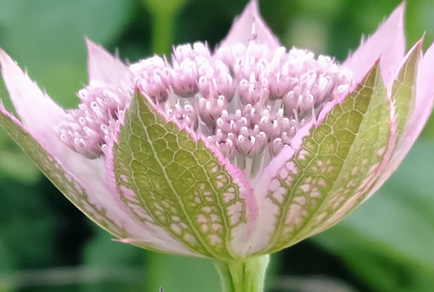
Astrantia is a small genus within the family Apiaceae. Among its 15 recognized taxa, Astrantia maxima subsp. haradjianii is a Turkish endemic that has not previously been included in any phylogenetic analyses. This study aimed to evaluate the taxonomic status of subsp. haradjianii, which, despite exhibiting clear morphological distinctions, such as smaller umbel size, has been classified as a subspecies. To investigate its potential elevation to species rank, multiple populations of both subspecies were analyzed using phylogenetic methods based on nuclear ribosomal (complete internal transcribed spacer region) and combined chloroplast (rps16, rpl16, matK, rbcL, psbA-trnH, trnL, trnL-trnF, and rps16-trnK) DNA sequences. The phylogenetic reconstruction revealed that the subsp. maxima and subsp. haradjianii are closely related yet separated by distinct genetic divergence, which is particularly evident in the chloroplast dataset. Based on this phylogenetic evidence, the current subspecific classification of A. maxima subsp. haradjianii was reconsidered, and its elevation to species rank is proposed. Furthermore, a lectotype was designated for the name Astrantia haradjianii.
References
- Albov, N.M. (1897) Prodromus Florae Colchicae. Romet, 294 pp.
- Bertoloni, A. (1813) Correspondance: Extraits d'une lettre renfermant le caractere de quelques nouvelles plantes, ecrite a Desvaux par le docteur Bertholoni. J. Bot. Agric. 2: 75–77.
- Calviño, C.I., Tilney, P.M., van Wyk, B.E. & Downie, S.R. (2006) A Molecular Phylogenetic Study of Southern African Apiaceae. American Journal of Botany 93: 1828–1847. https://doi.org/10.3732/ajb.93.12.1828
- Calviño, C.I. & Downie, S.R. (2007) Circumscription and phylogeny of Apiaceae subfamily Saniculoideae based on chloroplast DNA sequences. Molecular Phylogenetics and Evolution 44: 175–191. https://doi.org/10.1016/j.ympev.2007.01.002
- Calestani, V. (1905) Contributo alla sistematica. Webbia: Journal of Plant Taxonomy and Geography 1: 89–280. https://doi.org/10.1080/00837792.1905.10669550
- Darriba, D., Taboada, G.L., Doallo, R. & Posada, D. (2012) jModelTest 2: More models, new heuristics and parallel computing. Nature, Meth. 9: 772. https://doi.org/10.1038/nmeth.2109
- Davis, P.H. (Ed.) (1965) Flora of Turkey and East Aegean Islands, vol. 1. Edinburgh University Press, Edinburgh, pp. 567.
- Doğru-Koca (2024) Genetic divergences provide evidence to accept a new Mediterranean genus Antalia (Apiaceae) and insights into allopatric divergence extended to the Pliocene. Botanical Journal of Linnean Society 206: 95–113. https://doi.org/10.1093/botlinnean/boae019
- Downie, S.R., Ramanath, S., Katz-Downie, D.S. & Llanas, E. (1998) Molecular systematics of Apiaceae subfamily Apioideae: Phylogenetic analyses of nuclear ribosomal dna internal transcribed spacer and plastid rpoc1 intron sequences. American Journal of Botany 85: 563–591. https://doi.org/10.2307/2446441
- Downie, S.R., Katz-Downie, D.S. & Watson, M.F. (2000) A phylogeny of the flowering plant family Apiaceae based on chloroplast dna rpl16 and rpoc1 intron sequences: towards a suprageneric classification of subfamily Apioideae. American Journal of Botany 87: 273–292. https://doi.org/10.2307/2656915
- Fay, M.F., Swensen, S.M. & Chase, M.W. (1997) Taxonomic affinities of Medusagyne oppositifolia (Medusagynaceae). Kew Bulletin 52: 111–120. https://doi.org/10.2307/4117844
- Ford, C.S., Ayres, K.L., Toomey, N., Haider, N., Van Alphen Stahl, J., Kelly, L.J., Wikström, N., Hollingsworth, P.M., Duff, R.J., Hoot, S.B., Cowan, R.S., Chase, M.W. & Wilkinson, M.J. (2009) Selection of candidate coding DNA barcoding regions for use on land plants. Botanical Journal of the Linnean Society 159: 1–11. https://doi.org/10.1111/j.1095-8339.2008.00938.x
- Grintzesco, J. (1910) Monnographie du genre Astrantia. Annuaire du Conservatoire et du jardin botaniques de Genève 13–14: 66–194.
- Guindon, S. & Gascuel, O. (2003) A simple, fast, and accurate algorithm to estimate large phylogenies by maximum likelihood. Systematic Biology 52: 696–704. https://doi.org/10.1080/10635150390235520
- Hall, T. (1999) BioEdit: An important software for molecular biology. GERF Bulletin of Biosciences 2: 60–61.
- Hedge, I.C. & Lamond, J.M. (1972) Astrantia L. In: Davis, P.H. (Ed.) Flora of Turkey and East Aegean Islands, vol 4. Edinburgh University Press, Edinburgh, pp. 290–291.
- Hoffmann, G.F. (1816) Astrantia trifida Hoffm. In: Genera Plantarum Umbelliferarum, ed. 2.1. praef. 8 in nota.
- Kadereit, J.W., Repplinger, M., Schmalz, N., Uhink, C.H. & Wörz, A. (2008) The phylogeny and biogeography of Apiaceae subf. Saniculoideae tribe Saniculeae: From south to north and south again. Taxon 57: 365–382.
- Katoh, K., Rozewicki, J. & Yamada, K.D. (2019) MAFFT online service: multiple sequence alignment, interactive sequence choice and visualization. Briefings in Bioinformatics 20: 1160–1166. https://doi.org/10.1093/bib/bbx108
- Kaya, A. (2003) The genus Astrantia L. in Turkey: morphology and anatomy. Acta Botanica Croatica 62: 89–102.
- Linnaeus, C. (1753) Species plantarum, vol. 1. Holmiae [Stockholm]: impensis Laurentii Salvii, pp. 560.
- Oxelman, B., Liden, M. & Berglund, D. (1997) Chloroplast rps16 intron phylogeny of the tribe Sileneae (Caryophyllaceae). Plant Systematics and Evolution 206: 393–410. https://doi.org/10.1007/BF00987959
- Pallas, P.S. (1793) Nova Acta Academiae Scientiarum Imperialis Petropolitanae. vii. Imperatorskaja Akademija Nauk, Sankt-Peterburg, 357. t. 11.
- Plunkett, G.M., Soltis, D.E. & Soltis, P.S. (1996) Evolutionary patterns in Apiaceae: inferences based on matK sequence data. Systematic Botany 21: 477–495. https://doi.org/10.2307/2419610
- POWO, (2024) Plants of the World Online. Facilitated by the Royal Botanic Gardens, Kew. Available from: https://powo.science.kew.org/taxon/urn:lsid:ipni.org:names:39706-1 (accessed 20 October 2024)
- Rambaut, A. (2016) FigTree v1.4.3: Tree Figure Drawing Tool. Institute of Evolutionary Biology, University of Edinburgh. Available from: http://tree.bio.ed.ac.uk/software/figtree (accessed 20 October 2024)
- Rambaut, A., Drummond, A.J., Xie, D., Baele, G. & Suchard, M.A. (2018) Posterior summarisation in Bayesian phylogenetics using Tracer 1.7. Systematic Biology 67: 901–904. https://doi.org/10.1093/sysbio/syy032
- Rechinger, K.H. (1959) Astrantia maxima subsp. haradjianii (Grintz.) Rech.f. Arkiv för Botanik ser. 2, 5: 302.
- Ronquist, F., Teslenko, M., Van der Mark, P., Ayres, D.L., Darling, A., Höhna, S., Larget, B., Liu, L., Schard, M.A. & Huelsenbeck, J.P. (2012) Efficient Bayesian phylogenetic inference and model choice across a large model space. Systematic Biology 61: 539–542. https://doi.org/10.1093/sysbio/sys029
- Schultz, F.W. (1858) Eine lange verkannte und verwechselte Pflanze Bayerns. Flora 41: 161–163.
- Silvestro, M. (2012) raxmlGUI: A graphical front-end for RAxML. Organisms Diversity & Evolution 12: 335–337. https://doi.org/10.1007/s13127-011-0056-0
- Stamatakis, A. (2014) RAxML version 8: A tool for phylogenetic analysis and post-analysis of large phylogenies. Bioinformatics 30: 1312–1313. https://doi.org/10.1093/bioinformatics/btu033
- Turland, N.J., Wiersema, J.H., Barrie, F.R., Greuter, W., Hawksworth, D.L., Herendeen, P.S., Knapp, S., Kusber, W.-H., Li, D.-Z., Marhold, K., May, T.W., McNeill, J., Monro, A.M., Prado, J., Price, M.J. & Smith, G.F. (eds.) (2018) International Code of Nomenclature for algae, fungi, and plants (Shenzhen Code) adopted by the Nineteenth International Botanical Congress Shenzhen, China, July 2017. Regnum Vegetabile 159. Glashütten: Koeltz Botanical Books. https://doi.org/10.12705/Code.2018
- Taberlet, P., Gielly, L., Pautou, G. & Bouvet, J. (1991) Universal primers for amplification of three non-coding regions of chloroplast DNA. Plant Molecular Biology 17: 1105–1109. https://doi.org/10.1007/BF00037152
- Valiejo-Roman, C.M., Terentieva, E.I., Samigullin, T.H. & Pimenov, M.G. (2002) Relationships among genera in Saniculoideae and selected Apioideae (Umbelliferae) inferred from nrITS sequences. Taxon 51: 91–101. https://doi.org/10.2307/1554966
- Woronow, J.N. (1905) Astrantia ossica. Trudy Botanicheskogo Sada Imperatorskogo Yur’evskogo Universiteta 6: 70.
- Wörz, A. (1999) Systematics and evolution of the genus Astrantia L (Apiaceae-Saniculoideae). Botanische Jahrbucher fur Systematik Pflanzengeschichte und Pflanzengeographie 121: 507–536.
- Wulfen, N.J.von J. (1778) Astrantia carniolica. In: Florae Austriaceae, vol. 5. Opera AcSumptibus, Vienna, pp. 500.