

Abstract
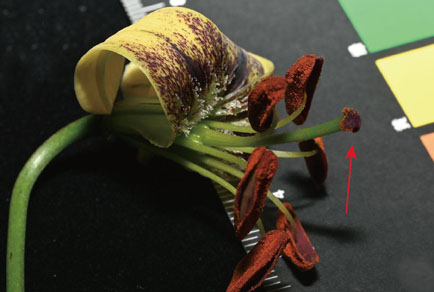
In this study, the previously overlooked name Lilium cupreum has been restored through field verification, morphological comparison and molecular phylogenetic analysis. The findings confirm the independent status of this species and clarify its taxonomic position in the lophophora clade in the genus Lilium of south-western China, providing a broader context for its classification. Field investigations and specimen surveys reveal that this species has a limited distribution and small populations, making it vulnerable to threats from human activities.
References
- Allen, G.C., Flores-Vergara, M.A., Krasynanski, S., Kumar, S. & Thompson, W.F. (2006) A modified protocol for rapid DNA isolation from plant tissues using cetyltrimethylammonium bromide. Nature Protocols 1: 2320–2325. https://doi.org/10.1038/nprot.2006.384
- Austin, M.P. (2013) Vegetation and environment: discontinuities and continuities. In: Van Der Maarel, E. & Franklin, J. (Eds.) Vegetation ecology. Wiley, Chichester, pp. 71–106. https://doi.org/10.1002/9781118452592.ch3
- Chen, S., Zhou, Y., Chen, Y. & Gu, J. (2018) fastp: an ultra-fast all-in-one FASTQ preprocessor. Bioinformatics 34: i884–i890. https://doi.org/10.1093/bioinformatics/bty560
- Franchet, A.R. (1892) Les lis de la Chine et du Thibet. Journal de Botanique (Morot) 6: 304–321.
- Franchet, A.R. (1898) Plantarum sinensium ecloge secunda. Journal de Botanique (Morot) 12: 219–224.
- Gao, Y.D. (2015) Continuous variation supports accommodating Lilium habaense and L. xanthellum within L. stewartianum (Liliaceae). Phytotaxa 226: 196. https://doi.org/10.11646/phytotaxa.226.2.10
- Gao, Y.D., Harris, A. & He, X.J. (2015) Morphological and ecological divergence of Lilium and Nomocharis within the Hengduan Mountains and Qinghai-Tibetan Plateau may result from habitat specialization and hybridization. BMC Evolutionary Biology 15: 147. https://doi.org/10.1186/s12862-015-0405-2
- Gao, Y.D., Harris, A., Zhou, S.D. & He, X.J. (2013a) Evolutionary events in Lilium (including Nomocharis, Liliaceae) are temporally correlated with orogenies of the Q–T plateau and the Hengduan Mountains. Molecular Phylogenetics and Evolution 68: 443–460. https://doi.org/10.1016/j.ympev.2013.04.026
- Gao, Y.D., Zhou, S.D. & He, X.J. (2013b) Lilium yapingense (Liliaceae), a new species from Yunnan, China, and its systematic significance relative to Nomocharis. Annales Botanici Fennici 50: 187–194. https://doi.org/10.5735/085.050.0311
- Jin, J.J., Yu, W.B., Yang, J.B., Song, Y., dePamphilis, C.W., Yi, T.S. & Li, D.Z. (2020) GetOrganelle: a fast and versatile toolkit for accurate de novo assembly of organelle genomes. Genome Biology 21: 241. https://doi.org/10.1186/s13059-020-02154-5
- Kalyaanamoorthy, S., Minh, B.Q., Wong, T.K.F., von Haeseler, A. & Jermiin, L.S. (2017) ModelFinder: fast model selection for accurate phylogenetic estimates. Nature Methods 14: 587–589. https://doi.org/10.1038/nmeth.4285
- Katoh, K. & Standley, D.M. (2013) MAFFT Multiple eequence alignment software, version 7: improvements in performance and usability. Molecular Biology and Evolution 30: 772–780. https://doi.org/10.1093/molbev/mst010
- Klotzsch, F. & Garcke, A. (1862) Die botanischen ergebnisse der reise Seiner Königl. Becker, Berlin, 53 pp.
- Lemoine, F., Correia, D., Lefort, V., Doppelt-Azeroual, O., Mareuil, F., Cohen-Boulakia, S. & Gascuel, O. (2019) NGPhylogeny.fr: new generation phylogenetic services for non-specialists. Nucleic Acids Research 47 (W1): W260–W265. https://doi.org/10.1093/nar/gkz303
- Letunic, I. & Bork, P. (2024) Interactive Tree of Life (iTOL) v6: recent updates to the phylogenetic tree display and annotation tool. Nucleic Acids Research 52: W78–W82. https://doi.org/10.1093/nar/gkae268
- Léveillé, H. (1915) Flora missionnaria asiatica. Bulletin de géographie botanique 25: 37–50.
- Liang, S.Y. & Tamura, M. (2000) Lilium Linnaeus. In: Wu, Z.Y. & Raven, P.H. (Eds.) Flora of China, vol. 24. Science Press, Beijing and Missouri Botanical Garden Press, St. Louis, pp. 135–159.
- Liu, L., Wang, Q., Zhang, Z., He, X. & Yu, Y. (2023) MATO: An updated tool for capturing and analyzing cytotaxonomic and morphological data. The Innovation Life 1: 100010–7. https://doi.org/10.59717/j.xinn-life.2023.100010
- National Forestry and Grassland Administration & Ministry of Agriculture and Rural Affairs. (2021) List of national key protected wild plants. National Forestry and Grassland Administration. [https://www.forestry.gov.cn/c/www/lczc/10746.jhtml]
- Oksanen, J., Simpson, G.L., Blanchet, F.G., Kindt, R., Legendre, P., Minchin, P.R., O’Hara, R.B., Solymos, P., Stevens, M.H.H., Szoecs, E. & Wagner, H. (2025) vegan: Community ecology package. R package version 2.7-2. [https://CRAN.R-project.org/package=vegan]
- R Core Team (2025) R: A language and environment for statistical computing. R Foundation for Statistical Computing, Vienna, Austria. [https://www.r-project.org/]
- Ronquist, F., Teslenko, M., van der Mark, P., Ayres, D.L., Darling, A., Höhna, S., Larget, B., Liu, L., Suchard, M.A. & Huelsenbeck, J.P. (2012) MrBayes 3.2: Efficient Bayesian phylogenetic inference and model choice across a large model space. Systematic Biology 61: 539–542. https://doi.org/10.1093/sysbio/sys029
- Scanes, C.G. (2018) Human activity and habitat loss: destruction, fragmentation, and degradation. Animals and Human Society 451–482. https://doi.org/10.1016/B978-0-12-805247-1.00026-5
- Sichuan Provincial Government. (2024) List of key protected wild plants in Sichuan Province. Sichuan Provincial Government. [https://www.sc.gov.cn/10462/zfwjts/2024/8/9/76ae89dbca9648e39fc28013d3edce18.shtml]
- Smith, W.W. (1922) Notes on Chinese lilies. Transactions of the Botanical Society of Edinburgh 28: 122–160. https://doi.org/10.1080/03746602309469374
- Talavera, G. & Castresana, J. (2007) Improvement of phylogenies after removing divergent and ambiguously aligned blocks from protein sequence alignments. Systematic Biology 56: 564–577. https://doi.org/10.1080/10635150701472164
- Tamura, K., Stecher, G. & Kumar, S. (2021) MEGA11: Molecular evolutionary genetics analysis, version 11. Molecular Biology and Evolution 38: 3022–3027. https://doi.org/10.1093/molbev/msab120
- Wang, T., Yuan, Y.M., Zhou, T.H. & Gao, Y.D. (2025) Lilium huanglongense (Liliaceae): a newly discovered species in north-western Sichuan, China. PhytoKeys 252: 9–24. https://doi.org/10.3897/phytokeys.252.135155
- Wickham, H. (2016) ggplot2: Elegant graphics for data analysis. Springer, Cham, pp. 189–201. https://doi.org/10.1007/978-3-319-24277-4_9
- Wickham, H., François, R., Henry, L. & Müller, K. (2023) dplyr: A grammar of data manipulation. R package version 1.1.4. [https://CRAN.R-project.org/package=dplyr]
- Wickham, H., Hester, J. & Francois, R. (2024) readr: Read rectangular text data. R package version 2.1.5. [https://CRAN.R-project.org/package=readr]
- Xu, J.M. (1985) New species of Liliaceae from Sichuan. Journal of University of Chinese Academy of Sciences 23: 233–234.
- Yuan, Y.M. & Gao, Y.D. (2024) Lilium liangiae, a new species in the genus Lilium (Liliaceae) that reveals parallel evolution within morphology. Frontiers in Plant Science 15: 1371237. https://doi.org/10.3389/fpls.2024.1371237
- Zhang, D., Gao, F., Jakovlić, I., Zou, H., Zhang, J., Li, W.X. & Wang, G.T. (2020) PhyloSuite: An integrated and scalable desktop platform for streamlined molecular sequence data management and evolutionary phylogenetics studies. Molecular Ecology Resources 20: 348–355. https://doi.org/10.1111/1755-0998.13096