
Abstract
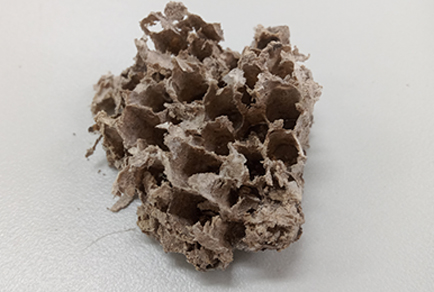
Aspergillus is a widely distributed genus occurring on diverse hosts and substrates. During a survey in Chiang Rai Province, Thailand, an Aspergillus species was found associated with a decaying nest of paper wasp (Polistes sp.). According to the morphological characterization and multi-locus phylogenetic analyses based on internal transcribed spacer (ITS) region, β-tubulin (BenA), calmodulin (CaM), and the second largest subunit of RNA polymerase II (RPB2) genes, we identified our strain as A. subalbidus (MFLUCC 25-0297). Phylogenetic analysis placed the isolate (MFLUCC 25-0297) within Aspergillus section Candidi. Our isolate exhibits high sequence similarity and morphological characters consistent with the type strain of A. subalbidus. This is the first record of Aspergillus subalbidus from decaying paper wasp nests. This study expands the knowledge of host association and ecological distribution of A. subalbidus suggesting its potential role in the decomposition of insect-associated lignocellulosic substrates. Further investigations are required to assess the enzymatic capabilities of these species and their ecological interactions with social insects.
References
- Abdel-Azeem, A.M. (2013) Ecological and taxonomical studies on ascospore-producing fungi in Egypt. LAP LAMBERT Academic Publishing.
- Alves, V.C.S., Lira, R.A., Lima, J.M.S., Barbosa, R.N., Bento, D.M., Barbier, E. & Bezerra, J.D.P. (2022) Unravelling the fungal darkness in a tropical cave: Richness and the description of one new genus and six new species. Fungal Systematics and Evolution 10 (1): 139–167. https://doi.org/10.3114/fuse.2022.10.06
- Alzahrani, K.K. (2025) Unveiling the distribution and research patterns of Aspergillus spp. in Saudi Arabia: a systematic and bibliometric analysis. Frontiers in Microbiology 16: 1638271 https://doi.org/10.3389/fmicb.2025.1638271
- Balbool, B.A. & Abdel-Azeem, A.M. (2020) Diversity of the culturable endophytic fungi producing L-asparaginase in arid Sinai. Italian Journal of Mycology 49: 8–24. https://doi.org/10.6092/issn.2531-7342/10063
- Baldrian, P., Větrovský, T., Lepinay, C. & Kohout, P. (2022) High‑throughput sequencing view on the magnitude of global fungal diversity. Fungal Diversity 114: 539–547. https://doi.org/10.1007/s13225-021-00472-y
- Bhunjun, C.S., Niskanen, T., Suwannarach, N., Wannathes, N., Chen, Y.J., McKenzie, E.H.C., Maharachchikumbura, S.S.N., Buyck, B., Zhao, C.L., Fan, Y.G., Zhang, J.Y., Dissanayake, A.J., Marasinghe, D.S., Jayawardena, R.S., Kumla, J., Padamsee, M., Chen, Y.Y., Liimatainen, K., Ammirati, J.F., Phukhamsakda, C., Liu, J.K., Phonrob, W., Randrianjohany, É., Hongsanan, S., Cheewangkoon, R., Bundhun, S., Khuna, S., Yu, W.J., Deng, L.S., Lu, Y.Z., Hyde, K.D. & Lumyong, S. (2022) The numbers of fungi: Are the most speciose genera truly diverse? Fungal Diversity 114 (1): 387–462. https://doi.org/10.1007/s13225-022-00501-4
- Bhunjun, C.S., Chen, Y.J., Phukhamsakda, C., Boekhout, T., Groenewald, J.Z., McKenzie, E.H.C., Francisco, E.C., Frisvad, J.C., Groenewald, M., Hurdeal, V.G., Luangsa‑ard, J., Perrone, G., Visagie, C.M., Bai, F.Y., Błaszkowski, J., Braun, U., de Souza, F.A., de Queiroz, M.B., Dutta, A.K., Gonkhom, D., Goto, B.T., Guarnaccia, V., Hagen, F., Houbraken, J., Lachance, M.A., Li, J.J., Luo, K.Y., Magurno, F., Mongkolsamrit, S., Robert, V., Roy, N., Tibpromma, S., Wanasinghe, D.N., Wang, D.Q., Wei, D.P., Zhao, C.L., Aiphuk, W., Ajayi‑Oyetunde, O., Arantes, T.D. & Crous, P.W. (2024a) What are the 100 most cited fungal genera? Studies in Mycology 108 (1): 1–412. https://doi.org/10.3114/sim.2024.108.01
- Bhunjun, C.S., Phukhamsakda, C., Hyde, K.D., McKenzie, E.H.C. & Li, Q. (2024b) Do all fungi have ancestors with endophytic lifestyles? Fungal Diversity 125 (1): 73–98. https://doi.org/10.1007/s13225-023-00516-5
- Cañete-Gibas, C.F., Patterson, H.P., Sanders, C.J., Mele, J., Fan, H., David, M. & Wiederhold, N.P. (2023) Species distribution and antifungal susceptibilities of Aspergillus section Terrei isolates in clinical samples from the United States and description of Aspergillus pseudoalabamensis sp. nov. Pathogens 12 (4): 579. https://doi.org/10.1128/jcm.00280-22
- Capella-Gutiérrez, S., Silla-Martínez, J.M. & Gabaldón, T. (2009) trimAl: A tool for automated alignment trimming in large-scale phylogenetic analyses. Bioinformatics 25: 1972–1973. https://doi.org/10.1093/bioinformatics/btp348
- Carroll, G.C. & Wicklow, D.T. (1992) The fungal community: Its organization and role in the ecosystem. New York: Marcel Dekker, Inc. https://doi.org/10.1201/9781420027891
- Chan, J.F., Lau, S.K., Yuen, K.Y. & Woo, P.C. (2016) Talaromyces (Penicillium) marneffei infection in non-HIV-infected patients. Emerging Microbes & Infections 5 (1): 1–9. https://doi.org/10.1038/emi.2016.18
- Chaiwan, N., Gomdola, D., Wang, S., Monkai, J., Tibpromma, S., Doilom, M., Wanasinghe, D.N., Mortimer, P.E., Lumyong, S. & Hyde, K.D. (2021) https://gmsmicrofungi.org: An online database providing updated information of microfungi in the Greater Mekong Subregion. Mycosphere 12 (1): 1513–1526. https://doi.org/10.5943/mycosphere/12/1/19
- Chen, A.J., Frisvad, J.C., Sun, B.D., Varga, J., Kocsubé, S., Dijksterhuis, J., Kim, D.H., Hong, S.B., Houbraken, J. & Samson, R.A. (2016) Aspergillus section Nidulantes (formerly Emericella): Polyphasic taxonomy, chemistry and biology. Studies in Mycology 84: 1–118. https://doi.org/10.1016/j.simyco.2016.10.001
- Conley, C.A., Ishkhanova, G., McKay, C.P. & Cullings, K. (2006) A preliminary survey of non-lichenized fungi cultured from the hyperarid Atacama Desert of Chile. Astrobiology 6 (4): 521–526. https://doi.org/10.1089/ast.2006.6.521
- Crous, P.W., Boers, J., Holdom, D., Osieck, E.R., Steinrücken, T.V., Tan, Y.P., Vitelli, J.S., Shivas, R.G., Barrett, M., Boxshall, A.G., Broadbridge, J., Larsson, E., Lebel, T., Pinruan, U., Sommai, S., Alvarado, P., Bonito, G., Decock, C.A., De la Peña‑Lastra, S., Delgado, G., Houbraken, J., Maciá‑Vicente, J.G., Raja, H.A., Rigueiro‑Rodríguez, A., Rodríguez, A., Wingfield, M.J., Adams, S.J., Akulov, A., Al‑Hidmi, T., Antonín, V., Arauzo, S., Arenas, F., Armada, F., Aylward, J., Bellanger, J.M., Berraf‑Tebbal, A., Bidaud, A., Boccardo, F., Cabero, J., Calledda, F., Corriol, G., Crane, J.L., Dearnaley, J.D.W., Dima, B., Dovana, F., Eichmeier, A., Esteve‑Raventós, F., Fine, M., Ganzert, L., García, D., Torres‑García, D., Gené, J., Gutiérrez, A., Iglesias, P., Istel, Ł., Jangsantear, P., Jansen, G.M., Jeppson, M., Karun, N.C., Karich, A., Khamsuntorn, P., Kokkonen, K., Kolařík, M., Kubátová, A., Labuda, R., Lagashetti, A.C., Lifshitz, N., Linde, C., Loizides, M., Luangsa‑ard, J.J., Lueangjaroenkit, P., Mahadevakumar, S., Mahamedi, A.E., Malloch, D.W., Marincowitz, S., Mateos, A., Moreau, P.A., Miller, A.N., Molia, A., Morte, A., Navarro‑Ródenas, A., Nebesářová, J., Nigrone, E., Nuthan, B.R., Oberlies, N.H., Pepori, A.L., Rämä, T., Rapley, D., Reschke, K., Robicheau, B.M., Roets, F., Roux, J., Saavedra, M., Sakolrak, B., Santini, A., Ševčíková, H., Singh, P.N., Singh, S.K., Somrithipol, S., Spetik, M., Sridhar, K.R., Starink‑Willemse, M., Taylor, V.A. & van Iperen, A.L. (2022) Fungal Planet description sheets: 1383–1435. Persoonia 48 (1): 261–371. https://doi.org/10.3767/persoonia.2022.48.08
- Dissanayake, A.J., Bhunjun, C.S., Maharachchikumbura, S.S.N. & Liu, J.K. (2020) Applied aspects of methods to infer phylogenetic relationships amongst fungi. Mycosphere 11 (1): 2652–2676. https://doi.org/10.5943/mycosphere/11/1/18
- Etymologia: Aspergillus. (2006) Emerging Infectious Diseases 12 (3): 415. https://doi.org/10.3201/eid1203.ET1203
- Fouillaud, M. & Morel, G. (1995) Fungi associated with nests of the paper wasp Polistes hebraeus (Hymenoptera: Vespidae) on La Reunion Island. Environmental Entomology 24 (2): 298–305. https://doi.org/10.1093/ee/24.2.298
- Frisvad, J.C., Smedsgaard, J., Larsen, T.O. & Samson, R.A. (2004) Mycotoxins, drugs and other extrolites produced by species in Penicillium subgenus Penicillium. Studies in Mycology 49 (201): e41.
- Gautier, M., Normand, A.C. & Ranque, S. (2016) Previously unknown species of Aspergillus. Clinical Microbiology and Infection 22 (8): 662–669. https://doi.org/10.1016/j.cmi.2016.05.013
- Glässnerová, K., Sklenář, F., Jurjević, Ž., Houbraken, J., Yaguchi, T., Visagie, C.M., Gené, J., Siqueira, J.P.Z., Kubátová, A., Kolařík, M. & Hubka, V. (2022) A monograph of Aspergillus section Candidi. Studies in Mycology 102 (1): 1–51. https://doi.org/10.3114/sim.2022.102.01
- Habibi, A. (2021) Aspergillus species in retail samples of pistachio, walnut, and hazelnut in Kerman, Iran. Mycologia Iranica 8 (2): 77–94. https://doi.org/10.22092/MI.2022.359369.1223
- Haghi, S.M., Aghili, S.R., Gholami, S., Salmanian, B., Nikokar, S. & Khangolzadeh, M. & Geravi, H. (2014) Isolation of medically important fungi from cockroaches trapped at hospitals of Sari, Iran. Bulletin of Environment, Pharmacology and Life Sciences 3 (5): 29–36.
- Harikrishnan, K., Rajeshkumar, K.C., Patil, R.M., Jeewon, R., Yilmaz, N. & Visagie, C.M. (2025) Aspergillus dhakephalkarii and A. patriciawiltshireae spp. nov., two new species in Aspergillus sect. Nigri ser. Japonici (Eurotiales, Aspergillaceae) from India. Phytotaxa 695 (1): 57–79. https://doi.org/10.11646/phytotaxa.695.1.2
- Harris, R.J., Harcourt, S.J., Glare, T.R., Rose, E.A.F. & Nelson, T.J. (2000) Susceptibility of Vespula vulgaris (Hymenoptera: Vespidae) to generalist entomopathogenic fungi and their potential for wasp control. Journal of Invertebrate Pathology 75 (4): 251–258. https://doi.org/10.1006/jipa.2000.4928
- Hawksworth, D.L. (1991) The fungal dimension of biodiversity: Magnitude, significance, and conservation. Mycological Research 95: 641–655. https://doi.org/10.1016/S0953-7562(09)80810-1
- Hong, S.B., Cho, H.S., Shin, H.D., Frisvad, J.C. & Samson, R.A. (2006) Novel Neosartorya species isolated from soil in Korea. International Journal of Systematic and Evolutionary Microbiology 56 (2): 477–486. https://doi.org/10.1099/ijs.0.63980-0
- Houbraken, J.A.M.P. & Samson, R. (2011) Phylogeny of Penicillium and the segregation of Trichocomaceae into three families. Studies in Mycology 70 (1): 1–51. https://doi.org/10.3114/sim.2011.70.01
- Houbraken, J., Due, M., Varga, J., Meijer, M., Frisvad, J.C. & Samson, R.A. (2007) Polyphasic taxonomy of Aspergillus section Usti. Studies in Mycology 59: 107–128. https://doi.org/10.3114/sim.2007.59.12
- Houbraken, J., de Vries, R.P. & Samson, R.A. (2014) Modern taxonomy of biotechnologically important Aspergillus and Penicillium species. Advances in Applied Microbiology 86: 199–249. https://doi.org/10.1016/B978-0-12-800262-9.00004-4
- Houbraken, J., Kocsubé, S., Visagie, C.M., Yilmaz, N., Wang, X.C., Meijer, M., Kraak, B., Hubka, V., Bensch, K., Samson, R.A. & Frisvad, J.C. (2020) Classification of Aspergillus, Penicillium, Talaromyces and related genera (Eurotiales): An overview of families, genera, subgenera, sections, series and species. Studies in Mycology 95: 5–169. https://doi.org/10.1016/j.simyco.2020.05.002
- Hubka, V., Kubatova, A., Mallatova, N., Sedlacek, P., Melichar, J., Skorepova, M., Mencl, K., Lyskova, P., Sramkova, B., Chudickova, M. & Kolarik, M. (2012) Rare and new etiological agents revealed among 178 clinical Aspergillus strains obtained from Czech patients and characterized by molecular sequencing. Medical Mycology 50 (6): 601–610. https://doi.org/10.3109/13693786.2012.667578
- Hubka, V., Lyskova, P., Frisvad, J.C., Peterson, S.W., Skorepova, M. & Kolarik, M. (2014) Aspergillus pragensis sp. nov. discovered during molecular reidentification of clinical isolates belonging to Aspergillus section Candidi. Sabouraudia 52 (6): 565–576. https://doi.org/10.1093/mmy/myu022
- Hubka, V., Nováková, A., Kolařík, M., Jurjević, Ž. & Peterson, S.W. (2015) Revision of Aspergillus section Flavipedes: Seven new species and proposal of section Jani sect. nov. Mycologia 107 (1): 169–208. https://doi.org/10.3852/14-059
- Hubka, V., Nováková, A., Samson, R.A., Houbraken, J., Frisvad, J.C., Sklenář, F., Varga, J. & Kolařík, M. (2016) Aspergillus europaeus sp. nov., a widely distributed soil-borne species related to A. wentii (section Cremei). Plant Systematics and Evolution 302 (6): 641–650. https://doi.org/10.1007/s00606-016-1293-7
- Hyde, K.D., Amuhenage, T.B., Apurillo, C.CS., Asghari, R., Aumentado, H.D., Bahkali, A.H., Bera, I., Bhunjun, C.S., Calabon, M.S., Chandrasiri, S., Chethana, K.W.T., Doilom, M., Dong, W., Fallahi, M., Gajanayake, A.J., Gomdola, D., Gunarathne, A., Hongsanan, S., Huanraluek, N., Jayawardena, R.S., Kapov, S.A., Khyaju, S., Le, L., Li, C.J.Y., Li, Q.R., Li, Y.X., Lin, C.G., Linn, M.M., Liu, J.K., Liu, N.G., Luangharn, T., Madagammana, A.D., Manawasinghe, I.S., Marasinghe, D.S., McKenzie, E.H.C., Meakala, N., Meng, Q.F., Mukhopadhyay, S., Norphanphoun, C., Pem, D., Phukhamsakda, C., Sarma, V.V., Selçuk, F., Senanayake, I.C., Shah, S., Shu, Y.X., Silva, H.V.S., Su, H.L., Tavakol, M., Thakshila, S.A.D., Thiyagaraja, V., Thongklang, N., Tian, Q., Tibpromma, S., Tun, Z.L., Ulukapi, M., Wang, Y., Wannasawang, N., Wijayawardene, N.N. & Dai, D.Q. (2023) Fungalpedia, an illustrated compendium of the fungi and fungus‑like taxa. Mycosphere 14 (1): 1835–1959. https://doi.org/10.5943/mycosphere/14/1/22
- Hyde, K.D., Noorabadi, M.T., Thiyagaraja, V., He, M.Q., Johnston, P.R., Wijesinghe, S.N., Armand, A., Biketova, A.Y., Chethana, K.W.T., Erdoğdu, M., Ge, Z.W., Groenewald, J.Z., Hongsanan, S., Kušan, I., Leontyev, D.V., Li, D.W., Lin, C.G., Liu, N.G., Maharachchikumbura, S.S.N., Matočec, N., May, T.W., McKenzie, E.H.C., Mešić, A., Perera, R.H., Phukhamsakda, C., Piątek, M., Samarakoon, M.C., Selcuk, F., Senanayake, I.C., Tanney, J.B., Tian, Q., Vizzini, A., Wanasinghe, D.N., Wannasawang, N., Wijayawardene, N.N., Zhao, R.L., Abdel-Wahab, M.A., Abdollahzadeh, J., Abeywickrama, P.D., Abhinav, Absalan, S., Acharya, K., Afshari, N., Afshan, N.S., Afzalinia, S., Ahmadpour, S.A., Akulov, O., Alizadeh, A., Alizadeh, M., Al-Sadi, A.M., Alves, A., Alves, V.C.S., Alves-Silva, G., Antonín, V., Aouali, S., Aptroot, A., Apurillo, C.C.S., Arias, R.M., Asgari, B., Asghari, R., Assis, D.M.A., Assyov, B., Atienza, V., Aumentado, H.D.R., Avasthi, S., Azevedo, E., Bakhshi, M., Bao, D.F., Baral, H.O., Barata, M., Barbosa, K.D., Barbosa, R.N., Barbosa, F.R., Baroncelli, R., Barreto, G.G., Baschien, C., Bennett, R.M., Bera, I., Bezerra, J.D.P., Bhunjun, C.S., Bianchinotti, M.V., Błaszkowski, J., Boekhout, T., Bonito, G.M., Boonmee, S., Boonyuen, N., Bortnikov, F.M., Bregant, C., Bundhun, D., Burgaud, G., Buyck, B., Caeiro, M.F., Cabarroi-Hernández, M., Cai, M.F., Cai, L., Calabon, M.S., Calaça, F.J.S., Callalli, M., Câmara, M.P.S., Cano-Lira, J., Cao, B., Carlavilla, J.R., Carvalho, A., Carvalho, T.G., Castañeda-Ruiz, R.F., Catania, M.D.V., Cazabonne, J., Cedeño-Sanchez, M., Chaharmiri-Dokhaharani, S., Chaiwan, N., Chakraborty, N., Cheewankoon, R., Chen, C., Chen, J., Chen, Q., Chen, Y.P., Chinaglia, S., Coelho-Nascimento, C.C., Coleine, C., CostaRezende, D.H., Cortés-Pérez, A., Crouch, J.A., Crous, P.W., Cruz, R.H.S.F., Czachura, P., Damm, U., Darmostuk, V., Daroodi, Z., Das, K., Das, K., Davoodian, N., Davydov, E.A., da Silva, G.A., da Silva, I.R., da Silva, R.M.F., da Silva Santos, A.C., Dai, D.Q., Dai, Y.C., de Groot, D., De Kesel, A., De Lange, R., de Medeiros, E.V., de Souza, C.F.A., de Souza, F.A., dela Cruz, T.E.E., Decock, C., Delgado, G., Denchev, C.M., Denchev, T.T., Deng, Y.L., Dentinger, B.T.M., Devadatha, B., Dianese, J.C., Dima, B., Doilom, M., Dissanayake, A.J., Dissanayake, D.M.L.S., Dissanayake, L.S., Diniz, A.G., Dolatabadi, S., Dong, J.H., Dong, W., Dong, Z.Y., Drechsler-Santos, E.R., Druzhinina, I.S., Du, T.Y., Dubey, M.K., Dutta, A.K., Elliott, T.F., Elshahed, M.S., Egidi, E., Eisvand, P., Fan, L., Fan, X., Fan, X.L., Fedosova, A.G., Ferro, L.O., Fiuza, P.O., Flakus, A., Fonseca, E.O.W., Fryar, S.C., Gabaldón, T., Gajanayake, A.J., Gannibal, P.B., Gao, F., García-Sánchez, D., García-Sandoval, R., Garrido-Benavent, I., Garzoli, L., Gasca-Pineda, J., Gautam, A.K., Gené, J., Ghobad‑Nejhad, M., Ghosh, A., Giachini, A.J., Gibertoni, T.B., Gentekaki, E., Gmoshinskiy, V.I., Góes‑Neto, A., Gomdola, D., Gorjón, S.P., Goto, B.T., Granados‑Montero, M.M., Griffith, G.W., Groenewald, M., Grossart, H.P., Gu, Z.R., Gueidan, C., Gunarathne, A., Gunaseelan, S., Guo, S.L., Gusmão, L.F.P., Gutierrez, A.C., Guzmán‑Dávalos, L., Haelewaters, D., Haituk, H., Halling, R.E., He, S.C., Heredia, G., Hernández‑Restrepo, M., Hosoya, T., Hoog, S.D., Horak, E., Hou, C.L., Houbraken, J., Htet, Z.H., Huang, S.K., Huang, W.J., Hurdeal, V.G., Hustad, V.P., Inácio, C.A., Janik, P., Jayalal, R.G.U., Jayasiri, S.C., Jayawardena, R.S., Jeewon, R., Jerónimo, G.H., Jin, J., Jones, E.B.G., Joshi, Y., Jurjević, Ž., Justo, A., Kakishima, M., Kaliyaperumal, M., Kang, G.P., Kang, J.C., Karimi, O., Karunarathna, S.C., Karpov, S.A., Kezo, K., Khalid, A.N., Khan, M.K., Khuna, S., Khyaju, S., Kirchmair, M., Klawonn, I., Kraisitudomsook, N., Kukwa, M., Kularathnage, N.D., Kumar, S., Lachance, M.A., Lado, C., Latha, K.P.D., Lee, H.B., Leonardi, M., Lestari, A.S., Li, C., Li, H., Li, J., Li, Q., Li, Y., Li, Y.C., Li, Y.X., Liao, C.F., Lima, J.L.R., Lima, J.M.S., Lima, N.B., Lin, L., Linaldeddu, B.T., Linn, M.M., Liu, F., Liu, J.K., Liu, J.W., Liu, S., Liu, S.L., Liu, X.F., Liu, X.Y., Longcore, J.E., Luangharn, T., Luangsa‑ard, J.J., Lu, L., Lu, Y.Z., Lumbsch, H.T., Luo, L., Luo, M., Luo, Z.L., Ma, J., Madagammana, A.D., Madhushan, A., Madrid, H., Magurno, F., Magyar, D., Mahadevakumar, S., Malosso, E., Malysh, J.M., Mamarabadi, M., Manawasinghe, I.S., Manfrino, R.G., Manimohan, P., Mao, N., Mapook, A., Marchese, P., Marasinghe, D.S., Mardones, M., Marin‑Felix, Y., Masigol, H., Mehrabi, M., Mehrabi‑Koushki, M., Meiras‑Ottoni, A., Melo, R.F.R., Mendes‑Alvarenga, R.L., Mendieta, S., Meng, Q.F., Menkis, A., Menolli Jr, N., Mikšík, M., Miller, S.L., Moncada, B., Moncalvo, J.M., Monteiro, J.S., Monteiro, M., Mora‑Montes, H.M., Moroz, E.L., Moura, J.C., Muhammad, U., Mukhopadhyay, S., Nagy, G.L., Najam ul Sehar, A., Najafiniya, M., Nanayakkara, C.M., Naseer, A., Nascimento, E.C.R., Nascimento, S.S., Neuhauser, S., Neves, M.A., Niazi, A.R., Yong, N., Nilsson, R.H., Nogueira, P.T.S., Novozhilov, Y.K., Noordeloos, M., Norphanphoun, C., Nuñez‑Otaño, N., O’Donnell, R.P., Oehl, F., Oliveira, J.A., Oliveira Junior, I., Oliveira, N.V.L., Oliveira, P.H.F., Orihara, T., Oset, M., Pang, K.L., Papp, V., Pathirana, L.S., Peintner, U., Pem, D., Pereira, O.L., Pérez‑Moreno, J., Pérez‑Ortega, S., Péter, G., Pires‑Zottarelli, C.L.A., Phonemany, M., Phongeun, S., Pošta, A., Prazeres, J.F.S.A., Quan, Y., Quandt, C.A., Queiroz, M.B., Radek, R., Rahnama, K., Raj, K.N.A., Rajeshkumar, K.C., Soumyadeep, R., Ralaiveloarisoa, A.B., Rämä, T., Ramírez‑Cruz, V., Rambold, G., Rathnayaka, A.R., Raza, M., Ren, G.C., Rinaldi, A.C., Rivas‑Ferreiro, M., Robledo, G.L., Ronikier, A., Rossi, W., Rusevska, K., Ryberg, M., Safi, A., Salimi, F., Salvador‑Montoya, C.A., Samant, B., Samaradiwakara, N.P., Sánchez‑Castro, I., Sandoval‑Denis, M., Santiago, A.L.C.M.A., Santos, A.C.D.S., Santos, L.A. dos, Sarma, V.V., Sarwar, S., Savchenko, A., Savchenko, K., Saxena, R.K., Schoutteten, N., Selbmann, L., Ševčíková, H., Sharma, A., Shen, H.W., Shen, Y.M., Shu, Y.X., Silva, H.F., Silva‑Filho, A.G.S., Silva, V.S.H., Simmons, D.R., Singh, R., Sir, E.B., Sohrabi, M., Souza, F.A., Souza‑Motta, C.M., Sriindrasutdhi, V., Sruthi, O.P., Stadler, M., Stemler, J., Stephenson, S.L., Stoyneva‑Gaertner, M.P., Strassert, J.F.H., Stryjak‑Bogacka, M., Su, H., Sun, Y.R., Svantesson, S., Sysouphanthong, P., Takamatsu, S., Tan, T.H., Tanaka, K., Tang, C., Tang, X., Taylor, J.E., Taylor, P.W.J., Tennakoon, D.S., Thakshila, S.A.D., Thambugala, K.M., Thamodini, G.K., Thilanga, D., Thines, M., Tiago, P.V., Tian, X.G., Tian, W.H., Tibpromma, S., Tkalčec, Z., Tokarev, Y.S., Tomšovský, M., Torruella, G., Tsurykau, A., Udayanga, D., Ulukapı, M., Untereiner, W.A., Usman, M., Uzunov, B.A., Vadthanarat, S., Valenzuela, R., Van den Wyngaert, S., Van Vooren, N., Velez, P., Verma, R.K., Vieira, L.C., Vieira, W.A.S., Vinzelj, J.M., Tang, A.M.C., Walker, A., Walker, A.K., Wang, Q.M., Wang, Y., Wang, X.Y., Wang, Z.Y., Wannathes, N., Wartchow, F., Weerakoon, G., Wei, D.P., Wei, X., White, J.F. & Wijesundara, D.S.A. (2024a) The 2024 outline of fungi and fungus‑like taxa. Mycosphere 15 (1): 5146–6239. https://doi.org/10.5943/mycosphere/15/1/25
- Hyde, K.D., Jeewon, R., Chen, Y.J., Bhunjun, C.S., Calabon, M.S., Jiang, H.B., Lin, C.G., Norphanphoun, C., Sysouphanthong, P., Pem, D., Tibpromma, S., Zhang, Q., Doilom, M., Jayawardena, R.S., Liu, J.K., Maharachchikumbura, S.S.N., Phukhamsakda, C., Phookamsak, R., Al‑Sadi, A.M. & Thongklang, N., Wang, Y., Gafforov, Y., Jones, E.B.G. & Lumyong, S. (2020) The numbers of fungi: Is the descriptive curve flattening? Fungal Diversity 103: 219–271. https://doi.org/10.1007/s13225‑020‑00458‑2
- Hyde, K.D., Norphanphoun, C., Chen, J., Dissanayake, A.J., Doilom, M., Hongsanan, S., Jayawardena, R.S., Jeewon, R., Perera, R.H., Thongbai, B., Wanasinghe, D.N., Wisitrassameewong, K. & Tibpromma, S. & Stadler, M. (2018) Thailand’s amazing diversity: Up to 96% of fungi in northern Thailand may be novel. Fungal Diversity 93: 215–239. https://doi.org/10.1007/s13225-018-0415-7
- Index Fungorum. (2025) Index Fungorum: Global fungal nomenclator. Available from: http://www.indexfungorum.org/ (accessed 30 May 2025)
- Ichishima, E. (2016) Development of enzyme technology for Aspergillus oryzae, A. sojae and A. luchuensis, the national microorganisms of Japan. Bioscience, Biotechnology, and Biochemistry 80 (9): 1681–1692. https://doi.org/10.1080/09168451.2016.1177445
- Ijadpanahsaravi, M., Punt, M., Wösten, H.A. & Teertstra, W.R. (2021) Minimal nutrient requirements for induction of germination of Aspergillus niger conidia. Fungal Biology 125 (3): 231–238. https://doi.org/10.1016/j.funbio.2020.11.004
- Ito, Y., Peterson, S.W. & Goto, T. (1998) Isolation and characterization of Aspergillus nomius from Japanese soil and silkworm excrement. JSM Mycotoxins 1998 (46): 9–15.
- Jayaprakash, A. & Ebenezer, P. (2010) A new report on mycobiota associated with Ropalidia marginata paper nests. Indian Journal of Science and Technology 3 (1): 6–8. https://doi.org/10.17485/ijst/2010/v3i1/29633
- Jurjevic, Z., Peterson, S.W. & Horn, B.W. (2012) Aspergillus section Versicolores: nine new species and multilocus DNA sequence based phylogeny. IMA fungus 3 (1): 59–79. https://doi.org/10.5598/imafungus.2012.03.01.07
- Kallawicha, K., Chen, Y.C., Chao, H.J., Shen, W.C., Chen, B.Y., Chuang, Y.C. & Guo, Y.L. (2017) Ambient fungal spore concentration in a subtropical metropolis: temporal distributions and meteorological determinants. Aerosol and Air Quality Research 17 (8): 2051–2063. https://doi.org/10.4209/aaqr.2016.10.0450
- Klich, M.A. (2002) Biogeography of Aspergillus species in soil and litter. Mycologia 94 (1): 21–27. https://doi.org/10.2307/3761842
- Kwon-Chung, K.J. & Sugui, J.A. (2013) Aspergillus fumigatus – what makes the species a ubiquitous human fungal pathogen? PLoS Pathogens 9 (12): e1003743. https://doi.org/10.1371/journal.ppat.1003743
- Latgé, J.P. (1999) Aspergillus fumigatus and aspergillosis. Clinical Microbiology Reviews 12 (2): 310–350. https://doi.org/10.1128/CMR.12.2.310
- Li, P.D., Jeewon, R., Aruna, B., Li, H.Y., Lin, F.C. & Wang, H.K. (2019) Metabarcoding reveals differences in fungal communities between unflooded versus tidal flat soil in coastal saline ecosystem. Science of the Total Environment 690: 911–922. https://doi.org/10.1016/j.scitotenv.2019.06.473
- Li, W., Wang, M., Bian, X., Guo, J. & Cai, L. (2016) A high-level fungal diversity in the intertidal sediment of Chinese seas presents the spatial variation of community composition. Frontiers in Microbiology 7: 2098. https://doi.org/10.3389/fmicb.2016.02098
- Madagammana, A.D., Samarakoon, M.C., Phukhamsakda, C., Bhunjun, C.S., Huanraluek, N., Liu, J.K. & Hyde, K.D. (2024) Unveiling the holomorph and novel host records of Shearia formosa (Longiostiolaceae, Pleosporales) in China. New Zealand Journal of Botany 62 (2–3): 123–137. https://doi.org/10.1080/0028825X.2023.2267775
- Madden, A.A., Stchigel, A.M., Guarro, J., Sutton, D. & Starks, P.T. (2012) Mucor nidicola sp. nov., a fungal species isolated from an invasive paper wasp nest. International Journal of Systematic and Evolutionary Microbiology 62 (7): 1710–1714. https://doi.org/10.1099/ijs.0.033050-0
- Mageswari, A., Choi, Y., Thao, L.D., Lee, D., Kim, D.H., Park, M.S. & Hong, S.B. (2023) Re-identification of Aspergillus subgenus Circumdati strains in Korea led to the discovery of three unrecorded species. Mycobiology 51 (5): 288–299. https://doi.org/10.1080/12298093.2023.2257997
- Mapook, A., Hyde, K.D., McKenzie, E.H.C., Jones, E.G., Bhat, D.J., Jeewon, R., Stadler, M., Samarakoon, M.C., Malaithong, M., Tanunchai, B., Buscot, F., Wubet, T. & Purahong, W. (2020) Taxonomic and phylogenetic contributions to fungi associated with the invasive weed Chromolaena odorata (Siam weed). Fungal Diversity 101: 1–175. https://doi.org/10.1007/s13225-020-00444-8
- Mayorga-Ch, D., Rodríguez-C, C., Ortíz-Reyes, A., Romero-Tabarez, M. & Sarmiento, C.E. (2021) Interactions of social wasps with microorganisms. In: Neotropical Social Wasps: Basic and Applied Aspects, pp. 405–434. https://doi.org/10.1007/978-3-030-53510-0_22
- Miller, M.A., Pfeiffer, W. & Schwartz, T. (2010) Creating the CIPRES Science Gateway for inference of large phylogenetic trees. Gateway Computing Environments Workshop (GCE). New Orleans, LA, 2010, 1–8. https://doi.org/10.1109/GCE.2010.5676129
- Mohamed, A.H., Balbool, B.A. & Abdel-Azeem, A.M. (2021) Aspergillus from different habitats and their industrial applications. In: Industrially Important Fungi for Sustainable Development, pp. 85–106. https://doi.org/10.1007/978-3-030-67561-5_3
- Moretti, A. & Sarrocco, S. (2016) Encyclopedia of Food and Health.
- Mousavi, B., Hedayati, M.T., Hedayati, N., Ilkit, M. & Syedmousavi, S. (2016) Aspergillus species in indoor environments and their possible occupational and public health hazards. Current Medical Mycology 2 (1): 36–42. https://doi.org/10.18869/acadpub.cmm.2.1.36
- Mukhopadhyay, S., Phukhamsakda, C., Bhunjun, C.S., Bahkali, A.H., Jones, E.B.G. & Hyde, K.D. (2025) Exploring fungi on mangrove associates: Novel family Neoarthrineaceae and two novel species in Neoarthrinium and Oncopodiella. Mycological Progress 24 (1): 1–14. https://doi.org/10.1007/s11557-025-02035-w
- Nayak, S.S., Gonsalves, V. & Nazareth, S.W. (2012) Isolation and salt tolerance of halophilic fungi from mangroves and solar salterns in Goa, India. Indian Journal of Geo-Marine Sciences 41: 164–172.
- Negri, C.E., Gonçalves, S.S., Xafranski, H., Bergamasco, M.D., Aquino, V.R., Castro, P.T.O. & Colombo, A.L. (2014) Cryptic and rare Aspergillus species in Brazil: prevalence in clinical samples and in vitro susceptibility to triazoles. Journal of Clinical Microbiology 52 (10): 3633–3640. https://doi.org/10.1128/JCM.01582-14
- Nguyen, L.T., Schmidt, H.A., von Haeseler, A. & Minh, B.Q. (2015) IQ-TREE: A fast and effective stochastic algorithm for estimating maximum-likelihood phylogenies. Molecular Biology and Evolution 32 (1): 268–274. https://doi.org/10.1093/molbev/msu300
- Nguyen, T.T., Pangging, M., Bangash, N.K. & Lee, H.B. (2020) Five new records of the family Aspergillaceae in Korea, Aspergillus europaeus, A. pragensis, A. tennesseensis, Penicillium fluviserpens and P. scabrosum. Mycobiology 48 (2): 81–94. https://doi.org/10.1080/12298093.2020.1726563
- Nováková, A., Hubka, V. & Sáiz-Jiménez, C. (2014) Microscopic fungi isolated from cave air and sediments in the Nerja Cave preliminary results. In: The Conservation of Subterranean Cultural Heritage, pp. 239–245. https://doi.org/10.1201/b17570-29
- Nylander, J.A.A. (2004) MrModeltest v2. Evolutionary Biology Center, Uppsala University.
- Paulussen, C., Hallsworth, J.E., Álvarez-Pérez, S., Nierman, W.C., Hamill, P.G., Blain, D., Rediers, H. & Lievens, B. (2017) Ecology of aspergillosis: Insights into the pathogenic potency of Aspergillus fumigatus and some other Aspergillus species. Microbial Biotechnology 10 (2): 296–322. https://doi.org/10.1111/1751-7915.12367
- Peterson, S.W., Ito, Y., Horn, B.W. & Goto, T. (2001) Aspergillus bombycis, a new aflatoxigenic species and genetic variation in its sibling species, A. nomius. Mycologia 93 (4): 689–703. https://doi.org/10.1080/00275514.2001.12063200
- Peterson, S.W. (2008) Phylogenetic analysis of Aspergillus species using DNA sequences from four loci. Mycologia 100 (2): 205–226. https://doi.org/10.3852/mycologia.100.2.205
- Phukhamsakda, C., Hyde, K.D., Samarakoon, M.C., Louangphan, J., Navasit, K., Al‑Otibi, F. & Bhunjun, C.S. (2025) Unveiling Sordariomycetes taxa associated with woody litter in Northern Thailand. MycoKeys 115: 155–185. https://doi.org/10.3897/mycokeys.115.145330
- Phukhamsakda, C., McKenzie, E.H.C., Phillips, A.J.L., Gareth Jones, E.B., Bhat, D.J., Stadler, M., Bhunjun, C.S., Wanasinghe, D.N., Thongbai, B., Camporesi, E., Ertz, D., Jayawardena, R.S., Perera, R.H., Ekanayake, A.H., Tibpromma, S., Doilom, M., Xu, J. & Hyde, K.D. (2020) Microfungi associated with Clematis (Ranunculaceae) with an integrated approach to delimiting species boundaries. Fungal Diversity 102: 1–203. https://doi.org/10.1007/s13225-020-00448-4
- Phukhamsakda, C., Nilsson, R.H., Bhunjun, C.S., De Farias, A.R.G., Sun, Y.R., Wijesinghe, S.N., Raza, M., Bao, D.F., Tibpromma, S., Dong, W., Tennakoon, D.S., Tian, X.G., Xiong, Y.R., Karunarathna, S.C., Cai, L., Luo, Z.L., Wang, Y., Manawasinghe, I.S., Camporesi, E., Kirk, P.M., Promputtha, I., Kuo, C.H., Su, H.Y., Doilom, M., Li, Y., Fu, Y.P. & Hyde, K.D. (2022) The numbers of fungi: Contributions from traditional taxonomic studies and challenges of metabarcoding. Fungal Diversity 114: 327–386. https://doi.org/10.1007/s13225-022-00502-3
- Rambaut, A. (2012) FigTree v. 1.40. University of Oxford.
- Rannala, B. & Yang, Z. (1996) Probability distribution of molecular evolutionary trees: A new method of phylogenetic inference. Journal of Molecular Evolution 43: 304–311. https://doi.org/10.1007/BF02338839
- Ren, G., Wanasinghe, D.N., de Farias, A.R.G., Hyde, K.D., Yasanthika, E., Xu, J., Balasuriya, A. & Chethana, K.W.T. & Gui, H. (2022) Taxonomic novelties of woody litter fungi (Didymosphaeriaceae, Pleosporales) from the Greater Mekong Subregion. Biology 11 (11): 1660. https://doi.org/10.3390/biology11111660
- Riedling, O.L., David, K.T. & Rokas, A. (2024) Global patterns of species diversity and distribution in the biomedically and biotechnologically important fungal genus Aspergillus. bioRxiv. https://doi.org/10.1101/2024.11.29.626055
- Ronquist, F., Teslenko, M., van der Mark, P., Ayres, D.L., Darling, A., Höhna, S., Larget, B., Liu, L. & Suchard, M.A. & Huelsenbeck, J.P. (2012) MrBayes 3.2: Efficient Bayesian phylogenetic inference and model choice across a large model space. Systematic Biology 61 (3): 539–542. https://doi.org/10.1093/sysbio/sys029
- Rose, E.A.F., Harris, R.A. & Glare, T.R. (1999) Possible pathogens of social wasps (Hymenoptera: Vespidae) and their potential as biological control agents. New Zealand Journal of Zoology 26 (3): 179–190. https://doi.org/10.1080/03014223.1999.9518188
- Samson, R.A., Visagie, C.M., Houbraken, J., Hong, S.B., Hubka, V., Klaassen, C.H.W., Perrone, G., Seifert, K.A., Susca, A., Tanney, J.B., Varga, J., Kocsubé, S., Szigeti, G., Yaguchi, T. & Frisvad, J.C. (2014) Phylogeny, identification and nomenclature of the genus Aspergillus. Studies in Mycology 78 (1): 141–173. https://doi.org/10.1016/j.simyco.2014.07.004
- Senanayake, I.C., Rathnayaka, A.R., Marasinghe, D.S., Calabon, M.S., Gentekaki, E., Lee, H.B., Hurdeal, V.G., Pem, D., Dissanayake, L.S., Wijesinghe, S.N., Bundhun, D., Nguyen, T.T., Goonasekara, I.D., Abeywickrama, P.D., Bhunjun, C.S., Jayawardena, R.S., Wanasinghe, D.N. & Jeewon, R. & Bhat, D.J. & Xiang, M.M. (2020) Morphological approaches in studying fungi: Collection, examination, isolation, sporulation and preservation. Mycosphere 11 (1): 2678–2754. https://doi.org/10.5943/mycosphere/11/1/20
- Silva, J.J., Fungaro, M.H., Wang, X., Larsen, T.O., Frisvad, J.C., Taniwaki, M.H. & Iamanaka, B.T. (2022) Deep genotypic species delimitation of Aspergillus section Flavi isolated from Brazilian foodstuffs and the description of Aspergillus annui sp. nov. and Aspergillus saccharicola sp. nov. Journal of Fungi 8 (12): 1279. https://doi.org/10.3390/jof8121279
- Spagnolo, A.M. (2025) Aspergillus contamination in healthcare facilities: an ever‑present issue—prevention and control measures. Hygiene 5 (1): 3. https://doi.org/10.3390/hygiene5010003
- Stamatakis, A. (2014) RAxML version 8: A tool for phylogenetic analysis and post‑analysis of large phylogenies. Bioinformatics 30: 1312–1313. https://doi.org/10.1093/bioinformatics/btu033
- Sun, B., Luo, C., Bills, G.F., Li, J., Huang, P., Wang, L. & Chen, A.J. (2022) Four new species of Aspergillus subgenus Nidulantes from China. Journal of Fungi 8: 1205. https://doi.org/10.3390/jof8111205
- Swindell, S.R. & Plasterer, T.N. (1997) SEQMAN. In: Swindell, S.R. (Ed.) Sequence data analysis guidebook. pp. 75–89.
- Tamura, K., Stecher, G., Peterson, D., Filipski, A. & Kumar, S. (2013) MEGA6: molecular evolutionary genetics analysis version 6.0. Molecular Biology and Evolution 30 (12): 2725–2729. https://doi.org/10.1093/molbev/mst197
- Tang, Y., Lian, B., Dong, H., Liu, D. & Hou, W. (2012) Endolithic bacterial communities in dolomite and limestone rocks from the Nanjiang Canyon in Guizhou karst area (China). Geomicrobiology Journal 29 (3): 213–225. https://doi.org/10.1080/01490451.2011.558560
- Tian, X.G., Bao, D.F., Karunarathna, S.C., Jayawardena, R.S., Hyde, K.D., Bhat, D.J., Luo, Z.L., Elgorban, A.M., Hongsanan, S., Rajeshkumar, K.C., Maharachchikumbura, S.S.N., Suwannarach, N., Dawoud, T.M., Lu, Y.Z., Han, J.J., Xiao, Y.P., Du, T.Y., Lu, L., Xu, R.F., Dai, D.Q., Liu, X.F., Liu, C. & Tibpromma, S. (2024) Taxonomy and phylogeny of ascomycetes associated with selected economically important monocotyledons in China and Thailand. Mycosphere 15 (1): 1–274. https://doi.org/10.5943/mycosphere/15/1/1
- Torzilli, A.P. & Isbister, J.D. (1994) Comparison of coal solubilization by bacteria and fungi. Biodegradation 5 (1): 55–62. https://doi.org/10.1007/BF00695214
- Tsang, C.C., Tang, J.Y., Lau, S.K. & Woo, P.C. (2018) Taxonomy and evolution of Aspergillus, Penicillium and Talaromyces in the omics era–Past, present and future. Computational and Structural Biotechnology Journal 16: 197–210. https://doi.org/10.1016/j.csbj.2018.05.003
- Vaidya, G., Lohman, D.J. & Meier, R. (2011) Sequence Matrix: concatenation software for the fast assembly of multi‑gene datasets with character set and codon information. Cladistics 27 (2): 171–180. https://doi.org/10.1111/j.1096-0031.2010.00329.x
- Varga, J., Frisvad, J.C. & Samson, R.A. (2007) Polyphasic taxonomy of Aspergillus section Candidi based on molecular, morphological and physiological data. Studies in Mycology 59 (1): 75–88. https://doi.org/10.3114/sim.2007.59.10
- Visagie, C.M. & Houbraken, J. (2020) Updating the taxonomy of Aspergillus in South Africa. Studies in Mycology 95 (1): 253–292. https://doi.org/10.1016/j.simyco.2020.02.003
- Visagie, C.M., Goodwell, M. & Nkwe, D.O. (2021) Aspergillus diversity from the Gcwihaba Cave in Botswana and description of one new species. Fungal Systematics and Evolution 8 (1): 81–89. https://doi.org/10.3114/fuse.2021.08.07
- Visagie, C.M., Hirooka, Y., Tanney, J.B., Whitfield, E., Mwange, K., Meijer, M., Amend, A.S., Seifert, K.A. & Samson, R.A. (2014) Aspergillus, Penicillium and Talaromyces isolated from house dust samples collected around the world. Studies in Mycology 78: 63–139. https://doi.org/10.1016/j.simyco.2014.07.002
- Visagie, C.M., Yilmaz, N., Frisvad, J.C., Houbraken, J., Seifert, K.A., Samson, R.A. & Jacobs, K. (2015) Five new Talaromyces species with ampulliform‑like phialides and globose rough walled conidia resembling T. verruculosus. Mycoscience 56 (5): 486–502. https://doi.org/10.1016/j.myc.2015.02.005
- Visagie, C.M., Yilmaz, N., Kocsubé, S., Frisvad, J.C., Hubka, V., Samson, R.A. & Houbraken, J. (2024) A review of recently introduced Aspergillus, Penicillium, Talaromyces and other Eurotiales species. Studies in Mycology 107: 1–66. https://doi.org/10.3114/sim.2024.107.01
- Vu, D., Groenewald, M., de Vries, M., Gehrmann, T., Stielow, B., Eberhardt, U., Al‑Hatmi, A.M.S., Groenewald, J.Z., Cardinali, G., Houbraken, J., Boekhout, T., Crous, P.W., Robert, V. & Verkley, G.J.M. (2019) Large‑scale generation and analysis of filamentous fungal DNA barcodes boosts coverage for kingdom fungi and reveals thresholds for fungal species and higher taxon delimitation. Studies in Mycology 92: 135–154. https://doi.org/10.1016/j.simyco.2018.05.001
- Wang, X.C. & Zhuang, W.Y. (2022) New species of Aspergillus (Aspergillaceae) from tropical islands of China. Journal of Fungi 8 (3): 225. https://doi.org/10.3390/jof8030225
- Wicklow, D.T. (1985) Aspergillus leporis sclerotia form on rabbit dung. Mycologia 77 (3): 531–534. https://doi.org/10.1080/00275514.1985.12025138
- Wijayawardene, N.N., Phillips, A.J.L., Tibpromma, S., Dai, D.Q., Selbmann, L., Monteiro, J.S., Aptroot, A., Flakus, A., Rajeshkumar, K.C., Coleine, C., Pereira, D.S., Fan, X., Zhang, L., Maharachchikumbura, S.S.N., Souza, M.F., Kukwa, M., Suwannarach, N., Rodriguez‑Flakus, P., Ashtekar, N., Dauner, L., Tang, L.Z., Jin, X.C. & Karunarathna, S.C. (2021) Looking for the undiscovered asexual taxa: Case studies from lesser studied life modes and habitats. Mycosphere 12: 1290–1333. https://doi.org/10.3897/mycokeys.104.112149
- Win, H., Bhunjun, C.S. & Maharachchikumbura, S.S. (2025) A new lignicolous fungus, Rhexoacrodictys chiangraiensis (Pleurotheciales, Ascomycota), from Northern Thailand. New Zealand Journal of Botany 63 (4): 597–608. https://doi.org/10.1080/0028825X.2024.2344800
- Wingfield, L.K., Jitprasitporn, N. & Che-Alee, N. (2023) Isolation and characterization of halophilic and halotolerant fungi from man‑made solar salterns in Pattani Province, Thailand. PLoS One 18 (2): e0281623. https://doi.org/10.1371/journal.pone.0281623
- Wong Chin, J.M., Jeewon, R., Fahad Alrefaei, A., Puchooa, D., Bahorun, T. & Neergheen, V.S. (2024) Marine‑derived fungi from the genus Aspergillus (Ascomycota) and their anticancer properties. Mycology 16 (2): 545–592. https://doi.org/10.1080/21501203.2024.2402309
- Yoko, I.T.O., Peterson, S.W., Donald, T. & Tetsuhisa, G.O.T.O. (2001) Aspergillus pseudotamarii, a new aflatoxin producing species in Aspergillus section Flavi. Mycological Research 105 (2): 233–239. https://doi.org/10.1017/S0953756200003385
- Zhaxybayeva, O. & Gogarten, J.P. (2002) Bootstrap, Bayesian probability and maximum likelihood mapping: exploring new tools for comparative genome analyses. BMC Genomics 3: 4. https://doi.org/10.1186/1471-2164-3-4