
Abstract
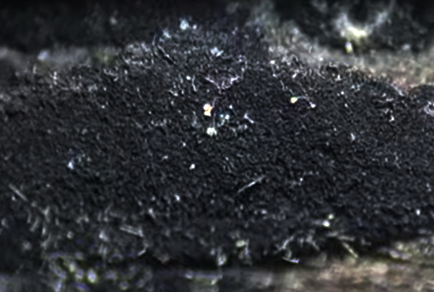
During the investigation of saprobic microfungi in Chiang Mai Province, Thailand, a black fungal mass on dead wood was collected and isolated. Based on initial morphology, this fungus was tentatively identified as a Dictyoarthrinium-like taxon. Phylogenetic analyses of combined ITS, LSU, and rpb2 sequences revealed that it belongs to a new taxon in the genus Paradictyoarthrinium. This novel taxon exhibits morphological characteristics typical of Paradictyoarthrinium, with gregarious, black, powdery colonies featuring macronematous conidiophores and unevenly dictyoseptate, muriform conidia. Based on morphological features similar to those of closely related species, the pairwise homoplasy index (PHI) test was used as an additional method to assess the likelihood of homoplasy within the dataset. The results indicated no significant genetic recombination (Φw = 0.9938) between all closely related species and our collection. Therefore, we propose our collection as a new species, P. chiangmaiense, accompanied by a description, illustrations, and a phylogenetic tree to illustrate its placement within the genus.
References
- Absalan, S., Armand, A., Jayawardena, R.S., McKenzie, E.H., Hyde, K.D. & Lumyong, S. (2024) Diversity of pleosporalean fungi isolated from rice (Oryza sativa L.) in Northern Thailand and descriptions of five new species. Journal of Fungi 10: e763. https://doi.org/10.3390/jof10110763
- Doilom, M., Dissanayake, A.J., Wanasinghe, D.N., Boonmee, S., Liu, J.K., Bhat, D.J., Taylor, J.E., Bahkali, A.H., McKenzie, E.H.C. & Hyde, K.D. (2017) Microfungi on Tectona grandis (teak) in Northern Thailand. Fungal Diversity 82: 107–182. https://doi.org/10.1007/s13225-016-0368-7
- Glez-Pena, D., Gomez-Blanco, D., Reboiro-Jato, M., Fdez-Riverola, F. & Posada, D. (2010) ALTER: Program-oriented conversion of DNA and protein alignments. Nucleic Acids Research 38: W14–W18. https://doi.org/10.1093/nar/gkq321
- Hall, T.A. (1999) BioEdit: a user-friendly biological sequence alignment editor and analysis program for Windows 95/98/NT. Nucleic Acids Symposium Series 1: 95–98.
- Htet, Z.H., Prematunga, C., Mapook, A., Jones, E.B.G. & Chethana, K.W.T. (2023) Taxonomy and phylogeny of Paradictyoarthrinium salsipaludicola sp. nov. (Paradictyoarthriniaceae, Pleosporales) from mangroves. Phytotaxa 620: 283–292. https://doi.org/10.11646/phytotaxa.620.4.4
- Huelsenbeck, J.P. & Ronquist, F.J.B. (2001) Mrbayes: Bayesian inference of phylogenetic trees. Bioinformatics 17: 754–755. https://doi.org/10.1093/bioinformatics/17.8.754
- Huson, D.H. & Bryant, D. (2006) Application of phylogenetic networks in evolutionary studies. Molecular Biology and Evolution 23: 254–267. https://doi.org/10.1093/molbev/msj030
- Huson, D.H. (1998) Splits Tree: Analyzing and visualizing evolutionary data. Bioinformatics 14: 68–73.
- Hyde, K.D., de Silva, N.I., Jeewon, R., Bhat, D.J., Phookamsak, R., Doilom, M., Boonmee, S., Jayawardena, R.S., Maharachchikumbura, S.S.N., Senanayake, I.C., Manawasinghe, I.S., Liu, N.G., Abeywickrama, P.D., Chaiwan, N., Karunarathna, A., Pem, D., Lin, C.G., Sysouphanthong, P., Luo, Z.L., Wei, D.P., Wanasinghe, D.N., Norphanphoun, C., Tennakoon, D.S., Samarakoon, M.C., Jayasiri, S.C., Jiang, H.B., Zeng, X.Y., Li, J.F., Wijesinghe, S.N., Devadatha, B., Goonasekara, I.D., Brahmanage, R.S., Yang, E.F., Aluthmuhandiram, J.V.S., Dayarathne, M.C., Marasinghe, D.S., Li, W.J., Dissanayake, L.S., Dong, W., Huanraluek, N., Lumyong, S., Liu, J.K., Karunarathna, S.C., Jones, E.B.G., Al-Sadi, A.M., Xu, J.C., Harishchandra, D. & Sarma, V.V. (2020) AJOM new records and collections of fungi: 1-100. Asian Journal of Mycology 3: 22–294. https://doi.org/10.5943/ajom/3/1/3
- Hyde, K.D., Norphanphoun, C., Chen, J., Dissanayake, A.J., Doilom, M., Hongsanan, S., Jayawardena, R.S., Jeewon, R.J., Perera, R.H., Thongbai, B., Wanasinghe, D.N., Wisitrassameewong, K., Tibpromma, S. & Stadler, M. (2018) Thailand’s amazing diversity: up to 96% of fungi in northern Thailand may be novel. Fungal Diversity 93: 215–239. https://doi.org/10.1007/s13225-018-0415-7
- Index Fungorum (2025) Index Fungorum. Available from: https://wwwindexfungorumorg/Names/Namesasp (accessed 20 May 2025)
- Jayasiri, S.C., Hyde, K.D., Ariyawansa, H.A., Bhat, J., Buyck, B., Cai, L., Dai, Y.C., Abd-Elsalam, K.A., Ertz, D., Hidayat, I., Jeewon, R., Jones, E.B.G., Bahkali, A.H., Karunarathna, S.C., Liu, J.K., Luangsa-ard, J.J., Lumbsch, H.T., Maharachchikumbura, S.S.N., McKenzie, E.H.C., Moncalvo, J., Ghobad-Nejhad, M., Nilsson, H., Pang, K.L., Pereira, O.L., Phillips, A.J.L., Raspé, O., Rollins, A.W., Romero, A.I., Etayo, J., Selçuk, F., Stephenson, S.L., Suetrong, S., Taylor, J.E., Tsui, C.K.M., Vizzini, A., Abdel-Wahab, M.A., Wen, T.C., Boonmee, S., Dai, D.Q., Daranagama, D.A., Dissanayake, A.J., Ekanayaka, A.H., Fryar, S.C., Hongsanan, S., Jayawardena, R.S., Li, W.J., Perera, R.H., Phookamsak, R., de Silva, N.I. & Thambugala, K.M., Tian, Q., Wijayawardene, N.N., Zhao, R.L. & Promputtha, I. (2015) The faces of fungi database: fungal names linked with morphology, phylogeny and human impacts. Fungal Diversity 74: 3–18. https://doi.org/10.1007/s13225-015-0351-8
- Kang, M., Feng, H., Xu, X., Wang, Z., Zhang, Y., Chen, K., Wang, H., Liang, Q.F. & Lu, X. (2024) Report of endophthalmitis caused by Paradictyoarthrinium diffractum after plant trauma: A case involving left enucleation. International Journal of Infectious Diseases 146: e107117. https://doi.org/10.1016/j.ijid.2024.107117
- Katoh, K. & Standley, D.M. (2013) Evolution MAFFT multiple sequence alignment software version 7: Improvements in performance and usability. Molecular Biology and Evolution 30: 772–780. https://doi.org/10.1093/molbev/mst010
- Li, C.J.Y., Chethana, K.W.T., Eungwanichayapant, P.D., Zhou, D.Q. & Zhao, Q. (2024) Additional four species of Tatraea (Leotiomycetes, Helotiales) in Yunnan Province, China. MycoKeys 102: 127–154. https://doi.org/10.3897/mycokeys.102.112565
- Liu, J.K., Hyde, K.D., Jones, E.G., Ariyawansa, H.A., Bhat, D.J., Boonmee, S., Maharachchikumbura, S.S.N., McKenzie, E.H.C., Phookamsak, R., Phukhamsakda, C., Shenoy, B.D., Abdel-Wahab, M.A., Buyck, B., Chen, J., Chethana, K.W.T., Singtripop, C., Dai, D.Q., Dai, Y.C., Daranagama, D.A., Dissanayake, A.J., Doilom, M., Dsouza, M.J., Fan, X.L., Goonasekara, I.D., Hirayama, K., Hongsanan, S., Jayasiri, S.C., Jayawardena, R.S., Karunarathna, S.C., Li, W.J., Mapook, A., Norphanphoun, C., Pang, K.L., Perera, R.H., Peršoh, D., Pinruan, U., Senanayake, I.C., Somrithipol, S., Suetrong, S., Tanaka, K., Thambugala, K.M., Tian, Q., Tibpromma, S., Udayanga, D., Wijayawardene, N.N., Wanasinghe, D., Wisitrassameewong, K. & Zeng, X.Y., Abdel-Aziz, F.A., Adamčík, S., Bahkali, A.H., Boonyuen, N., Bulgakov, T., Callac, P., Chomnunti, P., Greiner, K., Hashimoto, A., Hofstetter, V., Kang, J.C., Lewis, D., Li, X.H., Liu, X.Z., Liu, Z.Y., Matsumura, M., Mortimer, P.E., Rambold, G., Randrianjohany, E., Sato, G., Sri-Indrasutdhi, V., Tian, C.M., Verbeken, A., von Brackel, W., Wang, Y., Wen, T.C., Xu, J.C., Yan, J.Y. & Zhao, R.L. & Camporesi, E. (2015) Fungal diversity notes 1–110: taxonomic and phylogenetic contributions to fungal species. Fungal Diversity 72: 1–197. https://doi.org/10.1007/s13225-015-0324-y
- Liu, J.K., Luo, Z.L., Liu, N.G., Cheewangkoon, R. & To-Anun, C. (2018) Two novel species of Paradictyoarthrinium from decaying wood. Phytotaxa 338: 285–293. https://doi.org/10.11646/phytotaxa.338.3.6
- Liu, Y.J., Whelen, S. & Hall, B.D. (1999) Phylogenetic relationships among ascomycetes: evidence from an RNA polymerse II subunit. Molecular Biology and Evolution 16: 1799–1808. https://doi.org/10.1093/oxfordjournals.molbev.a026092
- Matsushima, T. (1996) Matsushima Mycological Memoirs No. 9. Matsushima, Kobe, Japan.
- Miller, M.A., Pfeiffer, W. & Schwartz, T. (2010) Creating the CIPRES Science Gateway for inference of large phylogenetic trees. In: 2010 Gateway Computing Environments Workshop (GCE). IEEE, New Orleans, LA, USA, pp. 1–8. https://doi.org/10.1109/GCE.2010.5676129
- Nylander, J.A.A. (2004) MrModeltest 20 Program Distributed by the Author. Evolutionary Biology Centre, Uppsala University, Uppsala.
- Phukhamsakda, C., McKenzie, E.H., Phillips, A.J., Gareth Jones, E.B., Jayarama Bhat, D., Stadler, M., Bhunjun, C.S., Wanasinghe, D.N., Thongbai, B., Camporesi, E., Ertz, D., Jayawardena, R.S., Perera, R.H., Ekanayake, A.H., Tibpromma, S., Doilom, M. & Hyde, K.D. (2020) Microfungi associated with Clematis (Ranunculaceae) with an integrated approach to delimiting species boundaries. Fungal Diversity 102: 1–203. https://doi.org/10.1007/s13225-020-00448-4
- Phupiewkham, W., Sirithorn, P., Saksirirat, W. & Thammasirirak, S. (2015) Antibacterial agents from Trichoderma harzianum strain T9 against pathogenic bacteria. Chiang Mai Journal of Science 42: 304–316.
- Pongcharoen, W., Rukachaisirikul, V., Isaka, M. & Sriklung, K. (2007) Cytotoxic metabolites from the wood-decayed fungus Xylaria sp. BCC 9653. Chemical and Pharmaceutical Bulletin 55: 1647–1648. https://doi.org/10.1248/cpb.55.1647
- Prabhugaonkar, A. & Bhat, D.J. (2011) New record of Megacapitula villosa and Paradictyoarthrinium diffractum from India. Mycosphere 2: 463–467.
- Rathnayaka, A.R., Tennakoon, D.S., Jones, G.E., Wanasinghe, D.N., Bhat, D.J., Priyashantha, A.H., Stephenson, S.L., Tibpromma, S. & Karunarathna, S.C. (2025) Significance of precise documentation of hosts and geospatial data of fungal collections, with an emphasis on plant-associated fungi. New Zealand Journal of Botany 63: 462–489. https://doi.org/10.1080/0028825X.2024.2381734
- Ronquist, F., Teslenko, M., Van Der Mark, P., Ayres, D.L., Darling, A., Höhna,S., Larget, B., Liu, L., Suchard, M.A. & Huelsenbeck, J.P. (2012) MrBayes 32: efficient Bayesian phylogenetic inference and model choice across a large model space. Systematic Biology 61: 539–542. https://doi.org/10.1093/sysbio/sys029
- Samarakoon, M.C., Lumyong, S., Manawasinghe, I.S., Suwannarach, N. & Cheewangkoon, R. (2023) Addition of five novel fungal flora to the Xylariomycetidae (Sordariomycetes, Ascomycota) in northern Thailand. Journal of Fungi 9: e1065. https://doi.org/10.3390/jof9111065
- Senanayake, I.C., Rathnayaka, A.R., Marasinghe, D.S., Calabon, M.S., Gentekaki, E., Lee, H.B., Hurdeal, V.G., Pem, D., Dissanayake, L.S., Wijesinghe, S.N., Bundhun, D., Nguyen, T.T., Goonasekara, I.D., Abeywickrama, P.D., Bhunjun, C.S., Jayawardena, R.S., Wanasinghe, D.N., Jeewon, R., Bhat, D.J. & Xiang, M.M. (2020) Morphological approaches in studying fungi: collection, examination, isolation, sporulation and preservation. Mycosphere 11: 2678–2754. https://doi.org/10.5943/mycosphere/11/1/20
- Senwanna, C., Kumla, J., Kodchasee, P., Duangkon, N. & Suwannarach, N. (2025) Additions of new endolichenic fungi to Herpotrichiellaceae (Chaetothyriales, Ascomycota) from northern Thailand. MycoKeys 120: 193–229. https://doi.org/10.3897/mycokeys.120.153906
- Stamatakis, A., Hoover, P. & Rougemont, J. (2008) A rapid bootstrap algorithm for the RAxML web servers. Systematic Biology 57: 758–771. https://doi.org/10.1080/10635150802429642
- Sun, Y.R., Hyde, K.D., Liu, N.G., Jayawardena, R.S., Wijayawardene, N.N., Ma, J., Zhang, Q., Al‑Otibi, F. & Wang, Y. (2025) Micro-fungi in southern China and northern Thailand: emphasis on medicinal plants. Fungal Diversity 131: 99–299. https://doi.org/10.1007/s13225-024-00549-4
- Suwannarach, N., Kumla, J., Pathom-aree, W., Hyde, K.D. & Lumyong, S. (2022) Changes in the understanding of fungal diversity based on research in the tropics. Chiang Mai Journal of Science 49: v–viii. https://doi.org/10.12982/CMJS.2022.061
- Swofford, D.L. (2002) PAUP*: Phylogenetic analysis using parsimony (and other methods), version 40 b10. Sinauer Associates, Sunderland.
- Tanaka, K. & Harada, Y. (2004) Pleosporales in Japan (4). The genus Massariosphaeria. Mycoscience 45: 96–105. https://doi.org/10.1007/S10267-003-0160-X
- Tian, W.H., Jin, Y., Liao, Y.C., Faraj, T.K., Guo, X.Y. & Maharachchikumbura, S.S. (2024) New and interesting pine-associated hyphomycetes from China. Journal of Fungi 10: e546. https://doi.org/10.3390/jof10080546
- Tian, X.G., Bao, D.F., Karunarathna, S.C., Jayawardena, R.S., Hyde, K.D., Bhat, D.J., Luo, Z.L., Elgorban, A.M., Hongsanan, S., Rajeshkumar, K.C., Maharachchikumbura, S.S.N., Suwannarach, N., Dawoud, T.M., Lu, Y.Z., Han, J.J., Xiao, Y.P., Du, T.Y., Lu, L., Xu, R.F., Dai, D.Q., Liu, X.F., Liu, C. & Tibpromma, S. (2024) Taxonomy and phylogeny of ascomycetes associated with selected economically important monocotyledons in China and Thailand. Mycosphere 15: 1–274. https://doi.org/10.5943/mycosphere/15/1/1
- Vaidya, G., Lohman, D.J. & Meier, R. (2011) SequenceMatrix: Concatenation software for the fast assembly of multi-gene datasets with character set and codon information. Cladistics 27: 171–180. https://doi.org/10.1111/j.1096-0031.2010.00329.x
- Vilgalys, R. & Hester, M. (1990) Rapid genetic identification and mapping of enzymatically amplified ribosomal DNA from several Cryptococcus species. Journal of Bacteriology 172: 4238–4246. https://doi.org/10.1128/jb.172.8.4238-4246.1990
- Wanasinghe, D.N., Phukhamsakda, C., Hyde, K.D., Jeewon, R., Lee, H.B., Gareth Jones, E.B., Tibpromma, S., Tennakoon, D.S., Dissanayake, A.J., Jayasiri, S.C., Gafforov, Y., Camporesi, E., Bulgakov, T.S., Ekanayake, A.H., Perera, R.H., Samarakoon, M.C., Goonasekara, I.D., Mapook, A., Li, W.J., Senanayake, I.C., Li, J.F., Norphanphoun, C., Doilom, M., Bahkali, A.H., Xu, J.C., Mortimer, P.E., Tibell, L., Tibell, S. & Karunarathna, S.C. (2018) Fungal diversity notes 709–839: taxonomic and phylogenetic contributions to fungal taxa with an emphasis on fungi on Rosaceae. Fungal Diversity 89: 1–236. https://doi.org/10.1007/s13225-018-0395-7
- White, T.J., Bruns, T., Lee, S.J.W.T. & Taylor, J. (1990) Amplification and direct sequencing of fungal ribosomal RNA genes for phylogenetics. PCR protocols: a guide to methods and applications 18: 315–322. https://doi.org/10.1016/B978-0-12-372180-8.50042-1
- Wonglom, P., Ruangwong, O.U., Poncheewin, W., Arikit, S., Riangwong, K. & Sunpapao, A. (2024) Trichoderma-bioenriched vermicompost induces defense response and promotes plant growth in Thai rice variety “Chor Khing”. Journal of Fungi 10: e582. https://doi.org/10.3390/jof10080582
- Xu, R.J., Zhu, Y.A., Liu, N.G., Boonmee, S., Zhou, D.Q. & Zhao, Q. (2023) Taxonomy and phylogeny of hyphomycetous muriform conidial taxa from the Tibetan Plateau, China. Journal of Fungi 9: e560. https://doi.org/10.3390/jof9050560
- Yang, E.F., Tibpromma, S., Karunarathna, S.C., Phookamsak, R., Xu, J.C., Zhao, Z.X., Karunanayake, C. & Promputtha, I. (2022) Taxonomy and phylogeny of novel and extant taxa in Pleosporales associated with Mangifera indica from Yunnan, China (Series I). Journal of Fungi 8: e152. https://doi.org/10.3390/jof8020152
- Zhang, X., Tibpromma, S., Karunarathna, S.C., Du, T.Y., Han, L.S., Elgorban, A.M., Kumla, J., Senwanna, C., Dai, D.Q., Suwannarach, N. & Wang, H.H. (2025) Additions to the saprobic fungi (Ascomycota) associated with macadamia trees from the Greater Mekong Subregion. MycoKeys 113: 1–29. https://doi.org/10.3897/mycokeys.113.140031