

Abstract
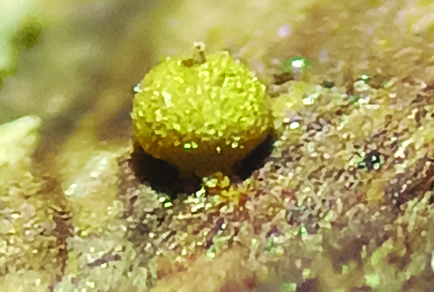
New records are presented for eight species of myxomycetes, including three for Russia and four for Mongolia. Of these, Calonema dissipatum, Perichaena brevifila and Trichia heteroelaterum are very rare on a global scale. Arcyria afroalpina is the first record in Russia and mainland Asia; Calonema dissipatum is the second record in the world, the first record in Russia and in Northern Asia; Perichaena brevifila is the second record in Russia and Asia; Trichia heteroelaterum is the third record in the world, and first record in Russia and in Northern Asia. Cribraria macrocarpa, C. mirabilis, C. purpurea, Metatrichia asiatica and Physarum aeneum are the first records in Mongolia. The 18S nrDNA sequence for Perichaena brevifila was obtained for the first time, allowing the phylogeny of the species to be determined. Photographs of fruiting bodies of the identified species in reflected light, microstructures in transmitted light and in SEM are presented.
References
- Altschul, S., Gish, W., Miller, W., Myers, E. & Lipman, D. (1990) Basic local alignment search tool. Journal of Molecular Biology 215 (3): 403–410. https://doi.org/10.1016/S0022-2836(05)80360-2
- Chopra, R.K., Nannenga-Bremekamp, N.E. & Lakhanpal, T.N. (1992) Some new taxa of corticolous myxomycetes from the N.W. Himalayas, India and a note on a Cribraria from Japan. Proceedings van de Koninklijke Nederlandse Akademie van Wetenschappen 95: 41–50.
- Dagamac, N.H.A., dela Cruz, T.E.E., Pangilinan, M.V.B. & Stephenson, S.L. (2011) List of species collected and interactive database of myxomycetes (plasmodial slime molds) for Mt. Arayat National Park, Pampanga, Philippines. Mycosphere 2 (4): 449–455.
- Felsenstein, J. (1981) Evolutionary trees from DNA sequences: a maximum likelihood approach. Journal of Molecular Evolution 17: 368–376. https://doi.org/10.1007/BF01734359
- Fenchel, T. & Finlay, B.J. (2004) The ubiquity of small species: patterns of local and global diversity. BioScience 54: 777–784. https://doi.org/10.1641/0006-3568(2004)054[0777:TUOSSP]2.0.CO;2
- Feng, Y. & Schnittler, M. (2017) Molecular or morphological species? Myxomycete diversity in a deciduous forest in northeastern Germany. Nova Hedwigia 104 (1–3): 359–380. https://doi.org/10.1127/nova_hedwigia/2016/0326
- Finlay, B.J. (2002) Global dispersal of free-living microbial eukaryote species. Science 296: 1061–1063. https://doi.org/10.1126/science.1070710
- Fiore-Donno, A-M., Berney, C., Pawlowski, J. & Baldauf, S.L. (2005) Higher-order phylogeny of plasmodial slime molds (Myxogastria) based on elongation factor 1-A and small subunit rRNA gene sequences. Journal of Eukaryotic Microbiology 52 (3): 201–210. https://doi.org/10.1111/j.1550-7408.2005.00032.x
- Fiore-Donno, A.M., Nikolaev, S.I., Nelson, M., Pawlowski, J., Cavalier-Smith, T. & Baldauf, S.L. (2010) Deep phylogeny and evolution of slime moulds (Mycetozoa). Protist 161 (1): 55–70. https://doi.org/10.1016/j.protis.2009.05.002
- Fiore-Donno, A.M., Clissmann, F., Meyer, M., Schnittler, M. & Cavalier-Smith, T. (2013) Two-gene phylogeny of bright-spored myxomycetes (slime moulds, superorder Lucisporidia). PLOS ONE 8: e62586. https://doi.org/10.1371/journal.pone.0062586
- Foissner, W. (2006) Biogeography and dispersal of micro-organisms: a review emphasizing protists. Acta Protozoologica 45: 111–136.
- Garcia-Cunchillos, I., Zamora, J.C., Ryberg, M. & Lado, C. (2022) Phylogeny and evolution of morphological structures in a highly diverse lineage of fruiting-body-forming amoebae, order Trichiales (Myxomycetes, Amoebozoa). Molecular Phylogenetics and Evolution 177: 107609. https://doi.org/10.1016/j.ympev.2022.107609
- GBIF Secretariat. (2023) Arcyria afroalpina Rammeloo, 1981. GBIF Backbone Taxonomy. Checklist dataset. https://doi.org/10.15468/39omei
- GBIF Secretariat. (2023) Cribraria macrocarpa Schrad., 1797. GBIF Backbone Taxonomy. Checklist dataset. https://doi.org/10.15468/39omei
- GBIF Secretariat. (2023) Cribraria mirabilis (Rostaf.) Massee, 1892. GBIF Backbone Taxonomy. Checklist dataset. https://doi.org/10.15468/39omei
- GBIF Secretariat. (2023) Cribraria purpurea Schrad., 1797. GBIF Backbone Taxonomy. Checklist dataset. https://doi.org/10.15468/39omei
- GBIF Secretariat. (2023) Perichaena brevifila T.E. Brooks & H.W. Keller, 1971. GBIF Backbone Taxonomy. Checklist dataset. https://doi.org/10.15468/39omei
- GBIF Secretariat. (2023) Physarum aeneum (Lister) R.E. Fr., 1903. GBIF Backbone Taxonomy. Checklist dataset. https://doi.org/10.15468/39omei
- GBIF Secretariat. (2023) Trichia heteroelaterum H.Z. Li & Yu Li, 1989. GBIF Backbone Taxonomy. Checklist dataset. https://doi.org/10.15468/39omei
- Gilbert, H.C. & Martin, G.W. (1933) Myxomycetes found on the bark of living trees. University of Iowa Studies in Natural History 15: 3–8.
- Härkönen, M. (1977) Corticolous myxomycetes in three different habitats in southern Finland. Karstenia 17: 19–32.
- Katoh, K. & Standley, D.M. (2013) MAFFT multiple sequence alignment software version 7: improvements in performance and usability. Molecular Biology and Evolution 30 (4): 772–780. https://doi.org/10.1093/molbev/mst010
- Katoh, K. & Toh, H. (2008) Recent developments in the MAFFT multiple sequence alignment program. Briefings in Bioinformatics 9 (4): 286–298. https://doi.org/10.1093/bib/bbn013
- Katoh, K., Misawa, K., Kuma, K. & Miyata, T. (2002) MAFFT: a novel method for rapid multiple sequence alignment based on fast Fourier transform. Nucleic Acids Research 30: 3059–3066. https://doi.org/10.1093/nar/gkf436
- Keller, H.W. & Brooks, T.E. (1971) A new species of Perichaena on decaying leaves. Mycologia 63 (3): 657–663.
- Keller, H.W. & Everhart, S.E. (2010) Importance of myxomycetes in biological research and teaching. Fungi 3: 13–27.
- Ko Ko, T.W., Rosing, W.C., Ko Ko, Z.Z.W. & Stephenson, S.L. (2013) Myxomycetes of Myanmar. Sydowia 65 (2): 267–276.
- Kumar, S., Stecher, G., Li, M., Knyaz, C. & Tamura, K. (2018) MEGA X: Molecular Evolutionary Genetics Analysis across computing platforms. Molecular Biology and Evolution 35: 1547–1549. https://doi.org/10.1093/molbev/msy096
- Lado, C. (2005–2025) An on line nomenclatural information system of Eumycetozoa. Real Jardin Botanico, CSIC. Madrid, Spain. [http://www.nomen.eumycetozoa.com]
- Li, Y., Li, H.Z. & Wang, Q. (1989) Myxomycetes from China II: two new species of Trichia. Mycosystema 2: 241–246.
- Luo, J., Wei, X., Liu, W., Chen, Sh., Ahmed, Z., Sun, W., Lei, Ch. & Ma, Zh. (2022) Paternal genetic diversity, differentiation and phylogeny of three white yak breeds/populations in China. Scientific Reports 12 (1): 19331. https://doi.org/10.1038/s41598-022-23453-w
- Ndiritu, G.G., Winsett, K.E., Spiegel, F.W. & Stephenson, S.L. (2009) A checklist of African myxomycetes. Mycotaxon 107: 353–356. https://doi.org/10.5248/107.353
- Nguyen, L.T., Schmidt, H.A., von Haeseler, A. & Minh, B.Q. (2015) IQ-TREE: a fast and effective stochastic algorithm for estimating maximum-likelihood phylogenies. Molecular Biology and Evolution 32 (1): 268–274. https://doi.org/10.1093/molbev/msu300
- Rambaut, A. (2018) FigTree v.1.4.4. [http://tree.bio.ed.ac.uk/software/figtree/]
- Rammeloo, J. (1981) Five new myxomycete species from Rwanda. Bulletin du Jardin Botanique National de Belgique 51 (1–2): 229–230. https://doi.org/10.2307/3667752
- Rojas, C., Stephenson, S.L., Estrada-Torres, A., Valverde, R. & Morales, O. (2010) New records of myxomycetes from high-elevation areas of Mexico and Guatemala. Mycosphere 1: 73–82.
- Rojas, C., Rollins, A.W. & Stephenson, S.L. (2014) Distribution of myxomycetes among the microhabitats available for these organisms in tropical forests. In: Fungi from different substrates. CRC Press, London, New York, pp. 126–143.
- Rollins, A.W. & Stephenson, S.L. (2011) Global distribution and ecology of myxomycetes. Current Topics in Plant Biology 12: 1–14. https://doi.org/10.1080/15572536.2007.11832547
- Ronikier, A., García-Cunchillos, I., Janik, P. & Lado, C. (2020) Nivicolous Trichiales from the austral Andes: unexpected diversity including two new species. Mycologia 112 (4): 753–780. https://doi.org/10.1080/00275514.2020.1759978
- Rosing, W.C., Mitchell, D.W., Moreno, G. & Stephenson, S.L. (2011) Additions to the Myxomycetes of Singapore. Pacific Science 65 (3): 391–400. https://doi.org/10.2984/65.3.391
- Stephenson, S.L. (2009) First records of myxomycetes from Ascension Island. Sydowia 61 (1): 105–115.
- Trifinopoulos, J., Nguyen, L.T., von Haeseler, A. & Minh, B.Q. (2016) W-IQ-TREE: a fast online phylogenetic tool for maximum likelihood analysis. Nucleic Acids Research 44 (W1): 232–235. https://doi.org/10.1093/nar/gkw256
- Vlasenko, A.V. (2013) Species diversity and taxonomic structure of myxomycetes of zonal and intrazonal biotopes of the flat territory of the south of Western Siberia. Flora and Vegetation of Asian Russia 2 (12): 3–11. [In Russian]
- Vlasenko, A.V. & Vlasenko, V.A. (2023) Three new species of myxomycetes from Siberia. Czech Mycology 75 (2): 159–177. https://doi.org/10.33585/cmy.75205
- Vlasenko, A.V., Enkhtuya, O., Degidmaa, T, Enkhjargal, E., Chelobanov, B.P. & Vlasenko, V.A. (2024) Three new species of bright-spored myxomycetes from Asia and the second world record of Perichaena maculosa. Phytotaxa 663 (4): 205–220. https://doi.org/10.11646/phytotaxa.663.4.3
- Walker, L.M., Rojas, C. & Stephenson, S.L. (2015) The myxomycetes of the La Selva Biological Station (Costa Rica). Austrian Journal of Mycology 24: 99–111.