

Abstract
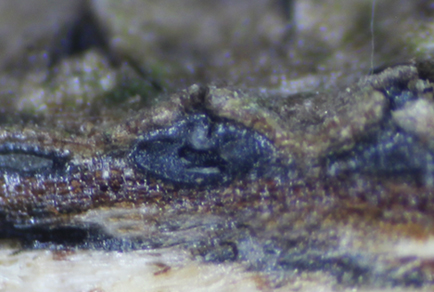
During an investigation of Xylariales, an interesting fungal species exhibiting distinctive morphological and molecular characteristics was collected and isolated. Integrating multi-locus phylogenetic analyses of ITS, LSU, rpb2, and tub2 sequence data with morphological observations, a new species is introduced as Amphisphaeria guizhouensis (Amphisphaeriales, Ascomycota). This taxon is morphologically different from its closest relative, A. curvaticonidia, by its ellipsoidal to fusiform ascospores and asci in Melzer’s reagent with J-. The phylogenetic analysis results demonstrated a well-supported monophyletic clade for the new species. A morphological description, illustrations, and the multi-gene phylogenetic analysis results of the new species are provided. In addition, the new species is compared with the closely related taxa.
References
- Barr, M.E. (1990) Prodromus to nonlichenized, pyrenomycetous members of Class Hymenascomycetes. Mycotaxon 34: 43–184.
- Cesati, V. & de Notaris, G. (1863) Schema di classificazione degli sferiacei italici aschigeri più o meno appartenenti al genere Sphaeria nell’antico significato attribuito da Persoon. Comment. Soc Crittogamia Ital 1: 177–240.
- Crous, P.W., Shivas, R.G., Quaedvlieg, W., van der Bank, M., Zhang, Y., Summerell, B.A., Guarro, J., Wingfield, M.J., Wood, A.R., Alfenas, A.C., Braun, U., Cano‑Lira, J.F., Garcia, D., Marin‑Felix, Y., Alvarado, P., Andrade, J.P., Armengol, J., Assefa, A., den Breeÿen, A., Camele, I., Cheewangkoon, R., De Souza, J.T., Duong, T.A., Esteve‑Raventós, F., Fournier, J., Frisullo, S., García‑Jiménez, J., Gardiennet, A., Gené, J., Hernández‑Restrepo, M., Hirooka, Y., Hospenthal, D.R., King, A., Lechat, C., Lombard, L., Mang, S.M., Marbach, P.A.S., Marincowitz, S., Montaño‑Mata, N.J., Moreno, G., Perez, C.A., Pérez Sierra, A.M., Robertson, J.L., Roux, J., Rubio, E., Schumacher, R.K., Stchigel, A.M., Sutton, D.A., Tan, Y.P., Thompson, E.H., Vanderlinde, E., Walker, A.K., Walker, D.M., Wickes, B.L., Wong, P.T.W. & Groenewald, J.Z. (2014) Fungal Planet description sheets: 214–280. Persoonia–Molecular Phylogeny and Evolution of Fungi 32 (1): 184–306. https://doi.org/10.3767/003158514X682395
- Darriba, D., Taboada, G.L., Doallo, R. & Posada, D. (2012) jModelTest 2: more models, new heuristics and parallel computing. Nature Methods 9 (8): 772. https://doi.org/10.1038/nmeth.2109
- Dissanayake, L.S., Samarakoon, M.C., Maharachchikumbura, S.S.N., Hyde, K.D., Tang, X., Li, Q.R., Mortimer, P.E., Faraj, T., Xu, J.C., Kang, J.C. & Wanasinghe, D.N. (2024) Exploring the taxonomy and phylogeny of Sordariomycetes taxa emphasizing Xylariomycetidae in Southwestern China. Mycosphere 15 (1): 1675–1793. https://doi.org/10.5943/mycosphere/15/1/15
- Dissanayake, L.S., Samarakoon, M.C., Mortimer, P.E., Lu, Y.Z., Li, Q.R., Hyde, K.D. & Kang, J.C. (2020) Morpho-molecular characterization of two novel amphisphaeriaceous species from Yunnan, China. Phytotaxa 446: 144–158. https://doi.org/10.11646/phytotaxa.446.3.1
- Gardes, M. & Bruns, T.D. (1993) ITS primers with enhanced specificity for basidiomycetes–application to the identification of mycorrhizae and rusts. Molecular Ecology 2: 113–118. https://doi.org/10.1111/j.1365-294X.1993.tb00005.x
- GenBank (n.d.) National Center for Biotechnology Information. Available from: https://www.ncbi.nlm.nih.gov/genbank/ (accessed 11 Jul 2025)
- Glass, N.L. & Donaldson, G.C. (1995) Development of primer sets designed for use with the PCR to amplify conserved genes from filamentous ascomycetes. Applied and Environmental Microbiology 61: 1323–1330.
- Grossart, H.P., Van den Wyngaert, S., Kagami, M., Wurzbacher, C., Cunliffe, M. & Rojas-Jimenez, K. (2019) Fungi in aquatic ecosystems. Nature Reviews Microbiology 17 (6): 339–354. https://doi.org/10.1038/s41579-019-0175-8
- Hall, T.A. (1999) BioEdit: a user-friendly biological sequence alignment editor and analysis program for Windows 95/98/NT. Nucleic Acids Symposium Series 41: 95–98.
- Habib, K., Li, W.H., Ren, Y.L., Liu, L.L., Lu, C.T., Zhang, Q.F., Yao, Z.Q., Luo, X.Y., Zhou, X., Zeng, W.Y., Kang, Y.Q., Shen, X.C., Wijayawardene, N.N., Elgorban, A.M., Al-Rejaie, S. & Li, Q.R. (2025) Exploration of ascomycetous fungi revealing novel taxa in Southwestern China. Mycosphere 16 (1): 1412–1529. https://doi.org/10.5943/mycosphere/16/1/9
- Huang, L., Jian, J.Y., Fan, Y.M., Liu, Q., Jin, J., Yuan, C.M., Gu, W. & Hao, X.J. (2022) Quinoline alkaloids from the roots of Orixa japonica with anti-pathogenic fungi activities. Chemistry & Biodiversity 20: e202201097. https://doi.org/10.1002/cbdv.202201097
- Index Fungorum (2025) Index Fungorum: Current names. Available from: http://www.indexfungorum.org (accessed 17 Jul 2025)
- Jaklitsch, W.M., Gardiennet, A. & Voglmayr, H. (2016) Resolution of morphology-based taxonomic delusions: Acrocordiella, Basiseptospora, Blogiascospora, Clypeosphaeria, Hymenopleella, Lepteutypa, Pseudapiospora, Requienella, Seiridium and Strickeria. Persoonia–Molecular Phylogeny and Evolution of Fungi 37: 82–105. https://doi.org/10.3767/003158516X690475
- Kang, J.C., Hyde, K.D. & Kong, R.Y.C. (1999) Studies on Amphisphaeriales I: the Clypeosphaeriaceae. Mycoscience 40: 151–164. https://doi.org/10.1007/BF02464294
- Katoh, K., Rozewicki, J. & Yamada, K.D. (2019) MAFFT online service: multiple sequence alignment, interactive sequence choice and visualization. Briefings in Bioinformatics 20: 1160–1166. https://doi.org/10.1093/bib/bbx108
- Li, Q.R., Habib, K., Long, S.H., Wu, Y.P., Zhang, X., Hu, H.M., Wu, Q.Z., Liu, L.L., Zhou, S.X., Shen, X.C. & Kang, J.C. (2024) Unveiling fungal diversity in China: New species and records within the Xylariaceae. Mycosphere 15 (1): 275–364. https://doi.org/10.5943/mycosphere/15/1/2
- Li, W.L., Liang, R.R., Yang, J. & Liu, J.K. (2024) Morpho-molecular characterization reveals a new genus, three novel species and two new host records in Xylariomycetidae. Journal of Fungi 10 (3): 1–20. https://doi.org/10.3390/jof10030189
- Liu, F., Bonthond, G., Groenewald, J.Z., Cai, L. & Crous, P.W. (2019) Sporocadaceae, a family of coelomycetous fungi with appendage-bearing conidia. Studies in Mycology 92: 287–415. https://doi.org/10.1016/j.simyco.2018.11.001
- Liu, J.K., Hyde, K.D., Jones, E.B.G., Ariyawansa, H.A., Bhat, D.J., Boonmee, S., Maharachchikumbura, S.S.N., McKenzie, E.H.C., Phookamsak, R., Phukhamsakda, C., Shenoy, B.D., Abdel-Wahab, M.A., Buyck, B., Chen, J., Chethana, K.W.T., Singtripop, C., Dai, D.Q., Dai, Y.C., Daranagama, D.A., Dissanayake, A.J., Doilom, M., D’souza, M.J., Fan, X.L., Goonasekara, I.D., Hirayama, K., Hongsanan, S., Jayasiri, S.C., Jayawardena, R.S., Karunarathna, S.C., Li, W.J., Mapook, A., Norphanphoun, C., Pang, K.L., Perera, R.H., Peršoh, D., Pinruan, U., Senanayake, I.C., Somrithipol, S., Suetrong, S., Tanaka, K., Thambugala, K.M., Tian, Q., Tibpromma, S., Udayanga, D., Wijayawardene, N.N., Wanasinghe, D., Wisitrassameewong, K., Zeng, X.Y., Abdel-Aziz, F.A., Adamčík, S., Bahkali, A.H., Boonyuen, N., Bulgakov, T., Callac, P., Chomnunti, P., Greiner, K., Hashimoto, A., Hofstetter, V., Kang, J.C., Lewis, D., Li, X.H., Liu, X.Z., Liu, Z.Y., Matsumura, M., Mortimer, P.E., Rambold, G., Randrianjohany, E., Sato, G., Sri-Indrasutdhi, V., Tian, C.M., Verbeken, A., Brackel, von .W., Wang, Y., Wen, T.C., Xu, J.C., Yan, J.Y. & Zhao, R.L., Camporesi, E. (2015) Fungal diversity notes 1–110: taxonomic and phylogenetic contributions to fungal species. Fungal Diversity 72: 1–197. https://doi.org/10.1007/s13225-015-0324-y
- Liu, L.L., Ren, Y.L., Habib, K., Lu, C.T., Wu, Y.P., Long, S.H., Lin, Y., Zhang, X., Kang, Y.Q., Wijayawardene, N.N., Wang, F., Elgorban, A.M., Al-Rejaie, S., Samarakoon, M.C., Shen, X.C. & Li, Q.R. (2025) New taxa of Xylariales from Karst Ecosystems in Southwestern China. Mycosphere 16 (1): 1–78. https://doi.org/10.5943/mycosphere/16/1/1
- Liu, W.W. (2019) Soil microbial composition at different stages of karst vegetation restoration and response of soil enzymes of nitrogen and phosphorus to habitats [PhD Thesis]. Guizhou University, Guiyang, China.
- Liu, X.C. (2017) Bioactive constituents isolated from Orixa japonica and Toddalia asiatica [PhD Thesis]. China Agricultural University, Beijing, China.
- Liu, Y.L., Whelen, S. & Hall, B.D. (1999) Phylogenetic relationships among ascomycetes: evidence from an RNA polymerase II subunit. Molecular Biology and Evolution 16: 1799–1808.
- Long, Q.D., Liu, L.L., Zhang, X., Wen, T.C., Kang, J.C., Hyde, K.D., Shen, X.C. & Li, Q.R. (2019) Contributions to species of Xylariales in China-1: Durotheca species. Mycological Progress 18: 495–510. https://doi.org/10.1007/s11557-018-1458-6
- Luo, Z.L., Hyde, K.D., Liu, J.K., Maharachchikumbura, S.S.N., Jeewon, R., Bao, D.F., Bhat, D.J., Lin, C.G., Li, W.L., Yang, J., Liu, N.G., Lu, Y.Z., Jayawardena, R.S., Li, J.F. & Su, H.Y. (2019) Freshwater Sordariomycetes. Fungal Diversity 99: 451–660. https://doi.org/10.1007/s13225-019-00436-2
- Marincowitz, S., Gryzenhout, M. & Wingfield, M.J. (2010) New and rare coelomycetes with appendage-bearing conidia from Pondoland, South Africa. Mycotaxon 111: 309–322. https://doi.org/10.5248/111.309
- Miller, M.A., Pfeiffer, W. & Schwartz, T. (2010) Creating the CIPRES Science Gateway for inference of large phylogenetic trees. In: 2010 Gateway Computing Environments Workshop (GCE), pp. 1–8. https://doi.org/10.1109/GCE.2010.5676129
- Nylander, J.A.A. (2004) MrModeltest v2. Program distributed by the author. Evolutionary Biology Centre, Uppsala University, Uppsala, Sweden.
- O’Donnell, K. & Cigelnik, E. (1997) Two divergent intragenomic rDNA ITS2 types within a monophyletic lineage of the fungus Fusarium are nonorthologous. Molecular Phylogenetics and Evolution 7: 103–116.
- Phookamsak, R., Hyde, K.D., Jeewon, R., Bhat, D.J., Jones, E.B.G., Maharachchikumbura, S.S.N., Raspé, O., Karunarathna, S.C., Wanasinghe, D.N., Hongsanan, S., Doilom, M., Tennakoon, D.S., Machado, A.R., Firmino, A.L., Ghosh, A., Karunarathna, A., Huanraluek, N., Chuankid, B., Samarakoon, M.C., Dayarathne, M.C., Jayawardena, R.S., Senanayake, I.C., Perera, R.H., Pem, D., Thongbai, B., Camporesi, E., Tian, Q., Dong, W., Thambugala, K.M., Liu, N.G., Luo, Z.L., Phukhamsakda, C., Kumla, J., Konta, S., de Azevedo Santiago, A.L.C.M., Gibertoni, T.B., Wijayawardene, N.N., Al-Sadi, A.M., Vizzini, A., Alvarado, P., Li, D.W., Kušan, I., Matočec, N., Takamatsu, S., Tian, C.M., Zhang, J.F., Tang, L.Z., Boonmee, S. & Mortimer, P.E., Xu, J. (2019) Fungal diversity notes 929–1035: Taxonomic and phylogenetic contributions on genera and species of fungi. Fungal Diversity 95 (1): 1–273. https://doi.org/10.1007/s13225-019-00421-w
- Rambaut, A. (2018) FigTree v1.4.4: Tree figure drawing tool. Available from: http://tree.bio.ed.ac.uk/software/figtree/ (accessed 7 Apr 2025)
- Rathnayaka, A.R., Tennakoon, D.S., Jones, G.E., Wanasinghe, D.N., Bhat, D.J., Priyashantha, A.H., Stephenson, S.L. & Tibpromma, S. (2024) Significance of precise documentation of hosts and geospatial data of fungal collections, with an emphasis on plant-associated fungi. New Zealand Journal of Botany 63 (2–3): 462–489. https://doi.org/10.1080/0028825x.2024.2381734
- Ronquist, F., Teslenko, M., Van Der Mark, P., Ayres, D.L., Darling, A., Höhna, S., Larget, B., Liu, L., Suchard, M.A. & Huelsenbeck, J.P. (2012) MrBayes 3.2: efficient Bayesian phylogenetic inference and model choice across a large model space. Systematic Biology 61: 539–542. https://doi.org/10.1093/sysbio/sys029
- Samarakoon, M.C., Jack Liu, J.K. & Promputtha, I. (2019) Two new species of Amphisphaeria (Amphisphaeriaceae) from Northern Thailand. Phytotaxa 391: 207–217. https://doi.org/10.11646/phytotaxa.391.3.4
- Samarakoon, M.C., Liu, J.K., Hyde, K.D., Promputtha, I. & Stadler, M. (2020) Molecular phylogeny and morphology of Amphisphaeria (= Lepteutypa) (Amphisphaeriaceae). Journal of Fungi 6 (3): 174. https://doi.org/10.3390/jof6030174
- Samarakoon, M.C., Hyde, K.D., Maharachchikumbura, S.S.N., Stadler, M., Gareth Jones, E.B., Promputtha, I., Suwannarach, N., Camporesi, E., Bulgakov, T.S. & Liu, J.K. (2022) Taxonomy, phylogeny, molecular dating and ancestral state reconstruction of Xylariomycetidae (Sordariomycetes). Fungal Diversity 112: 1–88. https://doi.org/10.1007/s13225-021-00495-5
- Samarakoon, M.C. (2023) Additions to the Xylariomycetidae (Sordariomycetes) Fungal Flora from Northern Thailand: Amphisphaeria chiangmaiensis sp. New Zealand Journal of Botany 62 (2–3): 253–269. https://doi.org/10.1080/0028825X.2023.2284420
- Samuels, G.J., Müller, E. & Petrini, O. (1987) Studies on the Amphisphaeriaceae (sensu lato) 3. New species of Monographella and Pestalosphaeria and two new genera. Mycotaxon 28: 473–499.
- Senanayake, I.C., Lian, T.-T., Mai, X.-M., Camporesi, E., Zeng, Y.-J., Tian, S.-L. & Xie, N. (2019) Taxonomy and phylogeny of Amphisphaeria acericola sp. nov. from Italy. Phytotaxa 403 (4): 285–292. https://doi.org/10.11646/phytotaxa.403.4.2
- Senanayake, I.C., Maharachchikumbura, S.S.N., Hyde, K.D., Bhat, J.D., Jones, E.B.G., McKenzie, E.H.C., Dai, D.Q., Daranagama, D.A., Dayarathne, M.C., Goonasekara, I.D., Konta, S., Li, W.J., Shang, Q.J., Stadler, M., Wijayawardene, N.N., Xiao, Y.P., Norphanphoun, C., Li, Q., Liu, X.Z., Bahkali, A.H., Kang, J.C., Wang, Y., Wen, T.C., Wendt, L., Xu, J.C. & Camporesi, E. (2015) Towards unraveling relationships in Xylariomycetidae (Sordariomycetes). Fungal Diversity 73: 73–144. https://doi.org/10.1007/s13225-015-0340-y
- Senanayake, I.C., Rathnayaka, A.R., Marasinghe, D.S., Calabon, M.S., Gentekaki, E., Lee, H.B., Hurdeal, V.G., Pem, D., Dissanayake, L.S., Wijesinghe, S.N., Bundhun, D., Nguyen, T.T., Goonasekara, I.D., Abeywickrama, P.D., Bhunjun, C.S., Jayawardena, R.S., Wanasinghe, D.N., Jeewon, R., Bhat, D.J. & Xiang, M.M. (2020) Morphological approaches in studying fungi: Collection, examination, isolation, sporulation and preservation. Mycosphere 11: 2678–2754. https://doi.org/10.5943/mycosphere/11/1/20
- Schoch, C.L., Sung, G.H., Lopez-Giraldez, F., Townsend, J.P., Miadlikowska, J., Hofstetter, V., Robbertse, B., Matheny, P.B., Kauff, F., Wang, Z., Gueidan, C., Andrie, R.M., Trippe, K., Ciufetti, L.M., Wynns, A., Fraker, E., Hodkinson, B.P., Bonito, G., Groenewald, J.Z., Arzanlou, M., de Hoog, G.S., Crous, P.W., Hewitt, D., Pfister, D.H., Peterson, K., Gryzenhout, M., Wingfield, M.J., Aptroot, A., Suh, S.O., Blackwell, M., Hillis, D.M., Griffith, G.W., Castlebury, L.A., Rossman, A.Y., Lumbsch, H.T., Lücking, R., Büdel, B., Rauhut, A., Diederich, P., Ertz, D., Geiser, D.M., Hosaka, K., Inderbitzin, P., Kohlmeyer, J., Volkmann-Kohlmeyer, B., Mostert, L., O’Donnell, K., Sipman, H., Rogers, J.D., Shoemaker, R.A., Sugiyama, J., Summerbell, R.C., Untereiner, W., Johnston, P.R., Stenroos, S., Zuccaro, A., Dyer, P.S., Crittenden, P.D., Cole, M.S., Hansen, K. & Trappe, J.M., Yahr, R., Lutzoni, F. & Spatafora, J.W. (2009) The Ascomycota tree of life: A phylum-wide phylogeny clarifies the origin and evolution of fundamental reproductive and ecological traits. Systematic Biology 58 (2): 224–239. https://doi.org/10.1093/sysbio/syp020
- Stamatakis, A. (2014) RAxML version 8: a tool for phylogenetic analysis and post-analysis of large phylogenies. Bioinformatics 30: 1312–1313. https://doi.org/10.1093/bioinformatics/btu033
- Sun, Y.R., Hyde, K.D., Liu, N.G., Jayawardena, R.S., Wijayawardene, N.N., Ma, J., Zhang, Q., Al Otibi, F. & Wang, Y. (2025) Micro-fungi in southern China and northern Thailand: Emphasis on medicinal plants. Fungal Diversity 131 (1): 99–299. https://doi.org/10.1007/s13225-024-00549-4
- Vilgalys, R. & Hester, M. (1990) Rapid genetic identification and mapping of enzymatically amplified ribosomal DNA from several Cryptococcus species. Journal of Bacteriology 172 (8): 4238–4246. https://doi.org/10.1128/jb.172.8.4238-4246.1990
- Vondrák, J., Svoboda, S., Malíček, J., Palice, Z., Kocourková, J., Knudsen, K., Mayrhofer, H. & Thüs, H. (2022) From Cinderella to princess: an exceptional hotspot of lichen diversity in a long-inhabited central-European landscape. Preslia 94: 143–181. https://doi.org/10.23855/preslia.2022.143
- Wang, J., Chai, S. & An, X. (2023) Study on the spatial and temporal evolution characteristics of extreme high temperature in the Karst region of Southwest China. Science and Technology & Innovation 10: 75–77.
- Wang, X.J., Wanasinghe, D.N., Zhang, J.Y., Ma, J., Zhou, P.F., Zhang, L.J., Lu, Y.Z. & Zhang, Z. (2023) Insights from the endophytic fungi in Amphisphaeria (Sordariomycetes): A. orixae sp. nov. from Orixa japonica and its secondary metabolites. Microorganisms 11 (5): 1–16. https://doi.org/10.3390/microorganisms11051268
- Wang, Y.Z., Aptroot, A. & Hyde, K.D. (2004) Revision of the Ascomycete genus Amphisphaeria. Fungal Diversity Press, Hong Kong. ISBN: 962-86765-5-5.
- Wijayawardene, N.N., Dissanayake, L.S., Dai, D.Q., Li, Q.R., Xiao, Y., Wen, T.C., Karunarathna, S.C., Wu, H.X., Zhang, H., Tibpromma, S., Kang, J.C., Wang, Y., Shen, X.C., Tang, L.Z., Deng, C.Y., Liu, Y. & Kang, Y. (2021) Yunnan–Guizhou Plateau: a mycological hotspot. Phytotaxa 523 (1): 1–31. https://doi.org/10.11646/phytotaxa.523.1.1
- White, T.J., Burns, T., Lee, S. & Taylor, J. (1990) Amplification and direct sequencing of fungal ribosomal RNA genes for phylogenetics. In: PCR Protocols: A Guide to Methods and Applications, pp. 315–322. https://doi.org/10.1016/B978-0-12-372180-8.50042-1
- Zhang, J.-F., Liu, J.-K., Hyde, K.D., Chen, Y.-Y., Ran, H.-Y. & Liu, Z.-Y. (2023) Ascomycetes from karst landscapes of Guizhou Province, China. Fungal Diversity 122 (1): 1–160. https://doi.org/10.1007/s13225-023-00524-5