

Abstract
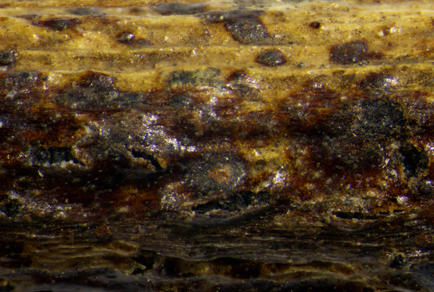
Phaeobotryon is a widely distributed fungal genus commonly associated with woody stems, playing important ecological roles in forest ecosystems. During an investigation of tree trunk diseases in Guizhou Province, China, we isolated three strains of this genus from Ormosia semicastrata. Based on integrated morphological and phylogenetic analysis (using ITS, tef1-α, and LSU gene loci), a novel species, Phaeobotryon ormosiae sp. nov., is described and illustrated. The phylogenetic analysis revealed that P. ormosiae sp. nov. forms a well-supported clade (ML/BI= 99/0.99) distinct from other known Phaeobotryon species (sequence differences of 0.86% in ITS, 0.37% in LSU, 4.50% in tef1-α). This study provides a comprehensive taxonomic characterization, including detailed morphological descriptions, high-resolution microscopic illustrations, and molecular sequence data deposited in public databases. Our findings expand the known species diversity of the genus Phaeobotryon.
References
- Abdollahzadeh, J., Goltapeh, E.M., Javadi, A., Shams-Bakhsh, M., Zare, R. & Phillips, A.J.L. (2009) Barriopsis iraniana and Phaeobotryon cupressi: two new species of the Botryosphaeriaceae from trees in Iran. Persoonia 23 (1): 1–8. https://doi.org/10.3767/003158509X467552
- Carbone, I. & Kohn, L.M. (1999) A method for designing primer sets for speciation studies in filamentous Ascomycetes. Mycologia 91 (3): 553–556. https://doi.org/10.1080/00275514.1999.12061051
- Daranagama, D.A., Thambugala, K.M., Campino, B., Alves, A., Bulgakov, T.S., Phillips, A.J.L., Liu, X.Z. & Hyde, K.D. (2016) Phaeobotryon negundinis sp. nov. (Botryosphaeriales) from Russia. Mycosphere 7 (7): 933–941. https://doi.org/10.5943/mycosphere/si/1b/2
- Doyle, J.J. & Doyle, J.L. (1990) Isolation of plant DNA from fresh tissue. Focus 12: 13–15. https://doi.org/10.2307/2419362
- Fan, X.L., Hyde, K.D., Liu, J., Liang, Y. & Tian, C.M. (2015) Phaeobotryon rhois sp. nov. (Botryosphaeriales, Ascomycota): multigene phylogeny and morphology. Phytotaxa 205: 90–98. https://doi.org/10.11646/phytotaxa.205.2.2
- Guindon, S., Dufayard, J.F., Lefort, V., Anisimova, M., Hordijk, W. & Gascuel, O. (2010) New algorithms and methods to estimate maximum-likelihood phylogenies: Assessing the performance of PhyML 3.0. Systematic Biology 59 (3): 307–321. https://doi.org/10.1093/sysbio/syq010
- Hattori, Y. & Masuya, H. (2023) First record of Phaeobotryon aplosporum (Botryosphaeriaceae) in Japan. Bulletin of the Forestry and Forest Products Research Institute 22 (3): 133–139. https://doi.org/10.20756/ffpri.22.3_133
- Huelsenbeck, J.P. & Ronquist, F. (2001) MRBAYES: Bayesian inference of phylogenetic trees. Bioinformatics 17 (8): 754–755. https://doi.org/10.1093/bioinformatics/17.8.754
- Jia, H., Li, M., Wang, C. & Ma, R. (2023) Species diversity of Phaeobotryon associated with tree canker and dieback diseases in Xinjiang, China. Forests 14 (5): 864. https://doi.org/10.3390/f14050864
- Li, W.L., Liang, R.R., Dissanayake, A.J. & Liu, J.K. (2023) Botryosphaerialean fungi associated with woody oil plants cultivated in Sichuan Province, China. MycoKeys 97: 71–116. https://doi.org/10.3897/mycokeys.97.103118
- Lin, L., Bai, Y.K., Pan, M., Tian, C.M. & Fan, X.L. (2023) Morphology and molecular analyses reveal three new species of Botryosphaeriales isolated from diseased plant branches in China. MycoKeys 97: 1–19. https://doi.org/10.3897/mycokeys.97.102653
- Liu, J.K., Phookamsak, R., Doilom, M., Wikee, S., Li, Y.M., Ariyawansha, H., Boonmee, S., Chomnunti, P., Dai, D.Q., Bhat, J.D., Romero, A.I., Zhuang, W.Y., Monkai, J., Jones, E.B.G., Chukeatirote, E., Ko-Ko, T.W., Zhao, Y.C., Wang, Y. & Hyde, K.D. (2012) Towards a natural classification of Botryosphaeriales. Fungal Diversity 57 (1): 149–210. https://doi.org/10.1007/s13225-012-0207-4
- Nouri, M.T., Lawrence, D.P., Holland, L.A., Doll, D.A., Kallsen, C.E., Culumber, C.M. & Nylander, J.A.A. (2004) MrModeltest v2. Distributed by the Author; Evolutionary Biology Center, Uppsala University, Uppsala.
- Pan, M., Zhu, H., Bezerra, J.D.P., Bonthond, G., Tian, C. & Fan, X. (2019) Botryosphaerialean fungi causing canker and dieback of tree hosts from Mount Yudu in China. Mycological Progress 18: 1341–1361. https://doi.org/10.1007/s11557-019-01532-z
- Phillips, A.J.L., Alves, A., Abdollahzadeh, J., Slippers, B., Wingfield, M.J., Groenewald, J.Z. & Crous, P.W. (2013) The Botryosphaeriaceae: Genera and species known from culture. Studies in Mycology 76: 51–167. https://doi.org/10.3114/sim0021
- Phillips, A.J.L., Alves, A., Abdollahzadeh, J., Slippers, B., Wingfield, M.J., Groenewald, J.Z. & Crous, P.W. (2013) The Botryosphaeriaceae: Genera and species known from culture. Studies in Mycology 76 (1): 51–167. https://doi.org/10.3114/sim0021
- Phillips, A.J.L., Alves, A., Correia, A. & Luque, J. (2005) Two new species of Botryosphaeria with brown, 1-septate ascospores and Dothiorella anamorphs. Mycologia 97 (2): 513–529. https://doi.org/10.1080/15572536.2006.11832826
- Phillips, A.J.L., Alves, A., Pennycook, S.R., Johnston, P.R., Ramaley, A., Akulov, A. & Crous, P.W. (2008) Resolving the phylogenetic and taxonomic status of dark-spored teleomorph genera in the Botryosphaeriaceae. Persoonia 21 (1): 29–55. https://doi.org/10.3767/003158508X340742
- Rannala, B. & Yang, Z. (1996) Probability distribution of molecular evolutionary trees: A new method of phylogenetic inference. Journal of Molecular Evolution 43 (3): 304–311. https://doi.org/10.1007/BF02338839
- Ronquist, F. & Huelsenbeck, J.P. (2003) MrBayes 3: Bayesian phylogenetic inference under mixed models. Bioinformatics 19 (12): 1572–1574. https://doi.org/10.1093/bioinformatics/btg180
- Stamatakis, A. (2014) RAxML version 8: A tool for phylogenetic analysis and post-analysis of large phylogenies. Bioinformatics 30 (9): 1312–1313. https://doi.org/10.1093/bioinformatics/btu033
- Tamura, K., Stecher, G., Peterson, D., Filipski, A. & Kumar, S. (2013) MEGA6: Molecular evolutionary genetics analysis version 6.0. Molecular Biology and Evolution 30 (12): 2725–2729. https://doi.org/10.1093/molbev/mst197
- Theissen, F. & Sydow, H. (1915) Die Dothideales. Kritisch-systematische Original-untersuchungen (Continuatio). Annales Mycologici 13: 431–746.
- Vilgalys, R. & Hester, M. (1990) Rapid genetic identification and mapping of enzymatically amplified ribosomal DNA from several Cryptococcus species. Journal of Bacteriology 172 (8): 4238–4246. https://doi.org/10.1128/jb.172.8.4238-4246.1990
- White, T.J., Bruns, T., Lee, S. & Taylor, J. (1990) Amplification and direct sequencing of fungal ribosomal RNA genes for phylogenetics. PCR Protocols: A Guide to Methods and Applications 18: 315–322. https://doi.org/10.1016/B978-0-12-372180-8.50042-1
- Wijayawardene, N.N., Phillips, A.J.L., Tibpromma, S., Dai, D.Q., Selbmann, L. & Monteiro, J.S. (2021) Looking for the undiscovered asexual taxa: Case studies from lesser studied life modes and habitats. Mycosphere 12 (1): 471–490. https://doi.org/10.5943/mycosphere/12/1/17
- Wu, N., Dissanayake, A.J., Du, H.Z. & Liu, J.K. (2023) Morpho-phylogenetic evidence reveals novel species and new records of Botryosphaeriaceae in China and Thailand. Journal of Fungi 9 (11): 1051. https://doi.org/10.3390/jof9111051
- Wu, Y., Peng, C., Yuan, R., Zhang, M., Hu, Y. & Tian, C. (2024) New species and records of Botryosphaeriales (Dothideomycetes) associated with tree dieback in Beijing, China. MycoKeys 106: 225. https://doi.org/10.3897/mycokeys.106.122890
- Zhang, W., Groenewald, J.Z., Lombard, L., Schumacher, R.K., Phillips, A.J.L. & Crous, P.W. (2021) Evaluating species in Botryosphaeriales. Persoonia 46 (1): 63–115. https://doi.org/10.3767/persoonia.2021.46.03
- Zhou, Y., Manawasinghe, I.S., He, Z.Z., Zhang, W., Liu, M., Song, J.Y., Li, S.F., Fan, Z.F. & Yan, J.Y. (2024) Microfungi associated with peach branch diseases in China. Journal of Fungi 10 (3): 217. https://doi.org/10.3390/jof10030217
- Zhu, H.Y., Tian, C.M. & Fan, X.L. (2018) Studies of botryosphaerialean fungi associated with canker and dieback of tree hosts in Dongling Mountain of China. Phytotaxa 348: 63–76. https://doi.org/10.1007/s10658-012-0122-2
- Zhu, Y., Liang, Y. & Peng, C. (2025) New species and records of Phaeobotryon (Botryosphaeriales, Botryosphaeriaceae) from Larix in China. MycoKeys 112: 1. https://doi.org/10.3897/mycokeys.112.139053