

Abstract
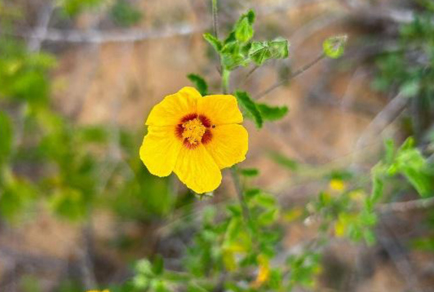
Sida brachyclada is a newly described shrubby species of Sida sect. Cordifoliae (Malvaceae, Malvoideae), endemic to the semiarid mountains of Bahia. It occurs in ecotonal zones of cerrados, caatingas, and submontane forests, at elevations ranging from 300 to 1169 m. The species is distinguished by a unique combination of morphological traits: short lateral brachyblasts with prominent scars from deciduous leaves and stipules, small ovate-elliptic leaves, and terminal, lax inflorescences bearing long-pedicellate flowers. A preliminary conservation assessment following IUCN criteria classifies the species as Endangered (EN). Supporting materials include an illustration, photographs, a diagnostic plate based on the Lankester Composite Dissection Plate, a distribution map, and a key for Bahian species from Sida sect. Cordifoliae.
References
- Aguilar, J.F., Fryxell, P.A. & Jansen, R.K. (2003) Phylogenetic relationships and classification of the Sida generic alliance (Malvaceae) based on nrDNA ITS evidence. Systematic Botany 28 (2): 352–364.
- Bachman, S., Moat, J., Hill, A.W., De La Torre, J. & Scott, B. (2011) Supporting Red List threat assessments with GeoCAT: geospatial conservation assessment tool. ZooKeys 150: 117–126. https://doi.org/10.3897/zookeys.150.2109
- Baracho, G.S. & Agra, M.D.F. (2024) New synonyms and lectotypifications in Sida (Malvaceae-Malveae) reveal the first record and extension of the distribution area of Sida maculata to Brazil. Phytotaxa 660 (3): 287–293. https://doi.org/10.11646/phytotaxa.660.3.6
- Bayer, C. & Kubitzki, K. (2003) Malvaceae. In: Kubitzki, K. & Bayer, C. (Eds.) Flowering Plants, Dicotyledons: Malvales, Capparales and Non-betalain Caryophyllales. Springer, Berlin, pp. 225–311.
- Beentje, H. (2010) The Kew plant glossary: an illustrated dictionary of plant terms. Kew, Royal Botanical Gardens, 160 pp.
- Brandão, J.L., Baracho, G.S., Sales, M.D. & Viegas Filho, M.P. (2017) Synopsis of Sida (Malvaceae, Malvoideae, Malveae) in the state of Pernambuco, Brazil. Phytotaxa 307 (3): 205–227. https://doi.org/10.11646/phytotaxa.307.3.5
- Bovini, M.G. (2025) Sida in Flora e Funga do Brasil. Jardim Botânico do Rio de Janeiro. Available from: https://floradobrasil.jbrj.gov.br/FB9203 (accessed 9 July 2025)
- Brasil. (2000) Lei nº 9.985, de 18 de julho de 2000. Available from: http://www.planalto.gov.br/ccivil_03/leis/l9985.htm (accessed: 01 April 2025).
- Burandt Jr., C.L. (1992) A monograph of Sida sect. Oligandrae (Malvaceae). Systematic Botany 17 (1): 164–179. https://doi.org/10.2307/2419071
- Burnett, G.T. (1835) Outlines of Rosarologia. In: Burnett, G.T. (Ed.) Outlines of Botany, including A General History of the Vegetable Kingdom, part II. Henry Renshaw, London, pp. 814–826.
- Candolle, A.P. de (1824) Prodromus Systematis Naturalis Regni Vegetabilis, vol. 1. Sumptibus Sociorum Treuttel et Würtz, Paris. 748 pp.
- Cavanilles, A.J. (1785) Monadelphiae classis dissertationes decem. Typographia regia, Paris. 463 pp.
- Chodat, R. & Hassler, E. (1905) Plantae Hasslerianae, soit énumération des plantes recoltées au Paraguay par le Dr. Emile Hassler. Impremerie Romet, Geneva. 825 pp. https://doi.org/10.5962/bhl.title.45112
- Clement, I.D. (1957) Studies in Sida (Malvaceae). Contributions from the Gray Herbarium of Harvard University 180: 3–91.
- Colli‐Silva, M., Pérez‐Escobar, O.A., Ferreira, C.D., Costa, M.T., Gerace, S., Coutinho, T.S., Yoshikawa, V.N., Antonio-Domingues, H., Hernández-Gutiérrez, R., Bovini, M.G., Duarte, M.C., Cheek, M., Chase, M.W., Fay, M.F., Christenhusz, M.J.M., Dorr, L.J., Schoeplein, C., Corcoran, M., Roy, S., Cable, S., McLay, T., Maurin, O., Forest, F., Baker, W.J. & Antonelli, A. (2025) Taxonomy in the light of incongruence: An updated classification of Malvales and Malvaceae based on phylogenomic data. Taxon 74 (2): 361–385. https://doi.org/10.1002/tax.13300
- Flora & Funga do Brasil. (2025) Malvaceae. Jardim Botânico do Rio de Janeiro. Available from: https://floradobrasil.jbrj.gov.br/FB156 (accessed: 13 April 2025)
- Fryxell, P.A. (1985) Sidus Sidarum—V. The North and Central American species of Sida. SIDA, Contributions to Botany 11 (1): 62–91.
- Fryxell, P.A. (1988) Malvaceae of Mexico. Systematic Botany Monograph 25: 1–522. https://doi.org/10.2307/25027717
- Fryxell, P.A. (1997) The American genera of Malvaceae—II. Brittonia 49: 204–269. https://doi.org/10.2307/2807683
- Grings, M. & Boldrini, I.I. (2022) Synopsis of Sida (Malvoideae, Malvaceae) in the state of Rio Grande do Sul, Brazil. Phytotaxa 542 (2): 105–135. https://doi.org/10.11646/phytotaxa.542.2.1
- IPNI. (2025) The International Plant Names Index. The Royal Botanic Gardens, Kew, Harvard University Herbaria & Libraries and Australian National Herbarium. Available from: http://www.ipni.org (accessed 1 April 2025)
- IUCN. (2024) Guidelines for Using the IUCN Red List Categories and Criteria. Version 16. Prepared by the Standards and Petitions Committee. Available from: https://www.iucnredlist.org/documents/RedListGuidelines.pdf (accessed 1 April 2025)
- Jussieu, A.L. de (1789) Genera plantarum: secundum ordines naturales disposita. Herissant et Theophilum Barrois, Paris. 491 pp. https://doi.org/10.5962/bhl.title.284
- Krapovickas, A. (1969) Notas citotaxonómicas sobre Malváceas. Bonplandia 3 (2–4): 1–16. https://doi.org/10.30972/bon.32-41441
- Krapovickas, A. (2003a) Revisión de Sida sección Muticae C.Presl (Malvaceae-Malveae). Bonplandia 12: 123–132. https://doi.org/10.30972/bon.121-41408
- Krapovickas, A. (2003b) Sida sección Distichifolia (Monteiro) Krapov. comb. nov., stat. nov. (Malvaceae-Malveae). Bonplandia 12: 83–121. https://doi.org/10.30972/bon.121-41407
- Krapovickas, A. (2006) Las especies argentinas y de países vecinos de Sida secc. Nelavaga (Malvaceae, Malveae). Bonplandia 15 (1–2): 5–45. https://doi.org/10.30972/bon.151-289
- Krapovickas, A. (2007) Las especies de Sida secc. Malacroideae (Malvaceae) del cono sur de sudamérica. Bonplandia 16 (3 –4): 209–253. https://doi.org/10.30972/bon.163-4150
- Krapovickas, A. (2012) Novedades en las secciones Cordifoliae, Distichifolia, Malacroidea, Muticae y Nelavaga del género Sida (Malvaceae). Bonplandia 21 (1): 77–92. https://doi.org/10.30972/bon.2111318
- Linnaeus, C. (1753) Species Plantarum. L. Salvius, Holmiae [Stockholm]. 200 pp.
- Milliken, W., Klitgard, B. and Baracat, A. (2009 onwards). Neotropikey - Interactive key and information resources for flowering plants of the Neotropics. Available from: https://powo.science.kew.org/taxon/urn:lsid:ipni.org:names:30000208-2/general-information (accessed: 19 november 2024)
- Monteiro Filho, H. da C. (1949) As especies argentinas, brasileiras e uruguayas da secção Malvinda do gênero Sida. Lilloa 17: 501–524.
- Monteiro Filho, H. da C. (1977) Malvaceae brasiliensis novae vel criticae. V. Anais do XXVI Congresso Nacional de Botânica: 401–412.
- NASA Shuttle Radar Topography Mission (2013) Shuttle Radar Topography Mission (SRTM) Global. Distributed by OpenTopography. Available from: https://doi.org/10.5069/G9445JDF (accessed 7 July 2025)
- Orshan, G. (1972) Morphological and physiological plasticity in relation to drought. In: McKell, C.M., Blaisdell, J.P. & Goodin, J.R. (Eds.) Wildland shrubs – their biology and utilization. General Technical Report INT-1. Ogden, Utah: USDA Forest Service, Intermountain Forest and Range Experiment Station, pp. 245–254.
- Pilger, R. (1924) Plantae Luetzelburgianae brasilienses IV. Notizblatt des Botanischen Gartens und Museums zu Berlin-Dahlem 9 (81): 39–48.
- POWO (2025). Plants of the World Online. Facilitated by the Royal Botanic Gardens, Kew. Available from: https://powo.science.kew.org/ (accessed 16 May 2025)
- Presl, C.B. (1835) Reliquiae Haenkeanae. Tomi secondi fasciculus secundus. J.G. Calve, Bibliopolam, Prague. 152 pp.
- QGIS.org (2025) QGIS Geographic Information System. QGIS Association. Available from: https://qgis.org/download/ (accessed 9 July 2025)
- Radford, A.E., Dickison, W.C., Massey, J.R. & Bell, C.R. (1976) Vascular plant systematics. Harper & Row, New York, 891 pp.
- Saint-Hilaire, A.D. (1825) Flora Brasiliae Meridionalis Tomus primus. A.Belin, Paris. 395 pp.
- Saint-Hilaire, A.D. & Naudin, C. (1842) Revue de la flore du Brésil meridional: deuxième partie. In: Brongniart, A.D. & Decaisne, J. (Eds.) Annales des Sciences Naturelles; Botanique Seconde Série. Vol. 18. Fortin, Masson et cie, Paris, pp. 24–54.
- Thiers, B. (2025) Index Herbariorum: A global directory of public herbaria and associated staff. New York Botanical Garden′s Virtual Herbarium. Available from: http://sweetgum.nybg.org/science/ih/ (accessed 9 April 2025)