
Abstract
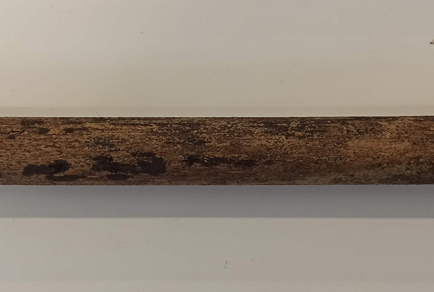
A novel species of family Cainiaceae, Paramphibambusa ghizhouensis is introduced based on morphological characteristics and phylogenetic analyses of ITS and LSU sequence data. Phylogenetically, the new taxon forms a well-supported clade within Paramphibambusa, sister to P. bambusicola. It is characterized by larger ascomata (635–850 × 430–600 µm), smaller asci (130–210 × 8.1–14.4 µm), and smaller ascospores (18.4–29.3 × 4.8–7.5 μm) with rounded ends, which differentiate it from its sister species, P. bambusicola. A comprehensive description, illustrations, and a phylogenetic tree are provided to confirm the systematic placement of this new species.
References
- Bhattacharya, D., Lutzoni, F., Reeb, V., Simon, D., Nason, J. & Fernandez, F. (2000) Widespread occurrence of spliceosomal introns in the rDNA genes of ascomycetes. Molecular Biology and Evolution 17 (12): 1971–1984. https://doi.org/10.1093/oxfordjournals.molbev.a026298
- Delgado, G., Miller, A.N., Hashimoto, A., Iida, T., Ohkuma, M. & Okada, G. (2022) A phylogenetic assessment of Endocalyx (Cainiaceae, Xylariales) with E. grossus comb. et stat. nov. Mycological Progress 21 (1): 221–242. https://doi.org/10.1007/s11557-021-01759-9
- Habib, K., Li, W.H., Ren, Y.L., Liu, L.L., Lu, C.T., Zhang, Q.F., Yao, Z.Q., Luo, X.Y., Zhou, X., Zeng, W.Y., Kang, Y.Q., Shen, X.C., Wijayawardene, N.N., Elgorban, A.M., Al-Rejaie, S. & Li, Q.R. (2025) Exploration of ascomycetous Fungi revealing novel taxa in Southwestern China. Mycosphere 16 (1): 536. https://doi.org/10.5943/mycosphere/16/1/8
- Hall, T.A. (1999) BioEdit: a user-friendly biological sequence alignment editor and analysis program for Windows 95/98/NT. Nucleic Acids Symposium Series 41 (41): 95–98.
- Han, L.S., Wijayawardene, N.N., Liu, C., Han, L.H., Promputtha, I. & Dai, D.Q. (2024) Paramphibambusa bambusicola gen. et sp. nov., Arecophila xishuangbannaensis and A.zhaotongensis spp. nov. in Cainiaceae from Yunnan, China. MycoKeys 104: 113–132. https://doi.org/10.3897/mycokeys.104.117872
- Hsieh, H.M., Ju, Y.M. & Rogers, J.D. (2005) Molecular phylogeny of Hypoxylon and closely related genera. Mycologia 97 (4): 914–923. https://doi.org/10.1080/15572536.2006.11832776
- Hyde, K.D., Hongsanan, S. & Jeewon, R. (2016) Fungal diversity notes 367–490: taxonomic and phylogenetic contributions to fungal taxa. Fungal Diversity 80: 1–270. https://doi.org/10.1007/s13225-016-0373-x
- Hyde, K.D., Norphanphoun, C., Maharachchikumbura, S.S.N., Bhat, D.J., Jones, E.B.G., Bundhun, D., Chen, Y.J., Bao, D.F., Boonmee, S., Calabon, M.S., Chaiwan, N., Chethana, K.W.T., Dai, D.Q., Dayarathne, M.C., Devadatha, B., Dissanayake, A.J., Dissanayake, L.S., Doilom, M., Dong, W., Fan, X.L., Goonasekara, I.D., Hongsanan, S., Huang, S.K., Jayawardena, R.S., Jeewon, R., Karunarathna, A., Konta, S., Kumar, V., Lin, C.G., Liu, J.K., Liu, N.G., Luangsa-ard, J., Lumyong, S., Luo, Z.L., Marasinghe, D.S., McKenzie, E.H.C., Niego, A.G., Niranjan, M., Perera, R.H., Phukhamsakda, C., Rathnayaka, A.R., Samarakoon, M.C., Samarakoon, S.M.B.C., Sarma, V.V., Senanayake, I.C., Shang, Q.J., Stadler, M., Tibpromma, S., Wanasinghe, D.N., Wei, D.P., Wijayawardene, N.N., Xiao, Y.P., Yang, J., Zeng, X.Y., Zhang, S.N. & Xiang, M.M. (2020) Refined families of Sordariomycetes. Mycosphere 11 (1): 305–1059. https://doi.org/10.5943/mycosphere/11/1/7
- Jaklitsch, W.M., Gardiennet, A. & Voglmayr, H. (2016) Resolution of morphology-based taxonomic delusions: Acrocordiella, Basiseptospora, Blogiascospora, Clypeosphaeria, Hymenopleella, Lepteutypa, Pseudapiospora, Requienella, Seiridium and Strickeria. Persoonia 37 (24): 82–105. https://doi.org/10.3767/003158516X690475
- Jeewon, R., Liew, E.C. & Hyde, K.D. (2003) Molecular systematics of the Amphisphaeriaceae based on cladistic analyses of partial LSU rDNA gene sequences. Mycological Research 107 (12): 1392–1402. https://doi.org/10.1017/S095375620300875X
- Jiang, H., Zhang, S., Phookamsak, R., Promputtha, I. & Xu, J. (2021) Amphibambusa hongheensis sp. nov., a novel bambusicolous ascomycete from Yunnan, China. Phytotaxa 505 (2): 201–212. https://doi.org/10.11646/phytotaxa.505.2.6
- Kang, J.C., Hyde, K.D. & Kong, R.Y.C. (1999) Studies on Amphisphaeriales: the Cainiaceae. Mycological Research 103 (12): 1621–1627. https://doi.org/10.1017/S0953756299001264
- Katoh, K., Rozewicki, J. & Yamada, K.D. (2019) MAFFT online service: multiple sequence alignment, interactive sequence choice and visualization. Briefings in Bioinformatics 20 (4): 1160–1166. https://doi.org/10.1093/bib/bbx108
- Konta, S., Hyde, K.D., Eungwanichayapant, P.D., Karunarathna, S.C., Samarakoon, M.C., Xu, J.C., Aluthwattha, S.T., Dauner, L.A.P., Tibpromma, S. & Lumyong, S. (2021) Morphology and multigene phylogeny reveal Haploanthostomella gen. et sp. nov. and familial placement of Endocalyx (Xylariales, Sordariomycetes, Ascomycota). Life (Chicago, Ill.) 11 (6): 486. https://doi.org/10.3390/life11060486
- Li, Q.R., Zhang, X., Lin, Y., Samarakoon, M.C., Hyde, K.D., She, X.C., Liao, W.Q., Karunarathna, A., Long, S.H., Kang, Y.Q. & Kang, J.C. (2022) Morpho-molecular characterisation of Arecophila, with A australis and A. clypeata sp. nov. and A. miscanthi comb. nov. MycoKeys 88: 123–149. https://doi.org/10.3897/mycokeys.88.79475
- Li, Q.R., Habib, K., Long, S.H., Wu, Y.P., Zhang, X., Hu, H.M., Wu, Q.Z., Liu, L.L., Zhou, S.X., Shen, X.C. & Kang, J.C. (2024) Unveiling fungal diversity in China: new species and records within the Xylariaceae. Mycosphere 15 (1): 275–364. https://doi.org/10.5943/mycosphere/15/1/2
- Liu, Y.L., Whelen, S. & Hall, B.D. (1999) Phylogenetic relationships among ascomycetes: evidence from an RNA polymerase II subunit. Molecular Biology and Evolution 16 (12): 1799–1808. https://doi.org/10.1093/oxfordjournals.molbev.a026092
- Liu, J.K., Hyde, K.D., Jones, E.B.G., Buyck, B., Chethana, K.W.T., Dai, D.Q., Dai, Y.C., Daranagama, D.A., Dissanayake, A.J., Doilom, M., D’souza, M.J., Fan, X.L., Goonasekara, I.D., Hirayama, K., Hongsanan, S., Jayasiri, S.C., Jayawardena, R.S., Karunarathna, S.C., Li, W.J., Mapook, A., Norphanphoun, C., Pang, K.L., Perera, R.H., Peršoh, D., Pinruan, U., Senanayake, I.C., Somrithipol, S., Suetrong, S., Tanaka, K., Thambugala, K.M., Tian, Q., Tibpromma, S., Udayanga, D., Wijayawardene, N.N., Wanasinghe, D., Wisitrassameewong, K., Zeng, X.Y., Abdel-Aziz, F.A., Adamčík, S., Bahkali, A.H., Boonyuen, N., Bulgakov, T., Callac, P., Chomnunti, P., Greiner, K., Hashimoto, A., Hofstetter, V., Kang, J.C., Lewis, D., Li, X.H., Liu, X.Z., Liu, Z.Y., Matsumura, M., Mortimer, P.E., Rambold, G., Randrianjohany, E., Sato, G., Sri-Indrasutdhi, V., Tian, C.M., Verbeken, A. & Camporesi, E. (2015) Fungal diversity notes 1–110: taxonomic and phylogenetic contributions to fungal species. Fungal Diversity 72 (1): 1–197. https://doi.org/10.1007/s13225-015-0324-y
- Liu, L.L., Ren, Y.L., Habib, K., Lu, C.T., Wu, Y.P., Long, S.H., Lin, Y., Zhang, X., Kang, Y.Q., Wijayawardene, N.N. & Wang, F. (2025) New taxa of Xylariales from karst ecosystems in Southwestern China. Mycosphere 16 (1): 1–78. https://doi.org/10.5943/mycosphere/16/1/1
- Maharachchikumbura, S.S.N., Hyde, K.D., Jones, E.B.G., McKenzie, E.H.C., Huang, S.K., Abdel-Wahab, M.A., Daranagama, D.A., Dayarathne, M., D’souza, M.J., Goonasekara, I.D., Hongsanan, S., Jayawardena, R.S., Kirk, P.M., Konta, S., Liu, J.K., Liu, Z.Y., Norphanphoun, C., Pang, K.L., Perera, R.H., Senanayake, I.C., Shang, Q.J., Shenoy, B.D., Xiao, Y.P., Bahkali, A.H., Kang, J.C., Somrothipol, S., Suetrong, S. & Wen, T.C. (2015) Towards a natural classification and backbone tree for Sordariomycetes. Fungal Diversity 72 (1): 199–301. https://doi.org/10.1007/s13225-015-0331-z
- Maharachchikumbura, S.S.N., Hyde, K.D., Jones, E.B.G., McKenzie, E.H.C., Bhat, D.J., Dayarathne, M.C., Huan, S.K., Norphanphoun, C., Senanayake, I.C., Perera, R.H., Shang, Q.J., Xiao, Y.P., D’souza, M.J., Hongsanan, S., Jayawardena, R.S., Daranagama, D.A., Konta, S., Goonasekara, I.D., Zhuang, W.Y., Jeewon, R., Phillips, A.J.L., Abdel-Wahab, M.A., Al-Sadi, A.M., Bahkali, A.H., Boonmee, S., Boonyuen, N., Cheewangkoon, R., Dissanayake, A.J., Kang, J.C., Li, Q.R., Liu, J.K., Liu, X.Z., Liu, Z.Y., Luangsa-ard, J.J., Pang, K.L., Phookamsak, R., Promputtha, I., Suetrong, S., Stadler, M. & Wen, T.C. (2016) Families of Sordariomycetes. Fungal Diversity 79 (1): 1–317. https://doi.org/10.1007/s13225-016-0369-6
- Mapook, A., Hyde, K.D., McKenzie, E.H.C., Jones, G.D., Bhat, J., Jeewon, R., Stadler, M., Samarakoon, M.C., Malaithong, M., Tanunchai, B., Buscot, F., Wubet, T. & Purahong, W. (2020) Taxonomic and phylogenetic contributions to fungi associated with the invasive weed Chromolaena odorata (Siam weed). Fungal Diversity 101 (1): 1–175. https://doi.org/10.1007/s13225-020-00444-8
- Miller, M., Pfeiffer, W.T. & Schwartz, T. (2010) Creating the CIPRES science gateway for inference of large phylogenetic trees. Proceedings of the Gateway Computing Environments Workshop 14: 1–8. https://doi.org/10.1109/GCE.2010.5676129
- Phukhamsakda, C., Nilsson, R.H., Bhunjun, C.S., De, Farias, A.R.G., Sun, Y.R., Wijesinghe, S.N., Raza, M., Bao, D.F., Lu, L., Tibpromma, S., Dong, W., Tennakoon, D.S., Tian, X.G., Xiong, Y.R., Karunarathna, S.C., Cai, L., Luo, Z.L., Wang, Y., Manawasinghe, I.S., Camporesi, E., Kirk, P.M., Promputtha, I., Kuo, C.H., Su, H.Y., Doilom, M., Li, Y. & Hyde, K.D. (2022) The numbers of fungi: contributions from traditional taxonomic studies and challenges of metabarcoding. Fungal Diversity 114 (1): 327–386. https://doi.org/10.1007/s13225-022-00502-3
- Rambaut, A. (2018) FigTree–Tree Figure Drawing Tool Version v.1.4.4. Institute of Evolutionary Biology, University of Edinburgh, Edinburgh.
- Rehner, S.A. & Buckley, E. (2005) A Beauveria phylogeny inferred from nuclear ITS and EF1-alpha sequences: evidence for cryptic diversification and links to Cordyceps teleomorphs. Mycologia 97 (1): 84–98. https://doi.org/10.3852/mycologia.97.1.84
- Ronquist, F., Teslenko, M., van der Mark, P., Ayres, D.L., Darling, A., Höhna, S., Larget, B., Liu, L. & Huelsenbeck, J.P. (2012) MrBayes 3.2: efficient Bayesian phylogenetic inference and model choice across a large model space. Systematic Biology 61 (3): 539–542. https://doi.org/10.1093/sysbio/sys029
- Senanayake, I.C., Maharachchikumbura, S.S., Hyde, K.D., Bhat, J.D., Jones, E.G., McKenzie, E.H.C., Dai, D.Q., Daranagama, D.A., Dayarathne, M.C., Goonasekara, I.D. & Konta, S. (2015) Towards unraveling relationships in Xylariomycetidae (Sordariomycetes). Fungal Diversity 73: 73–144. https://doi.org/10.1007/s13225-015-0340-y
- Stamatakis, A. (2014) RAxML version 8: A tool for phylogenetic analysis and post-analysis of large phylogenies. Bioinformatics 30 (9): 1312–1313. https://doi.org/10.1093/bioinformatics/btu033
- Vilgalys, R. & Hester, M. (1990) Rapid genetic identification and mapping of enzymatically amplified ribosomal DNA from several Cryptococcus species. Journal of Bacteriology 172 (8): 4238–4246. https://doi.org/10.1128/jb.172.8.4238-4246.1990
- Vu, D., Groenewald, M., de, Vries, M., Gehrmann, T., Stielow, B., Eberhardt, U., Al-Hatmi, A., Groenewald, J.Z., Cardinali, G., Houbraken, J., Boekhout, T., Crous, P.W., Robert, V. & Verkley, G.J.M. (2019) Large-scale generation and analysis of filamentous fungal DNA barcodes boosts coverage for kingdom Fungi and reveals thresholds for fungal species and higher taxon delimitation. Studies in Mycology 92 (1): 135–154. https://doi.org/10.1016/j.simyco.2018.05.001
- White, T.J., Bruns, T., Lee, S.J.W.T. & Taylor, J. (1990) Amplification and direct sequencing of fungal ribosomal RNA genes for phylogenetics. PCR protocols: a guide to methods and applications 18 (1): 315–322. https://doi.org/10.1016/B978-0-12-372180-8.50042-1
- Zhou, X., Habib, K., Zeng, W., Ren, Y., Shen, X., Kang, J. & Li, Q. (2024) Addition of three new species of Xylariomycetidae fungi on bamboo from Southern China. MycoKeys 109: 109. https://doi.org/10.3897/mycokeys.109.128020