

Abstract
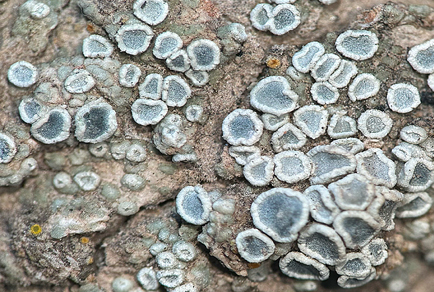
Among the grand challenges of the 21st Century is the documentation and description of the Earth’s biodiversity. This is especially the case for groups of organisms that historically have received far less attention than others, which is likely related to a lack of formal education/training in many to most K–12 systems. Lichens remain among the least studied groups of macro-organisms anywhere in the world. New research to understand their biodiversity is met with heightened urgency considering unprecedent rates of habitat destruction and that 21st Century ecosystems are now sculpted by human activities as much as they are by natural phenomena. The present contribution builds on early evidence of an exceptionally rich but as yet poorly documented lichen biota of the southern Rocky Mountains of Colorado. Here, we describe three species new to science and conduct molecular phylogenetic analyses that help place this diversity within the context of related species: Lecanora indigoana, Lepraria saliersiae, and Pertusaria rayana. We provide the new combination Lecanora gigantea for Myriolecis gigantea, and the new name Lecanora planata for Myriolecis complanata, which cannot be transferred under its original epithet due to homonymy in Lecanora. Additionally, we provide three new dichotomous keys that aid in the identification of these species in comparison to close relatives that occur throughout the region. Finally, we conduct IUCN conservation assessments for all three species to assist in future preservation strategies. Through discovery and description of the Colorado lichen biota, we aim to engage a broad audience of stakeholders and interest groups in these remarkable symbiotic organisms.
References
- Allen, J.A., McMullin, R.T., Tripp, E.A. & Lendemer, J.C. (2019) Lichen conservation in North America: a review of current practices and research in Canada and the United States. Biodiversity and Conservation 28: 3103–3138. https://doi.org/10.1007/s10531-019-01827-3
- Anderson, R.A. (1962) The lichen flora of the Dakota Sandstone in north‐central Colorado. The Bryologist 65: 242–261. https://doi.org/10.1639/0007-2745(1962)65[242:TLFOTD]2.0.CO;2
- Anderson, R.A. (1964) The genus Lecidea in Rocky Mountain National Park. Unpublished Ph.D. Thesis, University of Colorado-Boulder.
- Anderson, R.A. & Carmer, M.B. (1974) Additions to the lichen flora of Colorado. The Bryologist 77: 216–223. https://doi.org/10.2307/3241559
- Asplund, J. & Wardle, D.A. (2017) How lichens impact on a terrestrial community and ecosystem properties. Biological Reviews 92: 1720–1738. https://doi.org/10.1111/brv.12305
- Boldgiv, B. et al. (2024) Global natural history infrastructure requires international solidarity, support, and investment in local capacity. Proceedings of the National Academy of Sciences of the United States of America 122: e2411232122. https://doi.org/10.1073/pnas.2411232122
- Brodo, I.M. (1991) Studies in the lichen genus Ochrolechia. 2. Corticolous species of North America. Canadian Journal of Botany 69: 733–772. https://doi.org/10.1139/b91-098
- Brodo, I.M. & Henssen, A. (1995) A new isidiate crustose lichen in northwestern North America. Bibliotheca Lichenologica 58: 27–41.
- Brodo, I.M. & Lendemer, J.C. (2012) On the perplexing variability of reproductive modes in the genus Ochrolechia: notes on O. africana and O. arborea in eastern North America. Opuscula Philolichenum 11: 120–134. https://doi.org/10.5962/p.382089
- Calder, J.W., Parker, D., Stopka, C.J., Jiménez-Moreno, G. & Shuman, B.N. (2015) Medieval warming initiated exceptionally large wildfire outbreaks in the Rocky Mountains. Proceedings of the National Academy of Sciences of the United States of America 112: 13261–13266. https://doi.org/10.1073/pnas.1500796112
- Carmer, M.B. (1975) Corticolous lichens of riparian deciduous trees in the central Front Range of Colorado. The Bryologist 78: 44–56. https://doi.org/10.2307/3242106
- Colorado Natural Heritage Program (CNHP) (2011) The State of Colorado’s Biodiversity. Colorado State University, Fort Collins, Colorado, 209 pp.
- Culberson, C.F. (1972) Improved conditions and new data for identification of lichyen products by standardized thin‐layer chromatographic method. Journal of Chromatography A 72: 113–125. https://doi.org/10.1016/0021-9673(72)80013-X
- Culberson, C.F. & Kristinsson, H.-D. (1970) A standardized method for the identification of lichen products. Journal of Chromatography A 46: 85–93. https://doi.org/10.1016/S0021-9673(00)83967-9
- Díaz, H.F., Bradley, R.S. & Ning, L. (2014) Climatic changes in mountain regions of the American Cordillera and the tropics: historical changes and future outlook. Arctic and Alpine Research 46: 1–9. https://doi.org/10.1657/1938-4246-46.4.735
- Díaz, V. & Manzitto-Tripp, E.A. (2023) A synopsis of the yellow-green, usnic-acid producing Xanthoparmelia in Colorado. Opuscula Philolichenum 22: 1–40. https://doi.org/10.5962/p.388458
- Dirzo, R., Young, H.S., Galetti, M., Ceballos, G., Isaac, N.J.B. & Collen, B. (2014) Defaunation in the Anthropocene. Science 345: 401–406. https://doi.org/10.1126/science.1251817
- Dodds, W.K., Gido, K., Whiles, M.R., Fritz, K.M. & Matthews, W.J. (2004) Life on the edge: the ecology of Great Plains prairie streams. BioScience 54: 205–216. https://doi.org/10.1641/0006-3568(2004)054[0205:LOTETE]2.0.CO;2
- Doyle, J.J. & Doyle, J.L. (1987) A rapid DNA isolation procedure for small quantities of fresh leaf tissue. Phytochemical Bulletin 10: 11–15.
- Edler, D., Klein, J., Antonelli, A. & Silvestro, D. (2020) raxmlGUI 2.0: a graphical interface and toolkit for phylogenetic analysis using RAxML. Methods in Ecology and Evolution 12: 373–377. https://doi.org/10.1111/2041-210X.13512
- Esslinger, T.L. (2021) North American lichen checklist, Version #24. Opuscula Philolichenum 20: 100–394. https://doi.org/10.5962/p.388279
- Flakus, A., Elix, J.A., Rodriguez, P. & Kukwa, M. (2011) New species and records of Lepraria (Stereocaulaceae, lichenized Ascomycota) from South America. The Lichenologist 43: 57–66. https://doi.org/10.1017/S0024282910000502
- Flock, J.W. (1978) Lichen-bryophyte distribution along a snow-covered-soil-moisture gradient at Niwot Ridge, Colorado. Arctic and Alpine Research 10: 31–47. https://doi.org/10.1080/00040851.1978.12003942
- Funk, J., Saunders, S., Sanford, T., Easley, T. & Markham, A. (2014) Rocky Mountain Forests at Risk: Confronting Climate-Driven Impacts from Insects, Wildfires, Heat, and Drought. Union of Concerned Scientists and the Rocky Mountain Climate Organization, Cambridge, Massachusetts.
- Gaya, E., Fernández-Brime, S., Vargas, R., Lachlan, R.F., Gueidan, C., Ramírez-Mejía, M. & Lutzoni, F. (2015) The adaptive radiation of lichen-forming Teloschistaceae is associated with sunscreening pigments and a bark-to-rock substrate shift. Proceedings of the National Academy of Sciences of the United States of America 112: 11600–11605. https://doi.org/10.1073/pnas.1507072112
- Gilbert, O.L. & Coppins, B.J. (1992) The lichens of Caenlochan, Angus. The Lichenologist 24: 143–163. https://doi.org/10.1017/S0024282900500061
- Golubiewski, N.E. (2006) Urbanization increases grassland carbon pools: effects of landscaping in Colorado’s Front Range. Ecological Applications 16: 555–571. https://doi.org/10.1890/1051-0761(2006)016[0555:UIGCPE]2.0.CO;2
- Guzow-Krzemińska, B., Sérusiaux, E., van den Boom, P.P.G., Brand, A.M., Launis, A., Łubek, A. & Kukwa, M. (2019) Understanding the evolution of phenotypical characters in the Micarea prasina group (Pilocarpaceae) and descriptions of six new species within the group. MycoKeys 57: 1–30. https://doi.org/10.3897/mycokeys.57.33267
- Haddad, N.M., Brudvig, L.A., Clobert, J., Davies, K.F., Gonzalez, A., Holt, R.D., Lovejoy, T.E., Sexton, J.O., Austin, M.P., Collins, C.D., Cook, W.M., Damschen, E.I., Ewers, R.M., Foster, B.L., Jenkins, C.N., King, A.J., Laurance, W.F., Levey, D.J., Margules, C.R., Melbourne, B.A., Nicholls, A.O., Orrock, J.L., Song, D.X. & Townshend, J.R. (2015) Habitat fragmentation and its lasting impact on Earth’s ecosystems. Science Advances 1: e1500052. https://doi.org/10.1126/sciadv.1500052
- Handwerk, J., Kuhn, B., Rondeau, R. & Grunau, L. (2014) Climate Change Vulnerability Assessment for Rare Plants of the San Juan Region of Colorado. Colorado Natural Heritage Program, Colorado State University, Fort Collins, Colorado, 156 pp.
- Honegger, R. (1991) Functional aspects of the lichen symbiosis. Annual Review of Plant Physiology and Plant Molecular Biology 42: 553–578. https://doi.org/10.1146/annurev.pp.42.060191.003005
- Howard, G.E. (1970) The lichen genus Ochrolechia in North America north of Mexico. The Bryologist 73: 93–130. https://doi.org/10.2307/3241590
- IUCN Standards and Petitions Committee (2024) Guidelines for Using the IUCN Red List Categories and Criteria. Version 16. Prepared by the Standards and Petitions Committee. [https://www.iucnredlist.org/documents/RedListGuidelines.pdf]
- Jiang, X., Rauscher, S.A., Ringler, T.D., Lawrence, D.M., Williams, A.P., Allen, C.D., Steiner, A.L., Cai, D.M. & McDowell, N.G. (2013) Projected future changes in vegetation in western North America in the twenty-first century. Journal of Climate 26: 3671–3687. https://doi.org/10.1175/JCLI-D-12-00430.1
- Knapp, A.K., Fay, P.A., Blair, J.M., Collins, S.L., Smith, M.D., Carlisle, J.D., Harper, C.W., Danner, B.T., Lett, M.S. & McCarron, J.K. (2002) Rainfall variability, carbon cycling, and plant species diversity in a mesic grassland. Science 298: 2202–2205. https://doi.org/10.1126/science.1076347
- Kukwa, M. (2011) The Lichen Genus Ochrolechia in Europe. Fundacja Rozwoju Uniwersytetu Gdańskiego, Gdańsk, 309 pp.
- Laundon, J.R. (1989) The species of Leproloma—the name for the Lepraria membranacea group. The Lichenologist 21: 1–22. https://doi.org/10.1017/S0024282989000034
- Lendemer, J.C. (2013) A monograph of the crustose members of the genus Lepraria Ach. s.str. (Stereocaulaceae, lichenized Ascomycetes) in North America north of Mexico. Opuscula Philolichenum 12: 27–141. https://doi.org/10.5962/p.382102
- Lesica, P. & McCune, B. (2004) Decline of arctic-alpine plants at the southern margin of their range following a decade of climatic warming. Journal of Vegetation Science 15: 679–690. https://doi.org/10.1111/j.1654-1103.2004.tb02310.x
- Leu, M., Hanser, S.E. & Knick, S.T. (2008) The human footprint in the West: a large scale analysis of anthropogenic impacts. Ecological Applications 18: 1119–1139. https://doi.org/10.1890/07-0480.1
- Loarie, S.R., Duffy, P.B., Hamilton, H., Asner, G.P., Field, C.B. & Ackerly, D.D. (2009) The velocity of climate change. Nature 462: 1052–1055. https://doi.org/10.1038/nature08649
- Locklear, J.H. (2013) Taxonomic identity and historical accounts of Dalea cylindriceps (Fabaceae), a species of conservation concern in the Great Plains (U.S.A.). Journal of the Botanical Research Institute of Texas 7: 879–890.
- Loeffelhoz, J.D., Raynor, S.J., Sánchez-Moreno, S., Momeni, S. & Manzitto-Tripp, E. (2025) Tardigrada and Nematoda associations with lichen and bryophyte habitats from southwest Wisconsin state parks, universities, and private land. Biogeographia 40: a045. https://doi.org/10.21426/B6.40056
- Lumbsch, H.T., Plümper, M., Guderly, R. & Feige, G.B. (1997) The corticolous species of Lecanora sensu stricto with pruinose apothecial discs. Symbolae Botanicae Upsaliensis 32: 131–161.
- Manzitto-Tripp, E.A., Agabani, R. & McMullin, R.T. (2018) New and noteworthy reports of Colorado lichens and lichen allies, 1. Opuscula Philolichenum 17: 362–367. https://doi.org/10.5962/p.386182
- Manzitto-Tripp, E.A., Watts, J.L. & Raynor, S.J. (2025 [in press]) New and noteworthy reports of lichens and allied fungi to Colorado, including descriptions of two species new to science. Journal of the Botanical Research Institute of Texas.
- Manzitto-Tripp, E.A. & Watts, J.L. (2025) Ochrolechia raynori, a New Lichen Species from the Southern Rocky Mountains (Colorado, USA) and Key to Asexually Reproducing Ochrolechia in Western North America. Wild 2 (3): 28. https://doi.org/10.3390/wild2030028
- McCune, B. (2017) Microlichens of the Pacific Northwest, Vols. 1–2. Blueberry Media, Corvallis, OR, USA.
- Munson, S.M. & Sher, A.A. (2015) Long-term shifts in the phenology of rare and endemic Rocky Mountain plants. American Journal of Botany 102: 1268–1276. https://doi.org/10.3732/ajb.1500079
- Nash, T.H., Ryan, B., Gries, C. & Bungartz, F. (2002) Lichen Flora of the Greater Sonoran Desert, Vol. 1. Lichens Unlimited, Arizona State University, Tempe, AZ.
- Nash, T.H., Ryan, B., Gries, C. & Bungartz, F. (2004) Lichen Flora of the Greater Sonoran Desert, Vol. 2. Lichens Unlimited, Arizona State University, Tempe, AZ.
- Nash, T.H., Ryan, B., Gries, C. & Bungartz, F. (2007) Lichen Flora of the Greater Sonoran Desert, Vol. 3. Lichens Unlimited, Arizona State University, Tempe, AZ.
- Payzulla, T. & Mamut, R. (2025) New species and new records of the genus Lecanora (Lecanoraceae, lichenized Ascomycota) from China. The Bryologist 128: 16–29. https://doi.org/10.1639/0007-2745-128-1.016
- Printzen, C. (2001) Corticolous and lignicolous species of Lecanora (Lecanoraceae, Lecanorales) with usnic or isousnic acid in the Sonoran Desert region. The Bryologist 103: 382–409. https://doi.org/10.1639/0007-2745(2001)104[0382:CALSOL]2.0.CO;2
- Rambaut, A. (2010) FigTree v1.4.4. Institute of Evolutionary Biology, University of Edinburgh, U.K. [http://tree.bio.ed.ac.uk/software/figtree]
- Ray, A. & Saliers, E. (2005) Rarities, “Point Hope”. Producer: Various.
- Raynor, S.J., Kesler, J., Allen, J.R. & Manzitto-Tripp, E.A. (2023) New and noteworthy reports on Colorado lichens and lichen allies, 2: Biatoropsis hirtae and B. minuta. Western North American Naturalist 83: 454–461. https://doi.org/10.3398/064.083.0403
- Raynor, S.J., Watts, J.L. & Manzitto-Tripp, E.A. (2024) Sarea cirrhendocarpa, a fungus species new to science from the southern Rocky Mountains. Phytotaxa 671: 87–97. https://doi.org/10.11646/phytotaxa.671.1.5
- Raynor, S.J., Watts, J.L. & Manzitto-Tripp, E.A. (2025 [in press]) Polycauliona pancakeana, a new species to science from the southern Rocky Mountains. The Bryologist. https://doi.org/10.11646/phytotaxa.671.1.5
- Raynor, S.J. & Manzitto-Tripp, E.A. (In revision) Lichen inventory of the Indian Peaks Wilderness, Roosevelt National Forest, Colorado. Systematic Botany.
- Rolshausen, G., Dal Grande, F., Otte, J. & Schmitt, I. (2022) Lichen holobionts show compositional structure along elevation. Molecular Ecology 32: 6619–6630. https://doi.org/10.1111/mec.16471
- Rondeau, R.J., Pearson, K.T. & Kelso, S. (2013) Vegetation response in a Colorado grassland-shrub community to extreme drought: 1999–2010. American Midland Naturalist 170: 14–25. https://doi.org/10.1674/0003-0031-170.1.14
- Saag, L., Saag, A. & Randlane, T. (2009) World survey of the genus Lepraria (Stereocaulaceae, lichenized Ascomycota). The Lichenologist 41: 25–60. https://doi.org/10.1017/S0024282909007993
- Saliers, E. & Ray, I. (1994) Swamp Ophelia, “The Wood Song”. Producer: Peter Collins, with Indigo Girls, Nashville, TN.
- Sanders, W.B. & Masumoto, H. (2021) Lichen algae: the photosynthetic partners in lichen symbioses. The Lichenologist 53: 347–393. https://doi.org/10.1017/S0024282921000335
- Schmitt, I. & Lumbsch, H.T. (2004) Molecular phylogeny of the Pertusariaceae supports secondary chemistry as an important systematic character set in lichen-forming ascomycetes. Molecular Phylogenetics and Evolution 33: 43–55. https://doi.org/10.1016/j.ympev.2004.04.014
- Schoennagel, T., Veblen, T.T. & Romme, W.H. (2004) The interaction of fire, fuels, and climate across Rocky Mountain forests. BioScience 54: 661–676. https://doi.org/10.1641/0006-3568(2004)054[0661:TIOFFA]2.0.CO;2
- Schulz, M., Schmitt, I., Weber, D. & Dal Grande, F. (2022) Fungal host affects photosynthesis in a lichen holobiont. Journal of Fungi 8: 1267. https://doi.org/10.3390/jof8121267
- Schwob, G., Almendras, K., Veas-Mattheos, K., Pezoa, M. & Orlando, J. (2024) Host specialization and spatial divergence of bacteria associated with Peltigera lichens promote landscape gamma diversity. Environmental Microbiome 19: 57. https://doi.org/10.1186/s40793-024-00598-x
- Shrestha, G. & St. Clair, L.L. (2009) The lichen flora of southwest Colorado. Evansia 26: 102–123. https://doi.org/10.1639/0747-9859-26.3.102
- Śliwa, L. (2007) A revision of the Lecanora dispersa complex in North America. Polish Botanical Journal 52: 1–70.
- Śliwa, L., Miadlikowska, J., Redelings, B.D., Molnar, K. & Lutzoni, F. (2012) Are widespread morphospecies from the Lecanora dispersa group (lichen-forming Ascomycota) monophyletic? The Bryologist 115: 265–277. https://doi.org/10.1639/0007-2745-115.2.265
- Stanton, D.E. & Horn, H.S. (2013) Epiphytes as “filter-drinkers”: life-form changes across a fog gradient. The Bryologist 116: 34–42. https://doi.org/10.1639/0007-2745-116.1.034
- Tagirdzhanova, G., Saary, P., Cameron, E.S., Allen, C.C.G., Garber, A.I., Díaz Escandón, D., Cook, A.T., Goyette, S., Nogerius, V.T., Passo, A., Mayrhofer, H., Holien, H., Tønsberg, T., Stein, L.Y., Finn, R.D. & Spribille, T. (2024) Microbial occurrence and symbiont detection in a global sample of lichen metagenomes. PLOS Biology 22: e3002862. https://doi.org/10.1371/journal.pbio.3002862
- Thiers, B. (2025 [continuously updated]) Index Herbariorum: a global directory of public herbaria and associated staff. New York Botanical Garden’s Virtual Herbarium.
- Tønsberg, T. (1992) The sorediate and isidiate, corticolous, crustose lichens in Norway. Sommerfeltia 14: 1–336. https://doi.org/10.2478/som-1992-0002
- Tretiach, M. & Brown, D.H. (1995) Morphological and physiological differences between epilithic and epiphytic populations of the lichen Parmelia pastillifera. Annals of Botany 75: 627–632. https://doi.org/10.1006/anbo.1995.1072
- Tripp, E.A. (2015) Lichen inventory of White Rocks Open Space (City of Boulder, Colorado). Western North American Naturalist 75: 301–310. https://doi.org/10.3398/064.075.0307
- Tripp, E.A. (2017) Field Guide to the Lichens of White Rocks (Boulder, Colorado). University Press of Colorado.
- Tripp, E.A. & Lendemer, J.C. (2018) Twenty-seven modes of reproduction in the obligate lichen symbiosis. Brittonia 70: 1–14. https://doi.org/10.1007/s12228-017-9500-6
- Tripp, E.A., Morse, C.A., Keepers, K.G., Stewart, C.A., Pogoda, C.S., White, K.H., Hoffman, J.R., Kane, N.C. & McCain, C.M. (2019) Evidence of substrate endemism of lichens on Fox Hills Sandstone: discovery and description of Lecanora lendemeri as new to science. The Bryologist 122: 246–259. https://doi.org/10.1639/0007-2745-122.2.246
- Tripp, E.A. & Lendemer, J.C. (2019a) Field Guide to the Lichens of Great Smoky Mountains National Park. University of Tennessee Press.
- Tripp, E.A. & Lendemer, J.C. (2019b) Highlights from 10+ years of lichenological research in Great Smoky Mountains National Park: Celebrating the United States National Park Service Centennial. Systematic Botany 44: 943–980. https://doi.org/10.1600/036364419X15710776741332
- Watts, J.L., Raynor, S.J., Li, Y., Meier, R., Cook, C., Casini, G. & Chadwick, E. & Manzitto-Tripp, E.A. (2024) Lecanora exspersa: A new lichen record for North America and a key to sorediate Lecanora (Lecanoraceae) in western North America. The Bryologist 127: 427–440. https://doi.org/10.1639/0007-2745-127.4.427
- Watts, J.L., Raynor, S.J. & Manzitto-Tripp, E.A. (2025) Character evolution in Heterodermia s.l. (Physciaceae; Caliciales) and two new species from the southern Rocky Mountains, USA. Phytotaxa 698 (2): 61–81. https://doi.org/10.11646/phytotaxa.698.2.1
- Weber, W.A. & Shushan, S. (1955) The Lichen Flora of Colorado: Cetraria cornicularia, Dactylina, and Thamnolia. University Press of Colorado, Boulder, CO.
- White, T.J., Bruns, T., Lee, S. & Taylor, J. (1990) Amplification and direct sequencing of fungal ribosomal RNA genes for phylogenetics. In: Innis, M.A., Gelfand, D.H., Sninsky, J.J. & White, T.J. (Eds.) PCR Protocols: A Guide to Methods and Applications. Academic Press, New York, pp. 315–322. https://doi.org/10.1016/B978-0-12-372180-8.50042-1
- Wrobleski, A., Ernst, S., Weber, T. & Delach, A. (2023) The impact of climate change on endangered plants and lichen. PLOS Climate 2: e0000225. https://doi.org/10.1371/journal.pclm.0000225
- Yahr, R., Vilgalys, R. & DePriest, P.T. (2006) Geographic variation in algal partners of Cladonia subtenuis (Cladoniaceae) highlights the dynamic nature of a lichen symbiosis. New Phytologist 171: 847–860. https://doi.org/10.1111/j.1469-8137.2006.01788.x
- Yahr, R., Allen, J.L., Atienza, V., Bungartz, F., Chrismas, N., Dal Forno, M., Degtjarenko, P., Ohmura, Y., Pérez-Ortega, S., Randlane, T., Næsborg, R.R., Simijaca-Salcedo, D., von Hirschheydt, G., Anderson, F., Aptroot, A., Balderas, E., Borukhiyah, N., Chandler, A.M., Chesa Marro, M., Divakar, P.K., García, R.A., Herrera-Campos, M.d.l.Á., Howe, N., Joseph, S., Larsen, E.M., Lendemer, J.C., McMullin, R.T., Michlig, A., Moncada, B., Paulsen, J., Roa-García, F., Rosentreter, R., Scheidegger, C. & Sparrius, L.B. (2024) Red Listing lichenized fungi: Best practices and future prospects. The Lichenologist 56: 345–362. https://doi.org/10.1017/S0024282924000355
- Zhao, X., Leavitt, S.D., Zhao, Z.T., Zhang, L.L., Arup, U., Grube, M., Pérez-Ortega, S., Printzen, C., Śliwa, L., Kraichak, E., Divakar, P.K., Crespo, A. & Lumbsch, H.L. (2016) Towards a revised generic classification of lecanoroid lichens (Lecanoraceae, Ascomycota) based on molecular, morphological and chemical evidence. Fungal Diversity 78: 293–304. https://doi.org/10.1007/s13225-015-0354-5
- Zedda, L. (2023) The importance of a transformative biodiversity education for perceiving, appreciating and supporting lichen diversity in German urban environments. The Lichenologist 55: 161–168. https://doi.org/10.1017/S0024282923000312