

Abstract
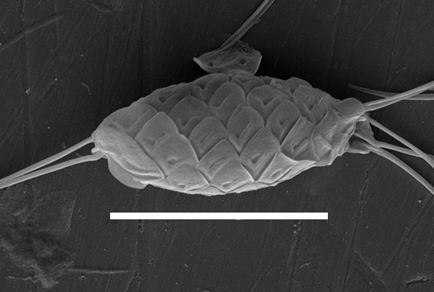
This research is devoted to the study of the Mallomonas splendens species complex in a tropical region using electron microscopy and molecular methods. Based on a study of 18 algal cultures belonging to the M. splendens morphotype, three clades were identified based on the SSU rDNA + rbcL cpDNA and ITS1-5.8S-ITS2 rDNA datasets. Based on these studies, the phylogenetic position of Mallomonas splendens sensu stricto was established and two new species were described based on molecular and morphological data: Mallomonas croomei sp. nov. and Mallomonas tyleri sp. nov. A new combination, Mallomonas arnhemensis comb. et stat. nov. was also proposed. The problems associated with the identification of Mallomonas splendens and determination of the scale morphotype belonging to taxa of this complex are discussed. Based on the literature data and metabarcoding results, the distribution of all three taxa was revised.
References
- Andersen, R.A. (2005) Algal Culturing Techniques. Elsevier Academic Press, Oxford, 589 pp.
- Andersen, R.A., Graf, L., Malakhov, Y. & Yoon, H.S. (2017) Rediscovery of the Ochromonas type species Ochromonas triangulata (Chrysophyceae) from its type locality (Lake Veysove, Donetsk region, Ukraine). Phycologia 56 (6): 591–604. https://doi.org/10.2216/17-15.1
- Asmund, B. & Kristiansen, J. (1986) The genus Mallomonas (Chrysophyceae). A taxonomic survey based on the ultrastructure of silica scales and bristles. Opera Botanica 85: 1–128.
- Belevich, T.A., Ilyash, L.V., Milyutina, I.A., Logacheva, M.D., Goryunov, D.V. & Troitsky, A.V. (2015) Metagenomic analyses of White Sea picoalgae: first data. Biochemistry (Moscow) 80: 1514–1521. https://doi.org/10.1134/S0006297915110140
- Chernomor, O., von Haeseler, A. & Minh, B.Q. (2016) Terrace aware data structure for phylogenomic inference from supermatrices. Systematic biology 65: 997–1008. https://doi.org/10.1093/sysbio/syw037
- Chodat, R. (1921) Algues de la région du Grand St-Bernard. I. Algues rares ou nouvelles du Plan de Jupiter. II. Sur la place à attribuer aux genres Tetraedron et Polyedrium. Bulletin de la Société de Botanique de Genève, série 2 12: 293–305.
- Choi, B., Son, M., Kim, J.I. & Shin, W. (2013) Taxonomy and phylogeny of the genus Cryptomonas (Cryptophyceae, Cryptophyta) from Korea. Algae 28: 307–330. https://doi.org/10.4490/algae.2013.28.4.307
- Compère, P. (1974) Mallomonas bronchartiana, Chrysophycée nouvelle du lac Tchad. Bulletin du Jardin Botanique National de Belgique 44: 61–63. https://doi.org/10.2307/3667427
- Conrad, W. (1927) Essai d'une Monographie des genres Mallomonas Perty (1852) et Pseudomallomonas Chodat (1920). Archiv für Protistenkunde 59: 423–505.
- Conrad, W. (1933) Revision du genre Mallomonas Perty (1851) incl. Pseudo-mallomonas Chodat (1920). Memoires du Museum Royal d'Histoire Naturelles de Belgiquec 56: 1–82.
- Croome, R., Durrschmidt, M. & Tyler, P. (1985) A light and electron microscopical investigation of Mallomonas splendens GS West playfair (Mallomonadaceae, Chrysophyceae). Nova hedwigia 41 (1-4): 463–470.
- Darriba, D., Taboada, G.L., Doallo, R. & Posada, D. (2012) jModelTest 2: more models, new heuristics and parallel computing. Nature Methods 9: 1–772. https://doi.org/10.1038/nmeth.2109
- Daugbjerg, N. & Andersen, R.A. (1997) Phylogenetic analysis of the rbcL sequences from haptophytes and heterokont algae suggest their chloroplasts are unrelated. Molecular Biology and Evolution 14: 1242–1251. https://doi.org/10.1093/oxfordjournals.molbev.a025733
- Dürrschmidt, M. & Croome, R. (1985) Mallomonadaceae (Chrysophyceae) from Malaysia and Australia. Nordic Journal of Botany 5: 285–298. https://doi.org/10.1111/j.1756-1051.1985.tb01657.x
- Grossmann, L., Bock, C., Schweikert, M. & Boenigk, J. (2016) Small but manifold–hidden diversity in “Spumella‐like flagellates”. Journal of Eukaryotic Microbiology 63: 419–439. https://doi.org/10.1111/jeu.12287
- Gusev, E.S. (2015) A new species of the genus Mallomonas Perty (Synurales, Chrysophyceae) from Vietnam. Algologia 25: 428–438. https://doi.org/10.15407/alg25.04.428
- Gusev, E. & Martynenko, N. (2022) Diversity of silica–scaled Chrysophytes in Central Vietnam. Water 14: 1–21. https://doi.org/10.3390/w14010065
- Gusev, E.S., Siver, P.A. & Shin, W. (2017a) Mallomonas bronchartiana Compère revisited: Two new species described from Asia. Cryptogamie, Algologie 38: 3–16. https://doi.org/10.7872/crya/v38.iss1.2017.3
- Gusev, E.S., Doan-Nhu, H. & Nguyen-Ngoc, L. (2017b) Silica-Scaled Chrysophytes from Cat Tien National Park (Dong Nai Province, Vietnam). Nova Hedwigia 105: 347–364. https://doi.org/10.1127/nova_hedwigia/2017/0416
- Gusev, E.S., Čertnerová, D., Škaloudová, M. & Škaloud, P. (2018) Exploring Cryptic Diversity and Distribution Patterns in the Mallomonas kalinae/rasilis Species Complex with a Description of a New Taxon – Mallomonas furtiva sp. nov. Journal of Eukaryotic Microbiology 65: 38–47. https://doi.org/10.1111/jeu.12427
- Gusev, E.S., Kapustin, D.A., Martynenko, N.A., Guseva, E.E. & Kulikovskiy, M.S. (2019a) Mallomonas gusakovii sp. nov. (Chrysophyceae, Synurales), a new species from Phu Quoc Island, Vietnam. Phytotaxa 406: 199–205. https://doi.org/10.11646/phytotaxa.406.3.6
- Gusev, E.S., Doan-Nhu, H., Nguyen-Ngoc, L., Guseva, E.E. & Phan-Tan, L. (2019b) Silica-scaled chrysophytes from Cam Ranh Peninsula (Khanh Hoa Province, Vietnam). Nova Hedwigia, Beihefte Beih 148: 63–76. https://doi.org/10.1127/nova-suppl/2019/077
- Gusev, E., Martynenko, N. & Tran, H. (2021) Studies on Algae from the Order Synurales (Chrysophyceae) in Northern Vietnam. Diversity 13: 602. https://doi.org/10.3390/d13110602
- Gusev, E., Kapustin, D., Martynenko, N. & Kulikovskiy, M. (2022a) Diversity of silica-scaled chrysophytes (Stramenopiles: Chrysophyceae) from Indonesian Papua. Diversity 14: 726. https://doi.org/10.3390/d14090726
- Gusev, E., Martynenko, N., Kapustin, D., Doan-Nhu, H. & Nguyen-Ngoc, L. (2022b) Diversity of silica-scaled chrysophytes of two tropical islands: Phu Quoc and Con Son (Viet Nam). Life 12: 1611. https://doi.org/10.3390/life12101611
- Gusev, E., Guseva, E., Tran Duc Dien & Kulikovskiy, M. (2022c) Flora of silica-scaled chrysophytes (Chrysophyceae) of two provinces in Southern Vietnam. Inland Water Biology 15: 205–216. https://doi.org/10.1134/S1995082922030063
- Gusev, E., Martynenko, N., Shkurina, N., Huan, P.T., Dien, T.D. & Thanh, N.T.H. (2023) An annotated checklist of algae from the order Synurales (Chrysophyceae) of Viet Nam. Diversity 15: 183. https://doi.org/10.3390/d15020183
- Gusev, E., Shkurina, N. & Martynenko, N. (2024a) Phylogenetic position, typification and emended description of Mallomonas matvienkoae (Chrysophyceae, Synurales). Phytotaxa 660: 112–22. https://doi.org/10.11646/phytotaxa.660.2.2
- Gusev, E.S., Safronova, T.V., Podunay, Y.А., Tran, H. & Martynenko, N.A. (2024b) Hidden diversity in the Mallomonas pseudomatvienkoae species complex (Synurales, Chrysophyceae) and description of two new species. Phycologia 63: 544–557. https://doi.org/10.1080/00318884.2024.2430034
- Gusev, E., Martynenko, N., Podunay, Yu. & Kuzmin, D.V. (2024c) Morphology, phylogenetic position and distribution of Mallomonas mangofera and Mallomonas foveata comb. et stat. nov. (Synurales, Chrysophyceae). Phytotaxa 662: 224–238. https://doi.org/10.11646/phytotaxa.662.3.2
- Gusev, E., Martynenko, N., Tran, H. & Podunay, Y. (2024d) Two new species of the Mallomonas mangofera species complex (Synurales, Chrysophyceae) from the tropics based on morphological and molecular studies. Phytotaxa 678: 17–32. https://doi.org/10.11646/phytotaxa.678.1.2
- Gusev, E.S., Podunay, Yu.A., Martynenko, N.A., Tran, H. & Kuzmin, D.V. (2024e) Mallomonas gemina comb. et stat. nov. (Synurales, Chrysophyceae)—a new combination based on molecular studies. Phytotaxa 665: 221–232. https://doi.org/10.11646/phytotaxa.665.3.4
- Hamby, R.K., Sims, L., Issel, L. & Zimmer, E. (1988) Direct ribosomal RNA sequencing: optimization of extraction and sequencing methods for work with higher plants. Plant Molecular Biology Reporter 6: 175–192. https://doi.org/10.1007/BF02669591
- Harris, K. & Bradley, D.E. (1960) A taxonomic study of Mallomonas. Journal of General Microbiology 22: 750–777. https://doi.org/10.1099/00221287-22-3-750
- Jeong, M., Kim, J.I., Jo, B.Y., Kim, H.S., Siver, P.A. & Shin, W. (2019) Surviving the marine environment: two new species of Mallomonas (Synurophyceae). Phycologia 58: 276–286. https://doi.org/10.1080/00318884.2019.1565718
- Jo, B.Y., Kim, J.I., Škaloud, P., Siver, P.A. & Shin, W. (2016) Multigene phylogeny of Synura (Synurophyceae) and descriptions of four new species based on morphological and DNA evidence. European Journal of Phycology 51: 413–430. https://doi.org/10.1080/09670262.2016.1201700
- Jo, B.Y., Shin, W., Kim, H.S., Siver, P.A. & Andersen, R.A. (2013) Phylogeny of the genus Mallomonas (Synurophyceae) and descriptions of five new species on the basis of morphological evidence. Phycologia 52: 266–278. https://doi.org/10.2216/12-107.1
- Jo, B.Y., Kim, J.I., Škaloud, P., Siver, P.A. & Shin, W. (2016) Multigene phylogeny of Synura (Synurophyceae) and descriptions of four new species based on morphological and DNA evidence. European Journal of Phycology 51: 413–430. https://doi.org/10.1080/09670262.2016.1201700
- Kapustin, D.A., Gusev, E.S. & Kulikovskiy, M.S. (2019) Mallomonas papuensis sp. nov. (Chrysophyceae, Synurales), a new species from the high mountain bog pool in Papua province, Indonesia. Phytotaxa 402: 281–287. https://doi.org/10.11646/phytotaxa.402.6.2
- Katana, A., Kwiatowski, J., Spalik, K., Zakryś, B., Szalacha, E. & Szymańska, H. (2001) Phylogenetic position of Koliella (Chlorophyta) as inferred from nuclear and chloroplast small subunit rDNA. Journal of Phycology 37: 443–451. https://doi.org/10.1046/j.1529-8817.2001.037003443.x
- Katoh, K., Rozewicki, J. & Yamada, K.D. (2019) MAFFT online service: multiple sequence alignment, interactive sequence choice and visualization. Briefings in bioinformatics 20: 1160–1166. https://doi.org/10.1093/bib/bbx108
- Kim, H.S., Kim, J.H., Shin, W. & Jo, B.Y. (2014) Mallomonas elevata sp.nov. (Synurophyceae), a new scaled Chrysophyte from Jeju Island, South Korea. Nova Hedwigia 98: 89–102. https://doi.org/10.1127/0029-5035/2013/0138
- Kristiansen, J. (2002) The genus Mallomonas (Synurophyceae): a taxonomic survey based on the ultrastructure of silica scales and bristles. Opera Botanica 139: 1–218.
- Kristiansen, J. & Preisig, H.R. (2007) Chrysophyte and Haptophyte Algae 2: Teil/2nd Part: Synurophyceae. Spektrum Akademischer Verlag, Heidelberg, 252 pp.
- Kumar, S., Stecher, G., Li, M., Knyaz, C. & Tamura, K. (2018) MEGA X: Molecular Evolutionary Genetics Analysis across computing platforms. Molecular Biology and Evolution 35: 1547–1549. https://doi.org/10.1093/molbev/msy096
- Martynenko, N.A., Shkurina, N.A. & Gusev, E.S. (2024) Description of the new species Mallomonas okhapkinii (Synurales, Chrysophyceae) based on morphological and molecular data. Phytotaxa 670: 63–71. https://doi.org/10.11646/phytotaxa.670.1.6
- McFadden, G.I. & Melkonian, M. (1986) Use of Hepes buffer for microalgal culture media and fixation for electron microscopy. Phycologia 25: 551–557. https://doi.org/10.2216/i0031-8884-25-4-551.1
- Momeu, L. & Péterfi, L.S. (1979) Taxonomy of Mallomonas based on the fine structure of scales and bristles. Contributii Botanice Cluj-Napoca 19: 13–20.
- Nemcova, Y. & Diaz-Pulido, G. (2023) Floristic and ecological insights into silica-scaled chrysophytes in southeastern Queensland, Australia. Plant Systematics and Evolution 309: 43. https://doi.org/10.1007/s00606-023-01881-z
- Nicholls, K.H. (1984) Four new Mallomonas species of the Torquatae series (Chrysophyceae). Canadian Journal of Botany 62: 1583–1591. https://doi.org/10.1139/b84-213
- Patova, E., Novakovskaya, I., Gusev, E. & Martynenko, N. (2023) Diversity of Cyanobacteria and Algae in biological soil crusts of the Northern Ural mountain region assessed through morphological and metabarcoding approaches. Diversity 15: 1080. https://doi.org/10.3390/d15101080
- Perty, M. (1852) Zur Kenntniss kleinster Lebensformen nach Bau, Funktionen, Systematik, mit Specialverzeichniss der in der Schweiz beobachteten. Jent & Reinert, Bern, 228 pp.
- Playfair, G.I. (1913) Plankton of Sydney water-supply. Proceedings of the Linnean Society of New South Wales 37: 512–552. https://doi.org/10.5962/bhl.part.22356
- Playfair, G.I. (1921) Australian freshwater flagellates. Proceedings of the Linnean Society of New South Wales 46: 99–146. https://doi.org/10.5962/bhl.part.14004
- Pruesse, E., Peplies, J. & Glöckner, F.O. (2012) SINA: Accurate high-throughput multiple sequence alignment of ribosomal RNA genes. Bioinformatics 28: 1823–1829. https://doi.org/10.1093/bioinformatics/bts252
- Pusztai, M. & Škaloud, P. (2019) Elucidating the evolution and diversity of Uroglena-like colonial flagellates (Chrysophyceae): polyphyletic origin of the morphotype. European Journal of Phycology 54: 404–416. https://doi.org/10.1080/09670262.2019.1574030
- Rezácova, M. (2006) Mallomonas kalinae (Synurophyceae), a new species of alga from northern Bohemia, Czech Republic. Preslia 78: 353–358.
- Ronquist, F. & Huelsenbeck, J.P. (2003) MrBayes 3: Bayesian phylogenetic inference under mixed models. Bioinformatics 19: 1572–1574. https://doi.org/10.1093/bioinformatics/btg180
- Schmidt‐Thomé, P., Nguyen, H., Pham, L., Jarva, J. & Nuottimäki, K. (2015) Climate change adaptation measures in Vietnam. Springer International Publishing, Cham, Switzerland, pp. 79–91. https://doi.org/10.1007/978-3-319-12346-2
- Siver, P.A. (2024) Mallomonas gigantica sp. nov., an Eocene synurophyte possessing the largest known siliceous scales. Fottea 24: 261–268. https://doi.org/10.5507/fot.2024.006
- Siver, P.A., Jo, B.Y., Kim, J.I., Shin, W., Lott, A.M. & Wolfe, A.P. (2015) Assessing the evolutionary history of the class Synurophyceae (Heterokonta) using molecular, morphometric, and paleobiological approaches. American Journal of Botany 102: 921–941. https://doi.org/10.3732/ajb.1500004
- Siver, P.A., Kapustin, D. & Gusev, E. (2018) Investigations of two-celled colonies of Synura formerly described as Chrysodidymus with descriptions of two new species. European Journal of Phycology 53 (3): 245–255. https://doi.org/10.1080/09670262.2018.1437930
- Skaloudova, M. & Skaloud, P. (2013) A new species of Chrysosphaerella (Chrysophyceae: Chromulinales), Chrysosphaerella rotundata sp. nov., from Finland. Phytotaxa 130: 34–42. https://doi.org/10.11646/phytotaxa.130.1.4
- Škaloud, P., Kynčlová, A., Benada, O., Kofroňová, O. & Škaloudová, M. (2012) Toward a revision of the genus Synura, section Petersenianae (Synurophyceae, Heterokontophyta): morphological characterization of six pseudo-cryptic species. Phycologia 51: 303–329. https://doi.org/10.2216/11-20.1
- Škaloud, P., Kristiansen, J. & Škaloudová, M. (2013) Developments in the taxonomy of silica-scaled chrysophytes – from morphological and ultrastructural to molecular approaches. Nordic Journal of Botany 31: 385–402. https://doi.org/10.1111/j.1756-1051.2013.00119.x
- Škaloud, P., Škaloudová, M., Jadrná, I., Bestová, H., Pusztai, M., Kapustin, D. & Siver, P.A. (2020) Comparing morphological and molecular estimates of species diversity in the freshwater genus Synura (Stramenopiles): a model for understanding diversity of eukaryotic microorganisms. Journal of Phycology 56: 574–591. https://doi.org/10.1111/jpy.12978
- Takahashi, K. (1972) Studies on genera Mallomonas and Synura, and other plankton in freshwater with the electron microscope. VIII. On three new species of Chrysophyceae. Botanical Magazine 85: 293–302. https://doi.org/10.1007/BF02490175
- Tran, H.Q. & Mazei, Y.A. (2018) Testate amoebae from South Vietnam waterbodies with the description of new species Difflugia vietnamica sp. nov. Acta Protozoologica 57: 215–230. https://doi.org/10.4467/16890027AP.18.016.10092
- Tran, H.Q., Tran, V.T., Zagumyonnaya, O.N. & Tikhonenkov, D.V. (2022) Ecology of testate amoebae in waterbodies of the Central Highlands and South-Central Coast provinces of Vietnam with the description of new species Difflugia quangtrani sp. nov. European Journal of Protistology 86: 125933. https://doi.org/10.1016/j.ejop.2022.125933
- Wee, J.L., Fasone, L.D., Sattler, A., Starks, W.W. & Hurley, D.L. (2001) ITS/5.8S DNA sequence variation in 15 isolates of Synura petersenii Korshikov (Synurophyceae). Nova Hedwigia Beiheft 122: 245–258.
- Wei, Y.X., Yuan, X.P. & Kristiansen, J. (2014) Silica-Scaled Chrysophytes from Hainan, Guangdong Provinces and Hong Kong Special Administrative Region, China. Nordic journal of botany 32: 881–896. https://doi.org/10.1111/njb.00493
- West, G.S. (1909) The algae of the Yan Yean Reservoir, Victoria: a biological and ecological study. Journal of the Linnean Society, Botany 39: 1–88. https://doi.org/10.1111/j.1095-8339.1909.tb02478.x