

Abstract
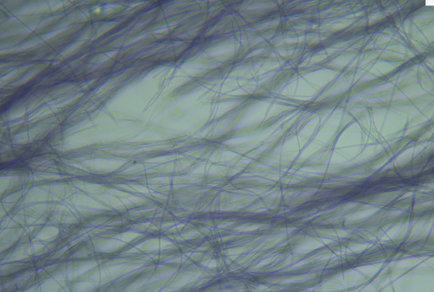
Cyanobacteria biodiversity remains underexplored despite their ecological importance and potential applications. To address this, we investigated two Leptolyngbya-like strains, LEGE 07170 and LEGE 191244, collected from marine tide pools in Portugal and Morocco using polyphasic approach. Phylogenetic analyses indicates that the strains form a distinct clade with strong statistical support in the Oculatellales order. The 16S rRNA gene identity matrix shows that the maximum shared values with the phylogenetically closest genera Gansulinema, Kaiparowitsia, Shahulinema, Aerofilum and Thermoleptolyngbya is consistently below 94.5%. Morphologically, LEGE 07170 and LEGE 191244 are indistinguishable to each other. Both optical and TEM analyses showed vacuole-like structures at the cells cross-walls and this character morphologically distinguishes these strains from their phylogenetically related genera. The 16S–23S ITS secondary structures also differed the LEGE-CC strains from their closest related genera.
References
- Akagha, M.U., Pietrasiak, N., Bustos, D.F., Vondrásková, A., Lamb, S.C. & Johansen, J.R. (2023) Albertania and Egbenema gen. nov. from Nigeria and the United States, expanding biodiversity in the Oculatellaceae (cyanobacteria). Journal of Phycology 59: 1217–1236. https://doi.org/10.1111/jpy.13389
- Brito, A., Gaifem, J., Ramos, V., Glukhov, E., Dorrestein, P.C., Gerwick, W., Vasconcelos, V.M., Mendes, M.V. & Tamagnini, P. (2015) Bioprospecting Portuguese Atlantic coast cyanobacteria for bioactive secondary metabolites reveals untapped chemodiversity. Algal Research 9: 218–26. https://doi.org/10.1016/j.algal.2015.03.016
- Brito, A., Ramos, V., Mota, R.L., Lima, S., Santos, A.V., Vieira, J., Vieira, C.P., Kastovsky, J., Vasconcelos, V.M. & Tamagnini, P. (2017) Description of new genera and species of marine cyanobacteria from the Portuguese Atlantic coast. Molecular Phylogenetics and Evolution 111: 18–34. https://doi.org/10.1016/j.ympev.2017.03.006
- Cai, F., Li, S., Chen, J. & Li, R. (2024) Gansulinema gen. nov. and Komarkovaeasiopsis gen. nov.: Novel Oculatellacean genera (Cyanobacteria) isolated from desert soils and hot spring. Journal of Phycology 60 (2): 432–446. https://doi.org/10.1111/jpy.13426
- Cellamare, M., Duval, C., Drelin, Y., Djediat, C., Toibi, N., Agogué, H., Leboulanger, C., Ader, M. & Bernard, C. (2018) Characterization of phototrophic microorganisms and description of new cyanobacteria isolated from the saline-alkaline crater-lake Dziani Dzaha (Mayotte, Indian Ocean). FEMS Microbiology Ecology 94: 1–25. https://doi.org/10.1093/femsec/fiy108
- Chakraborty, S., Veerabadhran, M., Achari, A., Pramanik, A., Jaisankar, P. & Mukherjee, J. (2021) Aerofilum fasciculatum gen. et sp. nov. (Oculatellaceae) and Euryhalinema pallustris sp. nov. (Prochlorotrichaceae) isolated from an Indian mangrove forest. Phytotaxa 522 (3): 165–186. https://doi.org/10.11646/phytotaxa.522.3.1
- Firth, H.V., Richards, S.M., Bevan, A.P., Clayton, S., Corpas, M., Rajan, D., Van Vooren, S., Moreau, Y., Pettett, R.M. & Carter, N.P. (2009) DECIPHER: Database of Chromosomal Imbalance and Phenotype in Humans using Ensembl Resources. American Journal of Human Genetics 84 (4): 524–33. https://doi.org/10.1016/j.ajhg.2009.03.010
- Geng, R., Cheng, Y., Chen, S., Zhang, H., Xiao, P., Chen, S., Ma, Z., Han, B. & Li, R. (2024) Maricoleus vaginatus gen. et sp. nov. (Oculatellaceae, Synechococcales), a novel cyanobacterium isolated from a marine ecosystem in China. Fottea 24 (1): 27–41. https://doi.org/10.5507/fot.2023.005
- Hentschke, G.S. & Sant’Anna, C.L. (2015) Current trends and prospects for cyanobacterial taxonomy—are only cultured populations enough? Algological Studies 147: 3–6. https://doi.org/10.1127/algol_stud/2014/0185
- Hentschke, G.S. & Gama-Júnior, W. (2022) Trends in Cyanobacteria: a contribution to systematics and biodiversity studies. In: Lopes, G., Silva, M. & Vasconcelos, V. (Eds.) The Pharmacological Potential of Cyanobacteria. Elsevier, London, pp. 340. https://doi.org/10.1016/B978-0-12-821491-6.00001-6
- Hentschke, G.S., Mohamed, Z., Campos, A. & Vasconcelos, V.M. (2024) Description of Pegethrix niliensis sp. nov., a novel cyanobacterium from the Nile River Basin, Egypt: A Polyphasic Analysis and Comparative Study of Related Genera in the Oculatellales Order. Toxins 16: 451. https://doi.org/10.3390/toxins16100451
- Jahodarova, E., Dvorak, P., Hasler, P., Holusova, K. & Poulickova, A. (2018) Elainella gen. nov.: a new tropical cyanobacterium characterized using a complex genomic approach. European Journal of Phycology 53 (1): 39–51. https://doi.org/10.1080/09670262.2017.1362591
- Jasser, I., Panou, M., Khomutovska, N., Sandzewicz, M., Panteris, E., Niyatbekov, T., Lach, L., Kwiatowski, J., Kokocinski, M. & Gkelis, S. (2022) Cyanobacteria in hot pursuit: characterization of cyanobacteria strains, including novel taxa, isolated from geothermal habitats from different ecoregions of the world. Molecular Phylogenetics and Evolution 170 (170454): 1–18. https://doi.org/10.1016/j.ympev.2022.107454
- Komárek, J. & Anagnostidis, K. (2005) Cyanoprokaryota, part 2. Oscillatoriales. In: Budel, B., Krienitz, L., Gartner, G. & Schagerl, M. (Eds.) Süsswasserflora von Mitteleuropa, Vol. 19/2. Elsevier/Spektrum, Heidelberg, pp. 759.
- Konstantinou, D., Voultsiadou, E., Panteris, E. & Gkelis, S. (2020) Revealing new sponge-associated cyanobacterial diversity: novel genera and species. Molecular Phylogenetics and Evolution 155: 1–16. https://doi.org/10.1016/j.ympev.2020.106991
- Kastovsky, J. (2023) Welcome to the jungle!: An overview of modern taxonomy of cyanobacteria. Hydrobiologia 851 (4): 1063–77. https://doi.org/10.1007/s10750-023-05356-7
- Katoh, K., Kazuharu, M., Kuma, K. & Miyata, T. (2002) MAFFT: a novel method for rapid multiple sequence alignment based on fast Fourier transform. Nucleic Acids Research 30 (14): 3059–66. https://doi.org/10.1093/nar/gkf436
- Kotai, J. (1972) Instructions for Preparation of Modified Nutrient Solution Z8 for Algae. Norwegian Institute for Water Research, Oslo, 5 pp.
- Lane, D.J. (1991) 16S/23S rRNA sequencing. In: Stackebrandt, E. & Goodfellow, M. (eds.) Nucleic acid techniques in bacterial systematics. Wiley & Sons, Hoboken, pp. 115–175.
- Li, S., Chen, J., Zhang, H., Geng, R., Yu, G. & Cai, F. (2024) Shahulinema minutum gen. & sp. nov. (Oculatellaceae) and Euryhalinema shahuense sp. nov. (Nodosilineaceae), two new Cyanobacteria isolated from Shahu Lake in China. Phycologia 63 (2): 145–57. https://doi.org/10.1080/00318884.2023.2299588
- Lukesova, A., Johansen, J.R., Martin, M.P. & Casamatta, D.A. (2009) Aulosira bohemensis sp. nov.: Further phylogenetic uncertainty at the base of the Nostocales (Cyanobacteria). Phycologia 48: 118–129.
- Luz, R., Cordeiro, R., Kastovsky, J., Johansen, J.R., Dias, E., Fonseca, A., Urbatzka, R., Vasconcelos, V.M. & Gonçalves, V. (2023) New terrestrial cyanobacteria from the Azores Islands: description of Venetifunis gen. nov. and new species of Albertania, Kovacikia and Pegethrix. Phycologia 62 (5): 483–98. https://doi.org/10.1080/00318884.2023.2259243
- Mai, T., Johansen, J.R., Pietrasiak, N., Bohunicka, M. & Martin, M.P. (2018) Revision of the Synechococcales (Cyanobacteria) through recognition of four families including Oculatellaceae fam. nov. and Trichocoleaceae fam. nov. and six new genera containing 14 species. Phytotaxa 365 (1): 1–59. https://doi.org/10.11646/phytotaxa.365.1.1
- Miller, M.A., Pfeiffer, W. & Schwartz, T. (2010) Creating the CIPRES science gateway for inference of large phylogenetic trees. In: 2010 gateway computing environments workshop (GCE). pp. 1–8. https://doi.org/10.1109/GCE.2010.5676129
- Neilan, B.A., Jacobs, D., Del Dot, T., Blackall, L.L., Hawkins, P.R., Cox, P.T. & Goodman, A.E. (1997) rRNA sequences and evolutionary relationships among toxic and nontoxic cyanobacteria of the genus Microcystis. International Journal of Systematic and Evolutionary Microbiology 47 (3): 693–97. https://doi.org/10.1099/00207713-47-3-693
- Nübel, U., Garcia-Pichel, F. & Muyzer, G. (1997) PCR primers to amplify 16S rRNA genes from cyanobacteria. Applied and Environmental Microbiology 63 (8): 3327–32. https://doi.org/10.1128/aem.63.8.3327-3332.1997
- Oliveira, F., Hentschke, G.S., Morais, J., Silva, R., Cruz, P. & Vasconcelos, V.M. (2024) Exploring the cyanobacterial diversity in Portugal: description of four new genera from LEGE-CC using the polyphasic approach. Journal of Phycology 60 (5): 1285–1304. https://doi.org/10.1111/jpy.13502
- Pietrasiak, N., Reeve, S., Osorio-Santos, K., Lipson, D.A. & Johansen, J.R. (2021) Trichotorquatus gen. nov.—a new genus of soil cyanobacteria discovered from American drylands. Journal of Phycology 57 (3): 886–902. https://doi.org/10.1111/jpy.13147
- Ramos, V., Morais, J., Castelo-Branco, R., Pinheiro, Â., Martins, J., Regueiras, A., Pereira, A.L., Lopes, V.R., Frazão, B., Gomes, D., Moreira, C., Costa, M.S., Brûle, S., Faustino, S., Martins, R., Saker, M., Osswald, J., Leão, P.N. & Vasconcelos, V.M. (2018) Cyanobacterial diversity held in microbial biological resource centers as a biotechnological asset: the case study of the newly established LEGE culture collection. Journal of Applied Phycology 30: 1437–1451. https://doi.org/10.1007/s10811-017-1369-y
- Rippka, R. (1988) Isolation and purification of cyanobacteria. Methods in Enzymology 167: 3–27.
- Ronquist, F., Teslenko, M., Van Der Mark, P., Ayres, D.L., Darling, A., Höhna, S., Larget, B., Liu, L., Suchard, M. & Huelsenbeck, J.P. (2012) MrBayes 15 3.2: efficient Bayesian phylogenetic inference and model choice across a large model space. Systematic biology 61: 539–542.
- Sciuto, K. & Moro, I. (2016) Detection of the new cosmopolitan genus Thermoleptolyngbya (Cyanobacteria, Leptolyngbyaceae) using the 16S rRNA gene and 16S–23S ITS region. Molecular Phylogenetics and Evolution 105: 15–35. https://doi.org/10.1016/j.ympev.2016.08.010
- Sciuto, K., Moschin, E. & Moro, I. (2017) Cryptic Cyanobacterial Diversity in the Giant Cave (Trieste, Italy): The New Genus Timaviella (Leptolyngbyaceae). Cryptogamie, Algologie 38 (4): 285–323. https://doi.org/10.7872/crya/v38.iss4.2017.285
- Strunecký, O., Ivanova, A.P. & Mareš, J. (2023) An updated classification of cyanobacterial orders and families based on phylogenomic and polyphasic analysis. Journal of Phycology 59: 12–51. https://doi.org/10.1111/jpy.13304
- Strunecky, O., Raabova, L., Bernardova, A., Ivanova, A.P., Semanova, A., Crossley, J. & Kaftan, D. (2020) Diversity of cyanobacteria at the Alaska North Slope with description of two new genera: Gibliniella and Shackletoniella. FEMS Microbiology Ecology 96 (fiz189): 1–20. https://doi.org/10.1093/femsec/fiz189
- Tamura, K., Stecher, G. & Kumar, S. (2021) MEGA11: Molecular Evolutionary Genetics Analysis version 11. Molecular Biology and Evolution 38: 3022–3027. https://doi.org/10.1093/molbev/msab120
- Tawong, W., Pongcharoen, P., Nishimura, T. & Saijuntha, W. (2022) Siamcapillus rubidus gen. et sp. nov. (Oculatellaceae), a novel cyanobacterium from Thailand based on molecular and morphological analyses. Phytotaxa 558 (1): 33–52. https://doi.org/10.11646/phytotaxa.558.1.2
- Taton, A., Grubisic, S., Brambilla, E., De Wit, R. & Wilmotte, A. (2003) Cyanobacterial diversity in natural and artificial microbial mats of Lake Fryxell (McMurdo Dry Valleys, Antarctica): A morphological and molecular approach. Applied and Environmental Microbiology 69 (9): 5157–69. https://doi.org/10.1128/AEM.69.9.5157-5169.2003
- Trifinopoulos, J., Nguyen, L.T., Von Haeseler, A. & Minh, B.Q. (2016) W- 421 IQ-TREE: a fast online phylogenetic tool for maximum likelihood analysis. Nucleic Acids Research 44: W232–W235. https://doi.org/10.1093/nar/gkw256
- Whitton, B.A. (2012) Ecology of Cyanobacteria II: Their Diversity in Space and Time. Springer Science & Business Media, Vienna, 760 pp.
- Yarza, P., Yilmaz, P., Pruesse, E., Glöckner, F.O., Ludwig, W., Schleifer, K., Whitman, W.B., Euzéby, J., Amann, R. & Rosselló-Móra, R. (2014) Uniting the classification of cultured and uncultured bacteria and archaea using 16S rRNA gene sequences. Nature Reviews Microbiology 12: 635–645. https://doi.org/10.1038/nrmicro3330
- Zammit, G. (2018) Systematics and biogeography of sciophilous cyanobacteria; an ecological and molecular description of Albertania skiophila (Leptolyngbyaceae) gen. & sp. nov. Phycologia 57 (5): 481–491. https://doi.org/10.2216/17-125.1
- Zammit, G., Billi, D. & Albertano, P. (2012) The subaerophytic cyanobacterium Oculatella subterranea (Oscillatoriales, Cyanophyceae) gen. et sp. nov.: a cytomorphological and molecular description. European Journal of Phycology 47: 341–354. https://doi.org/10.1080/09670262.2012.717106
- Zimba, P.V., Huang, I.S., Foley, J.E. & Linton, E.W. (2017) Identification of a new-to-science cyanobacterium, Toxifilum mysidocida gen. nov. & sp. nov. (Cyanobacteria, Cyanophyceae). Journal of Phycology 53 (1): 188–197. https://doi.org/10.1111/jpy.12490
- Zuker, M. (2003) Mfold web server for nucleic acid folding and hybridization prediction. Nucleic Acids Research 31: 3406–3415. https://doi.org/10.1093/nar/gkg595