
Abstract
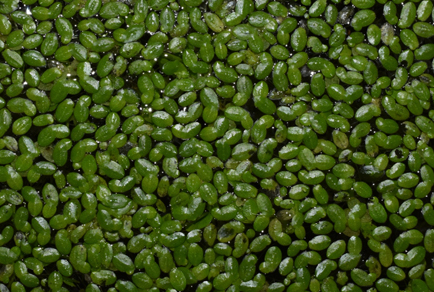
Duckweeds (Lemnaceae) are a family of floating aquatic plants that include the smallest angiosperms in the world. In
Sri Lanka, there have been inconsistent reports about which duckweed species are native, and there have been no comprehensive taxonomic surveys of Lemnaceae in the country. Following the recent discovery of non-native Landoltia plants in Sri Lanka, we undertook a comprehensive investigation using extensive sampling, followed by morphological and molecular methods to identify species and document their distributions. Ultimately, we confirmed the existence of the following species in
Sri Lanka: Spirodela polyrhiza, Landoltia punctata, Lemna aequinoctialis, and Wolffia neglecta.
References
- Azer, S.A. (2013) Taxonomic revision of genus Lemna L. (Lemnaceae Gray) in Egypt. Annals of Agricultural Sciences 58: 257–263.
- Appenroth, K.J., Jansen, M.A.K., Lam, E., Shoham, T. & Sree, K.S. (2024) Important terms in duckweed research defined. Duckweed Forum (ISCDRA Newsl.) 12: 90–94.
- Baum, D.A., Small, R.L. & Wendel, J.F. (1998) Biogeography and floral evolution of Baobabs (Adansonia, Bombacaceae) as inferred from multiple data sets. Systematic Biology 47: 181–207. https://doi.org/10.1080/106351598260879
- Bog, M., Baumbach, H., Schween, U., Hellwig, F., Landolt, E. & Appenroth, K.J. (2010) Genetic structure of the genus Lemna L. (Lemnaceae) as revealed by amplified fragment length polymorphism. Planta 232: 609–619.
- Bog, M., Schneider, P., Hellwig, F., Sachse, S., Kochieva, E.Z., Martyrosian, E., Landolt, E. & Appenroth, K.J. (2013) Genetic characterization and barcoding of taxa in the genus Wolffia Horkel ex Schleid. (Lemnaceae) as revealed by two plastidic markers and amplified fragment length polymorphism (AFLP). Planta 237: 1–13. https://doi.org/10.1007/s00425-012-1777-9
- Bog, M., Lautenschlager, U., Landrock, M.F., Landolt, E., Fuchs, J., Sowjanya Sree, K., Oberprieler, C. & Appenroth, K.J. (2015) Genetic characterization and barcoding of taxa in the genera Landoltia and Spirodela (Lemnaceae) by three plastidic markers and amplified fragment length polymorphism (AFLP). Hydrobiologia 749: 169–182.
- Bog, M., Landrock, M.F., Drefahl, D., Sree, K.S. & Appenroth, K.J. (2018) Fingerprinting by amplified fragment length polymorphism (AFLP) and barcoding by three plastidic markers in the genus Wolffiella Hegelm. Plant Systematics and Evolution 304: 373–386.
- Bog, M., Appenroth, K.J. & Sree, K.S. (2019) Duckweed (Lemnaceae): its molecular taxonomy. Frontiers in Sustainable Food Systems 3: 117.
- Cabrera, L.I., Salazar, G.A., Chase, M.W., Mayo, S.J., Bogner, J. & Dávila, P. (2008) Phylogenetic relationships of aroids and duckweeds (Araceae) inferred from coding and noncoding plastid DNA. American Journal of Botany 95: 1153–1165.
- Cusimano, N., Bogner, J., Mayo, S.J., Boyce, P.C., Wong, S.Y., Hesse, M., Hetterscheid, W.L.A., Keating, R.C. & French, J.C. (2011) Relationships within the Araceae: comparison of morphological patterns with molecular phylogenies. American Journal of Botany 98: 654–668.
- den Hartog, C. & van der Plas, F. (1970) Wolffia globosa (Roxb.) Hartog & Plas, comb. nov. Blumea 18: 367–369.
- Doyle, J.J. & Doyle, J.L. (1987) A rapid DNA isolation procedure for small quantities of fresh leaf tissue. Phytochemical Bulletin 19: 11–15.
- Hastings, W.K. (1970) Monte Carlo sampling methods using Markov chains and their applications. Biometrika 57: 97–109.
- Hegelmaier, C.F. (1895) Wolffiella. Botanische Jahrbücher für Systematik, Pflanzengeschichte und Pflanzengeographie 21: 303.
- Henriquez, C.L., Arias, T., Pires, J.C., Croat, T.B. & Schaal, B.A. (2014) Phylogenomics of the plant family Araceae. Molecular phylogenetics and evolution 75: 91–102. https://doi.org/10.1016/j.ympev.2014.02.017
- Hepper, F.N. (1980) Lemnaceae. In: Dassanayake, M.D., Fosberg, F.R. & Clayton, W.D. (Eds.) A Revised Handbook to the Flora of Ceylon (Vol. 2). Amerind Publishing Co. Pvt. Ltd., New Delhi, pp. 397–402.
- Horkel, J. & Wimmer, C.F.H.H. (1857) Wolffia arrhiza (L.) Horkel ex Wimm. In: Wimmer, C.F.H.H. (ed.) Flora von Schlesien preußischen und österreichischen Antheils, 3rd ed. Korn, Breslau, 140 pp.
- Johnson, L.A. & Soltis, D.E. (1994) matK DNA sequences and phylogenetic reconstruction in Saxifragaceae s. str. Systematic Botany 19: 143–156. https://doi.org/10.2307/2419718
- Landolt, E. (1986) Biosystematic investigations in the family of duckweeds (Lemnaceae) (Vol. 2). The family of Lemnaceae – a monographic study, vol. 1. Veröffentlichungen des Geobotanischen Institutes der Eidg. Techn. Hochschule, Stiftung Rübel, in Zürich 71: 1–566.
- Landolt, E. (1994) Taxonomy and ecology of the section Wolffia of the genus Wolffia (Lemnaceae). Berichte des Geobotanischen Institutes der Eidg. Techn. Hochschule, Stiftung Rübel 60: 137–151.
- Les, D.H., Landolt, E. & Crawford, D.J. (1997) Systematics of the Lemnaceae (duckweeds): inferences from micromolecular and morphological data. Plant Systematics and Evolution 204: 161–177.
- Les, D.H. & Crawford, D.J. (1999) Landoltia (Lemnaceae), a new genus of duckweeds. Novon 9: 530–533. https://doi.org/10.2307/3392195
- Les, D.H., Crawford, D.J., Landolt, E., Gabel, J.D. & Kimball, R.T. (2002) Phylogeny and systematics of Lemnaceae, the duckweed family. Systematic Botany 27: 221–240. https://doi.org/10.1043/0363-6445-27.2.221
- Les, D.H., Murray, N.M. & Tippery, N.P. (2009) Systematics of two imperiled pondweeds (Potamogeton vaseyi, P. gemmiparus) and taxonomic ramifications for subsection Pusilli (Potamogetonaceae). Systematic Botany 34: 643–651. https://doi.org/10.1600/036364409790139727
- Linnaeus, C. (1753) Species Plantarum, Vol. 2. Laurentii Salvii, Stockholm, 970 pp.
- Linné, C. (1771) Mantissa Plantarum : Altera generum editionis VI. et specierum editionis II. Laurentii Salvii, Stockholm, 588 pp.
- Maddison, W.P. & Maddison, D.R. (2023) Mesquite: a modular system for evolutionary analysis, version 3.81. Available from: https://www.mesquiteproject.org (accessed 10 November 2023)
- Metropolis, N., Rosenbluth, A.W., Rosenbluth, M.N., Teller, A.H. & Teller, E. (1953) Equation of state calculations by fast computing machines. The Journal of Chemical Physics 21: 1087–1092.
- Meyer, G.F.W. (1818) Primitiae Florae Essequeboensis adjectis descriptionibus centum circiter stirpium novarum, observationibusque criticis. Sumptibus Henrici Dieterich, Gottingae, 316 pp.
- Minh, B.Q., Schmidt, H.A., Chernomor, O., Schrempf, D., Woodhams, M.D., Von Haeseler, A. & Lanfear, R. (2020) IQ-TREE 2: new models and efficient methods for phylogenetic inference in the genomic era. Molecular Biology and Evolution 37: 1530–1534. https://doi.org/10.1093/molbev/msaa015
- MOE (Ministry of Environment). (2012) The National Red List 2012 of Sri Lanka; Conservation Status of the Fauna and Flora. Ministry of Environment, Colombo, Sri Lanka, 476 pp.
- Nauheimer, L., Metzler, D. & Renner, S.S. (2012) Global history of the ancient monocot family Araceae inferred with models accounting for past continental positions and previous ranges based on fossils. New Phytologist 195: 938–950.
- Nguyen, L.T., Schmidt, H.A., Von Haeseler, A. & Minh, B.Q. (2015) IQ-TREE: a fast and effective stochastic algorithm for estimating maximum-likelihood phylogenies. Molecular Biology and Evolution 32: 268–274. https://doi.org/10.1093/molbev/msu300
- Oxelman, B., Lidén, M. & Berglund, D. (1997) Chloroplast rps16 intron phylogeny of the tribe Sileneae (Caryophyllaceae). Plant Systematics and Evolution 206: 393–410. https://doi.org/10.1007/BF00987959
- Park, H., Park, J.H., Jeon, H.H., Woo, D.U., Lee, Y. & Kang, Y.J. (2020) Characterization of the complete chloroplast genome sequence of Wolffia globosa (Lemnoideae) and its phylogenetic relationships to other Araceae family. Mitochondrial DNA Part B 5: 1905–1907. https://doi.org/10.1080/23802359.2020.1754948
- Ranasinghe, R.H.L., Yakandawala, K. & Yakandawala, D.M.D. (2024) Genus Landoltia (Araceae): a newly recorded aquatic genus from Sri Lanka. In Proceedings of International Forestry and Environment Symposium 28: 4.
- Roxburgh, W. (1832) Flora Indica; or Descriptions of Indian Plants, by the Late William Roxburgh, M.D. F.R.S.E. etc. etc. Vol. III. Serampore, Printed for W. Thacker and Co. Calcutta, and PArbury, Allen and Co. London, 875 pp.
- Sanger, F., Nicklen, S. & Coulson, A.R. (1977) DNA sequencing with chain-terminating inhibitors. Proceedings of the National Academy of Sciences of the United States of America 74: 5463–5467. https://doi.org/10.1073/pnas.74.12.5463
- Schleiden, M.J. (1839) Prodromus Monographiae Lemnacearum oder Conspectus generum atque specierum. Linnaea 13: 385–392.
- Schleiden, M.J. (1844) Wolffia Horkel ex Schleid. Beiträge zur Botanik 1: 233.
- Suchard, M.A., Lemey, P., Baele, G., Ayres, D.L., Drummond, A.J. & Rambaut, A. (2018) Bayesian phylogenetic and phylodynamic data integration using BEAST 1.10. Virus Evolution 4: vey016. https://doi.org/10.1093/ve/vey016
- Tavaré, S. (1986) Some probabilistic and statistical problems in the analysis of DNA sequences. Lecture of mathematics for life science 17: 57–86.
- The National Red List (2020) Conservation Status of the Flora of Sri Lanka (2020) Sri Lanka. Biodiversity Secretariat, Ministry of Environment and the National Herbarium, Department of National Botanic Gardens, 254 pp.
- Tippery, N.P., Les, D.H. & Crawford, D.J. (2015) Evaluation of phylogenetic relationships in Lemnaceae using nuclear ribosomal data. Plant Biology 17: 50–58.
- Tippery, N.P. & Les, D.H. (2020) Tiny plants with enormous potential: phylogeny and evolution of duckweeds. In: Cao, X.H. et al. (eds.) The duckweed genomes, Compendium of Plant Genomes: 19–38. https://doi.org/10.1007/978-3-030-11045-1_2
- Tippery, N.P., Les, D.H., Appenroth, K.J., Sree, K.S. & Bog, M. (2021) Lemnaceae and Orontiaceae are phylogenetically and morphologically distinct from Araceae. Plants 10: 2639.
- Torrey, J. (1843) A Flora of the State of New-York, Vol. 1. Carroll and Cook, Albany, 245 pp.
- Welwitsch, F. (1859) Apontamentos phytogeographicos. Boletim do Conselho Ultramarino 55: 578.