

Abstract
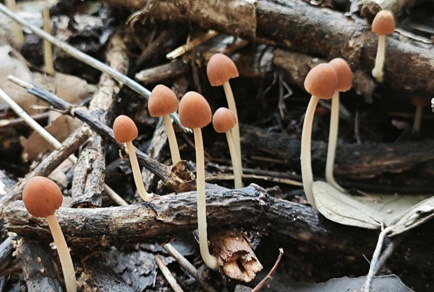
During an investigation on psathyrelloid fungi conducted from 2023 to 2024 in the Pearl River Delta in South China, 49 collections were gathered and studied through morphological observations and phylogenetic analyses. Among these collections, eight are identified as a new species of a new genus, namely Cantonopsathyra serendipita, characterized by terrestrial psathyrelloid basidiomata with a slightly rugose pileus, basidiospores with an irregularly wrinkled surface, and the rare presence of pleurocystidia and clamp connections; two are identified as a new species of Parasola, namely Pa. haizhuensis, characterized by lignicolous psathyrelloid basidiomata with an undulate pileus margin; while the remaining 39 could only be identified to the generic level of Candolleomyces. Species delimitation within Candolleomyces is found to be challenging, because the following problems often occur in the hypothetical species on our ITS phylogeny: (1) with an ITS sequence more than 99% similar to that of another species; (2) issued by a very short branch from the backbone; (3) unsupported by statistical values; (4) not a monophyletic group; and (5) with inaccurate sequences. A four-locus (ITS, nrLSU, tef-1α, and β-tub) phylogenetic analysis with limited samples of Candolleomyces appears to alleviate most of these problems by providing clearer partitions; however, four-locus data for previously proposed species remain largely unavailable for comparison. Based on the recent scale of species delimitation in Candolleomyces, more than ten new species of Candolleomyces appear to exist in our collections; however, due to the aforementioned issues, they are not formally proposed in this study. We recommend that new species of Candolleomyces proposed in the future should be provided with four-locus data of ITS, nrLSU, tef-1α, and β-tub. Supplementary sequencing for unprovided loci from type materials of previously proposed Candolleomyces species, particularly those proposed in recent years, is also highly encouraged. The recently proposed genus Tulosesus is illegitimate due to its circumscription including the type of an earlier legitimate genus, Ephemerocybe, and corresponding new combinations for transfer are made. Another genus, Lacrymaria Pat. 1887, is also illegitimate due to the homonymy with an earlier protist genus, Lacrymaria Ehrenberg 1830, but may be worth conserving; therefore, it is not treated here.
References
- Ahmad, I., Haqnawaz, M., Niazi, A.R. & Khalid, A.N. (2024) A new species of Candolleomyces (Psathyrellaceae) from Pakistan. Phytotaxa 658 (3): 280–288. https://doi.org/10.11646/phytotaxa.658.3.6
- Asif, M., Izhar, A., Niazi, A.R. & Khalid, A.N. (2022) Candolleomyces asiaticus sp. nov. (Psathyrellaceae, Agaricales), a novel species from Punjab, Pakistan. European Journal of Taxonomy 826: 176–187. https://doi.org/10.5852/ejt.2022.826.1845
- Bau, T. & Yan, J.Q. (2021a) A new genus and four new species in the /Psathyrella s.l. clade from China. MycoKeys 80: 115–131. https://doi.org/10.3897/mycokeys.80.65123
- Bau, T. & Yan, J.Q. (2021b) Two new rare species of Candolleomyces with pale spores from China. MycoKeys 80: 149–161. https://doi.org/10.3897/mycokeys.80.67166
- Bayman, P., Mosquera-Espinosa, A.T., Saladini-Aponte, C.M., Hurtado-Guevara, N.C. & Viera-Ruiz, N.L. (2016) Age-dependent mycorrhizal specificity in an invasive orchid, Oeceoclades maculata. American Journal of Botany 103 (11): 1880–1889. https://doi.org/10.3732/ajb.1600127
- Bhunjun, C.S., Niskanen, T., Suwannarach, N., Wannathes, N., Chen, Y.J., McKenzie, E.H.C., Maharachchikumbura, S.S.N., Buyck, B., Zhao, C.L., Fan, Y.G., Zhang, J.Y., Dissanayake, A.J., Marasinghe, D.S., Jayawardena, R.S., Kumla, J., Padamsee, M., Chen, Y.Y., Liimatainen, K., Ammirati, J.F., Phukhamsakda, C., Liu, J.K., Phonrob, W., Randrianjohany, É., Hongsanan, S., Cheewangkoon, R., Bundhun, D., Khuna, S., Yu, W.J., Deng, L.S., Lu, Y.Z., Hyde, K.D. & Lumyong, S. (2022) The numbers of fungi: are the most speciose genera truly diverse? Fungal Diversity 114: 387–462. https://doi.org/10.1007/s13225-022-00501-4
- Broussal, M., Carbó, J., Mir, G. & Pérez-De-Gregorio, M.À. (2018) Psathyrella salina, nouvelle espèce des milieux halophiles méditerranéens. Bulletin Semestriel de la Fédération des Associations Mycologiques Méditerranéennes 53: 17–30.
- Bulliard, P. (1789) Herbier de la France; ou, Collection complette des plantes indigenes de ce royaume; avec leurs propriétés, et leurs usages en medecine (Paris) 9: pl. 394.
- Büttner, E., Karich, A., Nghi, D.H., Lange, M., Liers, C., Kellner, H., Hofrichter, M. & Ullrich, R. (2020) Candolleomyces eurysporus—A new Psathyrellaceae (Agaricales) species from the tropical Cúc Phương National Park, Vietnam. Austrian Journal of Mycology 28: 79–92.
- Corner, E.J.H. (1994) Psathyrella (Agaricales) with ornamented spores in the Malay Peninsula. Gardens Bulletin Singapore 45 (2): 337–357.
- Desjardin, D.E. & Perry, B.A. (2016) Dark-spored species of Agaricineae from Republic of São Tomé and Príncipe, West Africa. Mycosphere 7 (3): 359–391. https://doi.org/10.5943/mycosphere/7/3/8
- Donk, M.A. (1962) The generic names proposed for Agaricaceae. Beih. Nova Hedwigia 5: 1–320.
- Ediriweera, A.N., Voto, P., Karunarathna,S.C., Kumla, J., Thiyagaraja, V., Wijesooriya, M.K., Wadduwage, K.S., Lu, W., Stephenson, S.L. & Xu, J. (2023) A new species and a new record in the Agaricales from Sri Lanka. Mycological Observations 6: 92–107.
- Edler, D., Klein, J., Antonelli, A. & Silvestro, D. (2020) raxmlGUI 2.0: a graphical interface and toolkit for phylogenetic analyses using RAxML. Methods in Ecology and Evolution 12 (2): 373–377. https://doi.org/10.1111/2041-210X.13512
- Ehrenberg, C.G. (1830) Beiträge zur Kenntnis der Organisation der Infusorien und ihrer geographischen Verbreitung, besonders in Sibirien. Abhandlungen der Königlichen Akademie der Wissenschaften zu Berlin 1830: 1–88, 8 plates.
- Fayod (1889) Prodrome d’une histoire naturelle des Agaricinés. Annales des Sciences Naturelles. Botanique. Ser. 7 9 (3−6): 181−411.
- Frank, J.L., Coffan, R.A. & Southworth, D. (2010) Aquatic gilled mushrooms: Psathyrella fruiting in the Rogue River in southern Oregon. Mycologia 102 (1): 93–107. https://doi.org/10.3852/07-190
- Ganga, K.G.G. & Manimohan, P. (2018) A new species and a new record of Parasola from Kerala State, India. Phytotaxa 369 (4): 260–268. https://doi.org/10.11646/phytotaxa.369.4.3
- Ganga, K.G.G. & Manimohan, P. (2019) Parasola psathyrelloides (Psathyrellaceae), a new species from Kerala State, India. Phytotaxa 405 (5): 255–262. https://doi.org/10.11646/phytotaxa.405.5.4
- Gardes, M. & Bruns, T.D. (1993) ITS primers with enhanced specificity for Basidiomycetes—application to identification of mycorrhizae and rusts. Molecular Ecology 2 (2): 113–118. https://doi.org/10.1111/j.1365-294x.1993.tb00005.x
- Han, X.X., Phurbu, D., Ma, G.F., Li, Y.Z., Mei, Y.J., Liu, D.M., Lin, F.C., Zhao, R.L., Thongklang, N. & Cao, B. (2024) A taxonomic study of Candolleomyces specimens from China revealed seven new species. Journal of Fungi 10 (7): 499. https://doi.org/10.3390/jof10070499
- Haqnawaz, M., Niazi, A.R. & Khalid, A.N. (2023) A study on the genus Candolleomyces (Agaricales: Psathyrellaceae) from Punjab, Pakistan. BMC Microbiology 23: 181. https://doi.org/10.1186/s12866-023-02938-2
- Haqnawaz, M., Usman, M., Fatima, N., Niazi, A.R. & Khalid, A.N. (2024a) Three new species of the genus Candolleomyces (Psathyrellaceae) from Pakistan. Plant Systematics and Evolution 310: 42. https://doi.org/10.1007/s00606-024-01925-y
- Haqnawaz, M., Usman, M., Javaid, A., Ramzan, F., Bibi, A., Niazi, A.R., Naseer, A., Sehar, N., Afshan, N.S. & Khalid, A.N. (2024b) Four new species of Candolleomyces (Psathyrellaceae) from the Punjab Plains, Pakistan. Mycologia. https://doi.org/10.1080/00275514.2024.2374208
- Hopple, J.S. & Vilgalys, R. (1994) Phylogenetic relationships among coprinoid taxa and allies based on data from restriction site mapping of nuclear rDNA. Mycologia 86: 96–107. https://doi.org/10.1080/00275514.1994.12026378
- Hopple, J.S. & Vilgalys, R. (1999) Phylogenetic relationships in the mushroom genus Coprinus and dark-spored allies based on sequence data from the nuclear gene coding for the large ribosomal subunit RNA: divergent domains, outgroups, and monophyly. Molecular Phylogenetics and Evolution 13 (1): 1–19. https://doi.org/10.1006/MPEV.1999.0634
- Hussain, S., Afshan, N., Ahmad, H., Khalid, A.N. & Niazi, A.R. (2017) Parasola malakandensis sp. nov. (Psathyrellaceae; Basidiomycota) from Malakand, Pakistan. Mycoscience 58 (2): 69–76. https://doi.org/10.1016/J.MYC.2016.09.002
- Hussain, S., Ahmad, H., Ullah, S., Afshan, N.S., Pfister, D.H., Sher, H., Ali, H. & Khalid, A.N. (2018) The genus Parasola in Pakistan with the description of two new species. MycoKeys 30: 41–60. https://doi.org/10.3897/mycokeys.30.21430
- Hussain, S., Usman, M., Afshan, N.U., Ahmad, H., Khan, J. & Khalid, A.N. (2018) The genus Coprinellus (Basidiomycota; Agaricales) in Pakistan with the description of four new species. MycoKeys (39): 41–61. https://doi.org/10.3897/mycokeys.39.26743
- Index Fungorum Partnership. (2025) Index Fungorum. Available from: https://www.indexfungorum.org/Names/Names.asp (accessed: 10 January 2025).
- Izhar, A., Asif, M., Khan, Z. & Khalid, A.N. (2023) Introducing two new members of the genus Candolleomyces (Agaricales, Psathyrellaceae) from Punjab, Pakistan. Plant Systematics and Evolution 309: 40. https://doi.org/10.1007/s00606-023-01876-w
- Johnson, J. (1999) Phylogenetic relationships within Lepiota sensu lato based on morphological and molecular data. Mycologia 91 (3): 443–458. https://doi.org/10.1080/00275514.1999.12061038
- Johnson, J. & Vilgalys, R. (1998) Phylogenetic systematics of Lepiota sensu lato based on nuclear large subunit rDNA evidence. Mycologia 90 (6): 971–979. https://doi.org/10.1080/00275514.1998.12026994
- Katoh, K. & Standley, D.M. (2013) MAFFT multiple sequence alignment software version 7: Improvements in performance and usability. Molecular Biology and Evolution 30 (4): 772–780. https://doi.org/10.1093/molbev/mst010
- Keirle, M.R., Hemmes, D.E. & Desjardin, D.E. (2004) Agaricales of the Hawaiian Islands. 8. Agaricaceae: Coprinus and Podaxis; Psathyrellaceae: Coprinopsis, Coprinellus and Parasola. Fungal Diversity 15: 33–124.
- Khan, Z., Arshad, M.A., Niazi, A.R. & Khalid, A.N. (2023) A new species of Parasola section Conopileae (Psathyrellaceae) from Pakistan. Turkish Journal of Botany 47 (6): 606–619. https://doi.org/10.55730/1300-008X.2788
- Larsson, A. (2014) AliView: a fast and lightweight alignment viewer and editor for large data sets. Bioinformatics 30 (22): 3276–3278. https://doi.org/10.1093/bioinformatics/btu531
- Larsson, A. (2021) AliView. Available from: http://www.ormbunkar.se/aliview/index.html#top (accessed 10 January 2025)
- Larsson, E. & Örstadius, L. (2008) Fourteen coprophilous species of Psathyrella identified in the Nordic countries using morphology and nuclear rDNA sequence data. Mycological Research 112 (10): 1165–1185. https://doi.org/10.1016/j.mycres.2008.04.003
- Li, Q., Haqnawaz, M., Niazi, A.R. & Khalid, A.N. (2025) Phylogenetic studies on the genus Candolleomyces (Psathyrellaceae, Basidiomycota) occurring in the bed of the Indus River, Punjab, Pakistan, reveal three new species. MycoKeys 112: 165–182. https://doi.org/10.3897/mycokeys.112.141766
- Malysheva, E., Moreno, G., Villarreal, M., Malysheva, V. & Svetasheva, T. (2019) The secotioid genus Galeropsis (Agaricomycetes, Basidiomycota): a real taxonomic unit or ecological phenomenon? Mycological Progress 18: 805–831. https://doi.org/10.1007/s11557-019-01490-6
- Melzer, A., Kimani, V.W. & Ullrich, R. (2018) A new species of Psathyrella (Agaricales) from a Kenyan National Park. Austrian Journal of Mycology 27: 23–30.
- Moreno, G., Heykoop, M., Esqueda, M. & Olariaga, I. (2015) Another lineage of secotioid fungi is discovered: Psathyrella secotioides sp. nov. from Mexico. Mycological Progress 14: 34. https://doi.org/10.1007/s11557-015-1057-8
- Moncalvo, J.M., Lutzoni, F.M., Rehner, S.A., Johnson, J. & Vilgalys, R. (2000) Phylogenetic relationships of agaric fungi based on nuclear large subunit ribosomal DNA sequences. Systematic Biology 49 (2): 278–305. https://doi.org/10.1093/sysbio/49.2.278
- mPTP Team. (2025) Tree upload and outgroup specification. Available from: https://mptp.h-its.org/#/tree (accessed: 10 January 2025).
- Nagy, L.G., Kocsubé, S., Papp, T. & Vágvölgyi, C. (2009) Phylogeny and character evolution of the coprinoid mushroom genus Parasola as inferred from LSU and ITS nrDNA sequence data. Persoonia 22: 28–37. https://doi.org/10.3767/003158509X422434
- Nagy, L.G., Házi, J., Vágvölgyi, C. & Papp, T. (2012) Phylogeny and species delimitation in the genus Coprinellus with special emphasis on the haired species. Mycologia 104 (1): 254–275. https://doi.org/10.3852/11-149
- Nagy, L.G., Kocsubé, S., Papp, T. & Vágvölgyi, C. (2009) Phylogeny and character evolution of the coprinoid mushroom genus Parasola as inferred from LSU and ITS nrDNA sequence data. Persoonia 22: 28–37. https://doi.org/10.3767/003158509X422434
- Nagy, L.G., Urban, A., Orstadius, L., Papp, T., Larsson, E. & Vágvölgyi, C. (2010) The evolution of autodigestion in the mushroom family Psathyrellaceae (Agaricales) inferred from Maximum Likelihood and Bayesian methods. Molecular Phylogenetics and Evolution 57 (3): 1037–1048. https://doi.org/10.1016/j.ympev.2010.08.022
- Nagy, L.G., Walther, G., Házi, J., Vágvölgyi, C. & Papp, T. (2011) Understanding the evolutionary processes of fungal fruiting bodies: correlated evolution and divergence times in the Psathyrellaceae. Systematic Biology 60 (3): 303–317. https://doi.org/10.1093/sysbio/syr005
- Nayana, P.K. & Pradeep, C.K. (2023a) A new species of Candolleomyces (Psathyrellaceae, Agaricales) from Western Ghats, India. Phytotaxa 606 (1): 63–72.
- Nayana, P.K. & Pradeep, C.K. (2023b) New species and new record of Candolleomyces (Psathyrellaceae) from India. Botany 101 (11): 472–484. https://doi.org/10.1139/cjb-2023-0066
- Nayana, P.K. & Pradeep, C.K. (2024) Morphological and phylogenetic analyses reveal two new species of Candolleomyces (Psathyrellaceae) from India. Phytotaxa 659 (3): 255–267. https://doi.org/10.11646/phytotaxa.659.3.3
- NCBI. (2025) GenBank. Available from: https://www.ncbi.nlm.nih.gov/genbank (accessed 10 January 2025)
- Nie, C., Wang, S.-N., Tkalčec, Z., Yan, J.-Q., Hu, Y., Ge, Y., Na, Q., Zeng, H., Ding, H., Huo, G., Pošta, A., Pradeep, C.K. & Mešić, A. (2022) Coprinus leucostictus rediscovered after a century, epitypified, and its generic position in Hausknechtia resolved by multigene phylogenetic analysis of Psathyrellaceae. Diversity 14 (9): 699. https://doi.org/10.3390/d14090699
- Örstadius, L., Ryberg, M. & Larsson, E. (2015) Molecular phylogenetics and taxonomy in Psathyrellaceae (Agaricales) with focus on psathyrelloid species: introduction of three new genera and 18 new species. Mycological Progress 14: 25. https://doi.org/10.1007/s11557-015-1047-x
- Patouillard, N. (1887) Anatomie générale et classification des champignons supérieurs: les hyménomycètes d’Europe. P. Klincksieck, Paris, 166 pp.
- Pegler, D.N. (1986) Agaric flora of Sri Lanka. Kew Bulletin S12: 1–519.
- Pegler, D.N. & Young, T.W.K. (1992) Tropical species of Psathyrella with ornamented spores. Mycological Research 96 (6): 503–506.
- Pošta, A., Tkalčec, Z., Kušan, I., Matočec, N., Pole, L., Čerkez, M. & Mešić, A. (2023) An integrative taxonomic study of Parasola (Psathyrellaceae, Fungi) reveals a new saprotrophic species from European temperate deciduous forests. Forests 14 (7): 1387. https://doi.org/10.3390/f14071387
- Rambaut, A. (2007) FigTree. Available from: http://tree.bio.ed.ac.uk/software/figtree (accessed 10 January 2025)
- Redhead, S.A., Vilgalys, R., Moncalvo, J.-M., Johnson, J. & Hopple, J.S. (2001) Coprinus Persoon and the disposition of Coprinus species sensu lato. Taxon 50 (1): 203–241. https://doi.org/10.2307/1224525
- Rehner, S.A. & Buckley, E. (2005) A Beauveria phylogeny inferred from nuclear ITS and EF1-alpha sequences: evidence for cryptic diversification and links to Cordyceps teleomorphs. Mycologia 97 (1): 84–98. https://doi.org/10.3852/mycologia.97.1.84
- Ronquist, F., Teslenko, M., Mark, P., Ayres, D.L., Darling, A., Höhna, S., Larget, B., Liu, L., Suchard, M.A. & Huelsenbeck, J.P. (2012) Mrbayes 3.2: efficient bayesian phylogenetic inference and model choice across a large model space. Systematic Biology 61 (3): 539–542. https://doi.org/10.1093/sysbio/sys029
- Schafer, D., Alvarado, P., Smith, L., Liimatainen, K. & Loizides, M. (2022) Coprinoid Psathyrellaceae species from Cyprus: three new sabulicolous taxa from sand dunes and a four-spored form of the fimicolous species Parasola cuniculorum. Mycological Progress 21: 52. https://doi.org/10.1007/s11557-022-01803-2
- Schroeter, J. (1889) Kryptogamen-Flora von Schlesien. 3. J.U. Kern’s Verlag, Breslau, pp. 513–640.
- Sicoli, G., Passalacqua, N.G., De Giuseppe, A.B., Palermo, A.M. & Pellegrino, G. (2019) A new species of Psathyrella (Psathyrellaceae, Agaricales) from Italy. MycoKeys 52: 89–102. https://doi.org/10.3897/mycokeys.52.31415
- Smith, A.H. (1972) The North American species of Psathyrella. Memoirs of the New York Botanical Garden 24: 1–633.
- Szarkándi, J.G., Schmidt-Stohn, G., Dima, B., Hussain, S., Kocsubé, S., Papp, T., Vágvölgyi, C. & Nagy, L.G. (2017) The genus Parasola: phylogeny and the description of three new species. Mycologia 109 (4): 620–629. https://doi.org/10.1080/00275514.2017.1386526
- Tan, Y.P. & Shivas, R.G. (2024) Nomenclatural novelties. Index of Australian Fungi 46: 1–17.
- Technelysium (2025) Chromas. Available from: https://technelysium.com.au/wp/chromas (accessed 10 January 2025)
- Tóth, A., Hausknecht, A., Krisai-Greilhuber, I., Papp, T., Vágvölgyi, C. & Nagy, L.G. (2013) Iteratively refined guide trees help improving alignment and phylogenetic inference in the mushroom family Bolbitiaceae. PLoS One 8 (2): e56143. https://doi.org/10.1371/journal.pone.0056143
- Turland, N.J., Wiersema, J.H., Barrie, F.R., Greuter, W., Hawksworth, D.L., Herendeen, P.S., Knapp, S., Kusber, W.H., Li, D.Z., Marhold, K., May, T.W., McNeill, J., Monro, A.M., Prado, J., Price, M.J. & Smith, G.F. (2018) International code of nomenclature for algae, fungi, and plants (Shenzhen Code) adopted by the Nineteenth International Botanical Congress Shenzhen, China, July 2017. Koeltz Botanical Books, Glashütten, pp. 16 & 83.
- Vilgalys Mycology Lab (2025) Vilgalys Mycology Lab—Duke University. Available from: https://sites.duke.edu/vilgalyslab (accessed: 10 January 2025).
- Voto, P. (2019) Novelties in the family Psathyrellaceae. Part I. Rivista Micologica Romana 107 (2): 94–95.
- Voto, P. (2020) Novelties in the family Psathyrellaceae. Part IV. Rivista Micologica Romana 110 (2): 87–91.
- Voto, P., Dovana, F. & Garbelotto, M. (2019) A revision of the genus Psathyrella, with a focus on subsection Spadiceogriseae. Fungal Systematics and Evolution 4: 97–170. https://doi.org/10.3114/fuse.2019.04.08
- Voto, P., Lee, S.M.L., Dibán, M.J. & Maraia, G. (2022) Rachipsathyra, a new genus in the family Psathyrellaceae - Part I. Mycological Observations 4: 11–12.
- Vu, D., Groenewald, M., de Vries, M., Gehrmann, T., Stielow, B., Eberhardt, U., Al-Hatmi, A., Groenewald, J.Z., Cardinali, G., Houbraken, J., Boekhout, T., Crous, P.W., Robert, V. & Verkley, G.J.M. (2019) Large-scale generation and analysis of filamentous fungal DNA barcodes boosts coverage for kingdom fungi and reveals thresholds for fungal species and higher taxon delimitation. Studies in Mycology 92: 135–154. https://doi.org/10.1016/j.simyco.2018.05.001
- Wächter, D. & Melzer, A. (2020) Proposal for a subdivision of the family Psathyrellaceae based on a taxon-rich phylogenetic analysis with iterative multigene guide tree. Mycological Progress 19: 1151–1265. https://doi.org/10.1007/s11557-020-01606-3
- Wang, G.S., Cai, Q., Hao, Y.J., Bau, T., Chen, Z.H., Li, M.X., David, N., Kraisitudomsook, N. & Yang, Z.L. (2023) Phylogenetic and taxonomic updates of Agaricales, with an emphasis on Tricholomopsis. Mycology 15 (2): 1–30. https://doi.org/10.1080/21501203.2023.2263031
- Wang, S.N., Fan, Y.G. & Yan, J.Q. (2022) Iugisporipsathyra reticulopilea gen. et sp. nov. (Agaricales, Psathyrellaceae) from tropical China produces unique ridge-ornamented spores with an obvious suprahilar plage. MycoKeys 90: 147–162. https://doi.org/10.3897/mycokeys.90.85690
- Wang, S.N., Hu, Y.P., Chen, J.L., Qi, L.L., Zeng, H., Ding, H., Huo, G.H., Zhang, L.P., Chen, F.S. & Yan, J.Q. (2021) First record of the rare genus Typhrasa (Psathyrellaceae, Agaricales) from China with description of two new species. MycoKeys 79: 119–128. https://doi.org/10.3897/mycokeys.79.63700
- White, T.J., Bruns, T., Lee, S. & Taylor, J. (1990) Amplification and direct sequencing of fungal ribosomal RNA genes for phylogenies. In: Innis, M.A., Gelfand, D.H., Sninsky, J.J. & White, T.J. (Eds.) PCR protocols: a guide to methods and applications. Academic Press, San Diego, pp. 315–322. https://doi.org/10.1016/B978-0-12-372180-8.50042-1
- Xiang, C.-Y., Gao, F., Jakovlić, I., Lei, H.-P., Hu, Y., Zhang, H., Zou, H., Wang, G‐T. & Zhang, D. (2023) Using PhyloSuite for molecular phylogeny and tree‐based analyses. iMeta 2 (1): e87. https://doi.org/10.1002/imt2.87
- Yan, J.Q. & Bau, T. (2018) The Northeast Chinese species of Psathyrella (Agaricales, Psathyrellaceae). MycoKeys 33: 85–102. https://doi.org/10.3897/mycokeys.33.24704
- Yang, K.L., Lin, J.Y., Li, G.-M., Liu, Z.-C., Hosen, M.I. & Yang, Z.L. (2024) Heinemannomyces, Hymenagaricus and Xanthagaricus revisited (Basidiomycota, Agaricaceae). Phytotaxa 659 (2): 112–164. https://doi.org/10.11646/phytotaxa.659.2.2
- Yang, K.L., Lin, J.Y., Li, G.-M. & Yang, Z.L. (2023) Mushrooms adapted to seawater: two new species of Candolleomyces (Basidiomycota, Agaricales) from China. Journal of Fungi 9 (12): 1204. https://doi.org/10.3390/jof9121204
- Zhang, D., Gao, F., Jakovlić, I., Zou, H., Zhang, J., Li, W.X. & Wang, G.T. (2020) PhyloSuite: an integrated and scalable desktop platform for streamlined molecular sequence data management and evolutionary phylogenetics studies. Molecular Ecology Resources 20 (1): 348–355. https://doi.org/10.1111/1755-0998.13096
- Zhang, J., Kapli, P., Pavlidis, P. & Stamatakis, A. (2013) A general species delimitation method with applications to phylogenetic placements. Bioinformatics 29 (22): 2869–2876. https://doi.org/10.1093/bioinformatics/btt499
- Zhao, R.L., Li, G.-J., Sánchez-Ramírez, S., Stata, M., Yang, Z.-L., Wu, G., Dai, Y.-C., He, S.-H., Cui, B.-K., Zhou, J.-L., Wu, F., He, M.-Q., Moncalvo, J.-M. & Hyde, K.D. (2017) A six-gene phylogenetic overview of Basidiomycota and allied phyla with estimated divergence times of higher taxa and a phyloproteomics perspective. Fungal Diversity 84: 43–74. https://doi.org/10.1007/s13225-017-0381-5
- Zhou, H., Cheng, G., Sun, X., Cheng, R., Zhang, H., Dong, Y. & Hou, C. (2022) Three new species of Candolleomyces (Agaricomycetes, Agaricales, Psathyrellaceae) from the Yanshan Mountains in China. MycoKeys 88: 109–121. https://doi.org/10.3897/mycokeys.88.81437
- Zhu, L.Y. & Bau, T. (2024) Species diversity of Tulosesus (Psathyrellaceae, Agaricales) in China. Mycosystema 43 (3): 230300. https://doi.org/10.13346/j.mycosystema.230300
- Zhu, L.Y., Huang, M. & Bau, T. (2022) Taxonomy of coprinoid fungi in China. Mycosystema 41 (6): 878–898. https://doi.org/10.13346/j.mycosystema.210398