

Abstract
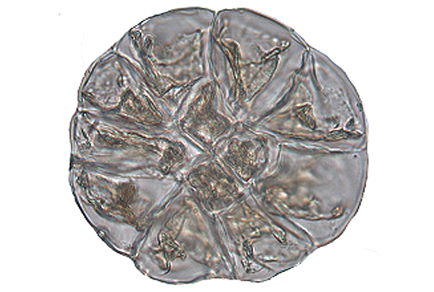
Micromorphology of trichomes and leaf epidermal cells of three morphologically similar species endemic to Türkiye, Salvia hedgeana, S. huberi and S. rosifolia, are investigated using light microscopy (LM) and scanning electron microscopy (SEM). The main objectives of the present study are to survey these characters for the first time and to assess their significance for distinguishing among these species. In addition to micromorphological analyses, phylogenetic relationships of the studied Salvia species with other Salvia taxa are inferred using the rpl32 gene region and the rpl32–trnL intergenic spacer. Three basic types of trichomes can be identified: peltate glandular, capitate glandular and eglandular trichomes. The capitate glandular trichomes may be subdivided into four subtypes according to shape of head cells and number of stalk cells. The eglandular trichomes are in turn subdivided into two subtypes: acicular and flagelliform (whip-like). Based on cell number, acicular eglandular trichomes are further divided in four shapes: unicellular, bicellular, three-celled and more than three celled. The peltate trichomes are present on the investigated aerial parts of the species. However, the capitate and eglandular trichomes types vary in distribution, density and size among the species. Some differences have been also observed in the morphology of epidermal cells and the number of stomata on the blades. The phylogenetic analysis reveal clear distinctions among the Salvia species, aligning with the micromorphological clustering observed in the Principal Component Analysis (PCA).
References
- Abu-Asab, M.S. & Cantino, P.D. (1987) Phylogenetic implications of leaf anatomy in subtribe Melittidinae (Labiatae) and related taxa. Journal of the Arnold Arbor 68: 1–34. https://doi.org/10.5962/p.185940
- Aksoy, A., Özcan, T., Girişken, H., Çelik, J. & Dirmenci, T. (2020) A phylogenetic analysis and biogeographical distribution of Teucrium sect. Teucrium (Lamiaceae) and taxonomic notes for a new species from southwest Turkey. Turkish Journal of Botanics 44: 322–337. https://doi.org/10.3906/bot-2002-5
- Babault, N., Noureddine, A., Amiez, N., Guillemet, D. & Cometti, C. (2021) Acute effects of Salvia supplementation on cognitive function in athletes during a fatiguing cycling exercise: a randomized cross-over, placebo-controlled, and double-blind study. Frontiers in Nutrition 8: 949. https://doi.org/10.3389/fnut.2021.771518
- Baylac, S. & Racine, P. (2003) Inhibition of 5-lipoxygenase by essential oils and other natural fragrant extracts. The International Journal of Aromatherapy 13: 138–142. https://doi.org/10.1016/S0962-4562(03)00083-3
- Baytop, T. (1999) Therapy with medicinal plants in Turkey (past and present). Second edition, Nobel Medicine Publication, Sıhhıye-Ankara.
- Bentham, G. (1833) Labiatarum genera et species. Ridgway, London.
- Bisio, A., Corallo, A., Gastaldo, P., Romussi, G., Ciarallo, G., Fontana, N., Tommasi, N.D. & Profumo, P. (1999) Glandular hairs and secreted material in Salvia blepharophylla Brandegee ex Epling grown in Italy. Annals of Botany 83: 441–452. https://doi.org/10.1006/anbo.1998.0838
- Boissier, E.P. (1875) Flora Orientalis. Vol. 4. Reg. Acad. Scient., Basel, pp. 823–854.
- Bosabalidis, A.M. & Tsekos, I. (1984) Glandular hair formation in Origanum species. Annals of Botany 53: 559–563. https://doi.org/10.1093/oxfordjournals.aob.a086719
- Bosabalidis, A.M. (1990) Glandular trichomes in Satureja thymbra leaves. Annals of Botany 65: 71–78. https://doi.org/10.1093/oxfordjournals.aob.a087910
- Bourett, T.M., Howard, R.J., O’Keefe, D.P. & Hallahan, D.L. (1994) Gland development on leaf surfaces of Nepeta racemosa. International Journal of Plant Sciences 155: 623–632. https://doi.org/10.1086/297202
- Bruni, A. & Modenesi, P. (1983) Development, oil storage and dehiscence of peltate trichomes in Thymus vulgaris (Lamiaceae). Nordic Journal of Botany 3: 245–251. https://doi.org/10.1111/j.1756-1051.1983.tb01073.x
- Bruni, A., Tosi, B. & Modenesi, P. (1987) Morphology and secretion of glandular trichomes in Tamus communis. Nordic Journal of Botany 7: 79–84. https://doi.org/10.1111/j.1756-1051.1987.tb00918.x
- Calabrese, G., Perrino, E.V., Ladisa, G., Aly, A., Tesfmichael Solomon, M., Mazdaric, S. & Ceglie, F.G. (2015) Short-term effects of different soil management practices on biodiversity and soil quality of Mediterranean ancient olive orchards. Organic Agriculture 5: 209–223. https://doi.org/10.1007/s13165-015-0120-8
- Cantino, P.D. (1990) The phylogenetic significance of stomata and trichomes in the Labiatae and Verbenaceae. Journal of the Arnold Arbor 71: 323–370. https://doi.org/10.5962/p.184532
- Celep, F., Dirmenci, T. & Güner, Ö. (2015) Salvia hasankeyfense (Lamiaceae), a new species from Hasankeyf (Batman, South-eastern Turkey). Phytotaxa 227 (3): 289–294. https://doi.org/10.11646/phytotaxa.227.3.9
- Chakalova, E.S., Genova, E.M. & Thuy, N.T. (1993) Comparative anatomical investigations on leaves of Salvia officinalis L. and S. tomentosa Mill. Fitologija 46: 3–11.
- Chalchat, J.C., Michet, A. & Pasquier, B. (1998) Study of clones of Salvia officinalis L.: yields and chemical composition of essential oil. Flavour and Fragrance Journal 13: 68–70. https://doi.org/10.1002/(SICI)1099-1026(199801/02)13:1<68::AID-FFJ698>3.0.CO;2-8
- Claben-Bockhoff, R., Speck, T., Tweraser, E., Wester, P., Thimm, S. & Reith, M. (2004) The staminal lever mechanism in Salvia L. (Lamiaceae): a key innovation for adaptive radiation?. Organism Diversity and Evolution 4: 189–205. https://doi.org/10.1016/j.ode.2004.01.004
- Corsi, G. & Bottega, S. (1999) Glandular hairs of Salvia officinalis: new data on morphology, localization and histochemistry in relation to function. Annals of Botany 84: 657–664. https://doi.org/10.1006/anbo.1999.0961
- Dönmez, A. (2001) A new Turkish species of Salvia L. (Lamiaceae). Botanical Journal of the Linnean Society 137: 413–416. https://doi.org/10.1111/j.1095-8339.2001.tb02336.x
- Drew, B.T. (2020) Evolution, pollination biology, and species richness of Salvia (Lamiaceae). International Journal of Plant Sciences 181: 767–769. https://doi.org/10.1086/710711
- Drew, B.T., González-Gallegos, J.G., Xiang, C.L., Kriebel, R., Drummond, C.P., Walker, J.B. & Sytsma, K.J. (2017) Salvia united: the greatest good for the greatest number. Taxon 66: 133–145. https://doi.org/10.12705/661.7
- Edgar, R.C. (2004) MUSCLE: multiple sequence alignment with high accuracy and high throughput. Nucleic Acids Research 32: 1792–1797. https://doi.org/10.1093/nar/gkh340
- El-Gazzar, A. & Watson, L. (1968) Labiatae: taxonomy and susceptibility to Puccinia menthae Pers. New Phytologist 67: 739–743. https://doi.org/10.1111/j.1469-8137.1968.tb05496.x
- El-Gazzar, A. & Watson, L. (1970) A taxonomic study of Labiatae and related genera. New Phytologist 69: 451–486. https://doi.org/10.1111/j.1469-8137.1970.tb02443.x
- Elvin, M.A., Kelley, R.B. & Drew, B.T. (2019) Trichome morphology relates to taxonomic diversity in Monardella (Lamiaceae) in the lower Snake River Watershed of Idaho and Oregon, USA: Taxonomic studies in Monardella (Lamiaceae) VI. Journal of the Torrey Botanical Society 146 (4): 299–313. https://doi.org/10.3159/TORREY-D-18-00059.1
- Esmaeili, G., Fatemi, H., Baghani avval, M., Azizi, M., Arouiee, H., Vaezi, J. & Fujii, Y. (2022) Diversity of chemical composition and morphological traits of eight Iranian wild Salvia species during the first step of domestication. Agronomy 12 (10): 2455. https://doi.org/10.3390/agronomy12102455
- Gairola, S., Naidoo, Y., Bhatt, A. & Nicholas, A. (2009) An investigation of the foliar trichomes of Tetradenia riparia (Hochst.) Codd [Lamiaceae]: an important medicinal plant of Southern Africa. Flora 204: 325–330. https://doi.org/10.1016/j.flora.2008.04.002
- Giuliani, C. & Maleci Bini, L. (2008) Insight into the structure and chemistry of glandular trichomes of Labiatae, with emphasis on subfamily Lamioideae. Plant Systematics and Evolution 276: 199–208. https://doi.org/10.1007/s00606-008-0085-0
- Giuliani, C., Ascrizzi, R., Lupi, D., Tassera, G., Santagostini, L., Giovanetti, M., Flamini, G. & Fico, G. (2018) Salvia verticillata: Linking glandular trichomes, volatiles and pollinators. Phytochemistry 155: 53–60. https://doi.org/10.1016/j.phytochem.2018.07.016
- Glas, J.J., Schimmel, B.C.J., Alba, J.M., Escobar-Bravo, R., Schuurink, R.C. & Kant, M.R. (2012) Plant glandular trichomes as targets for breeding or engineering of resistance to herbivores. International Journal of Molecular Sciences 13 (12): 17077–17103. https://doi.org/10.3390/ijms131217077
- Gostin, I.N. & Blidar, C.F. (2024) Glandular trichomes and essential oils variability in species of the genus Phlomis L.: A review. Plants 13 (10): 1338. https://doi.org/10.3390/plants13101338
- Gul, S., Ahmad, M., Zafar, M., Bahadur, S., Celep, F., Sultana, S., Begum, N., Hanif, U., Zaman, W., Shuaib, M. & Ayaz, A. (2019) Taxonomic significance of foliar epidermal morphology in Lamiaceae from Pakistan. Microscopy Research and Technique 82 (9): 1507–1528. https://doi.org/10.1002/jemt.23316
- Hedge, I.C. (1982) Salvia L. In: Davis, P.H. (Ed.) Flora of Turkey and the East Aegean Islands Edinburgh, Vol. 7. Edinburgh University Press, Edinburgh, pp. 400–461.
- İlçim, A., Tel, A.Z. & Kocabaş, Y.Z. (2023) Salvia adiyamanensis (Lamiaceae), a new species from South East Anatolia, Turkey. Phytotaxa 592 (1): 49–58. https://doi.org/10.11646/phytotaxa.592.1.4
- Jabeen, S., Zafar, M., Ahmad, M., Ameen, M., Ahmad, S., Gillani, S.W. & Iqbal, R. (2024) First report on taxonomic significance of foliar microanatomy of Lamiaceae taxa from Pakistan; a correct tool for taxa authentication. Phytotaxa 668 (1): 11–43. https://doi.org/10.11646/phytotaxa.668.1.2
- Kahraman, A., Celep, F. & Doğan, M. (2010a) Anatomy, trichome morphology and palynology of Salvia chrysophylla Stapf (Lamiaceae). South African Journal of Botany 76: 187–195. https://doi.org/10.1016/j.sajb.2009.10.003
- Kahraman, A., Celep, F., Doğan, M. & Bagherpour, S. (2010b) A taxonomic revision of Salvia euphratica sensu lato and its closely related species (sect. Hymenosphace, Lamiaceae) by using multivariety analysis. Turkish Journal of Botany 34: 261–276.
- Kahraman, A., Doğan, M., Celep, F., Koyuncu, M. & Akaydın, G. (2010c) Morphology, anatomy, palynology and nutlet micromorphology of the rediscovered Turkish endemic Salvia ballsiana (Lamiaceae) and their taxonomic implications. Nordic Journal of Botany 28: 91–99. https://doi.org/10.1111/j.1756-1051.2009.00384.x
- Kamatou, G.P.P., Makunga, N.P., Ramogola, W.P.N. & Viljoen, A.M. (2008) South African Salvia species: a review of biological activities and phytochemistry. Journal of Ethnopharmacology 119: 667–672. https://doi.org/10.1016/j.jep.2008.06.030
- Kamatou, G.P.P., Van Zyl, R.L., Van Vuuren, S.F., Viljoen, A.M., Figueiredo, A.C., Barroso, J.G., Pedro, L.G. & Tilney, P.M. (2006) Chemical composition, leaf trichome types and biological activities of the essential oils of four related Salvia species indigenous to southern Africa. Journal of Essential Oil Research 18: 72–79. https://doi.org/10.1080/10412905.2006.12067125
- Kamatou, G.P.P., Viljoen, A.M., Figueiredo, A.C., Tilney, P.M., Van Zyl, R.L., Barroso, J.G., Pedro, L.G. & Van Vuuren, S.F. (2007) Trichomes, essential oil composition and biological activities of Salvia albicaulis Benth. and S. dolomitica Codd, two species from the Cape region of South Africa. South African Journal of Botany 73: 102–108. https://doi.org/10.1016/j.sajb.2006.08.001
- Karabourniotis, G., Liakopoulos, G., Nikolopoulos, D. & Bresta, P. (2020) Protective and defensive roles of nonglandular trichomes against multiple stresses: structure–function coordination. Journal of Forestry Research 31 (1): 1–12. https://doi.org/10.1007/s11676-019-01034-4
- Khosroshahi, E.E. & Salmaki, Y. (2019) Evolution of trichome types and its systematic significance in the genus Phlomoides (Lamioideae, Lamiaceae). Nordic Journal of Botany 37 (5): 02132. https://doi.org/10.1111/njb.02132
- Kriebel, R., Drew, B., González-Gallegos, J.G., Celep, F., Heeg, L., Mahdjoub, M.M. & Sytsma, K.J. (2020) Pollinator shifts, contingent evolution, and evolutionary constraint drive floral disparity in Salvia (Lamiaceae): evidence from morphometrics and phylogenetic comparative methods. Evolution 74: 1335–1355. https://doi.org/10.1111/evo.14030
- Krstic, L., Malencic, D. & Anackov, G. (2006) Structural investigations of trichomes and essential oil composition of Salvia verticillata. Botanica Helvetica 116: 159–168. https://doi.org/10.1007/s00035-006-0767-6
- Krstic, L., Malencic, D.J., Merkulov, L.J., Popovic, M., Adamovic, D. & Boza, P. (2001) A contribution to the morpho-anatomical study of wild-growing and cultivated Salvia glutinosa L. Medical Plant Reports 8 (8): 38–47.
- Majeed, J., Shaheen, S., Waheed, M., Abbas, M., Ghani, N., Ashfaq, M., Hashem, A., Kumar, A. & Abd-Allah, E.F. (2024) Morpho-anatomical studies of family Lamiaceae species of district Lahore, Punjab: a revision to flora of Pakistan. BMC Plant Biology 24: 694. https://doi.org/10.1186/s12870-024-05358-0
- Maleci Bini, L. & Servettaz, O. (1991) Morphology and distribution of trichomes in Italian species of Teucrium Sect. Chamaedrys (Labiatae): A taxonomical evaluation. Plant Systematics and Evolution 174: 83–91. https://doi.org/10.1007/BF00937696
- Maleci Bini, L., Pinetti, A. & Servettaz, O. (1992) Micro-morphological and phytochemical researches on Teucrium massiliense L. In: Harley, R.M. & Reynolds, T. (Eds.) Advances in Labiatae Science. Royal Botanic Gardens, Kew, pp. 349–355.
- Marin, P.D., Petković, B.P. & Duletić, S. (1994) Nutlet sculpturing of selected Teucrium species (Lamiaceae): A character of taxonomic significance. Plant Systematics and Evolution 192: 199–214. https://doi.org/10.1007/BF00986252
- Martínez-Gordillo, M., Fragoso-Martínez, I. & García-Peña, M.D.R. (2016) A new species of Salvia section Uliginosae (Lamiaceae), from Oaxaca, Mexico. Phytotaxa 245 (3): 216–222. https://doi.org/10.11646/phytotaxa.245.3.4
- Metcalfe, C.R. & Chalk, L. (1950) Anatomy of the Dicotyledons, Vol. 2. Oxford Press, London.
- Moon, H.K. & Hong, S.P. (2003) The taxonomic consideration of leaf epidermal microstructure in Lycopus L. (Mentheae-Lamiaceae). Korean Journal of Plant Taxonomy 33: 151–164. https://doi.org/10.11110/kjpt.2003.33.2.151
- Moon, H.K., Hong, S.P., Smets, E. & Huysmans, S. (2009) Phylogenetic significance of leaf micromorphology and anatomy in the tribe Mentheae (Nepetoideae: Lamiaceae). Botanical Journal of the Linnean Society 160: 211–231. https://doi.org/10.1111/j.1095-8339.2009.00979.x
- Navarro, T. & El Oualidi, J. (2000) Trichome morphology in Teucrium L. (Labiatae): A taxonomic review. Anales del Jardín Botánico de Madrid 57: 277–297. https://doi.org/10.3989/ajbm.1999.v57.i2.203
- Payne, W.W. (1978) A glossary of plant hair terminology. Brittonia 30: 239–255. https://doi.org/10.2307/2806659
- Perrino, E.V., Wagensommer, R.P., Mezzapesa, G.N. & Trani, A. (2024) Stachys italica Mill.: synecology, functional compounds and potential use of an Italian endemic taxon. Planta 260: 138. https://doi.org/10.1007/s00425-024-04571-3
- Popa, C.L., Lupitu, A., Mot, M.D., Copolovici, L., Moisa, C. & Copolovici, D.M. (2021) Chemical and biochemical characterization of essential oils and their corresponding hydrolats from six species of the Lamiaceae family. Plants 10 (11): 2489. https://doi.org/10.3390/plants10112489
- Rejdali, M. (1990) Leaf micromorphology and taxonomy of North African species of Sideritis L. (Lamiaceae). Botanical Journal of the Linnean Society 107: 67–77. https://doi.org/10.1111/j.1095-8339.1991.tb00215.x
- Reményi, M.L. (1997a) Variations in tissue structures on the epidermis of Salvia verticillata L. Magyar Növényanatómiai Szimpózium, Abstracts, Szeged, 91.
- Reményi, M.L. (1997b) Research on epidermal appendices of Salvia aethiops L. Magyar Növényanatómiai Szimpózium, Abstracts, Szeged, 89.
- Sebebe, D. & Harley, M.M. (1992) Trichome, seed surface and pollen characters in Stachys (Lamioideae: Labiatae) in tropical Africa. In: Harley, R.M. & Reynolds, T. (Eds.) Advances in Labiatae Science. Royal Botanic Gardens, pp. 149–156.
- Selvi, S., Satıl, F., Martin, E., Çelenk, S. & Dirmenci, T. (2015) Some evidence for infrageneric classification in Ziziphora (Lamiaceae: Mentheae). Plant and Biosystems 149 (2): 415–423. https://doi.org/10.1080/11263504.2013.853701
- Serrato-Valenti, G., Bisio, A., Cornara, L. & Ciarallo, G. (1997) Structural and histochemical investigation of the glandular trichomes of Salvia aurea L. leaves and chemical analysis of the essential oil. Annals of Botany 79: 329–336. https://doi.org/10.1006/anbo.1996.0348
- Siadati, S., Salmaki, Y. & Brauchler, C. (2020) Trichome morphology provides phylogenetically informative signal for generic delimitation in tribe Marrubieae (Lamiaceae). Flora 273: 151720. https://doi.org/10.1016/j.flora.2020.151720
- Siebert, D.J. (2004) Localization of salvinorin A and related compounds in glandular trichomes of the psychoactive sage, Salvia divinorum. Annals of Botany 93: 763–771. https://doi.org/10.1093/aob/mch089
- Spréa, R.M., Caleja, C., Finimundy, T.C., Calhelha, R.C., Pires, T.C.S.P., Amaral, J.S., Prieto, M.A., Ferreira, I.C.F.R., Pereira, E. & Barros, L. (2024) Chemical and bioactive evaluation of essential oils from edible and aromatic Mediterranean Lamiaceae plants. Molecules 29 (12): 2827. https://doi.org/10.3390/molecules29122827
- Talebi, S.M., Mahdiyeh, M., Nohooji, M.G. & Akhani, M. (2018) Analysis of trichome morphology and density in Salvia nemorosa L. (Lamiaceae) of Iran. Botanica 24 (1): 49–58. https://doi.org/10.2478/botlit-2018-0005
- Tamura, K., Nei, M. & Kumar, S. (2004) Prospects for inferring very large phylogenies by using the neighbor-joining method. Proceedings of the National Academy of Sciences (USA) 101: 11030–11035. https://doi.org/10.1073/pnas.0404206101
- Tamura, K., Stecher, G. & Kumar, S. (2021) MEGA11: Molecular Evolutionary Genetics Analysis Version 11. Molecular Biology and Evolution 38 (7): 3022–3027. https://doi.org/10.1093/molbev/msab120
- Ulubelen, A. (2003) Cardioactive and antibacterial terpenoids from some Salvia species. Phytochemistry 64: 395–399. https://doi.org/10.1016/S0031-9422(03)00225-5
- Vezza, T., Molina-Tijeras, J.A., Rodríguez-Nogales, A., Garrido-Mesa, J., Cádiz-Gurrea, M.D.L.L., Segura-Carretero, A., González-Tejero, M.R., Rodríguez-Cabezas, M.E., Gálvez, J. & Algieri, F. (2023) The Antioxidant properties of Salvia verbenaca extract contribute to ıts ıntestinal antiinflammatory effects in experimental colitis in rats. Antioxidants 12 (12): 2071. https://doi.org/10.3390/antiox12122071
- Walker, J.B. & Sytsma, K.J. (2007) Staminal evolution in the genus Salvia (Lamiaceae): Molecular phylogenetic evidence for multiple origins of the staminal lever. Annals of Botany 100: 375–391. https://doi.org/10.1093/aob/mcl176
- Walker, J.B., Sytsma, K.J., Treutlein, J. & Wink, M. (2004) Salvia (Lamiaceae) is not monophyletic: Implications for the systematics, radiation, and ecological specializations of Salvia and tribe Mentheae. American Journal of Botany 91: 1115–1125. https://doi.org/10.3732/ajb.91.7.1115
- Watts, S. & Kariyat, R. (2021) Morphological characterization of trichomes shows enormous variation in shape, density, and dimensions across the leaves of 14 Solanum species. AoB Plants 13 (6): plab071. https://doi.org/10.1093/aobpla/plab071
- Werker, E. (1993) Function of essential oil-secreting glandular hairs in aromatic plants of the Lamiaceae. Flavour and Fragrance Journal 8: 249–255. https://doi.org/10.1002/ffj.2730080503
- Werker, E., Raavid, U. & Putievsky, E. (1985a) Structure of glandular hairs and identification of the main components of their secreted material in some species of the Labiatae. Israel Journal of Botany 34: 31–45.
- Werker, E., Raavid, U. & Putievsky, E. (1985b) Glandular hairs and their secretions in the vegetative and reproductive organs of Salvia sclarea and S. dominica. Israel Journal of Botany 34: 31–45.
- Xiang, C.L., Dong, Z.H., Peng, H. & Liu, Z.W. (2010) Trichome micromorphology of the East Asiatic genus Chelonopsis (Lamiaceae) and its systematic implications. Flora 235: 434–441. https://doi.org/10.1016/j.flora.2009.12.007
- Zhao, F., Chen, YP., Salmaki, Y. et al. (2021) An updated tribal classification of Lamiaceae based on plastome phylogenomics. BMC Biology 19: 2. https://doi.org/10.1186/s12915-020-00931-z