

Abstract
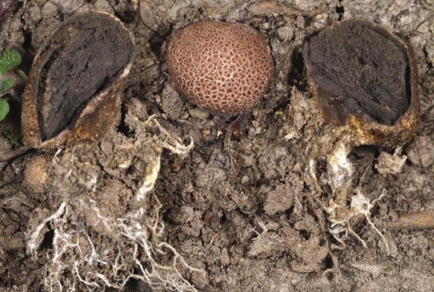
To bring new data for taxonomy of the common but insufficiently known genus Scleroderma, we have performed morphological and phylogenetic studies on 63 relevant collections gathered across China. Three previously described sections of Scleroderma, namely sect. Scleroderma, sect. Sclerangium and sect. Reticulatae, are accepted with revisions from the current phylogenies and observations. Peridium thickness, morphology of basidiospore ornamentation, and the presence or absence of clamp connections, are found to be informative characteristics for distinguishing these sections. A total of 18 species belonging to these three sections are identified and described, wherein nine are new to science (S. boluoshanense, S. gaibeioides, S. lunare, S. navigatum, S. pernicococcum, S. plutonium, S. solare, S. zengchengense and S. zijinshanense), three are newly recorded in China (S. capeverdeanum, S. nastii and S. xanthochroum), and six are previously known in China (S. areolatum, S. bovista, S. cepa, S. suthepense, S. venenatum and S. yunnanense). The edibility/toxicity of analysed species seems largely consistent with our phylogenies. Most of the species inferred as poisonous are found to be nested in the sect. Scleroderma, while safer species are found within the sect. Sclerangium. However, it must be noted that credible molecular evidence for many species inferred as edible is largely absent, and thus they require further confirmations for the sake of safety. The phylogenetic position of sect. Caloderma and S. dictyosporum remains uncertain, due to the lack of more samples.
References
- Ahlawat, O.P., Kumar, S., Arumuganathan, T. & Tewari, R.P. (2008) 25 Years of AICRP (Mushroom). National Research Centre for Mushroom (ICAR), Solan, 28 pp.
- Bâ, A.M., Séne, S., Manokari, M., Galardis, M.M.B., Sylla, S.N., Selosse, M.A. & Shekhawat, M.S. (2024) Coccoloba uvifera L. associated with Scleroderma bermudense Coker: a pantropical ectomycorrhizal symbiosis used in restoring of degraded coastal sand dunes. Mycorrhiza 34 (5–6): 375–389. https://doi.org/10.1007/s00572-024-01170-8
- Baseia, I.G., Silva, B.D., Ishikawa, N.K., Soares, J.V., França, I.F., Ushijima, S., Maekawa, N. & Martín, M.P. (2016) Discovery or extinction of new Scleroderma species in Amazonia? PLoS One 11 (12): e0167879. https://doi.org/10.1371/journal.pone.0167879
- Bau, T., Li, H.J., Bao, H.Y. & Li, Y. (2024) A revised checklist of poisonous mushrooms in China. Journal of Fungal Research: 10.13341/j.jfr.2024.0010. https://doi.org/10.13341/j.jfr.2024.0010
- Belfiori, B., Riccioni, C., Tempesta, S., Pasqualetti, M., Paolocci, F. & Rubini, A. (2012) Comparison of ectomycorrhizal communities in natural and cultivated Tuber melanosporum truffle grounds. FEMS Microbiology Ecology 81 (3): 47–561. https://doi.org/10.1111/j.1574-6941.2012.01379.x
- Berbee, M., Le Renard, L. & Bazzicalupo, A. (2018) GenBank record: MG969993.1. Available from: https://www.ncbi.nlm.nih.gov/nuccore/MG969993 (accessed 20 January 2025)
- Boa, E. (2004) Wild edible fungi: a global overview of their use and importance to people. Food and Agriculture Organization of the United Nations, Rome, 147 pp.
- Brock, P.M., Döring, H. & Bidartondo, M.I. (2009) How to know unknown fungi: the role of a herbarium. New Phytologist 181 (3): 719–724. https://doi.org/10.1111/j.1469-8137.2008.02703.x
- Buscardo, E., Rodríguez-Echeverría, S., Martín, M.P., De Angelis, P., Pereira, J.S. & Freitas, H. (2010) Impact of wildfire return interval on the ectomycorrhizal resistant propagules communities of a Mediterranean open forest. Fungal Biology 114 (8): 628–636. https://doi.org/10.1016/j.funbio.2010.05.004
- Chen, Z.H., Yang, Z.L., Bau, T. & Li, T.H. (2016) Poisonous mushrooms: recognition and poisoning treatment. Science Press, Beijing, pp. 255–258.
- Cho, S.-E., Kwag, Y.-N., Han, S.-K., Lee, D.-H. & Kim, C.S. (2022) Two new records of Scleroderma species (Sclerodermataceae, Boletales) in South Korea. The Korean Journal of Mycology 50 (2): 115–123. https://doi.org/10.4489/KJM.20220011
- Christensen, M., Bhattarai, S., Devkota, S. & Larsen, H.O. (2008) Collection and use of wild edible fungi in Nepal. Economic Botany 62: 12–23.
- Clements, F.E. & Shear, C.L. (1931) The genera of Fungi. The H.W. Wilson Company, New York, 496 pp.
- Cortés-Pérez, A., Pérez-Pacheco, C.K., Yescas-Arreola, E. & Ramírez-Cruz, V. (2021) First record of Scleroderma texense (Boletales, Sclerodermatinae) as an edible species in the Sierra Sur from Oaxaca, Mexico. Scientia Fungorum 52: e1386. https://doi.org/10.33885/sf.2021.52.1386
- Crous, P.W., Wingfield, M.J., Richardson, D.M., Le Roux, J.J., Strasberg, D., Edwards, J., Roets, F., Hubka, V., Taylor, P.W.J., Heykoop, M., Martín, M.P., Moreno, G., Sutton, D.A., Wiederhold, N.P., Barnes, C.W., Carlavilla, J.R., Gené, J., Giraldo, A., Guarnaccia, V., Guarro, J., Hernández-Restrepo, M., Kolařík, M., Manjón, J.L., Pascoe, I.G., Popov, E.S., Sandoval-Denis, M., Woudenberg, J.H.C., Acharya, K., Alexandrova, A.V., Alvarado, P., Barbosa, R.N., Baseia, I.G., Blanchette, R.A., Boekhout, T., Burgess, T.I., Cano-Lira, J.F., Čmoková, A., Dimitrov, R.A., Dyakov, M.Y., Dueñas, M., Dutta, A.K., Esteve-Raventós, F., Fedosova, A.G., Fournier, J., Gamboa, P., Gouliamova, D.E., Grebenc, T., Groenewald, M., Hanse, B., Hardy, G.E.St.J., Held, B.W., Jurjević, Ž., Kaewgrajang, T., Latha, K.P.D., Lombard, L., Luangsa-Ard, J.J., Lysková, P., Mallátová, N., Manimohan, P., Miller, A.N., Mirabolfathy, M., Morozova, O.V., Obodai, M., Oliveira, N.T., Ordóñez, M.E., Otto, E.C., Paloi, S., Peterson, S.W., Phosri, C., Roux, J., Salazar, W.A., Sánchez, A., Sarria, G.A., Shin, H.-D., Silva, B.D.B., Silva, G.A., Smith, M.Th. & Souza-Motta, C.M. (2016) Fungal Planet description sheets: 400–468. Persoonia 36: 316–458. https://doi.org/10.3767/003158516X692185
- Dai, Y.C., Zhou, L.W., Yang, Z.L., Wen, H.A., Bau, T. & Li, T.H. (2010) A revised checklist of edible fungi in China. Mycosystema 29 (1): 1–21. https://doi.org/10.13346/j.mycosystema.2010.01.022
- Disyatat, N.R., Yomyart, S., Sihanonth, P. & Piapukiew, J. (2016) Community structure and dynamics of ectomycorrhizal fungi in a dipterocarp forest fragment and plantation in Thailand. Plant Ecology & Diversity 9 (5–6): 577–588. https://doi.org/10.1080/17550874.2016.1264018
- Du, F. (1981) Primary researches on Scleroderma species in China. Journal of Shanxi University 4: 67–70. https://doi.org/10.13451/j.cnki.shanxi.univ(nat.sci.).1981.04.009
- Ducousso, M., Ba, A.M. & Thoen, D. (2002) Ectomycorrhizal fungi associated with native and planted tree species in West Africa: a potential source of edible mushrooms. In: Hall, I.R., Wang, Y., Zambonclli, A. & Danell, E. (Eds.) Edible ectomycorrhizal mushrooms and their cultivation. New Zealand Institute for Crop and Food Research Limited, Christchurch, pp. 1–9.
- Edler, D., Klein, J., Antonelli, A. & Silvestro, D. (2020) raxmlGUI 2.0: a graphical interface and toolkit for phylogenetic analyses using RAxML. Methods in Ecology and Evolution 12 (2): 373–377. https://doi.org/10.1111/2041-210X.13512
- Gardes, M. & Bruns, T.D. (1993) ITS primers with enhanced specificity for Basidiomycetes—application to identification of mycorrhizae and rusts. Molecular Ecology 2 (2): 113–118. https://doi.org/10.1111/j.1365-294x.1993.tb00005.x
- Gardezi, S.R. (2005) Notes on Scleroderma, puff balls and Geastrum of Azad Jammu and Kashmir, Pakistan. Archives of Phytopathology and Plant Protection 38 (2): 113–122. https://doi.org/10.1080/03235400400007582
- Guo, F. & Bau, T. (2023) Taxonomic studies of hypogeous fungi in the Northeastern China Forest. Jilin Agricultural University, Jilin, 102 pp. https://doi.org/10.27163/d.cnki.gjlnu.2023.000793
- Gurgel, F.E., Silva, B.D.B. & Baseia, I.G. (2008) New records of Scleroderma from Northeastern Brazil. Mycotaxon 105: 99–405.
- Guzmán, G. (1967) Taxonomía del género Scleroderma Pers. emend. Fr. Ciencia (México) 25: 195–208.
- Guzmán, G. (1970) Monografía del género Scleroderma Pers. emend. Fr. (Fungi-Basidiomycetes). Darwiniana 16: 233–407.
- Guzmán, G., Cortés-Pérez, A., Guzmán-Dávalos, L., Ramírez-Guillén, F. & Sánchez-Jácome, M.D. (2013) An emendation of Scleroderma, new records, and review of the known species in Mexico. Revista Mexicana De Biodiversidad 84: 173–191. https://doi.org/10.7550/rmb.31979
- Guzmán, G. & Ovrebo, C.L. (2000) New observations on sclerodermataceous fungi. Mycologia 92: 174–179. https://doi.org/10.2307/3761461
- Guzmán, G., Ramírez-Guillén, F., Miller, O.K., Lodge, D.J. & Baroni, T.J. (2004) Scleroderma stellatum versus Scleroderma bermudense: the status of Scleroderma echinatum and the first record of Veligaster nitidum from the Virgin Islands. Mycologia 96 (6): 1370–1379. https://doi.org/10.1080/15572536.2005.11832886
- He, M.Q., Wang, M.Q., Chen, Z.H., Deng, W.Q., Li, T.H., Vizzini, A., Jeewon, R., Hyde, K.D. & Zhao, R.L. (2022) Potential benefits and harms: a review of poisonous mushrooms in the world. Fungal Biology Reviews 42: 56–68. https://doi.org/10.1016/j.fbr.2022.06.002
- Houlès, A., Vincent, B., David, M., Ducousso, M., Galiana, A., Juillot, F., Hannibal, L., Carriconde, F., Fritsch, E. & Jourand, P. (2018) Ectomycorrhizal communities associated with the legume Acacia spirorbis growing on contrasted edaphic constraints in New Caledonia. Microbial Ecology 76: 964–975. https://doi.org/10.1007/s00248-018-1193-1
- Huang, J., Nara, K., Lian, C., Zong, K., Peng, K., Xue, S. & Shen, Z. (2012) Ectomycorrhizal fungal communities associated with Masson pine (Pinus massoniana Lamb.) in Pb–Zn mine sites of central south China. Mycorrhiza 22: 589–602. https://doi.org/10.1016/j.funeco.2014.01.001
- Index Fungorum Partnership. (2025) Index Fungorum. Available from: https://www.indexfungorum.org/Names/Names.asp (accessed 20 January 2025)
- Jaouen, G., Sagne, A., Buyck, B., Decock, C., Louisanna, E., Manzi, S., Baraloto, C., Roy, M. & Schimann, H. (2019) Fungi of French Guiana gathered in a taxonomic, environmental and molecular dataset. Scientific Data 6 (1): 206. https://doi.org/10.1038/s41597-019-0218-z
- Kanchanaprayudh, J., Zhou, Z., Yomyart, S., Sihanonth, P. & Hogetsu, T. (2003) Molecular phylogeny of ectomycorrhizal Pisolithus fungi associated with pine, dipterocarp, and eucalyptus trees in Thailand. Mycoscience 44: 287–294. https://doi.org/10.1007/S10267-003-0110-7
- Karun, N.C., Mahadevakumar, S. & Sridhar, K.R. (2022) On the Scleroderma in southwest India. Species 23 (71): 297–312.
- Karun, N.C. & Sridhar, K.R. (2017) Edible wild mushrooms of the Western Ghats: data on the ethnic knowledge. Data in Brief 14: 320–328. https://doi.org/10.1016/j.dib.2017.07.067
- Kasuya, T., Guzmán, G., Ramírez-Guillén, F. & Kato, T. (2002) Scleroderma laeve (Gasteromycetes, Sclerodermatales), new to Japan. Mycoscience 4: 475–476.
- Kasuya, T., Imai, K. & Hosaka, K. (2023) First report of a subhypogeous basidiomycete, Scleroderma yunnanense (Boletales) from Japan. Truffology 6 (1): 1–6.
- Kasuya, T., Uzawa, M. & Hosaka, K. (2022) Scleroderma capeverdeanum, a subhypogeous fungus new to Japan, collected from the Eucalyptus plantation in Ibaraki Prefecture. Truffology 5 (1): 23–32.
- Katoh, K. & Standley, D.M. (2013) MAFFT multiple sequence alignment software version 7: Improvements in performance and usability. Molecular Biology and Evolution 30 (4): 772–780. https://doi.org/10.1093/molbev/mst010
- Khastini, R.O., Maryani, N., Sari, I.J., Lestari, I.D., Usman & Putri, C.F. (2022) Diversity of wild edible mushroom in Gunung Tukung Gede Nature Reserves, Indonesia. Bangladesh Journal of Botany 51 (3): 625–629. https://doi.org/10.3329/bjb.v51i3.62010
- Klaubauf, S., Inselsbacher, E., Zechmeister-Boltenstern, S., Wanek, W., Gottsberger, R., Strauss, J. & Gorfer, M. (2010) Molecular diversity of fungal communities in agricultural soils from Lower Austria. Fungal Diversity 44 (1): 65–75. https://doi.org/10.1007/s13225-010-0053-1
- Krpata, D., Peintner, U., Langer, I., Fitz, W.J. & Schweiger, P. (2008) Ectomycorrhizal communities associated with Populus tremula growing on a heavy metal contaminated site. Mycological Research 112 (9): 1069–1079. https://doi.org/10.1016/j.mycres.2008.02.004
- Kumla, J., Suwannarach, N., Bussaban, B. & Lumyong, S. (2013) Scleroderma suthepense, a new ectomycorrhizal fungus from Thailand. Mycotaxon 123: 1–7. https://doi.org/10.5248/123.1
- Larsson, A. (2014) AliView: a fast and lightweight alignment viewer and editor for large data sets. Bioinformatics 30 (22): 3276–3278. https://doi.org/10.1093/bioinformatics/btu531
- Larsson, A. (2021) AliView. Available from: http://www.ormbunkar.se/aliview/index.html#top (accessed 20 January 2025)
- Leonardi, M., Furtado, A.N.M., Comandini, O., Geml, J. & Rinaldi, A.C. (2020) Halimium as an ectomycorrhizal symbiont: new records and an appreciation of known fungal diversity. Mycological Progress 19: 1495–1509. https://doi.org/10.1007/s11557-020-01641-0
- Leonardi, M., Neves, M.A., Comandini, O. & Rinaldi, A.C. (2018) Scleroderma meridionale ectomycorrhizae on Halimium halimifolium: expanding the Mediterranean symbiotic repertoire. Symbiosis 76: 199–208. https://doi.org/10.1007/s13199-018-0548-1
- Léveillé, J.H. (1848) Fragments mycologiques. Annales des Sciences Naturelles Botanique 9: 119–144.
- Lloyd, C.G. (1916) Letter No. 63. Mycological Writings 5: 1–16.
- Li, H.-J., Zhang, H., Zhang, Y., Zhou, J., Yin, Y., He, Q., Jiang, S., Ma, P., Zhang, Y., Wen, K., Yuan, Y., Lang, N., Cheng, B., Lu, J. & Sun, C. (2021) Mushroom poisoning outbreaks—China, 2020. China CDC Weekly 3 (3): 41–45. https://doi.org/10.46234/ccdcw2021.014
- Li, H.-J., Zhang, H., Zhang, Y., Zhou, J., Yin, Y., He, Q., Jiang, S., Ma, P., Zhang, Y., Yuan, Y., Lang, N., Cheng, B., Wang, M. & Sun, C. (2022) Mushroom poisoning outbreaks—China, 2021. China CDC Weekly 4 (3): 35–40. https://doi.org/10.46234/ccdcw2022.010
- Li, H.-J., Zhang, H., Zhang, Y., Zhang, K., Zhou, J., Yin, Y., Jiang, S., Ma, P., He, Q., Zhang, Y., Wen, K., Yuan, Y., Lang, N., Lu, J. & Sun, C. (2020) Mushroom poisoning outbreaks—China, 2019. China CDC Weekly 2 (2): 19–24. https://doi.org/10.46234/ccdcw2020.005
- Li, H.-J., Zhang, Y., Zhang, H., Zhou, J., Chen, Z., Liang, J., Yin, Y., He, Q., Jiang, S., Zhang, Y., Yuan, Y., Lang, N., Cheng, B., Zhong, J., Li, Z. & Sun, C. (2024) Mushroom poisoning outbreaks—China, 2023. China CDC Weekly 6 (4): 64–68. https://doi.org/10.46234/ccdcw2024.014
- Li, H.-J., Zhang, Y., Zhang, H., Zhou, J., Li, Z., Yin, Y., He, Q., Jiang, S., Zhang, Y., Yuan, Y., Lang, N., Cheng, B., Zhong, J., Yuan, M., Liu, Z. & Sun, C. (2025) Mushroom poisoning outbreaks—China, 2024. China CDC Weekly 7 (19): 645–649. https://doi.org/10.46234/ccdcw2025.106
- Li, H.-J., Zhang, Y., Zhang, H., Zhou, J., Liang, J., Yin, Y., He, Q., Jiang, S., Zhang, Y., Yuan, Y., Lang, N., Cheng, B., Wang, M. & Sun, C. (2023) Mushroom poisoning outbreaks—China, 2022. China CDC Weekly 5 (3): 45–50. https://doi.org/10.46234/ccdcw2023.009
- Li, J.Z. (2003) Studies of Scleroderma from China. Journal of Natural Science of Hunan Normal University 26: 60–64.
- Li, Y., Li, T.H., Yang, Z.L., Bau, T. & Dai, Y.C. (2015) Atlas of Chinese macrofungal resources. Central China Farmers’ Publishing House, Zhengzhou, 1194–1198 pp.
- Liu, B. (1984) The Gasteromycetes of China. Beihefte zur Nova Hedwigia 76: 1–235.
- Liu, B., Fan, L., Li, J.Z., Li, T.H., Song, B. & Liu, J.H. (2005) Flora fungorum sinicorum—volume 23—Sclerodermatales, Tulostomatales, Phallales et Podaxales. Science Press, Beijing, 222 pp.
- Mao, X.L. (1998) Economic fungi of China. Science Press, Beijing, pp. 611–615.
- Mao, X.L. (2000) The macrofungi in China. Henan Science and Technology Press, Zhengzhou, pp. 554–557.
- Mao, X.L. (2006) Poisonous mushrooms and their toxins in China. Mycosystema 25 (3): 345–363.
- Marčiulynienė, D., Marčiulynas, A., Lynikienė, J., Vaičiukynė, M., Gedminas, A. & Menkis, A. (2021) DNA-metabarcoding of belowground fungal communities in Bare-Root Forest Nurseries: focus on different tree species. Microorganisms 9 (1): 150. https://doi.org/10.3390/microorganisms9010150
- Montagner, D. (2015) Morphological and molecular analyses in Scleroderma (Basidiomycota) associated with exotic forests in Pampa biome, southern Brazil. Mycosphere 6: 337–344. https://doi.org/10.5943/MYCOSPHERE/6/3/9
- Morris, M.H., Pérez-Pérez, M.A., Smith, M.E. & Bledsoe, C.S. (2009) Influence of host species on ectomycorrhizal communities associated with two co-occurring oaks (Quercus spp.) in a tropical cloud forest. FEMS Microbiology Ecology 69 (2): 274–287. https://doi.org/10.1111/j.1574-6941.2009.00704.x
- mPTP Team. (2025) Tree upload and outgroup specification. Available from: https://mptp.h-its.org/#/tree (accessed 20 January 2025)
- Napoli, C., Mello, A., Borra, A., Vizzini, A., Sourzat, P. & Bonfante, P. (2010) Tuber melanosporum, when dominant, affects fungal dynamics in truffle grounds. New Phytologist 185 (1): 237–247. https://doi.org/10.1111/j.1469-8137.2009.03053.x
- NCBI. (2025) GenBank. Available from: https://www.ncbi.nlm.nih.gov/genbank (accessed 20 January 2025)
- Nouhra, E.R., Hernández Caffot, M.L., Pastor, N. & Crespo, E.M. (2012) The species of Scleroderma from Argentina, including a new species from the Nothofagus forest. Mycologia 104 (2): 488–495. https://doi.org/10.3852/11-082
- Ortiz-Rivero, J., Watling, R., Guzman-Davalos, L. & Martin, M.P. (2021) The many-rooted earthball—Scleroderma geaster and S. polyrhizum revisited, with the description of a new species. Phytotaxa 510 (1): 1–17. https://doi.org/10.11646/phytotaxa.510.1.1
- Palmer, J.M., Lindner, D.L. & Volk, T.J. (2008) Ectomycorrhizal characterization of an American chestnut (Castanea dentata)-dominated community in Western Wisconsin. Mycorrhiza 19 (1): 27–36. https://doi.org/10.1007/s00572-008-0200-7
- Pandey, N., Devkota, S., Christensen, M. & Budathoki, U. (2006) The use of wild mushrooms among the Tamangs of Nepal. Nepal Journal of Science and Technology 7: 97–104.
- Patouillard, N.T. (1893) Quelques champignons du Thibet. Journal de Botanique (Morot) 7: 343–344.
- Persoon, C.H. (1801) Synopsis methodica fungorum. Apvd Henricvm Dieterich, Gottingae, 511 pp.
- Pennington, H.G., Bidartondo, M.I. & Barsoum, N. (2011) A few exotic mycorrhizal fungi dominate eucalypts planted in England. Fungal Ecology 4 (4): 299–302. https://doi.org/10.1016/j.funeco.2011.03.002
- Phosri, C., Martín, M.P., Watling, R., Jeppson, M. & Sihanonth, P. (2009) Molecular phylogeny and re-assessment of some Scleroderma spp. (Gasteromycetes). Anales del Jardin Botanico de Madrid 66: 83–91.
- Phosri, C., Watling, R., Suwannasai, N., Wilson, A. & Martín, M.P. (2014) A new representative of star-shaped fungi: Astraeus sirindhorniae sp. nov. from Thailand. PLoS One 9 (5): e71160. https://doi.org/10.1371/journal.pone.0071160
- Pietras, M., Rudawska, M., Leski, T. & Karliński, L. (2013) Diversity of ectomycorrhizal fungus assemblages on nursery grown European beech seedlings. Annals of Forest Science 70: 115–121. https://doi.org/10.1007/s13595-012-0243-y [https://doi.org/10.3989/AJBM.2199]
- Plett, J.M., Miyauchi, S., Morin, E., Plett, K., Wong-Bajracharya, J., de Freitas Pereira, M., Kuo, A., Henrissat, B., Drula, E., Wojtalewicz, D., Riley, R., Pangilinan, J., Andreopoulos, W., LaButti, K., Daum, C., Yoshinaga, Y., Fauchery, L., Ng, V., Lipzen, A., Barry, K., Singan, V., Guo, J., Lebel, T., Costa, M.D., Grigoriev, I.V., Martin, F., Anderson, I.C. & Kohler, A. (2023) Speciation underpinned by unexpected molecular diversity in the mycorrhizal fungal genus Pisolithus. Molecular Biology and Evolution 40 (3): msad045. https://doi.org/10.1093/molbev/msad045
- Putra, I.P. (2020) Scleroderma spp. in Indonesia: poisoning case and potential utilization. Jurnal Sains & Teknologi 3 (2): 37–45. https://doi.org/10.31764/justek.v3i2.3517
- Rambaut, A. (2007) FigTree. Available from: http://tree.bio.ed.ac.uk/software/figtree/ (accessed 20 January 2025)
- Raut, J. (2020) Scleroderma nastii sp. nov., a gasteroid mushroom from Phulchoki Hill, Nepal. Studies in Fungi 5 (1): 50–58. https://doi.org/10.5943/sif/5/1/4
- Rebriev, Y.A. & Zvyagina, E.A. (2022) Scleroderma furfuraceum (Boletales, Agaricomycetes)—a new species from the Russian Far East. Phytotaxa 555 (2): 169–177. https://doi.org/10.11646/phytotaxa.555.2.5
- Ronquist, F., Teslenko, M., Mark, P., Ayres, D.L., Darling, A., Höhna, S., Larget, B., Liu, L., Suchard, M.A. & Huelsenbeck, J.P. (2012) Mrbayes 3.2: efficient bayesian phylogenetic inference and model choice across a large model space. Systematic Biology 61 (3): 539–542. https://doi.org/10.1093/sysbio/sys029
- Ruiz-González, L.E., Guzmán-Dávalos, L., Guerrero-Galván, S.R. & Vega-Villasante, F. (2023) Mushrooms to live or die: toxicity of some Basidiomycota using Artemia franciscana. Brazilian Journal of Biology 83: e275156. https://doi.org/10.1590/1519-6984.275156
- Rusevska, K., Karadelev, M., Phosri, C., Duenas, M., Watling, R. & Martin, M.P. (2014) Re-checking of the genus Scleroderma (Gasteromycetes) from Macedonia using barcoding approach. Turkish Journal of Botany 38 (2): 17. https://doi.org/10.3906/bot-1301-36
- Sanchez-Tello, J.D. & Corrales, A. (2024) Ectomycorrhizal fungal communities in natural and urban ecosystems: Quercus humboldtii as a study case in the tropical Andes. Mycorrhiza 34 (1–2): 45–55. https://doi.org/10.1007/s00572-024-01140-0
- Sanon, K.B., Bâ, A.M., Delaruelle, C., Duponnois, R. & Martin, F. (2009) Morphological and molecular analyses in Scleroderma species associated with some caesalpinioid legumes, Dipterocarpaceae and Phyllanthaceae trees in southern Burkina Faso. Mycorrhiza 19 (8): 571–584. https://doi.org/10.1007/s00572-009-0272-z
- Sato, Y., Tomonari, H., Kaneko, Y. & Yo, K. (2019) Mushroom poisoning with Scleroderma albidum: a case report with review of the literature. Acute Medicine & Surgery 7 (1): e460. https://doi.org/10.1002/ams2.460
- Sawada, K. (1931) Investigation report of fungi from Taiwan—X. Agricultural Experiment Station, Governor-General of Taiwan, Taiwan, 131 pp.
- Šebek, S. (1953) Monograph of the Central European species of the genus Scleroderma Pers. Sydowia 7: 158–190.
- Sims, K.P., Watling, R. & Jeffries, P. (1995) A revised key of the genus Scleroderma. Mycotaxon 56: 403–420.
- Stevenson, J.A. & Benjamin, C.R. (1961) Scleroderma poisoning. Mycologia 5: 438–439.
- Suz, L.M., Barsoum, N., Benham, S., Dietrich, H.P., Fetzer, K.D., Fischer, R., García, P., Gehrman, J., Kristöfel, F., Manninger, M., Neagu, S., Nicolas, M., Oldenburger, J., Raspe, S., Sánchez, G., Schröck, H.W., Schubert, A., Verheyen, K., Verstraeten, A. & Bidartondo, M.I. (2014) Environmental drivers of ectomycorrhizal communities in Europe’s temperate oak forests. Molecular Ecology 23 (22): 5628–5644. https://doi.org/10.1111/mec.12947
- Tai, F.L. (1979) Sylloge fungorum sinicorum. Science Press, Beijing, pp. 714–715.
- Technelysium (2025) Chromas. Available from: https://technelysium.com.au/wp/chromas (accessed 20 January 2025)
- Tedersoo, L., Bahram, M., Jairus, T., Bechem, E., Chinoya, S., Mpumba, R., Leal, M., Randrianjohany, E., Razafimandimbison, S., Sadam, A., Naadel, T. & Kõljalg, U. (2011) Spatial structure and the effects of host and soil environments on communities of ectomycorrhizal fungi in wooded savannas and rain forests of Continental Africa and Madagascar. Molecular Ecology 20 (14): 3071–3080. https://doi.org/10.1111/j.1365-294X.2011.05145.x
- Tedersoo, L. & Põlme, S. (2012) Infrageneric variation in partner specificity: multiple ectomycorrhizal symbionts associate with Gnetum gnemon (Gnetophyta) in Papua New Guinea. Mycorrhiza 22 (8): 663–668. https://doi.org/10.1007/s00572-012-0458-7
- Teng, S.Q. (1935) Gasteroid fungi of China. Sinensia 6: 701–724.
- Teng, S.Q. (1963) Fungi of China. Science Press, Beijing, 808 pp.
- Tudu, D., Chakraborty, D. & Ghosh, A. (2024) Morphology and molecular phylogeny of Scleroderma yunnanense and Tricholoma olivaceum, two edible mushrooms new to India. Czech Mycology 76 (2): 111–124. https://doi.org/10.33585/cmy.76201
- Vilgalys Mycology Lab (2024) Vilgalys Mycology Lab—Duke University. Available from: https://sites.duke.edu/vilgalyslab (accessed 20 January 2025)
- Walbert, K., Ramsfield, T.D., Ridgway, H.J. & Jones, E.E. (2010) Ectomycorrhizal species associated with Pinus radiata in New Zealand including novel associations determined by molecular analysis. Mycorrhiza 20 (3): 209–215. https://doi.org/10.1007/s00572-009-0277-7
- Wang, K., Liu, S.L., Liu, X.Z., Hong, P., Wei, H.W., Wang, Y., Phurbu, D., Zhou, L.-W. & Wei, T.Z. (2024) Catalogue of fungi in China 3. New taxa of macrofungi from southern Xizang, China. Mycology 16 (1): 91–123. https://doi.org/10.1080/21501203.2024.2392014
- Wang, Y., Yu, F.Q., Zhang, C., Liu, C., Yang, M. & Li, S. (2020) Edible ectomycorrhizal fungi and their cultivation in China. In: Pérez-Moreno, J., Guerin-Laguette, A., Flores Arzú, R. & Yu, F.Q. (Eds.) Mushrooms, humans and nature in a changing world. Springer, Cham, pp. 41–60. https://doi.org/10.1007/978-3-030-37378-8_2
- Wei, J., Gao, W. & Huang, C.Y. (2021) A checklist of edible ectomycorrhizal mushrooms in China. Mycosystema 40 (8): 1938–1957. https://doi.org/10.13346/j.mycosystema.210031
- White, T.J., Bruns, T., Lee, S. & Taylor, J. (1990) Amplification and direct sequencing of fungal ribosomal RNA genes for phylogenies. In: Innis, M.A., Gelfand, D.H., Sninsky, J.J. & White, T.J. (Eds.) PCR protocols: a guide to methods and applications. Academic Press, San Diego, pp. 315–322. https://doi.org/10.1016/B978-0-12-372180-8.50042-1
- Wilson, A.W., Binder, M. & Hibbett, D.S. (2011) Effects of gasteroid fruiting body morphology on diversification rates in three independent clades of fungi estimated using binary state speciation and extinction analysis. Evolution 65 (5): 1305–1322. https://doi.org/10.1111/j.1558-5646.2010.01214.x
- Wu, F., Zhou, L., Yang, Z.L., Bau, T., Li, T. & Dai, Y.C. (2019) Resource diversity of Chinese macrofungi: edible, medicinal and poisonous species. Fungal Diversity 98: 1–76. https://doi.org/10.1007/s13225-019-00432-7
- Wu, G., Wu, K., Halling, R.E., Horak, E., Xu, J.-P., Li, G.-M., Lee, S., Pecoraro, L., Arzu, R.F., Ebika, S.T.N., Aouali, S., Persiani, A.M., Yorou, N.S., Xu, X., Feng, B., Li, Y.-C. & Yang, Z.L. (2023) The rapid diversification of Boletales is linked to Early Eocene and Mid-Miocene Climatic Optima. bioRxiv. [preprint] https://doi.org/10.1101/2023.10.24.563795
- Wu, R., Zhou, L., Qu, H. & Ge, Z.-W. (2023) Updates on Scleroderma: four new species of section Scleroderma from Southwestern China. Diversity 15 (6): 775. https://doi.org/10.3390/d15060775
- Wu, X.L., Dai, Y.C., Li, T.H., Yang, Z.L. & Song, B. (2011) Fungi of tropical China. Science Press, Beijing, pp. 238–243.
- Xiang, C.-Y., Gao, F., Jakovlić, I., Lei, H.-P., Hu, Y., Zhang, H., Zou, H., Wang, G.-T. & Zhang, D. (2023) Using PhyloSuite for molecular phylogeny and tree‐based analyses. iMeta 2 (1): e87. https://doi.org/10.1002/imt2.87
- Yang, K.L., Lin, J.Y., Li, G.-M., Liu, Z.-C., Hosen, M.I. & Yang, Z.L. (2024) Heinemannomyces, Hymenagaricus and Xanthagaricus revisited (Basidiomycota, Agaricaceae). Phytotaxa 659 (2): 112–164. https://doi.org/10.11646/phytotaxa.659.2.2
- Yang, K.L., Lin, J.Y. & Li, H.-J. (2024) Mushroom poisoning in China (2019–2023)—data listing based on CDC reports. Research sheet of Turemugo Lab (posted on Zenodo) 3: 1–39. https://doi.org/10.5281/zenodo.11911801
- Yang, Z.L., Wang, X.H. & Wu, G. (2022) Mushrooms of Yunnan. Science Press, Beijing, pp. 239–240.
- Yang, Z.L., Wu, G., Li, Y.C., Wang, X.H. & Cai, Q. (2021) Common edible and poisonous mushrooms of southwestern China. Science Press, Beijing, pp. 303–305.
- Yuwa-Amornpitak, T., Vichitsoonthonkul, T., Tanticharoen, M., Cheevadhanarak, S. & Ratchadawong, S. (2006) Diversity of ectomycorrhizal fungi on Dipterocarpaceae in Thailand. Journal of Biological Sciences 6: 1059–1064. https://doi.org/10.3923/jbs.2006.1059.1064
- Zhang, C.X., Xu, X.-E., Liu, J., He, M.X., Wang, W.B., Wang, Y. & Ji, K.P. (2013) Scleroderma yunnanense, a new species from South China. Mycotaxon 125: 193–220. https://doi.org/10.5248/125.193
- Zhang, D., Gao, F., Jakovlić, I., Zou, H., Zhang, J., Li, W.X. & Wang, G.T. (2020) PhyloSuite: an integrated and scalable desktop platform for streamlined molecular sequence data management and evolutionary phylogenetics studies. Molecular Ecology Resources 20 (1): 348–355. https://doi.org/10.1111/1755-0998.13096
- Zhang, G.Y. (1984) Edible fungi in Yunnan. Yunnan People’s Publishing House, Kunming, pp. 335–339.
- Zhang, J., Kapli, P., Pavlidis, P. & Stamatakis, A. (2013) A general species delimitation method with applications to phylogenetic placements. Bioinformatics 29 (22): 2869–2876. https://doi.org/10.1093/bioinformatics/btt499
- Zhang, Y., Sun, C., Sun, J., Zhang, K., Zhang, H., Guo, X., Zhou, Y., Zheng, D. & Li, H. (2020) Scleroderma venenatum sp. nov., S. venenatum var. macrosporum var. nov. and S. suthepense new to China. Phytotaxa 438: 107–118. https://doi.org/10.11646/phytotaxa.438.2.4
- Zhong, J.J., Li, H.J., Zhang, Y.Z., Yu, C.M., Pu, Y., Peng, J.M., Yang, H. & Yao, Q.M. (2021) An investigation of food poisoning by mistaken eating of Scleroderma cepa. Chinese Journal of Food Hygiene 33 (5): 616–619.
- Zhou, Z.H. (1935) Notes on some fungi from Kweichow. Bulletin of the Fan Memorial Institute of Biology 6: 161–166.