
Abstract
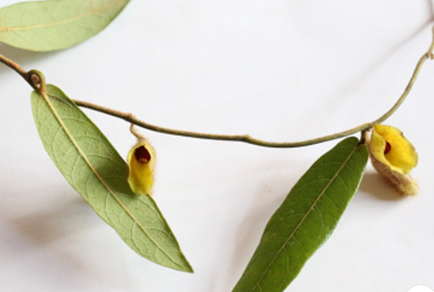
Aristolochia phoenixa is described and illustrated as a new species of Aristolochiaceae from Hainan Island, China. This species is morphologically similar to A. ledongensis and Isotrema sanyaense in the shape of leaf blade and calyx. However, A. phoenixa can be easily distinguished from these two species by its pedicel (1.8–2.2 cm vs. 0.7–1.0 cm, 1.1–2.6 cm), size of basal tube (ca. 20.0–26.0 × 5.0–6.0 mm vs. ca. 15.0–16.0 × 4.5–5.0 mm, ca. 22 × 5 mm) and throat (without spots vs. with dark red–brown spots, without spots), and the flowering time (November–December vs. August, October).
References
- Baack, E., Melo, M.C., Rieseberg, L.H. & Ortiz-Barrientos, D. (2015) The origins of reproductive isolation in plants. New Phytologist 207 (4): 968–84. https://doi.org/10.1111/nph.13424
- Cai, J., Yu, W.B., Zhang, T. & Li, D.Z. (2019) China’s biodiversity hotspots revisited: A treasure chest for plants. In: Cai, J., Yu, W.-B, Zhang, T. & Li, D.-Z. (Eds.) Revealing of the plant diversity in China’s biodiversity hotspots, pp. 1–24. https://doi.org/10.3897/phytokeys.130.38417
- Duchartre, P. (1854) Tentamen methodicae divisionis generis Aristolochia, additis descriptionibus complurium novarum specierum novique generis Holostylis. Annales des Sciences Naturelles 4a. Sér. 2: 29–76.
- González, F.A. & Stevenson, D.W. (2000a) Perianth development and systematics of Aristolochia. Flora 195 (4): 370–391. https://doi.org/10.1016/S0367-2530(17)30995-7
- González, F.A. & Stevenson, D.W. (2000b) Gynostemium development in Aristolochia (Aristolochiaceae). Botanische Jahrbücher für Systematik 122: 249–291.
- González, F.A. & Stevenson, D.W. (2002) A phylogenetic analysis of the subfamily Aristolochioideae (Aristolochiaceae). Revista de la Academia Colombiana de Ciencias Exactas 26: 25–60. https://doi.org/10.18257/raccefyn.26(98).2002.2752
- González, F.A. (2012) Florística y sistemática filogenética innecesariamente disyuntas: El caso de Aristolochia, Euglypha y Holostylis (Aristolochiaceae). Revista de la Academia Colombiana de Ciencias Exactas, Físicas y Naturales 36: 193–202. https://doi.org/10.18257/raccefyn.36(139).2012.2441
- González, F.A. & Pabón-Mora, N. (2015) Trickery flowers: the extraordinary chemical mimicry of Aristolochia to accomplish deception to its pollinators. New Phytologist 206: 10–13. https://doi.org/10.1111/nph.13328
- Huang, Y.S., Qin, K., Zou, C.Y., Huang, Z.P. & Liu, Y. (2022) Isotrema haimingii, a new species of Aristolochiaceae from Dayaoshan Mountain of Guangxi, China. Taiwania 67 (3): 380‒385. https://doi.org/10.6165/tai.2022.67.380
- Hwang, S.M., Kelly, L.M. & Gilbert, M.G. (2003) Aristolochia Linnaeus. In: Wu, ZY, Raven, PH & Hong, DY (Eds.) Flora of China. Vol. 5. Science Press, Beijing & Missouri Botanical Garden Press, St. Louis, pp. 258–269.
- IUCN Standards and Petitions Committee. (2024) Guidelines for Using the IUCN Red List Categories and Criteria. Version 16. Prepared by the Standards and Petitions Committee. Available from: [https://www.iucnredlist.org/documents/RedListGuidelines.pdf].
- Li, R.T., Wang, Z., Wang, J., Zhu, X.X. & Xu, H. (2019) Isotrema sanyaense, a new species of Aristolochiaceae from Hainan, China. PhytoKeys 128: 85–96. https://doi.org/10.3897/phytokeys.128.35042
- Linnaeus, C. (1753) Species Plantarum, vol 2. Impensis Laurentii Salvii, Holmiae, Stockholm, pp. 561–1200.
- Lu, C.T., Yang, C.L., Hung, Y.L., Chen, P.H. & Wang, J.C. (2022) A taxonomic revision on Isotrema (Aristolochiaceae) in Taiwan, including one new species. Taiwania 67 (3): 391–407. https://doi.org/10.6165/tai.2022.67.391
- Luo, Y.J., Ni, S.D., Jiang, Q., Huang, B.G., Liu, Y. & Huang, Y.S. (2020) Aristolochia yachangensis, a new species of Aristolochiaceae from limestone areas in Guangxi, China. PhytoKeys 153: 49–61. https://doi.org/10.3897/phytokeys.153.52796
- Ma, K.P. (2001) Hotspots assessment and conservation priorities identification of biodiversity in China should be emphasized. Chinese Journal of Plant Ecology 25 (1): 125.
- Neinhuis, C., Wanke, S., Hilu, K.W., Müller, K. & Borsch, T. (2005) Phylogeny of Aristolochiaceae based on parsimony, likelihood, and Bayesian analyses of trnL-trnF sequences. Plant Systematics and Evolution 250 (1): 7–26. https://doi.org/10.1007/s00606-004-0217-0
- Myers, N., Mittermeier, R.A., Mittermeier, C.G., Fonseca, G.A.B. & Kent, J. (2000) Biodiversity hotspots for conservation priorities. Nature 403 (6772): 853–858. https://doi.org/10.1038/35002501
- Oelschlägel, B., Gorb, S., Wanke, S. & Neinhuis, C. (2009) Structure and biomechanics of trapping flower trichomes and their role in the pollination biology of Aristolochia plants (Aristolochiaceae). New Phytologist 184: 988–1002. https://doi.org/10.1111/j.1469-8137.2009.03013.x
- Oelschlägel, B., Nuss, M., von Tschirnhaus, M., Pätzold, C., Neinhuis, C. & Wanke, S. (2015) The betrayed thief–the extraordinary strategy of Aristolochia rotunda to deceive its pollinators. New Phytologist 206: 342–351. https://doi.org/10.1111/nph.13210
- Oelschlägel, B., von Tschirnhaus, M., Nuss, M., Nikolić, T., Wanke, S., Dötterl, S. & Neinhuis, C. (2016) Spatio-temporal patterns in pollination of deceptive Aristolochia rotunda L. (Aristolochiaceae). Plant Biology 18 (6): 928–937. https://doi.org/10.1111/plb.12503
- Ohi-Toma, T., Sugawara, T., Murata, H., Wanke, S., Neinhuis, C. & Murata, J. (2006) Molecular phylogeny of Aristolochia sensu lato (Aristolochiaceae) based on sequences of rbcL, matK and phyA genes, with special reference to differentiation of chromosome numbers. Systematic Botany 31: 481–492. [https://www.jstor.org/stable/25064177]
- Qin, L.Y., Hu, Y., Wang, J.P., Wang, X.L., Zhao, R., Shan, H.Y., Li, K.P., Xu, P., Wu, H.Y., Yan, X.Q., Liu, L.M., Yi, X., Wanke, S., Bowers, J.E., Leebens-Mack, J.H., dePamphilis, C.W., Soltis, P.S., Soltis, D.E., Kong, H.Z. & Jiao, Y.N. (2021) Insights into angiosperm evolution, floral development and chemical biosynthesis from the Aristolochia fimbriata genome. Nature Plants 7: 1239–1253. https://doi.org/10.1038/s41477-021-00990-2
- Rafinesque, C.S. (1819) Art. 3. The genera of North-American plants: and a catalogue of the species to the year 1817. By Thomas Nuttall, F.L.S. &o. &c. 2 vols. 12mo. Philadelphia 1818. American Monthly Magazine and Critical Review 4: 184–196.
- RHS Media. (2015) Royal Horticultural Society (RHS) Colour Chart, 6th ed. Royal Horticultural Society, London,UK.
- Rulik, B., Wanke, S., Nuss, M. & Neinhuis, C. (2008) Pollination of Aristolochia pallida Willd. (Aristolochiaceae) in the Mediterranean. Flora 203: 175–184. https://doi.org/10.1016/j.flora.2007.02.006
- Veron, S., Kondratyeva, A., Robuchon, M., Grandcolas, P., Govaerts, R., Haevermans, T., Pellens, R. & Mouchet, M. (2021) High evolutionary and functional distinctiveness of endemic monocots in world islands. Biodiversity and Conservation 30: 3697–3715. https://doi.org/10.1007/s10531-021-02272-x
- Vogel, S. (1998) Remarkable nectaries: structure, ecology, organophyletic perspectives. II. Nectarioles. Flora 193: 1–29. https://doi.org/10.1016/S0367-2530(17)30812-5
- Xu, H., Li, Y.D., Yang, H.J. & Chen, H.Q. (2011) Two new species of Aristolochia (Aristolochiaceae) from Hainan Island, China. Novon 21 (2): 285–289. https://doi.org/10.3417/2009116
- Wanke, S., González, F. & Neinhuis, C. (2006) Systematics of pipevines: Combining morphological and fast-evolving molecular characters to investigate the relationships within subfamily Aristolochioideae (Aristolochiaceae). International Journal of Plant Sciences 167: 1215–1227. https://doi.org/10.1086/508024
- Watson, B. (1993) The Records of the Grand Historian: Qin Dynasty. Columbia University Press, New York, USA.
- Yang, J.M., Huang, R.Z., Liu, J.Z., Zhang, C.J. & Yang, Y.R. (2024) Aristolochia sanheensis (Aristolochiaceae), a New Species from Yunnan, Southwest China. Phytotaxa 666 (3): 223–28. https://doi.org/10.11646/phytotaxa.666.3.6
- Yu, F., Yan, C.C., Tu, W.Qin., Yuan, Y.M., Wang, J.B., Chen, X.J., Liu, C.Q. & Gao, Y.D. (2024) Multi-disciplinary evidence illuminates the speciation history of a monophyletic yet dimorphic lily group. Plant Diversity 47 (2): 189–200. https://doi.org/10.1016/j.pld.2024.12.005
- Zhu, X.X., Wang, J., Liao, S. & Ma, J.S. (2019a) Synopsis of Aristolochia L. and Isotrema Raf. (Aristolochiaceae) in China. Biodiversity Science 27 (10): 1143–1146. https://doi.org/10.17520/biods.2019183
- Zhu, X.X., Li, X.Q., Liao, S., Du, C., Wang, Y., Wang, Z.H., Yan, J., Zuo, Y.J. & Ma, J.S. (2019b) Reinstatement of Isotrema, a new generic delimitation of Aristolochia subgen. Siphisia (Aristolochiaceae). Phytotaxa 401 (1): 1–23. https://doi.org/10.11646/phytotaxa.401.1.1
- Zhu, X.X., Li, X.Q., Liao, S., Li, G.D. & Ma, J.S. (2019c) The taxonomic revision of Asian Aristolochia (Aristolochiaceae) V: Two new species from Yunnan, China. PhytoKeys 130: 93–106. https://doi.org/10.3897/phytokeys.130.33933