

Abstract
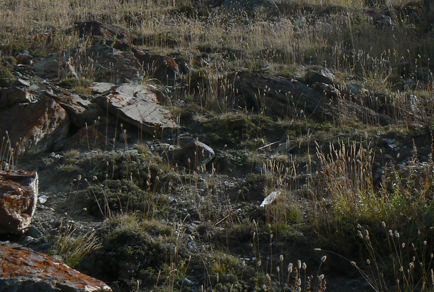
A new species of Tulostoma is described based on morphological and molecular data. Phylogenetic analysis based on the ITS1-5.8S-ITS2 and partial 28S nrDNA regions and morphological analysis using the SEM have been carry out. The detailed description of new species, color photos of basidiomata, light microscopy of anatomical characters, and analysis of morphological features in comparison with related species are provided. Morphologically, the new species of Tulostoma is closest to T. kotlabae, and T. lysocephalum and T. morenoi. The new species is distinguished by small, single, greyish-white basidiomata, gleba ocher, spores subglobose, regularly verrucose, with flattened, smoothed, large warts, 4.2 × 5.8 µm in diam. without ornamentation. The new species of Tulostoma and our previously described T. morenoi are endemic to the Altai-Sayan mountain region.
References
- Altschul, S., Gish, W., Miller, W., Myers, E. & Lipman, D. (1990) Basic local alignment search tool. Journal of Molecular Biology 215 (3): 403–410. https://doi.org/10.1016/S0022-2836(05)80360-2
- Binder, M. & Bresinsky, A. (2002) Derivation of a polymorphic lineage of Gasteromycetes from boletoid ancestors. Mycologia 94 (1): 85–98. https://doi.org/10.1080/15572536.2003.11833251
- El Kholfy, S., Nmichi, A., Ouabbou, A., Ajana, M., Belahbib, N., Touhami, A.O., Benkirane, R. & Douira, A. (2017) Study of two fungal species of Tulostoma genus encountered for the first time in Morocco: Tulostoma melanocyclum Bres. and Tulostoma kotlabae Pouzar. International Journal of Agriculture Environment and Biotechnology (IJEAB) 2 (1): 235–239. https://doi.org/10.22161/ijeab/2.1.30
- Felsenstein, J. (1981) Evolutionary trees from DNA sequences: a maximum likelihood approach. Journal of Molecular Evolution 17: 368–376. https://doi.org/10.1007/BF01734359
- Finy, P., Jeppson, M., Knapp, D.G., Papp, V., László, A., Ölvedi, I., Bóka, K., Varga, D., Kovács, G.M. & Dima, B. (2023) Exploring diversity within the genus Tulostoma (Basidiomycota, Agaricales) in the Pannonian sandy steppe: four fascinating novel species from Hungary. MycoKeys 100: 153–170. https://doi.org/10.3897/mycokeys.100.112458
- Hernández Caffot, M.L., Domínguez, L.S., Hosaka, K. & Crespo, E.M. (2011) Tulostoma domingueziae sp. nov. from Polylepis australis woodlands in Cordoba Mountains, central Argentina. Mycologia 103 (5): 1047–1054. https://doi.org/10.3852/10-266
- Gardes, M. & Bruns, T.D. (1993) ITS primers with enhanced specificity for basidiomycetes-application to the identification of mycorrhizae and rusts. Molecular Ecology 2: 113–118. https://doi.org/10.1111/j.1365-294X.1993.tb00005.x
- Garnica, S., Weiss, M., Walther, G. & Oberwinkler, F. (2007) Reconstructing the evolution of agarics from nuclear gene sequences and basidiospore ultrastructure. Mycological Research 111 (9): 1019–1029. https://doi.org/10.1016/j.mycres.2007.03.019
- GBIF (2024) Tulostoma Pers., 1794 in GBIF Secretariat. GBIF Backbone Taxonomy. Checklist dataset. Available from: https://doi.org/10.15468/39omei (accessed 1 Jule 2024)
- Gorbunova, I.A. (2003) Macromycetes of the Ukok Plateau (Gorny Altai). Mikologiya i Fitopatologiya 37 (1): 42–49. [in Russian]
- Gorbunova, I.A. (2006) Steppe macromycetes of the south of Western Siberia. Mikologiya i Fitopatologiya 40 (5): 361–369. [in Russian]
- Jeppson, M., Altés, A., Moreno, G., Nilsson, R.H., Loarce, Y., de Bustos, A. & Larsson, E. (2017) Unexpected high species diversity among European stalked puffballs—a contribution to the phylogeny and taxonomy of the genus Tulostoma (Agaricales). MycoKeys 21: 33–88. https://doi.org/10.3897/mycokeys.21.12176
- Katoh, K., Misawa, K., Kuma, K. & Miyata, T. (2002) MAFFT: a novel method for rapid multiple sequence alignment based on fast Fourier transform. Nucleic Acids Research 30: 3059–3066. https://doi.org/10.1093/nar/gkf436
- Katoh, K. & Toh, H. (2008) Recent developments in the MAFFT multiple sequence alignment program. Briefings in Bioinformatics 9 (4): 286–298. https://doi.org/10.1093/nar/gkf436
- Khanminchun, V.M., Sedelnikova, N.V. & Petrova, N.V. (1997) Flora of Tsuger-Eliss Ubsunur basin. Altai State University Publ., Barnaul, pp. 1–63 [in Russian]
- Kumar, S., Stecher, G., Li, M., Knyaz, C. & Tamura, K. (2018) MEGA X: Molecular Evolutionary Genetics Analysis across computing platforms. Molecular Biology and Evolution 35: 1547–1549. https://doi.org/10.1093/molbev/msy096
- Kuminova, A.V. (1960) The vegetation of the Altai. Siberian Branch of the USSR Academy of Sciences Publ., Novosibirsk, pp. 1–450. [in Russian]
- Larsson, E. & Jeppson, M. (2008) Phylogenetic relationships among species and genera of Lycoperdaceae based on ITS and LSU sequence data from north European taxa. Mycological Research 112 (1): 4–22. https://doi.org/10.1016/j.mycres.2007.10.018
- Lima, A., Melanda, G., Marinho, P., T.A., Paz Martín, M. & Baseia, I. (2023) Two new species of Tulostoma (Agaricales, Basidiomycota) from the Neotropics. Turkish Journal of Botany 47 (5): Art. 8. https://doi.org/10.55730/1300-008X.2777
- Nguyen, L.T., Schmidt, H.A., von Haeseler, A. & Minh, B.Q. (2015) IQ-TREE: A fast and effective stochastic algorithm for estimating maximum-likelihood phylogenies. Molecular Biology and Evolution 32 (1): 268–274. https://doi.org/10.1093/molbev/msu300
- Persoon, C.H. (1794) Neuer Versuch einer systematischen Eintheilung der Schwämme. Neues Magazin für die Botanik 1: 63–128.
- Rambaut, A. (2018) FigTree v.1.4.4. Available from: http://tree.bio.ed.ac.uk/software/figtree/ (accessed 1 July 2024)
- Ronquist, F., Teslenko, M., van der Mark, P., Ayres, D.L., Darling, A., Höhna, S., Larget, B., Liu, L., Suchard, M.A. & Huelsenbeck, J.P. (2012) MrBayes 3.2, efficient Bayesian phylogenetic inference and model choice across a large model space. Systematic Biology 61 (3): 539–542. https://doi.org/10.1093/sysbio/sys029
- Rusevska, K., Calonge, F.D., Karadelev, M. & Martín, M.P. (2019) Fungal DNA barcode (ITS nrDNA) reveals more diversity than expected in Tulostoma from Macedonia. Turkish Journal of Botany 43 (1): 102–115. https://doi.org/10.3906/bot-1804-38
- Tomaszewska, A., Łuszczyński, J., Łuszczyńska, B. & Jaworska, J. (2011) Taxonomic notes on the Polish Tulostoma species. Acta Mycologica 46 (2): 179–186. https://doi.org/10.5586/am.2011.011
- Trifinopoulos, J., Nguyen, L.T., von Haeseler, A. & Minh, B.Q. (2016) W-IQ-TREE: a fast online phylogenetic tool for maximum likelihood analysis. Nucleic Acids Research 44 (W1): 232–235. https://doi.org/10.1093/nar/gkw256
- Vilgalys, R. & Hester, M. (1990) Rapid genetic identification and mapping of enzymatically amplified ribosomal DNA from several Cryptococcus species. Journal of Bacteriology 172: 4238–4246. https://doi.org/10.1128/jb.172.8.4238-4246.1990
- Vlasenko, V.A. & Vlasenko, A.V. (2023) A new species of Tulostoma genus from Siberia. Phytotaxa 600 (1): 25–34. https://doi.org/10.11646/phytotaxa.600.1.4
- Wright, J.E. (1987) The genus Tulostoma (Gasteromycetes)—A world monograph. Bibliotheca Mycologica 113: 1–338.