

Abstract
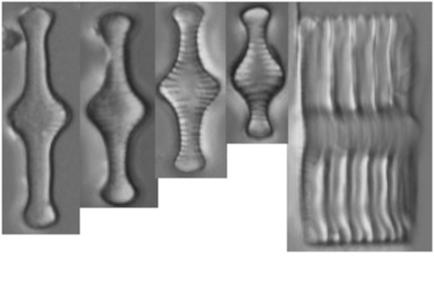
Mountain lakes, often regarded as sentinels of environmental degradation and climate change, are extreme environments. Diatoms are widely considered good indicators in freshwater ecosystems. Littoral diatoms in lakes are highly effective in detecting trophic and thermal conditions and point-source pollution and are considered early warning of potential changes in lake ecosystems. An extensive study of littoral diatoms of Upper Lake Balma (southern European Alps, Italy) was conducted in 2021. Sampling was carried out at seven littoral stations over two periods (July and October). The results revealed a high diversity of taxa, with a total of 116 identified. Plates with figures for 103 taxa and measures (length, width and striae/fibulae number) for 104 taxa are given. Iconographic studies significantly enhance the description of diatom biodiversity in these environments.
References
- Alibert, M., Hamilton, P.B., Pienitz, R. & Antoniades, D. (2023) Small naviculoid species of Kobayasiella Lange-Bertalot, Adlafia Moser, Lange-Bertalot & Metzeltin, Nupela Vyverman & Compère and Sellaphora Mereschowsky from Tursujuq National Park, Hudson Bay region, Nunavik, Québec. Cryptogamie, Algologie 44 (9): 157–187. https://doi.org/10.5252/cryptogamie-algologie2023v44a9
- Angeli, N. & Cantonati, M. (2005) Depth-distribution of surface sediment diatoms in Lake Tovel, Italy. Verhandlungen des Internationalen Verein Limnologie 29: 539–544. https://doi.org/10.1080/03680770.2005.11902072
- Bahls, L. (2017) Potential loss of cold-water stenothermal diatoms (Bacillariophyta) from their southern refugia in the western United States. Diatom Research 32 (4): 483–494. https://doi.org/10.1080/0269249X.2017.1403378
- Bąk, M., Witkowski, A., Żelazna-Wieczorek, J., Wojtal, A.Z., Szczepocka, E., Szulc, K. & Szulc, B. (2012) Klucz do oznaczania okrzemek w fitobentosie na potrzeby oceny stanu ekologicznego wód powierzchniowych w Polsce. Biblioteka Monitoringu Środowiska, 452 pp.
- Bertoli, M., Pizzul, E., Basile, S., Perilli, S., Tauler, R., Lacorte, S., Prearo, M. & Pastorino, P. (2023) Littoral macrobenthic invertebrates of two high-altitude lakes in the Alps: A small-scale analysis. Ecohydrology & Hydrobiology 23: 211–223. https://doi.org/10.1016/j.ecohyd.2023.02.003
- Blanco, S., Pla-Rabès, S., Wetzel, C.E. & Granados, I. (2017) A New Psammothidium Species (Bacillariophyta, Achnanthidiaceae) from Cimera Lake (Gredos Mountain Range), Central Spain. Cryptogamie, Algologie 38 (1): 17–29. https://doi.org/10.7872/crya/v38.iss1.2017.17
- Boggero, A., Marchetto, A., Manca, M., Mosello, R. & Tartati, G.A. (2005) Studies on small mountain lakes in the Val Grande National Park (Central Alps, Italy). Studi Trentini di Scienze Naturali, Acta Biologica 82: 43–54.
- Buczkó, K. (2016) Guide to diatoms in mountain lakes in the Retazat Mountains, south Carpathians, Romania. Studia botanica hungarica 47 (Suppl.): 9–21. https://doi.org/10.17110/StudBot.2016.47.Suppl.9
- Buczkó, K., Wojtal, A.Z. & Magyari, E.K. (2013) Lectotypification, emended description and distribution of Planothidium distinctum (Achnanthidiaceae, Bacillariophyceae). Phytotaxa 117 (1): 1–10. https://doi.org/10.11646/phytotaxa.117.1.1
- Buczkó, K., Wojtal, A.Z., Beszteri, B. & Magyari, E.K. (2015) Morphology and Distribution of Navicula schmassmannii and Its Transfer to Genus Humidophila. Studia botanica hungarica 46 (1): 25–41. https://doi.org/10.17110/StudBot.2015.46.1.25
- Bukhtiyarova, L. (1996) Revision of the genus Achnanthes sensu lato. Psammothidium, a new genus based on A. marginulatum. Diatom Research 11 (1): 1–30. https://doi.org/10.1080/0269249X.1996.9705361
- Cantonati, M., Van de Vijver, B. & Lange-Bertalot, H. (2009) Microfissurata gen. nov. Bacillariophyta, a new diatom genus from dystrophic and intermittently wet terrestrial habitats. Journal of Phycology 45: 732–741. https://doi.org/10.1111/j.1529-8817.2009.00683.x
- Cantonati, M., Corradini, G., Juttner, I. & Cox, E. (2001) Diatom assemblages in high mountain streams of the Alps and the Himalaya. Nova Hedwigia 123: 37–6.
- Cantonati, M., Lange-Bertalot, H., Decet, F. & Gabrieli, J. (2011) Diatoms in very-shallow pools of the site of community importance Danta di Cadore Mires (south-eastern Alps), and the potential contribution of these habitats to diatom biodiversity conservation. Nova Hedwigia 93: 475–507. https://doi.org/10.1127/0029-5035/2011/0093-0475
- Cantonati, M. & Lowe, R.L. (2014) Lake benthic algae: Toward an understanding of their ecology. Freshwater Science 33 (2): 475–486. https://doi.org/10.1086/676140
- Cantonati, M., Zorza, R., Bertoli, M., Pastorino, P., Salvi, G., Platania, G., Prearo, M. & Pizzul, E. (2021) Recent and subfossil diatom assemblages as indicators of environmental change (including fish introduction) in a high-mountain lake. Ecological Indicators 125: 107603. https://doi.org/10.1016/j.ecolind.2021.107603
- Cantonati, M., Hofmann, G., Spitale, D., Werum, M. & Lange-Bertalot, H. (2022) Diatom Red Lists: important tools to assess and preserve biodiversity and habitats in the face of direct impacts and environmental change. Biodiversity and Conservation 31: 453–477. https://doi.org/10.1007/s10531-021-02339-9
- Catalan, J., Camarero, L., Felip, M., Ventura, M., Buchaca, T., Bartumeus, F., de Mendoza, G., Miró, A., Casamayor, E.O., Medina-Sánchez, J.M., Bacardit, M., Altuna, M., Bartrons, M. & de Quijano, D.D. (2006) High mountain lakes: extreme habitats and witnesses of environmental changes. Limnetica 25 (1–2): 551–584. https://doi.org/10.23818/limn.25.38
- Douglas, M.S.V. & Smol, J.P. (2010) Freshwater diatoms as indicators of environmental change in the High Arctic. In: Smol, J.P. & Stroemer, E.F. (Ed.) The Diatoms. Applications for the Environmental and Earth Sciences. Cambridge University Press, pp. 249–266.
- Feret, L., Bouchez, A. & Rimet, F. (2017) Benthic diatom communities in high altitude lakes: a large scale study in the French Alps. Annales de Limnologie - International Journal of Limology 53: 411–423. https://doi.org/10.1051/limn/2017025
- Fjellheim, A., Raddum, G.G., Vandvik, V., Cogălniceanu, D., Boggero, A., Brancelj, A., Galas, J., Sporka, F., Vidinova, Y., Bitusik, P., Dumnicka, E., Galdean, N., Kownacki, A., Krno, I., Preda, E., Rîşnoveanu, G. & Stuchlik, E. (2009) Diversity and distribution patterns of benthic invertebrates along alpine gradients. A study of remote European freshwater lakes. Advances in Limnology 62: 167–190. https://doi.org/10.1127/advlim/62/2009/167
- Flower, R.J. (2005) A taxonomic and ecological study of diatoms from freshwater habitats in the Falkland Islands, South Atlantic. Diatom Research 20 (1): 23–96. https://doi.org/10.1080/0269249X.2005.9705620
- García, M.L., Bustos, S., Villacís, L.A., Laprida, C., Mayr, C., Moreno, P.I., Maidana, N.I. & Morales, E.A. (2021) New araphid species of the genus Pseudostaurosira (Bacillariophyceae) from southern Patagonia. European Journal of Phycology 56 (3): 255–272. https://doi.org/10.1080/09670262.2020.1813810
- Heudre, D., Wetzel, C.E., Lange–Bertalot, H., Van de Vijver, B., Moreau, L. & Ector, L. (2021) A review of Tabellaria species from freshwater environments in Europe. Fottea, Olomouc 21 (2): 180–205. https://doi.org/10.5507/fot.2021.005
- Hofmann, G., Lange-Bertalot, H., Werum, M. & Klee, R. (2018) Rote Liste der limnischen Kieselalgen. Naturschutz und Biologische Vielfalt 70 (7): 601–708.
- Jüttner, I., Williams, D.M., Levkov, Z., Falasco, E., Battegazzore, M., Cantonati, M., Van de Vijver, B., Angele, C. & Ector, L. (2015) Reinvestigation of the type material for Odontidium hyemale (Roth) Kützing and related species, with description of four new species in the genus Odontidium (Fragilariaceae, Bacillariophyceae). Phytotaxa 234 (1): 1–36. https://doi.org/10.11646/phytotaxa.234.1.1
- Kang, W., Anslan, S., Börner, N., Schwarz, A., Schmidt, R., Künzel, S., Rioual, P., Echeverría-Galindo, P., Vences, M., Wang, J. & Schwalb, A. (2021) Diatom metabarcoding and microscopic analyses from sediment samples at Lake Nam Co, Tibet: The effect of sample-size and bioinformatics on the identified communities. Ecological Indicators 121: 107070. https://doi.org/10.1016/j.ecolind.2020.107070
- Kheiri, S., Solak, C.N., Edlund, M.B., Spaulding, S., Nejadsattari, T., Asri, Y. & Hamdi, S.M.M. (2018) Biodiversity of diatoms of the Karaj River in the Central Alborz, Iran. Diatom Research 33 (3): 355–380. https://doi.org/10.1080/0269249X.2018.1557747
- Kociolek, J.P., Laslandes, B., Bennett, D., Thomas, E., Brady, M. & Graeff, C. (2014) Diatoms of the United States, 1 Taxonomy, ultrastructure and descriptions of new species and other rarely reported taxa from lake sediments in the western U.S.A. Bibliotheca Diatomologica 61: 1–188.
- Kopalová, K., Zidarova, R. & Van de Vijver, B. (2016) Four new monoraphid diatom species (Bacillariophyta, Achnanthaceae) from the Maritime Antarctic Region. European Journal of Taxonomy 217: 1–19. https://doi.org/10.5852/ejt.2016.217
- Krammer, K. (1997a) Die cymbelloiden Diatomeen. Eine Monographie der weltweit bekannten Taxa. Teil 1. Allgemeines und Encyonema Part. Biblioteka Diatomologica 36: 1–382.
- Krammer, K. (1997b) Die cymbelloiden Diatomeen. Eine Monographie der weltweit bekannten Taxa. Teil 1. Allgemeines und Encyonema Part. Biblioteka Diatomologica 37: 1–469.
- Krammer, K. (2000) The genus Pinnularia. In: Lange-Bertalot, H. (Ed.) Diatoms of Europe. Diatoms of the European inland waters and comparable habitats. Vol. 1. A.R.G. Gantner Verlag K.G., Ruggell, 703 pp.
- Krammer, K. (2002) Cymbella. In: Lange-Bertalot, H. (Ed.) Diatoms of Europe. Diatoms of the European inland waters and comparable habitats Vol. 3. A.R.G. Gantner Verlag K.G., Ruggell, 584 pp.
- Krammer, K. (2003) Cymbopleura, Delicata, Navicymbula, Gomphocymbellopsis, Afrocymbella. In: Lange-Bertalot, H. (Ed.) Diatoms of Europe. Diatoms of the European Inland waters and comparable habitats. Vol. 4. A.R.G. Gantner Verlag K.G., Ruggell, 529 pp.
- Krammer, K. & Lange-Bertalot, H. (1991a) Bacillariophyceae 3. Teil: Centrales, Fragilariaceae, Eunotiaceae. In: Ettl, H., Gerloff, J., Heynig, H. & Mollenhauer, D. (Eds.) Süsswasserflora von Mitteleuropa 2 (3). VEB Gustav Fisher Verlag, Stuttgart, 576 pp.
- Krammer, K. & Lange-Bertalot, H. (1991b) Bacillariophyceae 4. Teil: Achnanthaceae, Kritische Erganzungen zu Navicula (Lineolatae) und Gomphonema. In: Ettl, H., Gärtner, G., Gerloff, J., Heynig, H. & Mollenhauer, D. (Eds.) Süßswasserflora von Mitteleuropa. VEB Gustav Fisher Verlag, Stuttgart, 437 pp.
- Krammer, K. & Lange-Bertalot, H. (1997a) Bacillariophyceae 1. Teil Naviculaceae. In: Ettl, H., Gerloff, J., Heynig, H. & Mollenhauer, D. (Eds.) Süsswasserflora von Mitteleuropa. VEB Gustav Fisher Verlag, Stuttgart, 876 pp.
- Krammer, K. & Lange-Bertalot, H. (1997b) Bacillariophyceae 2. Teil Bacillariaceae, Epithemiaceae, Surirellaceae. In: Ettl, H., Gerloff, J., Heynig, H. & Mollenhauer, D. (Eds.) Süsswasserflora von Mitteleuropa. VEB Gustav Fisher Verlag, Stuttgart, 611 pp.
- Kulikovskiy, M.S., Glushchenko, A.M., Genkal, S.I. & Kuznetsova, I.V. (2016) Identification book of diatoms from Russia. Filigran, Yaroslavl, 804 pp.
- Lange-Bertalot, H. (1993) 85 Neue taxa und uber 100 weitere neu definierte Taxa erganzend zur Subwasserflora von Mittleuropa. Biblioteka Diatomologica 27: 1–454.
- Lange-Bertalot, H. (2001) Navicula sensu stricto. 10 Genera separated from Navicula sensu lato. Frustulia. In: Lange-Bertalot, H. (Ed.) Diatoms of Europe. Diatoms of the European inland waters and comparable habitats. Vol. 2. A.R.G. Gantner Verlag K.G., Ruggell, 526 pp.
- Lange-Bertalot, H. & Krammer, K. (1989) Achnanthes eine Monographie der Gattung mit Definition der Gattung Cocconeis and Nachtragen zu den Naviculaceae. Biblioteka Diatomologica, Cramer, Berlin–Stuttgart, 18, 393 pp.
- Lange-Bertalot, H. & Metzeltin, D. (1996) Oligotrophie-Indikatoren. 800 Taxa repräsentativ für drei diverse Seen-Typen. Kalkreich - Oligodystroph - Schwach gepuffertes Weichwasser [Indicators of Oligotrophy. 800 taxa representative of three ecologically distinct lake types. Carbonate buffered - Oligodystrophic - Weakly buffered soft water]. Iconographia Diatomologica 2: 1–390.
- Lange-Bertalot, H. & Genkal, S.I. (1999) Diatoms from Siberia I. Islands in the Arctic Ocean (Yugorsky-Shar Strait)]. Iconographia Diatomologica 6: 1–271.
- Lange-Bertalot, H., Bąk, M. & Witkowski, A. (2011) Eunotia and some related genera. In: Lange-Bertalot, H. (Ed.) Diatoms of Europe. Diatoms of the European inland water and comparable habitats. Volume 6. A.R.G. Gantner Verlag K.G., Ruggell, 747 pp.
- Lange-Bertalot, H., Hofmann, G., Werum, M. & Cantonati, M. (2017) Freshwater benthic diatoms of Central Europe: over 800 common species used in ecological assessment. Schmitten-Oberreifenberg, Koeltz Botanical Books, 942 pp.
- Lecointe, C., Coste, M. & Prygiel, J. (1993) “Omnidia”: software for taxonomy, calculation of diatom indices and inventories management. Hydrobiologia 269: 509–513. https://doi.org/10.1007/BF00028048
- Lotter, A.F., Pienitz, R. & Schmidt, R. (2010) Diatoms as indicators of environmental change in subarctic and alpine regions. In: Smol, J.P. & Stroemer, E.F. (Eds.) The Diatoms. Applications for the Environmental and Earth Sciences. Cambridge University Press, pp. 231–248.
- Lepori, F. & Tolotti, M. (2023) Effects of nitrogen on benthic diatom assemblages in high-elevation central and eastern alpine lakes. Arctic, Antarctic, and Alpine Research 55 (1): 2270821. https://doi.org/10.1080/15230430.2023.2270821
- Levkov, Z., Krstic, S., Nakov, T. & Melovski, L. (2005) Diatom assemblages on haraand Nidze Mountains, Macedonia. Nova Hedwigia 81 (3–4): 501–537. https://doi.org/10.1127/0029-5035/2005/0081-0501
- Levkov, Z., Mitic-Kopanja, D. & Reichardt, E. (2016) The diatom genus Gomphonema in the Republic of Macedonia. In: Lange-Bertalot, H. (Ed.) Diatoms of Europe. Diatoms of the European inland waters and comparable habitats. Vol. 8. Koeltz Botanical Books, Oberreifenberg, 552 pp.
- Marchetto, A., Mosello, R., Rogora, M., Manca, M., Boggero, A., Morabito, G., Musazzi, S., Tartari, G.A., Nocentini, A.M., Pugnetti, A., Bettinetti, R., Panzani, P., Armiraglio, M., Cammarano, P. & Lami, A. (2004) The chemical and biological response of two remote mountain lakes in the Southern Central Alps (Italy) to twenty years of changing physical and chemical climate. Journal of Limnology 63 (1): 77–89. https://doi.org/10.4081/jlimnol.2004.77
- Marchetto, A., Boggero, A., Fontaneto, D., Lami, A., Lotter, A.F., Manca, M.M., Massaferro, J., Mosello, R., Musazzi, S., Nickus, U., Psenner, R., Rogora, M., Stundet, S.S., Stuchlik, E., Tartari, G.A., Thies, H. & Tolotti, M. (2021) Living Organisms and Sedimentary Remains from High Mountain Lakes in the Alps. Journal of Limnology 80 (3). https://doi.org/10.4081/jlimnol.2021.2036
- Monnier, O., Lange-Bertalot, H., Hoffmann, L. & Ector, L. (2007) The genera Achnanthidium Kützing and Psammothidium Bukhtiyarova et Round in the family Achnanthidiaceae (Bacillariophyceae): a reappraisal of the differential criteria. Cryptogamie, Algologie 28 (2): 141–158.
- Moser, K.A., Baron, J.S., Brahney, J., Oleksy, I.A., Saros, J.E., Hundey, E.J., Sadro, S., Kopáček, J., Sommaruga, R., Kainz, M.J., Strecker, A.L., Chandra, S., Walters, D.M., Preston, D.L., Michelutti, N., Lepori, F., Spaulding, S.A., Christianson, K.R., Melack, J.M. & Smol, J.P. (2019) Mountain lakes: Eyes on global environmental change. Global and Planetary Change 178: 77–95. https://doi.org/10.1016/j.gloplacha.2019.04.001
- Novais, M.E., Wetzel, C.E., Van de Vijver, B., Morais, M.M., Hoffmann, L. & Ector, L. (2013) New Species and Combinations in the Genus Geissleria (Bacillariophyceae). Cryptogamie, Algologie 34 (2): 117–148. https://doi.org/10.7872/crya.v34.iss2.2013.117
- Ossyssek, S., Hofmann, A.M., Geist, J. & Raeder, U. (2023) Sedimentary, littoral and planktic diatoms show different diversity patterns and assembly mechanisms in mountain lakes of the northern European Alps. Hydrobiologia 850: 1941–1954. https://doi.org/10.1007/s10750-022-05103-4
- Padula, R., Carosi, A., Rossetti, A. & Lorenzoni, M. (2021) The Diatomic Diversity of Two Mediterranean High-Elevation Lakes in the Sibillini Mountains National Park (Central Italy). Environments 8 (8): 79. https://doi.org/10.3390/environments8080079
- Pavlov, A. & Levkov, Z. (2013) Diversity and distribution of taxa in the genus Eunotia Ehrenberg (Bacillariophyta) in Macedonia. Phytotaxa 86 (1): 1–117. https://doi.org/10.11646/phytotaxa.86.1.1
- Peszek, L., Robinson, C.T., Rybak, M. & Kawecka, B. (2023) Orthoseira helvetica sp. nov. - a new diatom (Bacillariophyceae) from the Swiss Alps. Diatom Research 38 (2): 77–87. https://doi.org/10.1080/0269249X.2023.2230972
- Rimet, F., Bouchez, A. & Tapolczai, K. (2016) Spatial heterogeneity of littoral benthic diatoms in a large lake: monitoring implications. Hydrobiologia 771: 179–193. https://doi.org/10.1007/s10750-015-2629-y
- Rimet, F., Feret, L., Bouchez, A. & Kheiri, A. (2019) Factors influencing the heterogeneity of benthic diatom communities along the shoreline of natural alpine lakes. Hydrobiologia 839: 103–118. https://doi.org/10.1007/s10750-019-03999-z
- Rimet, F., Pinseel, E., Bouchez, A., Japoshvili, B. & Mumladze, L. (2023) Diatom endemism and taxonomic turnover: Assessment in high-altitude alpine lakes covering a large geographical range. Science of the Total Environment 871: 161970. https://doi.org/10.1016/j.scitotenv.2023.161970
- Rivera-Rondón, C.A. & Catalan, J. (2017) Diatom diversity in the lakes of the Pyrenees: an iconographic reference. Limnetica 36 (1): 127–395. https://doi.org/10.23818/limn.36.10
- Rivera-Rondón, C.A. & Catalan, J. (2020) Diatoms as indicators of the multivariate environment of mountain lakes. Science of the Total Environment 703: 135517. https://doi.org/10.1016/j.scitotenv.2019.135517
- Rogora, M., Frate, L., Carranza, M.L., Freppaz, M., Stanisci, A., Bertani, I. & Matteucci, G. (2018) Assessment of climate change effects on mountain ecosystems through a cross-site analysis in the Alps and Apennines. Science of the Total Environment 624: 1429–1442. https://doi.org/10.1016/j.scitotenv.2017.12.155
- Safiallah, S., Saadatmand, S., Kheiri, S. & Iranbakhsh, A. (2020) Biodiversity of diatoms in the Kashkan River in the Zagros Mountains, western Iran. Iranian Journal of Botany 206 (2): 141–161. https://doi.org/10.22092/ijb.2020.351698.1296
- Singh Rana, A., Verma, P., Mitta,l, P. & Mahajan, M. (2022) Investigation of Diatom Communities in Highlands of western Himalayas: Geographical and ecological patterns. Annals of the Romanian Society for Cell Biology 26 (1): 1347–1367.
- Siver, P.A., Hamilton, P.B., Stachura-Suchoples, K. & Kociolek, J.P. (2005) Diatoms of North America. The Freshwater Flora of Cape Cod. Iconographia Diatomologica 14: 1–463.
- Sochuliaková, L., Sienkiewicz, E., Hamerlík, L., Svitok, M., Fidlerová, D. & Bitušík, P. (2018) Reconstructing the Trophic History of an Alpine Lake (HighTatra Mts.) using Subfossil Diatoms: Disentangling the Effects of Climate and Human Influence. Water, Air, & Soil Pollution 229: 289. https://doi.org/10.1007/s11270-018-3940-9
- Solak, C., Hamilton, P.B., Peszek, Ł., Bąk, M., Yilmaz, E., Özkan, K. & Ertorun, N. (2023a) Alpine Lake Environments and Psychrophile Diatoms Around the World with a Particular Emphasis on Turkish Glacial Lakes. In: Srivastava, P., Khan, A.S., Verma, J. & Dhyani, S. (Eds.) Insights into the World of Diatoms: From Essentials to Applications. Springer Natuire, Singapore, pp. 45–102.
- Solak, C.N., Hamilton, P.B., Peszek, Ł., Yilmaz, E., Ertorun, N. & Blanco, S. (2023b) A new diatom (Bacillariophyta) species – Sellaphora lucectoriana sp. nov. – from a glacial lake in Kaçkar Mountain (Eastern Blacksea Region), Rize, Republic of Türkiye. Nova Hedwigia 117 (1–4): 203–212. https://doi.org/10.1127/nova_hedwigia/2023/0847
- Spauldind, S.A., Van De Jijver, B., Hodgson, D.A., Mcknight, D.M., Verleyen, E. & Stanish, L. (2010) Diatoms as indicators of environmental change in Antarctic and subantarctic freshwaters. In: Smol, J.P. & Stroemer, E.F. (Eds.) The Diatoms. Applications for the Environmental and Earth Sciences. Cambridge University Press, pp. 267–283.
- Štefková, E. (2006) Epilithic diatoms of mountain lakes of the Tatra Mountains (Slovakia). Biologia, Bratislava 61/Suppl. 18: S101–S108. https://doi.org/10.2478/s11756-006-0123-8
- Tolotti, M. (2001) Phytoplankton and littoral epilithic diatoms in high mountain lakes of the Adamello-Brenta Regional Park (Trentino, Italy) and their relation to trophic status and acidification risk. Journal of Limnology 60 (2): 171–188. https://doi.org/10.4081/jlimnol.2001.1.171
- Van Dam, H., Mertens, A. & Sinkeldam, J. (1994) A coded checklist and ecological indicator values of freshwater diatoms from The Netherlands. Netherlands Journal of Aquatic Ecology 28: 117–133. https://doi.org/10.1007/BF02334251
- Van de Vijver, B., Verweij, G.L., Van der Wal, J. & Metrens, A. (2012) Encyonopsis neerlandica, a new freshwater diatom species (Bacillariophyta) from moorland pools in The Netherlands. Phytotaxa 66: 43–48. https://doi.org/10.11646/phytotaxa.66.1.7
- Van de Vijver, B., Schuster, T.M., Kusber, W.-H., Hamilton, P.B., Wetzel, C.E. & Ector, L. (2021a) Revision of European Brachysira species (Brachysiraceae, Bacillariophyta): I. The Brachysira microcephala–B. neoexilis enigma. Botany Letters 168 (4): 467–484. https://doi.org/10.1080/23818107.2021.1909499
- Van de Vijver, B., Schuster, T.M., Kusber, W.-H., Williams, D.M., Wetzel, C.E. & Ector, L. (2021b) Revision of European Brachysira species (Brachysiraceae, Bacillariophyta): II. The Brachysira styriaca and B. zellensis group. Botany Letters 168 (4): 485–502. https://doi.org/10.1080/23818107.2021.1923062
- Van de Vijver, B., Schuster, T.M., Kusber, W.-H., Kennedy, B., Hamilton, P.B., Albert, R.-L., Ballings, P., Wetzel, C.E. & Ector, L. (2022a) Revision of European Brachysira species (Brachysiraceae, Bacillariophyta): III. Species formerly included in the Brachysira serians-complex. Botany Letters 169 (1): 83–105. https://doi.org/10.1080/23818107.2021.1941250
- Van de Vijver, B., Williams, D.M., Kusber, W.-H., Cantonati, M., Hamilton, P.B., Wetzel, C.E. & Ector, L. (2022b) Fragilaria radians (Kützing) D.M.Williams et Round, the correct name for F. gracilis (Fragilariaceae, Bacillariophyta): a critical analysis of this species complex in Europe. Fottea 22 (2): 256–291. https://doi.org/10.5507/fot.2022.006
- Vassal, V., Heudre, D., Wetzel, C.E. & Tudesque, L. (2023) Two new Achnanthidium (Bacillariophyceae) species from a recent alpine lake in the National Park of Ecrins (South of France). Nova Hedwigia 117 (1–4): 143–163. https://doi.org/10.1127/nova_hedwigia/2023/0852
- Werum, M. & Lange-Bertalot, H. (2004) Diatoms in springs from Central Europe and elsewhere under the influence of hydrogeology and anthropogenic impacts. Iconographia Diatomologica 13: 1–417.
- Wetzel, C.E., Ector, L., Van de Vijver, B., Compère, P. & Mann, D.G. (2015) Morphology, typification and critical analysis of some ecologically important small naviculoid species (Bacillariophyta). Fottea, Olomouc 15 (2): 203–234. https://doi.org/10.5507/fot.2015.020
- Wetzel, C.E. & Ector, L. (2020) Two new Punctastriata (Bacillariophyta) species from subalpine French lakes. Botany Letters 168 (1): 42–55. https://doi.org/10.1080/23818107.2020.1765865
- Wojtal, A.Z., Ognjanova–Rumenova, N., Wetzel, C.E., Hinz, F., Piątek, J., Kapetanovic, T., Ector, L. & Buczkó, K. (2014) Diversity of the genus Genkalia (Bacillariophyta) in boreal and mountain lakes – taxonomy, distribution and ecology. Fottea, Olomouc 14 (2): 225–239. https://doi.org/10.5507/fot.2014.017
- Zaharescu, D.G., Burghelea, C.I., Hooda, P.S., Lester, R.N. & Palanca-Soler, A. (2016) Small lakes in big landscape: Multi-scale drivers of littoral ecosystem in alpine lakes. Science of the Total Environment 551–552: 496–505. https://doi.org/10.1016/j.scitotenv.2016.02.066
- Zidarova, R., Kopalová, K. & Van de Vijver, B. (2016) Diatoms from the Antarctic Region: Maritime Antarctica. Iconographia Diatomologica 24. Koeltz Botanical Books. 504 pp.