
Abstract
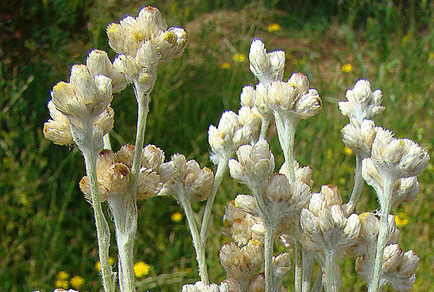
Pseudognaphalium (Gnaphalieae, Asteraceae) consists of about 60 species mainly distributed in South, Central, and North America, but some also occurring in Africa and Asia. The South American P. viravira was treated as a polymorphic species, ranging from a few centimetres to nearly half a meter tall, usually woolly with stem leaves varying from linear to linear-obovate and commonly numerous capitula arranged in dense terminal clusters. In major reviews of the species, nine heterotypic taxa have been considered synonymous with or morphologically similar to P. viravira. Recent molecular analysis puts three of them (P. andicola, P. montevidense and P. versatile) in distinct clades. In order to evaluate species limits on a morphological basis, we performed a morphometric analysis. A matrix of 31 morphological characters and 68 specimens were analyzed using two multivariate approaches: Cluster analysis and Principal Coordinate Analysis. Both, the dendrogram and the Principal Coordinate Analysis (PCoA) showed that the segregate species are not clearly distinguished in morphology. No discriminating morphological characters for these species have been found. In conclusion, all available data support that P. andicola, P. montevidense, and P. versatile should be considered synonyms of P. viravira. Pseudognaphalium viravira (including P. andicola, P. montevidense, and P. versatile) is described and illustrated.
References
- Acosta-Maindo, A. & Galbany-Casals, M. (2018) Pseudognaphalium aldunateoides de nuevo bajo Gnaphalium (Compositae: Gnaphalieae). Collectanea Botanica 37: 1–27. https://doi.org/10.3989/collectbot.2018.v37.012
- Anderberg, A.A. (1991) Taxonomy and phylogeny of the tribe Gnaphalieae (Asteraceae). Opera Botanica 104: 1–195. https://doi.org/10.1007/BF00937947
- Bayer, R.J., Breitwieser, I., Ward, J. & Puttock, C. ([2006] 2007) Tribe Gnaphalieae. In: Kadereit, J.W. & Jeffrey, C. (Eds.) The families and genera of vascular plants, vol. 8. Springer-Verlag, Berlin, pp. 246–283.
- Bayón, N.D., Giuliano, D.A. & Freire, S.E. (2013) New Combinations and New Synonyms in Pseudognaphalium (Asteraceae: Gnaphalieae) from South America. Journal of the Botanical Research Institute of Texas 7: 195–202.
- Cabrera, A.L. (1963) Compositae: Gnaphalium. In: Cabrera, A.L. (Ed.) Flora de la Provincia de Buenos Aires. Colección Científica del INTA, Buenos Aires, pp. 161–166.
- Cabrera, A.L. (1971) Compositae: Gnaphalium. In: Correa, M.N. (Ed.) Flora Patagónica. Colección Científica del INTA, Buenos Aires, pp. 109–117.
- Cabrera, A.L. (1974) Compositae: Gnaphalium. In: Burkart, A. (Ed.) Flora Ilustrada de Entre Ríos (Argentina). Colección Científica del INTA, Buenos Aires, pp. 315–317.
- Cabrera, A.L. (1978) Compositae: Gnaphalium. In: Cabrera, A.L. (Ed.) Flora de la Provincia de Jujuy, República Argentina. Colección Científica del INTA, Buenos Aires, pp. 275–288.
- Castillo, Ò., Roquet, C., Blanco, C., Moreyra, L.D., Garcia-Jacas, N., Freire, S.E., Fujikawa, K. & Galbany-Casals, M. (2022) Evolutionary and biogeographic study of the genus Pseudognaphalium (Compositae) based on Hyb-Seq. III Simposio Anual de Botánica Española.
- Christodoulou, M.D., Clark, J.Y. & Culham, A. (2020) The Cinderella discipline: morphometrics and their use in botanical classification. Botanical Journal of the Linnean Society 194 (4): 385–396. https://doi.org/10.1093/botlinnean/boaa055
- Cruz-Lustre, G., Batista, J.A., Radins, J.A., González, A. & Borba, E.L. (2020) Morphometric analysis of the Habenaria parviflora complex (Orchidaceae). Plant Systematics and Evolution 306 (2): 1–15. https://doi.org/10.1007/s00606-020-01634-2
- Davies, P.H. & Heywood, V.H. (1967) Principles of angiosperm taxonomy. Oliver & Boyd, Edimburgh and London, 556 pp.
- Deble, L.P. & Marchiori, J.N.C. (2006) Sinopse de Pseudognaphalium Kirp. (Asteraceae—Gnaphalieae) no Brasil. Balduinia 9: 13–16.
- Dillon, M.O. & Sagástegui-Alva, A. (1991) Gnaphalium. In: Macbride, J.F. & collab. (Eds.) Flora of Peru, Family Asteraceae: Part V. Fieldiana Botany, Field Museum of Natural History, Chicago, pp. 32–41.
- Di Rienzo, J.A., Casanoves, F., Balzarini, M.G., González, L., Tablada, M. & Robledo, C.W. (2020) InfoStat versión 2020. Centro de Transferencia InfoStat, FCA, Universidad Nacional de Córdoba, Argentina. Available from: http://www.infostat.com.ar (accessed 19 May 2025)
- Fernández, M., Ezcurra, C. & Calviño, C.I. (2017) Species limits and morphometric and environmental variation within the South Andean and Patagonian Mulinum spinosum species-group (Apiaceae-Azorelloideae). Systematics and Biodiversity 15 (5): 489–505. https://doi.org/10.1080/14772000.2016.1273975
- Freire, S.E. (1995) Tribu IV. Inuleae. In: Hunziker, A.T. (Ed.) Flora Fanerogámica Argentina, fasc. 14. Córdoba, Argentina: Museo Botánico, IMBIV, Programa ProFlora, CONICET, pp. 1–60.
- Freire, S.E. (1998) Inuleae. Compositae. In: Bocquet, G.F. & Crosby, M.R. (Eds.) Flora del Paraguay, vol. 27. Conservatoire et Jardin botaniques de la Ville de Genève-Missouri Botanical Garden, Genève & St Louis, pp. 1–100.
- Freire, S.E. & Iharlegui, L. (2008) Asteraceae. Gnaphalium. In: Zuloaga, F.O., Morrone, O. & Belgrano, M.J. (Eds.) Catálogo de las Plantas Vasculares del Cono Sur de América del Sur: Argentina, Sur de Brasil (Paraná, Santa Catarina y Rio Grande do Sul), Chile, Paraguay y Uruguay, vol. 2. Monographs in Systematic Botany from the Missouri Botanical Garden, Missouri Botanical Garden, St. Louis, USA, pp. 1312–1320.
- Freire, S.E., Deble, L.P. & Iharlegui, L. (2011) Compostas. Tribo Inuleae. In: Reis, A. (Ed.) Flora Ilustrada Catarinense, parte 1. Itajaí, Santa Catarina, Brasil: Herbário Barboza Rodriguez, pp. 1067–1197.
- Freire, S.E., Bayón, N.D., Baeza, C.M., Giuliano, D.A. & Monti, C. (2014a) Revision of the genus Pseudognaphalium (Asteraceae, Gnaphalieae) in Chile. Gayana Botánica 71: 68–107. https://doi.org/10.4067/S0717-66432014000100010
- Freire, S.E., Bayón, N.D. & Monti, C. (2014b) Pseudognaphalium. In: Freire, S.E. (Coord.), Anton, A.M., Zuloaga, F.O. & Belgrano, M.J. (Eds.) Flora Vascular Argentina, Asteraceae: Anthemideae-Gnaphalieae, vol 7 (1). Estudio Sigma, Buenos Aires, Argentina, pp. 495–509.
- Freire, S.E., Monti, C., Bayón, N.D. & Migoya, M.A. (2018) Taxonomic Studies in Pseudognaphalium Kirp. (Asteraceae, Gnaphalieae) from Peru. Systematic Botany 43 (1): 325–343. https://doi.org/10.1600/036364418X696914
- Gower, J.C. (1971) A general coefficient of similarity and some of its properties. Biometrics 27: 857–871. https://doi.org/10.2307/2528823
- Grossi, M.A., Gutiérrez, D.G., Berrueta, P.C. & Martínez, J.J. (2011) Acanthostyles (Asteraceae, Eupatorieae): a revision with a multivariate analysis. Australian Systematic Botany 24: 87–103. https://doi.org/10.1071/SB10038
- Hammer, Ø. & Harper, D. (2006) Paleontological Data Analysis. Blackwell Publishing Malden, Oxford, 351 pp. https://doi.org/10.1002/9780470750711
- Harris, J.G. & Harris, M.W. (1994) Plant Identification Terminology: An Illustrated Glossary. Spring Lake Publishing, Spring Lake, Utah, 197 pp.
- Hind, D.J.N. (2011) An annotated preliminary checklist of the Compositae of Bolivia (Version 2). Available from: http://www.kew.org/science/tropamerica/boliviacompositae/ (accessed 1 November 2024)
- Kalsing, A., Nunes, F.A., Gotardi, G.A., Campos, J.B., Schneider, A.A., Tropaldi, L., Velini, E.D., Merotto, A. Jr & Carbonari, C.A. (2024) Taxonomic resolution of fleabane species (Conyza spp.) based on morphological and molecular markers and their dispersion across soybean-cropping macroregions and seasons in Brazil. Weed Science 72 (2): 192–204. https://doi.org/10.1017/wsc.2024.3
- Kirpichnikov, M.E. & Kuprijanova, L.A. (1950) Morphological geographical and palynological contributions to the understanding of the genera of the subtribe Gnaphaliinae. Acta Institutum Botanicum V. F. Komarov Academiae Scientiarum URSS, Series 1, 9: 7–37. [In Russian]
- López Laphitz, R.M., Ma, Y. & Semple, J.C. (2011) A Multivariate Study of Solidago subsect. Junceae and a New Species in South America (Asteraceae: Astereae). Novon 21: 219–225. https://doi.org/10.3417/2010088
- Mapaya, R.J. & Cron, G.V. (2016) A phenetic study of the Emilia coccinea complex (Asteraceae, Senecioneae) in Africa. Plant Systematics and Evolution 302: 703–720. https://doi.org/10.1007/s00606-016-1294-6
- Marticorena, C. & Quezada, M. (1985) Catálogo de la flora vascular de Chile. Gayana, Botánica 42: 1–157.
- Meade, C. & Parnell, J. (2003) Multivariate analysis of leaf shape patterns in Asian species of the Uvaria group (Annonaceae). Botanical Journal of the Linnean Society 143: 231–242. https://doi.org/10.1046/j.1095-8339.2003.00223.x
- Molina, G.I. (1782) Saggio sulla Storia Naturale del Chili. Stamperia di S. Tommaso d’ Aquino, Bologna. https://doi.org/10.5962/bhl.title.62689
- Monti, C. (2016) Revisión taxonómica y análisis cladístico de las especies sudamericanas del género Pseudognaphalium Kirp. (Asteraceae, Gnaphalieae). [Doctoral thesis, University of La Plata]. Argentina. https://doi.org/10.35537/10915/56369
- Nie, Z.-L., Funk, V.A., Meng, Y., Deng, T., Sun, H. & Wen, J. (2015) Recent assembly of the global herbaceous flora: Evidence from the paper daisies (Asteraceae: Gnaphalieae). The New Phytologist 209: 1798–1806. https://doi.org/10.1111/nph.13740
- Owen, E., Semple, J.C. & Baum, B.R. (2006) A multivariate morphometric analysis of the Symphyotrichum boreale—S. nahanniense—S. welshii complex (Asteraceae: Astereae). Canadian Journal of Botany 84: 1282–1297. https://doi.org/10.1139/b06-091
- Philippi, R.A. (1858) Plantarum novarum Chilensium. Centuria quarta. Linnaea 29: 1–47.
- Philippi, R.A. (1864) Plantarum novarum Chilensium Centuriae, inclusis quibusdam Mendocinis et Patagonicis. Linnaea 33: 1–308.
- Philippi, R.A. (1895) Gnaphalium. Plantas nuevas chilenas de las familias que corresponden al tomo IV de la obra de Gay (continuación). Anales de la Universidad de Chile 90: 7–26.
- Pisani, D., Benton, M.J. & Wilkinson, M. (2007) Congruence of morphological and molecular phylogenies. Acta Biotheoretica 55: 269–281. https://doi.org/10.1007/s10441-007-9015-8
- Radford, A.E. (1986) Fundamentals of plant systematics. Harper and Row, New York, 498 pp.
- Ramayya, N. (1962) Studies on the trichomes of some Compositae I. General structure. Bulletin of the Botanical Survey of India 4 (1–4): 177–182.
- Reiche, C. (1905) Gnaphalium. Estudios críticos sobre la Flora de Chile 4. Santiago de Chile, pp. 47–65.
- Rémy, E.J. (1849) Compuestas. In: Gay, C. (Ed.) Historia física y política de Chile según documentos adquiridos en esta República durante doce años de residencia en ella. Botánica, tomo 4. Paris, pp. 5–317.
- Robbiati, F.O., Anton, A.M. & Fortunato, R.H. (2014) A New Synonym in Senna, Series Aphyllae (Leguminosae, Caesalpinioideae). Systematic Botany 39 (4): 1120–1126. https://doi.org/10.1600/036364414X683840
- Rodríguez, R., Marticorena, C., Alarcón, D., Baeza, C., Cavieres, L., Finot, V.L., Fuentes, N., Kiessling, A., Mihoc, M., Pauchard, A., Ruíz, E., Sánchez, P. & Marticorena, A. (2018) Catálogo de la Flora Vascular de Chile. Gayana Botánica 75 (1): 1–430. https://doi.org/10.4067/S0717-66432018000100001
- Rusby, H.H. (1896) An enumeration of the plants collected in Bolivia by Miguel Bang. Memoirs of the Torrey Botanical Club 6 (1): 1–130.
- Sneath, P.H.A. & Sokal, R.R. (1973) Numerical taxonomy. The principles and practice of numerical classification. Freeman WH and company press, San Francisco, 573 pp.
- Sprengel, C.P.J. (1826) Systema Vegetabilium, ed. 16, vol. 3. Sumptibus Librariae Dieterichianae, Göttingen, 936 pp.
- Thiers, B. (2024, continuously updated) Index Herbariorum: A global directory of public herbaria and associated staff. New York Botanical Garden’s Virtual Herbarium. Available from: http://sweetgum.nybg.org/science/ih/ (accessed 1 December 2024)
- Ward, J.M. (1993) Systematics of New Zealand Inuleae (Compositae—Asteraceae)—2. A numerical phenetic study of Raoulia in relation to allied genera. New Zealand Journal of Botany 31: 29–42. https://doi.org/10.1080/0028825X.1993.10419532
- Ward, J.M., Bayer, R.J., Breitwieser, I., Smissen, R., Galbany-Casals, M. & Unwin, M. (2009) Gnaphalieae. In: Funk, V.A., Susanna, A., Stuessy, T.F. & Bayer, R.J. (Eds.) Systematics, Evolution, and Biogeography of Compositae. International Association of Plant Taxonomists, Vienna, pp. 539–588.
- Weddell, H.A. (1856) Chloris Andina. Essai d‘une flore de la région alpine des Cordillères de l‘Amérique du Sud. In: Castelnau, F. (Ed.) Expédition dans l‘Amérique du Sud, vol. 1. [Partie 1–6]. P. Bertrand, Paris, 232 pp. https://doi.org/10.5962/bhl.title.217
- Zanotti, C.A., Freire, S.E. & Giuliano, D.A. (2022) The Unnoticed Type of Gnaphalium viravira. Novon 30: 113–114. https://doi.org/10.3417/2022785
- Zhang, G., Yang, J., Zhang, C., Jiao, B., Panero, J.L., Cai, J., Zhang, Z.-R., Gao, L.-M., Gao, T. & Ma, H. (2024) Nuclear phylogenomics of Asteraceae with increased sampling provides new insights into convergent morphological and molecular evolution. Plant Communications 5 (6): 1–22. https://doi.org/10.1016/j.xplc.2024.100851