
Abstract
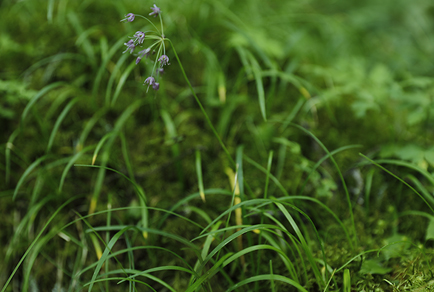
Allium stoloniferum, a new species from Northwest Sichuan Province, China, is described and illustrated herein. Morphological and phylogenetic evidence suggests that this species belongs to the Allium sikkimense group of the subgenus Reticulatobulbosa. It is very similar to A. paepalanthoides and A. plurifoliatum, but can be distinguished by the purplish-red, basal, and broader leaf blades at the base of the petiole and scape, the well-developed underground rhizomes, the hollow scape, and the coloration of the tepals. Phylogenetic analysis based on nuclear ribosomal internal transcribed spacers (ITS) and four cpDNA regions (atpI–atpH, trnV–ndhC, rpoB–trnC, trnL–trnF), further reveal that A. stoloniferum shows a close relationship with other species in the A. sikkimense group, including A. kangdingense, A. beesianum, A. zhegushanense, A. sikkimense, A. yuanum, and A. cyaneum. Detailed differences in morphological characteristics and habitat are also provided.
References
- Airy-Shaw, H.K. (1931) Allia praesertim Sinensia nova vel minus cognita. Notes from the Royal Botanic Garden, Edinburgh 16: 134–147.
- Ashokan, A., Xavier, A., Suksathan, P., Ardiyani, M., Leong-Škorničková, J., Newman, M., Kress, W.J. & Gowda, V. (2022) Himalayan orogeny and monsoon intensification explain species diversification in an endemic ginger (Hedychium: Zingiberaceae) from the Indo-Malayan Realm. Molecular Phylogenetics and Evolution 170: 107440. https://doi.org/10.1016/j.ympev.2022.107440
- Baker, J.G. (1874) Original article on the Alliums of India, China, and Japan. Br J.G. Baker, F.L.S. The Journal of Botany, British and Foreign 12: 292–293.
- Burland, T.G. (2000) DNASTAR’s Lasergene sequence analysis software. Methods in Molecular Biology (Clifton, N.J.) 132: 71–91. https://doi.org/10.1385/1-59259-192-2:71
- Cheng, R.Y., Li, J., Xie, D.F., He, X.J., Zhou, R.X., Li, Q., Yu, Y. & Zhou, S.D. (2025) Effects of Mountain Uplift and Climatic Oscillations on Phylogeography and Species Divergence of Notholirion (Liliaceae). Journal of Heredity esaf032. https://doi.org/10.1093/jhered/esaf032
- Cheng, X.J., Fritsch, P.W., Lin, Y.J., Li, G.H., Chen, Y.Q., Zhang, M.Y. & Lu, L. (2024) The role of Pleistocene dispersal in shaping species richness of sky island wintergreens from the Himalaya-Hengduan Mountains. Molecular Phylogenetics and Evolution 197: 108082. https://doi.org/10.1016/j.ympev.2024.108082
- Darriba, D., Taboada, G.L., Doallo, R. & Posada, D. (2012) JModelTest 2: more models, new heuristics and parallel computing. Nature Methods 9: 772. https://doi.org/10.1038/nmeth.2109
- Friesen, N., Fritsch, R.M. & Blattner, F.R. (2006) Phylogeny and intrageneric classification of Allium (Alliaceae) based on nuclear ribosomal DNA ITS sequences. Aliso 22: 372–395. https://doi.org/10.5642/aliso.20062201.31
- Fritsch, R.M. & Abbasi, M. (2013) A taxonomic review of Allium subg. Melanocrommyum in Iran. Leibniz-Institut für Pflanzengenetik und Kulturpflanzenforschung, Gatersleben, 240 pp.
- Fritsch, R.M. & Friesen, N. (2002) Evolution, domestication and taxonomy. In: Rabinowitch, H.D. & Currah, L. (Eds.) Allium crop science: recent advances. CABI Publishing, Wallingford, UK, pp. 5–30. https://doi.org/10.1079/9780851995106.0005
- Gao, Y.D., Harris, A.J. & He, X.J. (2015) Morphological and ecological divergence of Lilium and Nomocharis within the Hengduan Mountains and Qinghai-Tibetan Plateau may result from habitat specialization and hybridization. BMC Evolutionary Biology 15: 147. https://doi.org/10.1186/s12862-015-0405-2
- Govaerts, R., Kington, S., Friesen, N., Fritsch, R., Snijman, D.A., Marcucci, R., Silverstone-Sopkin, P.A. & Brullo, S. (2021) World checklist of Amaryllidaceae. Facilitated by the Royal Botanic Gardens, Kew. Available from: http://apps.kew.org/wcsp/ (accessed 28 August 2024)
- Huang D.Q., Zhen A.G. & Zhu, X.X. (2021) Allium yingshanense, a new species from the Dabie Mountains (East-central China), and taxonomic remarks on the related species. Phytotaxa 498 (4): 227–241. https://doi.org/10.11646/phytotaxa.498.4.1
- Huang, D.Q., Sun, H. & Ma, X.G. (2022) Allium jichouense (Amaryllidaceae), a new species of the section Sikkimensia from southwestern China. Phytotaxa 575: 115–128. https://doi.org/10.11646/phytotaxa.575.2.1
- Huang, D.Q., Sun, H. & Ma, X.G. (2024) Phylogenomic analyses and chromosome ploidy identification reveal multiple cryptic species in Allium sikkimense complex (Amaryllidaceae). Frontiers in Plant Science 14: 1268546. https://doi.org/10.3389/fpls.2023.1268546
- Kamelin, R.V. (1973) Florogeneticheskij analiz estestvennoj flory gornoj Srednej Azii. Leningrad, 354 pp.
- Katoh, K. & Standley, D.M. (2013) MAFFT multiple sequence alignment software version 7.0: improvements in performance and usability. Molecular Biology and Evolution 30: 772–780. https://doi.org/10.1093/molbev/mst010
- Kumar, S., Stecher, G. & Tamura, K. (2016) Mega7: molecular evolutionary genetics analysis version 7.0 for bigger datasets. Molecular Biology and Evolution 33: 1870–1874. https://doi.org/10.1093/molbev/msw054
- Li, Q.Q., Zhou, S.D., He, X.J., Yu, Y., Zhang, Y.C. & Wei, X.Q. (2010) Phylogeny and biogeography of Allium (Amaryllidaceae: Allieae) based on nuclear ribosomal internal transcribed spacer and chloroplast rps16 sequences, focusing on the inclusion of species endemic to China. Annals of Botany 106: 709–733. https://doi.org/10.1093/aob/mcq177
- Linnaeus, C. (1753) Species Plantarum, vol. 1. Impensis Laurentius Salvius, Holmiae, 560 pp.
- McLay, T.G.B., Fowler, R.M., Fahey, P.S., Murphy, D.J., Udovicic, F., Cantrill, D.J. & Bayly, M.J. (2023) Phylogenomics reveals extreme gene tree discordance in a lineage of dominant trees: hybridization, introgression, and incomplete lineage sorting blur deep evolutionary relationships despite clear species groupings in Eucalyptus subgenus Eudesmia. Molecular phylogenetics and evolution 187: 107869. https://doi.org/10.1016/j.ympev.2023.107869
- Meng, H.H., Su, T., Gao, X.Y., Li, J., Jiang, X.L., Sun, H. & Zhou, Z.K. (2017) Warm-cold colonization: response of oaks to uplift of the Himalaya-Hengduan Mountains. Molecular Ecology 26(12): 3276–3294. https://doi.org/10.1111/mec.14092
- Nguyen, N.H., Driscoll, H.E. & Specht, C.D. (2008) A molecular phylogeny of the wild onions (Allium: Alliaceae) with a focus on the western North American center of diversity. Molecular Phylogenetics and Evolution 47: 1157–1172. https://doi.org/10.1016/j.ympev.2007.12.006
- Pandey, A., Pandey, R., Negi, K.S. & Radhamani, J. (2008) Realizing value of genetic resources of Allium in India. Genetic Resources and Crop Evolution 55: 985–994. https://doi.org/10.1007/s10722-008-9305-2
- Regel, E. (1875) Alliorum adhuc cognitorum monographia. Trudy Imperatorskago S.-Peterburgskago Botaničeskago Sada 3 (2): 1–266. https://doi.org/10.5962/bhl.title.15473
- Rendle, A.B. (1906) New monocotyledons from China and Tibet. Journal of Botany, British and Foreign. London 44: 41–46.
- Ronquist, F. & Huelsenbeck, J.P. (2003) MrBayes 3: Bayesian phylogenetic inference under mixed models. Bioinformatics 19: 1572–1574. https://doi.org/10.1093/bioinformatics/btg180
- Shaw, J., Lickey, E.B., Beck, J.T., Farmer, S.B., Liu, W.S., Miller, J., Siripun, K.C., Winder, C.T., Schilling, E.E. & Small, R.L. (2005) The tortoise and the hare II: relative utility of 21 noncoding chloroplast DNA sequences for phylogenetic analysis. American Journal of Botany 92: 142–166. https://doi.org/10.3732/ajb.92.1.142
- Shaw, J., Lickey, E., Schilling, E. & Small, R. (2007) Comparison of whole chloroplast genome sequences to choose noncoding regions for phylogenetic studies in angiosperms: the tortoise and the hare III. American Journal of Botany 94: 275–288. https://doi.org/10.3732/ajb.94.3.275
- Smith, W.W. (1914) Allium beesianum. Notes from the Royal Botanic Garden, Edinburgh. Edinburgh and Glasgow 8: 176–177.
- Stamatakis, A. (2014) RAxML version 8: a tool for phylogenetic analysis and post-analysis of large phylogenies. Bioinformatics 30: 1312–1313. https://doi.org/10.1093/bioinformatics/btu033
- Swofford, D.L. (2003) PAUP*: Phylogenetic analysis using parsimony (*and other methods), version 4.0b10. Sunderland: Sinauer Associates.
- Traub, H.P. (1972) Genus Allium L. subgenera, sections and subsections. Plant Life 28: 132–137.
- Wang, F.T. & Tang, T. (1937) Notes on Chinese Liliaceae IV. Bulletin of the Fan Memorial Institute of Biology; Botany. Beijing 7: 281–304.
- Wang, K.L., Zhou, X.H., Liu, D.T., Li, Y.Z., Yao, Z., He, W.M. & Liu, Y.B. (2022) The uplift of the Hengduan Mountains contributed to the speciation of three Rhododendron species. Global Ecology and Conservation 35: e02085. https://doi.org/10.1016/j.gecco.2022.e02085
- White, T.J., Bruns, T., Lee, S. & Taylor, J. (1990) Amplification and direct sequencing of fungal ribosomal RNA genes for phylogenetics. In: Innis, M.A., Gelfand, D.H., Sninsky, J.J. & White, T.J. (Eds.) PCR Protocols: A Guide to Methods and Applications. Academic Press Inc, San Diego, California, pp. 315–322. https://doi.org/10.1016/B978-0-12-372180-8.50042-1
- Xia, M.Q., Liu, Y., Liu, J.J., Chen, D.H., Shi, Y., Chen, Z.X., Chen, D.R., Jin, R.F., Chen, H.L., Zhu, S.S., Li, P., Si, J.P. & Qiu, Y.X. (2022) Out of the Himalaya-Hengduan Mountains: Phylogenomics, biogeography and diversification of Polygonatum Mill. (Asparagaceae) in the Northern Hemisphere. Molecular Phylogenetics and Evolution 169: 107431. https://doi.org/10.1016/j.ympev.2022.107431
- Xie, C., Xie, D.F., Zhong, Y., Guo, X.L., Liu, Q., Zhou, S.D. & He, X.J. (2019) The effect of Hengduan Mountains Region (HMR) uplift to environmental changes in the HMR and its eastern adjacent area: tracing the evolutionary history of Allium section Sikkimensia (Amaryllidaceae). Molecular Phylogenetics and Evolution 130: 380–396. https://doi.org/10.1016/j.ympev.2018.09.011
- Xie, D.F., Cheng, R.Y., Megan, Chen, J.P., Lei, J.Q., Zhang, X.Y. & He, X.J. (2022) Allium heterophyllum (Amaryllidaceae), a new species from Henan, China. PhytoKeys 190: 53–67. https://doi.org/10.3897/phytokeys.190.77449
- Xie, D.F., Cheng, R.Y., Deng, J.J., Wang, Y. & He, X.J. (2024) Allium kangdingense (Amaryllidaceae, Allioideae), a new species of section Sikkimensia from western Sichuan. Phytotaxa 638 (2): 175–184. https://doi.org/10.11646/phytotaxa.638.2.6
- Xu, J.M. (1980) Allium L. In: Wang, F.T. & Tang, T. (Eds.) Flora Reipublicae Popularis Sinicae (Monocotyledoneae—Liliaceae). Science press, Beijing, pp. 170–272, 283–286.
- Zhang, Z.Z., Liu, G. & Li, M.J. (2024) Incomplete lineage sorting and gene flow within Allium (Amayllidaceae). Molecular phylogenetics and evolution 195: 108054. https://doi.org/10.1016/j.ympev.2024.108054