
Abstract
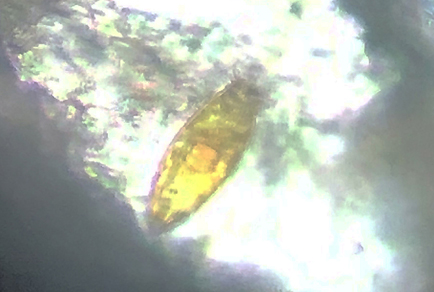
Extremely rare raphid diatoms occur on the Imazu tidal flat, Fukuoka, Japan. We identified a new taxon, Lyreneis gen. nov., based on morphological structure and genetic analysis. Although this genus belongs to the family Lyrellaceae, it does not possess a lateral area, as seen in Navicula, Petroneis, and Moreneis, but has an undulating transapical axis and shows patterns of punctae and striae similar to those of Petroneis. Detailed inspection of the microstructural characteristics and the results of rbcL analysis of this diatom confirmed that the establishment of a new genus is in order. Manual isolation is effective for obtaining material of extremely rare species such as Lyreneis undulata gen. et sp. nov. The detection of L. undulata demonstrates that, at least on some tidal flats, certain living organisms are present at very low abundance, meaning that these ecosystems are more biodiverse than currently known.
References
- Al-Handal, A.Y., Thomas, E.W. & Pennesi, C. (2018) Marine benthic diatoms in the newly discovered coral reefs, off Basra coast, Southern Iraq. Phytotaxa 372: 111–152. https://doi.org/10.11646/phytotaxa.372.2.1
- Angeles, I.B., Romero-MartÍnez, M.L., Cavaliere, M., Varrella, S., Francescangeli, F., Piredda, R. & Frontalini, F. (2023) Encapsulated in sediments: eDNA deciphers the ecosystem history of one of the most polluted European marine sites. Environment International 172: 107738. https://doi.org/10.1016/j.envint.2023.107738
- Ashworth, M.P., Majewska, R., Frankovich, T.A., Sullivan, M., Bosak, S., Filek, K., Van de Vijver, B., Arendt, M., Schwenter, J., Nel, R., Robinson, N.J., Gary, M.P., Theriot, E.C., Stacy, N.I., Lam, D.W., Perrault, J.R., Manire, C.A. & Manning, S.R. (2022) Cultivating epizoic diatoms provides insights into the evolution and ecology of both epibionts and hosts. Scientific reports 12: 15116. https://doi.org/10.1038/s41598-022-19064-0
- Babasaki, M., Sou, T., Kawaguchi, Y., Park, K. & Shimatani, Y. (2006) Historical change of Environment and Human impact relationship in the Imazu tidal flat, Fukuoka. Environmental Systems Research 34: 97–103. (in Japanese with English abstract) https://doi.org/10.2208/proer.34.97
- Bruder, K. (2006) Taxonomic revision of diatoms belonging to the family Naviculaceae based on morphological and molecular data. PhD Thesis, Universität Bremen. [https://epic.awi.de/id/eprint/17950/1/Bru2006b.pdf]
- Chiba, T. & Sawai, Y. (2014) Reexamination and updating of diatom species for paleoenvironmental reconstructions. Diatom 30 (Supplement): 17–30. (in Japanese with English abstract) https://doi.org/10.11464/diatom.30.17
- Chiba, T., Endo, K. & Masubuchi, K. (2011) Size distribution of diatom frustules and sedimentary process of dead diatoms in a tidal zone. The Quaternary Research (Daiyonki-Kenkyu) 50: 279–293. (in Japanese with English abstract) https://doi.org/10.4116/jaqua.50.279
- Chiba, T., Nishimura, Y. & Yanagisawa, Y. (2021) Distinguishing reworked diatoms derived from Neogene marine strata in modern coastal assemblages for understanding taphonomic processes and reconstructing Holocene paleoenvironments in the Tokachi coastal area, Hokkaido, Japan. Marine Micropaleontology 164: 101970. https://doi.org/10.1016/j.marmicro.2021.101970
- Chiba, T., Osada, R., Tuji, A. & Idei, M. (2025) Actinocyclus aquae-dulcis sp. nov. (Coscinodiscophyceae, Coscinodiscales, Hemidiscaeae), a new centric diatom from Lake Akan and northern coasts of Japan. Phytotaxa 687: 65–83. https://doi.org/10.11646/phytotaxa.687.1.5
- Cleve, P.T. (1894) Synopsis of the naviculoid diatom I and II. Kongliga Svenska VetenskapsAkademien, 26, pp. 1–194. https://doi.org/10.1111/j.1529-8817.2011.01087.x
- Desikachary, T.V. (1989) Atlas of diatoms, Pt. 6, Marine diatoms of the Indian Ocean region. Madras Science Foundation, Madras, pl. 662–809.
- Grunow, A. (1863) Über einige neue and unbekannten Arten und Gattungen von Diatomaceen. –Verhandlungen der Kaiserlich-königlich Zoologisch-Botanischen Gesellschaft in Wien 13: 137–162.
- Hernández-Almeida, O.U., Herrera-Silveira, J.A. & Merino-Virgilio, F. (2013) Nine new records of benthic diatoms of the genera Cimaconeis, Cocconeis, Licmophora, Talaroneis, Oestrupia, Petroneis and Synedrosphenia from the northern coast of the Yucatan Peninsula, Mexico. Hidrobiológica 23: 154–168. Available from: [https://www.scielo.org.mx/pdf/hbio/v23n2/v23n2a4.pdf]
- Hendey, N.I. (1958) Marine diatoms from some West African Ports. Journal of Royal Microscopic society 77: 28–85. https://doi.org/10.1111/j.1365-2818.1957.tb02015.x
- Hendey, N.I. (1964) An introductory account of the smaller algae of British coastal waters. Pt.5, Bacillariophyceae (Diatoms). Her Majesty’s Stationery Office, London, 317 pp.
- Hustedt, F. (1927–1966) Die Kieslagen Deutschlands, Österreichs und der Schweiz unter Berucksichtigung der ubrigen Lander Europas sowie der angrensenden Meeresgebiete. In: Dr. Rabenhorst’s Kryptogrammen Flora von Deutschland, Österreich und der Schweiz 7, Akademische Verlagsgell-schaft, Leipzig.
- Japan Industrial Standard Committee. (2020) JIS A 1226:2020 Test method for ignition loss of soils. Available from: https://kikakurui.com/a1/A1226-2020-01.html (accessed 11 March 2023)
- Jones, H.M., Simpson, G.E., Stickle, A.J. & Mann, D.G. (2005) Life history and systematics of Petroneis (Bacillariophyta), with special reference to British waters. European Journal of Phycology 40: 61–87. https://doi.org/10.1080/09670260400024675
- Karajeva, N.I. (1978) New genus of the family Naviculaceae West. Botanicheskii Zhurnal 63: 1593–1596.
- Kitton, F. (1889) New species of Navicula (N. venustissima). Journal of the Royal Microscopical Society 1889: 101.
- Kumar, S., Stecher, G., Li, M., Knyaz, C. & Tamura, K. (2018) MEGA X: Molecular Evolutionary Genetics Analysis across Computing Platforms. Molecular Biology and Evolution 35: 1547–1549. https://doi.org/10.1093/molbev/msy096
- Leach, W.E. (1819) Entomostraca. In: Levrault, F.G. (Ed.) Dictionnaire des sciences naturelles Tome 14. Levrault and Schoell, Strasbourg and Paris, pp. 524–543.
- Lepere, C., Demura, M., Kawachi, M., Romac, S., Probert, I. & Vaulot, D. (2011) Whole-genome amplification (WGA) of marine photosynthetic eukaryote populations. FEMS Microbiology Ecology 76: 513–523. https://doi.org/10.1111/j.1574-6941.2011.01072.x
- Li, Y., Suzuki, H., Nagumo, T., Tanaka, J., Sun, Z. & Xu, K. (2022) Morphology, molecular phylogeny and systematics of the diatom genus Fallacia (Sellaphoraceae), with descriptions of three new species1. Journal of Phycology 58: 449–464. https://doi.org/10.1111/jpy.13246
- Lobban, C.S. & Pennesi, C. (2014) Two new Mastogloia species (Bacillariophyceae), M. parlibellioides and M. lyra, from coral reefs in Guam, Western Pacific. Botanica marina 57: 41–54. https://doi.org/10.1515/bot-2013-0020
- Mann, D.G. & Stickle, A.l. (1993) Life history and systematics of Lyrella. Nova Hedwigia, Beiheft 106: 43–70.
- Mann, D.G. (1998) Lyrella cassiteridum, a new species of marine epipelic diatom. Nordic Journal of Botany 18: 503–512. https://doi.org/10.1111/j.1756-1051.1998.tb01529.x
- Mann, D.G. & Evans, K.M. (2007) Molecular genetics and the neglected art of diatomics. In: Brodie, J. & Lewis, J. (Eds.) Unravelling the Algae—The Past, Present and Future of Algal Systematics. CRC Press, Boca Raton, FL, pp. 231–265.
- Montgomery, R.T. (1978) Environmental and ecological studies of the diatom communities associated with the coral reefs of the Florida Keys. vol. I and II, PhD Thesis, Florida State University.
- Moser, G., Lange-Bertalot, H. & Metzeltin, D. (1998) Insel der Endemiten. Geobotanisches Phänomen Neukaledonien. In: Lange-Bertalot, H. & Kociolek, J. (Eds.) Bibliotheca Diatomologica 38. J. Cramer, Berlin-Stuttgart. 464 pp.
- Nagumo, T., Suzuki, H. & Sato, S. (2018) Diatom Observation Guide (Keiso Kansatsu Zukan). 176 pp. Seibundo Shinkosha Co., Ltd., Tokyo. (in Japanese)
- National Museum of Nature and Science. Collection Database of Specimens and Materials. NMNS-MPC-02453: Navicula carinifera Grunow. Available from: [https://db.kahaku.go.jp/webmuseum/detail?cls=col_c3_02&pkey=MPC-02453]
- Nevrova, E., Witkowski, A., Kulikovskiy, M., Lange-Bertalot, H. & Kociolek, J.P. (2013) A revision of the diatom genus Lyrella Karayeva (Bacillariophyta: Lyrellaceae) from the Black Sea, with descriptions of five new species. Phytotaxa 83: 1–38. http://dx.doi.org/10.11646/phytotaxa.83.1.1
- Ohtsubo, M., Asahiro, K., Takami, S. & Okabe, T. (1997) Characterization of Imazu tidal-flat from the view point of physical and chemical properties of mud and benthos distribution. Transactions of The Japanese Society of Irrigation, Drainage and Reclamation Engineering 190: 481–489, a1. [in Japanese with English abstract] https://doi.org/10.11408/jsidre1965.1997.481
- Ohtsuka, T. (2005) Epipelic diatoms blooming in Isahaya Tidal Flat in the Ariake Sea, Japan, before the drainage following the Isahaya‐Bay Reclamation Project. Phycological Research 53: 138–148. https://doi.org/10.1111/j.1440-183.2005.00380.x
- Park, J., Koh, C.H., Khim, J.S., Ohtsuka, T. & Witkowski, A. (2012) Description of a new naviculoid diatom genus Moreneis gen. nov. (Bacillariophyceae) from sand flats in Korea 1. Journal of Phycology 48: 186–195. https://doi.org/10.1111/j.1529-8817.2011.01087.x
- Peragallo, H. & Peragallo, M. (1897–1908) Diatomées Marines de France et des Districts Maritimes Voisins. Micrographe-Éiteur J. Tempère, Grez-sur Loing, 491 pp.
- Pomazkina, G., Rodionova, Y., Sherbakova, T. & Williams, D.M. (2016) Petroplacus gen. nov. (Bacillariophyta): a new genus of diatom from Lake Baikal. Phytotaxa 272: 267–276. Availble from: http://www.mapress.com/j/pt/ (accessed 11 March 2023)
- Road & Sewerage Bureau, Fukuoka City Government. (2013) Results of the environmental monitoring in the new west water treatment center 2012. (in Japanese title transrated). Available from: https://www.city.fukuoka.lg.jp/data/open/cnt/3/25277/1/09_siryohen.pdf?20170306104300 (accessed 11 March 2023)
- Round, F.E., Crawford, R.M. & Mann, D.G. (1990) The diatoms: biology and morphology of the genera. Cambridge University Press, Cambridge, 747 pp.
- Sawai, Y. (2001) Distribution of living and dead diatoms in tidal wetlands of northern Japan: relations to taphonomy. Palaeogeography, Palaeoclimatology, Palaeoecology 173: 125–141. https://doi.org/10.1016/S0031-0182(01)00313-3
- Seino, S., Uda, T., Tsuchiya, Y. & Hino, A. (1999) Field observation of spawning sites of horseshoe crab Tachypleus tridentatus in view of mitigation in Itoshima Peninsula in Fukuoka Prefecture. Proceedings of civil engineering in the ocean 15: 189–194. (in Japanese with English abstract) https://doi.org/10.2208/prooe.15.189
- Schmidt, A. (1874–1959) Atlas der Diatomaceen-Kunde. Band I and II, O.R. Reisland, Leipzig.
- Shimatani, Y., Yokogawa, S., Sou, T., Kawaguchi, Y., Mizugaki, S. & Babasaki, M. (2008) Historical changes and Sedimentary environment of Imazu tidal flat. Proceedings of Hydraulic Engineering 52: 1087–1092. (in Japanese with English abstract) https://doi.org/10.2208/prohe.52.1087
- Siqueiros-Beltrones, D.A., MARTÍNEZ, Y.J. & LÓPEZ-Fuerte, F.O. (2023) Epiphytic Diatoms from the Central Region of the Gulf of California: Floristics and Biogeographic Remarks. Diversity 15: 510. https://doi.org/10.3390/d15040510
- Smith, W. (1856) A synopsis of the British Diatomaceae; with remarks on their structure, functions and distribution; and instructions for collecting and preserving specimens. Vol. 2, John van Voorst, London, 107 pp.
- Stidolph, S.R., Sterrenburg, F.A.S., Smith, K.E.L. & Kraberg, A. (2012) Stuart R. Stidolph diatom atlas. Open-File Report 2012–1163. Available from: https://doi.org/10.3133/ofr20121163 (accessed 7 July 2023)
- Takahara, T., Yamanaka, H., Minamoto, T., Doi, H. & Uchii, K. (2016) Current state of biomonitoring method using environment DNA analysis. Japanese Journal of Ecology 66: 583–599. (in Japanese with English abstract) https://doi.org/10.18960/seitai.66.3_583
- Tuji, A., Mohri, Y., Ki, J.S., Jung, S.W. & Julius, M.L. (2014) Phylogeny of Praestephanos gen. nov. (Thalassiosirales, Bacillariophyceae) based on Stephanodiscus suzukii, and related freshwater thalassiosiroid diatoms. Plankton and Benthos Research 9: 132–140. https://doi.org/10.3800/pbr.9.132
- Tsumura, K. (1991) The Collection of Diatom Slides preserved in the National Science Museum of Japan. Diatom 6: 45–56. (in Japanese with English abstract) https://doi.org/10.11464/diatom1985.6.0_45
- Walsh, P.S., Metzger, D.A. & Higuchi, R. (1991) Chelex 100 as a medium for simple extraction of DNA for PCR-based typing from forensic material. BioTechniques 10: 506–513.
- Wetzel, C.E., Sar, E.A., Sunesen, I., Van de Vijver, B. & Ector, L. (2017) New combinations and typification of Neotropical Cosmioneis species (Cosmioneidaceae). Diatom Research 32: 229–240. https://doi.org/10.1080/0269249X.2017.1316776
- Witkowski, A. (1994) Recent and fossil diatom flora of the Gulf of Gdansk, Southern Baltic Sea. Origin, composition and changes of diatom assemblages during the Holocene. In: Lange-Bertalot, H. (Ed.) Bibliotheca Diatomologica 28, J. Cramer, Berlin-Stuttgart. 313 pp.
- Witkowski, A., Lange-Bertalot, H. & Metzeltin, D. (2000) Diatom flora of marine coasts 1. In: Lange-Bertalot, H. (ed.) Iconographia Diatomologica 7, Koeltz Scientific Books, Königstein, 925 pp.
- Zimmermann, J., Glöckner, G., Jahn, R., Enke, N. & Gemeinholzer, B. (2015) Metabarcoding vs. morphological identification to assess diatom diversity in environmental studies. Molecular ecology resources 15: 526–542. https://doi.org/10.1111/1755-0998.12336