

Abstract
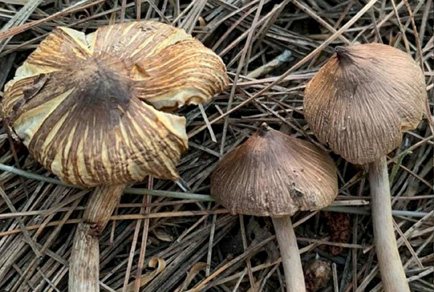
A new species, Pseudosperma umbonatum was collected from different localities of Himalayan region of Khyber Pakhtunkhwa and Punjab in Pakistan. The species is characterized by its fibrillose pileus, ovoid to ellipsoid basidiospores (7.2–7.9 × 4.7–5.4 µm), and clavate to fusiform or ventricose septate cheilocystidia. Molecular phylogenetic analysis of DNA sequences from ITS and LSU regions supported it as a new species.
References
- Ahmad, S., Iqbal, S.H. & Khalid, A.N. (1997) Fungi of Pakistan. Sultan Ahmad Mycological Society of Pakistan, Department of Botany, University of the Punjab, Quaid-e-Azam campus, Lahore, 248 pp.
- Ahmed, E., Arshad, M., Saboor, A., Qureshi, R., Mustafa, G., Sadiq, S.K. & Chaudhari, S.K. (2013) Ethnobotanical appraisal and medicinal use of plants in Patriata, New Murree, evidence from Pakistan. Journal of Ethnobiology and Ethnomedicine 9: 1–10. https://doi.org/10.1186/1746-4269-9-13
- Ahmed, M., Husain, T., Sheikh, A.H., Hussain, S.S. & Siddiqui, M.F. (2006) Phytosociology and structure of Himalayan forests from different climatic zones of Pakistan. Pakistan Journal of Botany 38: 361–383.
- Aïgnon, L.H., Jabeen, S., Naseer, A., Yorou, N.S. & Ryberg, M. (2021) Three new species of Inosperma (Agaricales, Inocybaceae) from Tropical Africa. MycoKeys 77: 97–116. https://doi.org/10.3897/mycokeys.77.60084
- Aïgnon, H.L., Fan, Y-G. & Matheny, P.B. (2024) Pseudosperma brunneopilosum, a new species of Inocybaceae from West Africa. Nordic Journal of Botany 2024: e04470. https://doi.org/10.1111/njb.04470
- Bandini, D. & Oertel, B. (2020) Three new species of the genus Pseudosperma (Inocybaceae). Czech Mycology 72 (2): 221–250. https://doi.org/10.33585/cmy.72205
- Bandini, D., Oertel, B. & Berhardt, U. (2024) Noch mehr Risspilze (5): Elf neue Arten der Familie Inocybaceae und Epitypifizierung von Pseudosperma rimosum. Mycologia Bavarica 24: 1–52.
- Bau, T. & Fan, Y. (2018) Three new species of Inocybe sect. Rimosae from China. Mycosystema 37 (6): 693–702.
- Beg, A.R. (1975) Wildlife habitats of Pakistan. Forest institute Peshawar, Bulletin of Pakistan 5: 25–30.
- Bon, M. (1997) Les clitocybes, omphales et ressemblants. Documents mycologiques: Mémoire hors série 4: l–174.
- Bruns, T.D. (1995) Thoughts on the processes that maintain local species diversity of ectomycorrhizal fungi. Plant and Soil 170 (1): 63–73. https://doi.org/10.1007/BF02183055
- Cervini, M., Bizio, E. & Alvarado, P. (2020) Quattro nueve specie italiane del genere Pseudosperma (Inocybaceae) con odore di miele. Rivista di Micologia 63: 3–36.
- Cooke, M.C. (1883) Handbook of British fungi. London, 398 pp.
- Drummond, A.J., Suchard, M.A., Xie, D. & Rambaut, A. (2012) Bayesian phylogenetics with BEAUti and the BEAST 1.7. Molecular Biology and Evolution 29: 1969–1973. https://doi.org/10.1093/molbev/mss075
- DNASTAR Inc. (2003) MegAlign version 5.00. DNASTAR Inc., Madison, WI.
- Esteve-Raventós, F. (2014) Inocybe aureocitrina (Inocybaceae), a new species of section Rimosae from Mediterranean evergreen oak forests. Plant Biosystems-An International Journal Dealing with all Aspects of Plant Biology 148 (2): 377–383. https://doi.org/10.1080/11263504.2013.877532
- Farooqi, A., Aqdus, F., Niazi, A.R., Jabeen, S. & Khalid, A.N. (2017) Inocybe ahmadii sp. nov. and a new record of I. leptocystis from Pakistan. Mycotaxon 132: 257–269. https://doi.org/10.5248/132.257
- Gardes, M. & Bruns, T.D. (1993) ITS primers with enhanced specificity of basidiomycetes: application to the identification of mycorrhizae and rusts. Molecular Ecology 2: 113–118. https://doi.org/10.1111/j.1365-294X.1993.tb00005.x
- Hall, T.A. (1999) BioEdit: a user-friendly biological sequence alignment editor and analysis program for Windows 95/98/NT. Nucleic Acid Series 41: 95–98.
- Hameed, M., Nawaz, T., Ashraf, M., Ahmad, F., Ahmad, K.S., Ahmad, M.S.A., Raza, S.H., Hussain, M. & Ahmad, I. (2012) Floral Biodiversity and Conservation Status of the Himalayan Foothill Region, Punjab. Pakistan Journal of Botany 44: 143–149.
- Hrynkiewicz, K., Toljander, Y.K., Baum, C., Fransson, P.M., Taylor, A.F. & Weih, M. (2012) Correspondence of ectomycorrhizal diversity and colonisation of willows (Salix spp.) grown in short rotation coppice on arable sites and adjacent natural stands. Mycorrhiza 22: 603–613. https://doi.org/10.1007/s00572-012-0437-z
- Heim, R. (1931) Le genre Inocybe. Encyclopedie Mycologique 1: 1–429.
- Hussain, F. & Ilahi, I. (1991) Ecology and Vegetation of Lesser Himalayas, Pakistan. Department of Botany University of Peshawar, Pakistan, Jadoon Printing Press, Peshawar, 185 pp.
- Ilyas, S., Razaq, A. & Khalid, A.N. (2013) Inocybe nitidiuscula and its ectomycorrhizae with Alnus nitida from Galyat, Pakistan. Mycotaxon 124 (1): 247–254. https://doi.org/10.5248/124.247
- Jabeen, S. & Khalid, A.N. (2020) Pseudosperma flavorimosum sp. nov. from Pakistan. Mycotaxon 135 (1): 183–193. https://doi.org/10.5248/134.183
- Jabeen, S. (2024) Ectomycorrhizal Inoculum-A Key Tool for Rehabilitation of Natural Forests. IntechOpen. https://doi.org/10.5772/intechopen.115046
- Jabeen, S., Ahmad, I., Rashid, A. & Khalid, A.N. (2016) Inocybe kohistanensis, a new species from Swat, Pakistan. Turkish Journal of Botany 40: 312–318. https://doi.org/10.3906/bot-1501-17
- Jabeen, S., Bashir, H. & Khalid, A.N. (2021) Pseudosperma albobrunneum sp. nov. from coniferous forests of Pakistan. Mycotaxon 136 (2): 361–372. https://doi.org/10.5248/136.361
- Jacobsson, S. & Larsson, E. (2009) Inocybe spuria, a new species in section Rimosae from boreal coniferous forests. Mycotaxon 109 (1): 201–207. https://doi.org/10.5248/109.201
- Kaygusuz, O., Bandini, D., Knudsen, H. & Türkekul, İ. (2023) Pseudosperma pamukkalense (Inocybaceae: Agaricomycetes), a new species from Turkey. Phytotaxa 599 (4): 225–238. https://doi.org/10.11646/phytotaxa.599.4.2
- Kaygusuz, O., Bandini, D., Rühl, A., Sarawi, S., Yorou, N.S. & Piepenbring, M. (2024) Five new species of Pseudosperma (Inocybaceae, Agaricales) from Benin and Turkey based on morphological characteristics and phylogenetic evidence. Mycological Progress 23 (1): 1–24. https://doi.org/10.1007/s11557-024-01964-2
- Khan, M.S. (1999) Herpetology of habitat types of Pakistan. Pakistan Journal of Zoology 31: 275–289.
- Kropp, B.R., Matheny, P.B. & Hutchison, L.J. (2013) Inocybe section Rimosae in Utah: phylogenetic affinities and new species. Mycologia 105 (3): 728–747. https://doi.org/10.3852/12-185
- Kuyper, T. (1986) A revision of the genus Inocybe in Europe. I. Subgenus Inosperma and the smooth-spored species of subgenus. Inocybe Persoonia-Supplement 3 (1): 1–247.
- Larsson, E., Ryberg, M., Moreau, P.A., Mathiesen, Å.D. & Jacobsson, S. (2009) Taxonomy and evolutionary relationships within species of section Rimosae (Inocybe) based on ITS, LSU and mtSSU sequence data. Persoonia 23 (1): 86–98. https://doi.org/10.3767/003158509X475913
- Latha, K.D. & Manimohan, P. (2015) Inocybe griseorubida, a new species of Pseudosperma clade from tropical India. Phytotaxa 221 (2): 166–174. https://doi.org/10.11646/phytotaxa.221.2.6
- Liu, L.N., Razaq, A., Atri, N.S., Bau, T., Belbahri, L. & Bouket, A.C. (2018) Fungal systematics and evolution: FUSE 4. Sydowia 70: 211–286. https://doi.org/10.12905/0380.sydowia70-2018-0211
- Maire, R. & Werner, R.G. (1937) Fungi Maroccani. Catalogue raisonné des champignons connus jusqu’ici au Maroc. Mémoires de la Société des Sciences Naturelles du Maroc 45: 1–148.
- Malençon, G. & Bertault, R. (1975) Flore des champignons supérieurs du Maroc, tome 2. Travaux de l’Institut Scientifique Chérifien. Série¹Botanique et Biologique Végétale 33: 1–540.
- Malik, S.N. & Sukhera, O.R. (2012) Management of natural gas resources and search for alternative renewable energy resources: a case study of Pakistan. Renewable and Sustainable Energy Reviews 16 (2): 1282–1290. https://doi.org/10.1016/j.rser.2011.10.003
- Mao, N., Xu, Y.Y., Zhao, T.Y., Lv, J.C. & Fan, L. (2022) New Species of Mallocybe and Pseudosperma from North China. Journal of Fungi 8 (3): 256. https://doi.org/10.3390/jof8030256
- Matheny, P.B. & Kudzma, L.V. (2019) New species of Inocybe (Agaricales) from eastern North America. Journal of the Torrey Botanical Society 146 (3): 213–235. https://doi.org/10.3159/TORREY-D-18-00060.1
- Matheny, P.B., Aime, M.C., Bougher, N.L., Buyck, B., Desjardin, D.E., Horak, E., Kropp, B.R., Lodge, D.J., Soytong, K., Trappe, J.M. & Hibbett, D.S. (2009) Out of the Palaeotropics? Historical biogeography and diversification of the cosmopolitan ectomycorrhizal mushroom family Inocybaceae. Journal of Biogeography 36: 577–592. https://doi.org/10.1111/j.1365-2699.2008.02055.x
- Matheny, P.B., Hobbs, A.M. & Esteve-Raventós, F. (2020) Genera of Inocybaceae: new skin for the old ceremony. Mycologia 112 (1): 83–120. https://doi.org/10.1080/00275514.2019.1668906
- Moenne-Loccoz, P., Robert, B., Ikegami, I. & Lutz, M. (1990) Structure of the primary electron donor in photosystem I: a resonance Raman study. Biochemistry 29 (19): 4740–4746. https://doi.org/10.1021/bi00471a031
- Munsell, A.H. (1975) Munsell soil color charts. Macbeth Division of Kollmorgen Corporation, Baltimore, Maryland.
- Naseer, A., Khanum, S., Niazi, A.R. & Khalid, A.N. (2019) Inocybe caroticolor from oak forests of Pakistan. Mycotaxon 134 (2): 241–251. https://doi.org/10.5248/134.241
- Naseer, A., Jabeen, S., Ashfaq, A., Akbar, M., Hussain, S.I. & Khalid, A.N. (2023) Pseudosperma quercinum sp. nov. (Inocybaceae) from the Himalayan forests of Pakistan. Phytotaxa 622 (4): 260–270. https://doi.org/10.11646/phytotaxa.622.4.3
- Naseer, A., Khalid, A.N. & Smith, M.E. (2017) Inocybe shawarensis sp. nov. in the Inosperma clade from Pakistan. Mycotaxon 132 (4): 909–918. https://doi.org/10.5248/132.909
- Osmundson, T.W., Robert, V.A., Schoch, C.L., Baker, L.J., Smith, A., Robich, G., Mizzan, L. & Garbelotto, M.M. (2013) Filling gaps in biodiversity knowledge for macrofungi: contributions and assessment of an herbarium collection DNA barcode sequencing project. PloS One 8 (4): e62419. https://doi.org/10.1371/journal.pone.0062419
- Rambaut, A. (2012) FigTree Tree Figure Drawing Tool Version 1.3.1. Institute of Evolutionary 623 Biology, University of Edinburgh.
- Rambaut, A., Suchard, M.A., Xie, D. & Drummond, A.J. (2014) TRACER v 1.6. Computer program and documentation distributed by the authors.
- Ryberg, M., Nilsson, R.H., Kristiansson, E., Töpel, M., Jacobsson, S. & Larsson, E. (2008) Mining metadata from unidentified ITS sequences in GenBank: a case study in Inocybe (Basidiomycota). BMC Evolutionary Biology 8: 1–14. https://doi.org/10.1186/1471-2148-8-50
- Ryberg, M., Larsson, E. & Jacobsson, S. (2010) An evolutionary perspective on morphological and ecological characters in the mushroom family Inocybaceae (Agaricomycotina, Fungi). Molecular Phylogenetic Evolution 55: 431–442. https://doi.org/10.1016/j.ympev.2010.02.011
- Saba, M., Ahmad, I. & Khalid, A.N. (2015) New reports of Inocybe from pine forests in Pakistan. Mycotaxon 130: 671–681.
- Saba, M., Haelewaters, D., Pfister, D.H. & Khalid, A.N. (2020) New species of Pseudosperma (Agaricales, Inocybaceae) from Pakistan revealed by morphology and multi-locus phylogenetic reconstruction. MycoKeys 69: 1–31. https://doi.org/10.3897/mycokeys.69.33563
- Sanna, M., Mua, A., Porcu, G., Casula, M., Rinaldi, A.C., Mifsud, S. & Garrido-Benavent, I. (2024) Pseudosperma calciphilum (Inocybaceae), a new Mediterranean species from Sardinia (Italy), Malta, and Valencia (Spain). Phytotaxa 633 (3): 253–264. https://doi.org/10.11646/phytotaxa.633.3.5
- Shafique, C.M. (2003) Some aspect of bio-ecology of Ayubia National Park NWFP Pakistan. PhD thesis, University of Karachi, Pakistan.
- Schoch, C.L., Robbertse, B., Robert, V., Vu, D., Cardinali, G., Irinyi, L., Meyer, W., Nilsson, R.H., Hughes, K., Miller, A.N., Kirk, P.M., Abarenkov, K., Aime, M.C., Ariyawansa, H.A., Bidartondo, M., Boekhout, T., Buyck, B., Cai, Q., Chen, J., Crespo, A., Crous, P.W., Damm, U., De Beer, Z.W., Dentinger, B.T.M., Divakar, P.K., Dueñas, M., Feau, N., Fliegerova, K., García, M.A., Ge, Z.-W., Griffith, G.W., Groenewald, J.Z., Groenewald, M., Grube, M., Gryzenhout, M., Gueidan, C., Guo, L., Hambleton, S., Hamelin, R., Hansen, K., Hofstetter, V., Hong, S.-B., Houbraken, J., Hyde, K.D., Inderbitzin, P., Johnston, P.R., Karunarathna, S.C., Kõljalg, U., Kovács, G.M., Kraichak, E., Krizsan, K., Kurtzman, C.P., Larsson, K.-H., Leavitt, S., Letcher, P.M., Liimatainen, K., Liu, J.-K., Lodge, D.J., Luangsa-ard, J.J., Lumbsch, H.T., Maharachchikumbura, S.S.N., Manamgoda, D., Martín, M.P., Minnis, A.M., Moncalvo, J.-M., Mulè, G., Nakasone, K.K., Niskanen, T., Olariaga, I., Papp, T., Petkovits, T., Pino-Bodas, R., Powell, M.J., Raja, H.A., Redecker, D., Sarmiento-Ramirez, J.M., Seifert, K.A., Shrestha, B., Stenroos, S., Stielow, B., Suh, S.-O., Tanaka, K., Tedersoo, L., Telleria, M.T., Udayanga, D., Untereiner, W.A., Uribeondo, J.D., Subbarao, K.V., Vágvölgyi, C., Visagie, C., Voigt, K., Walker, D.M., Weir, B.S., Weiß, M., Wijayawardene, N.N., Wingfield, M.J., Xu, J.P., Yang, Z.L., Zhang, N., Zhuang, W.-Y. & Federhen, S. (2014) Finding needles in haystacks: linking scientific names, reference specimens and molecular data for Fungi. Database 2014: bau061. https://doi.org/10.1093/database/bau061
- Sjökvist, E., Larsson, E., Eberhardt, U., Ryvarden, L. & Larsson, K.H. (2012) Stipitate stereoid basidiocarps have evolved multiple times. Mycologia 104 (5): 1046–1055. https://doi.org/10.3852/11-174
- Stangl, J. (1989) Die Gattung Inocybe in Bayern. Hoppea 46: 5–8.
- Tamura, K., Stecher, G. & Kumar, S. (2021) MEGA11: molecular evolutionary genetics analysis version 11. Molecular Biology and Evolution 38 (7): 3022–3027. https://doi.org/10.1093/molbev/msab120
- Ullah, Z., Jabeen, S., Ahmad, H. & Khalid, A.N. (2018) Inocybe pakistanensis, a new species in section Rimosae. Phytotaxa 348 (4): 279–288. https://doi.org/10.11646/phytotaxa.348.4.4
- Valade, F. (2020) Nomenclatural novelties. Index Fungorum 447: 1.
- Vauras, J. & Huhtinen, S. (1986) Finnish records on the genus Inocybe. Ecology and distribution of four calciphilous species. Karstenia 26 (2): 65–72. https://doi.org/10.29203/ka.1986.246
- White, T.J., Bruns, T., Lee, S.J.W.T. & Taylor, J. (1990) Amplification and direct sequencing of fungal ribosomal RNA genes for phylogenetics. PCR protocols: A Guide to Methods and Applications 18 (1): 315–322. https://doi.org/10.1016/B978-0-12-372180-8.50042-1
- Yan, Y.Y., Zhang, Y.Z., Vauras, J., Zhao, L.N., Fan, Y.G., Li, H.J. & Xu, F. (2022) Pseudosperma arenarium (Inocybaceae), a new poisonous species from Eurasia, based on morphological, ecological, molecular and biochemical evidence. MycoKeys 92: 79–93. https://doi.org/10.3897/mycokeys.92.86277
- Yu, W.J., Chang, C., Qin, L.W., Zeng, N.K., Wang, S.X. & Fan, Y.G. (2020) Pseudosperma citrinostipes (Inocybaceae), a new species associated with Keteleeria from southwestern China. Phytotaxa 450 (1): 8–16. https://doi.org/10.11646/phytotaxa.450.1.2
- Zhao, L.N., Yu, W.J., Deng, L.S., Hu, J.H., Ge, Y.P., Zeng, N.K. & Fan, Y.G. (2022) Phylogenetic analyses, morphological studies, and muscarine detection reveal two new toxic Pseudosperma (Inocybaceae, Agaricales) species from tropical China. Mycological Progress 21 (9): 75. https://doi.org/10.21203/rs.3.rs-1572469/v1