

Abstract
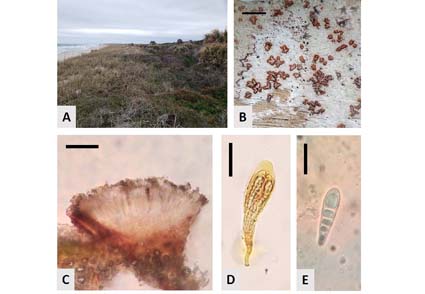
Arthonia rubrocincta morphologically and anatomically fits the generic concept of Coniocarpon and is here transferred to the latter genus as Coniocarpon rubrocinctum. Specimens from southeastern United States and Bahamas were studied and the range of the species is found to extend north into North Carolina, USA and southeast to the Bahamas. Thatch palm (Coccothrinax argentata) is reported as a new phorophyte. An emended description based on examined material is presented for the species.
References
<p align="justify"><span style="color: #000000;"><span style="font-family: Times New Roman, serif;"><span style="font-size: small;">Cáceres, M., Aptroot, A. & Ertz, D. (2014) New species and interesting records of Arthoniales from the Amazon, Rondônia, Brazil. The Lichenologist 46 (4): 573–588. https://doi.org/10.1017/S0024282914000036</span></span></span>
<p align="justify"><span style="color: #000000;"><span style="font-family: Times New Roman, serif;"><span style="font-size: small;">Frisch, A., Thor, G., Ertz, D. & Grube, M. (2014) The Arthonialean challenge: restructuring Arthoniaceae. Taxon 63 (4): 727–744. https://doi.org/10.12705/634.20 </span></span></span>
<p align="justify"><span style="color: #000000;"><span style="font-family: Times New Roman, serif;"><span style="font-size: small;">Frisch, A., Grube, M., Kashiwadani, H. & Ohmura, Y. (2018) Arthoniaceae with reddish, K+ purple ascomata in Japan. Phytotaxa 356 (1): 19–33. https://doi.org/10.11646/phytotaxa.356.1.2 </span></span></span>
<p align="justify"><span style="color: #000000;"><span style="font-family: Times New Roman, serif;"><span style="font-size: small;">Govaerts, R. & Dransfield, J. (2005) World Checklist of Palms. Richmond: Royal Botanic Gardens Kew.</span></span></span>
<p align="justify"><span style="color: #000000;"><span style="font-family: Times New Roman, serif;"><span style="font-size: small;">Grube, M. & Lendemer, J.C. (2009) Arthonia rubrocincta: belated validation of a name for a common species endemic to Sabal palmetto in the southeastern United States. Opuscula Philolichenum 7: 7–12.</span></span></span>
<p align="justify"><span style="color: #000000;"><span style="font-family: Times New Roman, serif;"><span style="font-size: small;">Lamarck, J.B. de & De Candolle, A.P. (1805) Flore Française, Ed. 3 (2): 1–600.</span></span></span>
<p align="justify"><span style="color: #000000;"><span style="font-family: Times New Roman, serif;"><span style="font-size: small;">Lendemer, J.C., Harris, R.C. & Ruiz, A.M. (2016) A review of the lichens of the Dare Regional Biodiversity Hotspot in the Mid-Atlantic Coastal Plain of North Carolina, eastern North America. Castanea 81 (1): 1–7. https://doi.org/10.2179/15-073R2</span></span></span>
<p align="justify"><span style="color: #000000;"><span style="font-family: Times New Roman, serif;"><span style="font-size: small;">Lücking, R., Seavey, F., Common, R., Beeching, S.Q., Breuss, O., Buck, W.R., Crane, L., Hodges, M., Hodkinson, B.P., Lay, E., Lendemer, J.C., McMullin, R.T., Mercado-Díaz, J.A., Nelsen, M.P., Rivas Plata, E., Safranek, W., Sanders, W.B., Schaefer, H.P., Jr. & Seavey, J. (2011) The lichens of Fakahatchee Strand Preserve State Park, Florida: Proceedings from the 18th Tuckerman Workshop. Bulletin of the Florida Museum of Natural History 49 (4): 127–186.</span></span></span>
<p align="justify"><span style="color: #000000;"><span style="font-family: Times New Roman, serif;"><span style="font-size: small;">Nelsen, M.P., Lücking, R., Grube, M., Mbatchou, J.S., Muggia, L., Rivas Plata, E. & Lumbsch, H.T. (2009) Unravelling the phylogenetic relationships of lichenised fungi in Dothideomyceta. Studies in Mycology 64: 135–144. https://doi.org/10.3114/sim.2009.64.07 </span></span></span>
<p align="justify"><span style="color: #000000;"><span style="font-family: Times New Roman, serif;"><span style="font-size: small;">Thiyagaraja, V., Lücking, R., Ertz, D., Wanasinghe, D.N., Karunarathna, S.C., Camporesi, E. & Hyde, K.D. (2020) Evolution of non?lichenized, saprotrophic species of Arthonia (Ascomycota, Arthoniales) and resurrection of Naevia, with notes on Mycoporum. Fungal Diversity 102: 205–224. https://doi.org/10.1007/s13225-020-00451-9 </span></span></span>
<p align="justify"><span style="color: #000000;"><span style="font-family: Times New Roman, serif;"><span style="font-size: small;">Turland, N.J., Wiersema, J.H., Barrie, F.R., Greuter, W., Hawksworth, D.L., Herendeen, P.S., Knapp, S., Kusber, W.-H., Li, D.-Z., Marhold, K., May, T.W., McNeill, J., Monro, A.M., Prado, J., Price, M.J. & Smith, G.F. (eds.) (2018) International Code of Nomenclature for algae, fungi, and plants (Shenzhen Code) adopted by the Nineteenth International Botanical Congress Shenzhen, China, July 2017. Regnum Vegetabile 159. Glashütten: Koeltz Botanical Books. https://doi.org/10.12705/Code.2018</span></span></span>
<p align="justify"><span style="color: #000000;"><span style="font-family: Times New Roman, serif;"><span style="font-size: small;">Frisch, A., Thor, G., Ertz, D. & Grube, M. (2014) The Arthonialean challenge: restructuring Arthoniaceae. Taxon 63 (4): 727–744. https://doi.org/10.12705/634.20 </span></span></span>
<p align="justify"><span style="color: #000000;"><span style="font-family: Times New Roman, serif;"><span style="font-size: small;">Frisch, A., Grube, M., Kashiwadani, H. & Ohmura, Y. (2018) Arthoniaceae with reddish, K+ purple ascomata in Japan. Phytotaxa 356 (1): 19–33. https://doi.org/10.11646/phytotaxa.356.1.2 </span></span></span>
<p align="justify"><span style="color: #000000;"><span style="font-family: Times New Roman, serif;"><span style="font-size: small;">Govaerts, R. & Dransfield, J. (2005) World Checklist of Palms. Richmond: Royal Botanic Gardens Kew.</span></span></span>
<p align="justify"><span style="color: #000000;"><span style="font-family: Times New Roman, serif;"><span style="font-size: small;">Grube, M. & Lendemer, J.C. (2009) Arthonia rubrocincta: belated validation of a name for a common species endemic to Sabal palmetto in the southeastern United States. Opuscula Philolichenum 7: 7–12.</span></span></span>
<p align="justify"><span style="color: #000000;"><span style="font-family: Times New Roman, serif;"><span style="font-size: small;">Lamarck, J.B. de & De Candolle, A.P. (1805) Flore Française, Ed. 3 (2): 1–600.</span></span></span>
<p align="justify"><span style="color: #000000;"><span style="font-family: Times New Roman, serif;"><span style="font-size: small;">Lendemer, J.C., Harris, R.C. & Ruiz, A.M. (2016) A review of the lichens of the Dare Regional Biodiversity Hotspot in the Mid-Atlantic Coastal Plain of North Carolina, eastern North America. Castanea 81 (1): 1–7. https://doi.org/10.2179/15-073R2</span></span></span>
<p align="justify"><span style="color: #000000;"><span style="font-family: Times New Roman, serif;"><span style="font-size: small;">Lücking, R., Seavey, F., Common, R., Beeching, S.Q., Breuss, O., Buck, W.R., Crane, L., Hodges, M., Hodkinson, B.P., Lay, E., Lendemer, J.C., McMullin, R.T., Mercado-Díaz, J.A., Nelsen, M.P., Rivas Plata, E., Safranek, W., Sanders, W.B., Schaefer, H.P., Jr. & Seavey, J. (2011) The lichens of Fakahatchee Strand Preserve State Park, Florida: Proceedings from the 18th Tuckerman Workshop. Bulletin of the Florida Museum of Natural History 49 (4): 127–186.</span></span></span>
<p align="justify"><span style="color: #000000;"><span style="font-family: Times New Roman, serif;"><span style="font-size: small;">Nelsen, M.P., Lücking, R., Grube, M., Mbatchou, J.S., Muggia, L., Rivas Plata, E. & Lumbsch, H.T. (2009) Unravelling the phylogenetic relationships of lichenised fungi in Dothideomyceta. Studies in Mycology 64: 135–144. https://doi.org/10.3114/sim.2009.64.07 </span></span></span>
<p align="justify"><span style="color: #000000;"><span style="font-family: Times New Roman, serif;"><span style="font-size: small;">Thiyagaraja, V., Lücking, R., Ertz, D., Wanasinghe, D.N., Karunarathna, S.C., Camporesi, E. & Hyde, K.D. (2020) Evolution of non?lichenized, saprotrophic species of Arthonia (Ascomycota, Arthoniales) and resurrection of Naevia, with notes on Mycoporum. Fungal Diversity 102: 205–224. https://doi.org/10.1007/s13225-020-00451-9 </span></span></span>
<p align="justify"><span style="color: #000000;"><span style="font-family: Times New Roman, serif;"><span style="font-size: small;">Turland, N.J., Wiersema, J.H., Barrie, F.R., Greuter, W., Hawksworth, D.L., Herendeen, P.S., Knapp, S., Kusber, W.-H., Li, D.-Z., Marhold, K., May, T.W., McNeill, J., Monro, A.M., Prado, J., Price, M.J. & Smith, G.F. (eds.) (2018) International Code of Nomenclature for algae, fungi, and plants (Shenzhen Code) adopted by the Nineteenth International Botanical Congress Shenzhen, China, July 2017. Regnum Vegetabile 159. Glashütten: Koeltz Botanical Books. https://doi.org/10.12705/Code.2018</span></span></span>