
Abstract
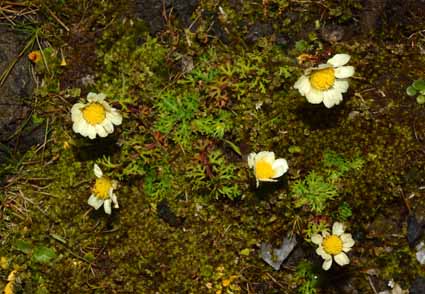
Chrysanthemum neo-oreastrum (Asteraceae, Anthemideae) has been placed in synonymy with C. hypargyreum. Based on our examination of herbarium specimens and field investigation, C. neo-oreastrum was found to be easily distinguishable from C. hypargyreum morphologically. Its independent specific status is therefore resurrected. An emended description and a distribution map are also provided for this species.
References
<p align="justify"><span style="color: #000000;"><span style="font-family: Times New Roman, serif;"><span style="font-size: small;">Chang, C.C. (1934) Compositae novae sinensis. Sinensia 5: 158–163.</span></span></span>
<p align="justify"><span style="color: #000000;"><span style="font-family: Times New Roman, serif;"><span style="font-size: small;">Chen, J.Y., Wang, C.Y., Zhao, H.E. & Zhou, J. (2012) The Origin of Garden Chrysanthemum. Anhui Science and Technology Publishing House, Hefei, 358 pp.</span></span></span>
<p align="justify"><span style="color: #000000;"><span style="font-family: Times New Roman, serif;"><span style="font-size: small;">Cui, X.D. (1985) Denfvzdranthema (DC.) Des Moul. In: Fu, K.T. & Chang, Z.Y. (eds.) Flora Tsinglingensis, vol. 1 (5). Science Press, Beijing, pp. 247–253. [In Chinese]</span></span></span>
<p align="justify"><span style="color: #000000;"><span style="font-family: Times New Roman, serif;"><span style="font-size: small;">Diels, F.L.E. (1905) Beiträge zur Flora des Tsin ling shan und andere Zusätze zur Flora von Central-China. Botanische Jahrbücher für Systematik, Pflanzengeschichte und Pflanzengeographie 36: 1–138.</span></span></span>
<p align="justify"><span style="color: #000000;"><span style="font-family: Times New Roman, serif;"><span style="font-size: small;">Hance, H.F. (1878) Spicilegia florae sinensis: diagnoses of new, and habitats of rare or hitherto unrecorded Chinese plants. The Journal of Botany, British and Foreign 16: 103–114.</span></span></span>
<p align="justify"><span style="color: #000000;"><span style="font-family: Times New Roman, serif;"><span style="font-size: small;">Handel-Mazzetti, H. (1934) Kleine Beiträge zur Kenntnis der Flora von China IV. Österreichische Botanische Zeitschrift 83: 233–237. https://doi.org/10.1007/BF02716640</span></span></span>
<p align="justify"><span style="color: #000000;"><span style="font-family: Times New Roman, serif;"><span style="font-size: small;">Handel-Mazzetti, H. (1938) Plantae sinenses a Dre. H. Smith annis 1921–1922, 1924 et 1934 lectae, XXXII. Compositae. 2. Acta Horti Gothoburgensis 12: 203–359.</span></span></span>
<p align="justify"><span style="color: #000000;"><span style="font-family: Times New Roman, serif;"><span style="font-size: small;">Hu, S.Y. (1966) The Compositae of China (III). Quarterly Journal of the Taiwan Museum 19: 1–73.</span></span></span>
<p align="justify"><span style="color: #000000;"><span style="font-family: Times New Roman, serif;"><span style="font-size: small;">Kitamura, S. (1937) Contributio ad cognitionem generis Chrysanthemi Sinae scripsit. The Journal of Japanese Botany 13: 24–33.</span></span></span>
<p align="justify"><span style="color: #000000;"><span style="font-family: Times New Roman, serif;"><span style="font-size: small;">Ling, Y. & Shih, C. (1980) Taxa nova tribus Anthemidearum familiae Compositarum Sinicarum. Bulletin of Botanical Laboratory of North Eastern Forestry Institute 6: 1–16.</span></span></span>
<p align="justify"><span style="color: #000000;"><span style="font-family: Times New Roman, serif;"><span style="font-size: small;">Shih, C. & Fu, K.X. (1983) Dendranthema (DC.) Des Moul. In: Ling, Y. & Shih, C. (eds.) Flora Reipublicae Popularis Sinicae, vol. 76 (1). Science Press, Beijing, pp. 28–49. [In Chinese]</span></span></span>
<p align="justify"><span style="color: #000000;"><span style="font-family: Times New Roman, serif;"><span style="font-size: small;">Shi, C., Humphries, C.J. & Gilbert, M.G. (2011) Chrysanthemum L. In: Wu, Z.Y., Raven, P.H., Hong, D.Y. (eds.) Flora of China, vols. 20–21. Science Press, Beijing & Missouri Botanical Garden Press, St. Louis, pp. 669?676.</span></span></span>
<p align="justify"><span style="color: #000000;"><span style="font-family: Times New Roman, serif;"><span style="font-size: small;">Zhang, S.L. & Dai, S.L. (2014) Chinese Chrysanthemum Book. China Forestry Publishing House, Beijing, 348 pp. [In Chinese]</span></span></span>
<p align="justify"><span style="color: #000000;"><span style="font-family: Times New Roman, serif;"><span style="font-size: small;">Chen, J.Y., Wang, C.Y., Zhao, H.E. & Zhou, J. (2012) The Origin of Garden Chrysanthemum. Anhui Science and Technology Publishing House, Hefei, 358 pp.</span></span></span>
<p align="justify"><span style="color: #000000;"><span style="font-family: Times New Roman, serif;"><span style="font-size: small;">Cui, X.D. (1985) Denfvzdranthema (DC.) Des Moul. In: Fu, K.T. & Chang, Z.Y. (eds.) Flora Tsinglingensis, vol. 1 (5). Science Press, Beijing, pp. 247–253. [In Chinese]</span></span></span>
<p align="justify"><span style="color: #000000;"><span style="font-family: Times New Roman, serif;"><span style="font-size: small;">Diels, F.L.E. (1905) Beiträge zur Flora des Tsin ling shan und andere Zusätze zur Flora von Central-China. Botanische Jahrbücher für Systematik, Pflanzengeschichte und Pflanzengeographie 36: 1–138.</span></span></span>
<p align="justify"><span style="color: #000000;"><span style="font-family: Times New Roman, serif;"><span style="font-size: small;">Hance, H.F. (1878) Spicilegia florae sinensis: diagnoses of new, and habitats of rare or hitherto unrecorded Chinese plants. The Journal of Botany, British and Foreign 16: 103–114.</span></span></span>
<p align="justify"><span style="color: #000000;"><span style="font-family: Times New Roman, serif;"><span style="font-size: small;">Handel-Mazzetti, H. (1934) Kleine Beiträge zur Kenntnis der Flora von China IV. Österreichische Botanische Zeitschrift 83: 233–237. https://doi.org/10.1007/BF02716640</span></span></span>
<p align="justify"><span style="color: #000000;"><span style="font-family: Times New Roman, serif;"><span style="font-size: small;">Handel-Mazzetti, H. (1938) Plantae sinenses a Dre. H. Smith annis 1921–1922, 1924 et 1934 lectae, XXXII. Compositae. 2. Acta Horti Gothoburgensis 12: 203–359.</span></span></span>
<p align="justify"><span style="color: #000000;"><span style="font-family: Times New Roman, serif;"><span style="font-size: small;">Hu, S.Y. (1966) The Compositae of China (III). Quarterly Journal of the Taiwan Museum 19: 1–73.</span></span></span>
<p align="justify"><span style="color: #000000;"><span style="font-family: Times New Roman, serif;"><span style="font-size: small;">Kitamura, S. (1937) Contributio ad cognitionem generis Chrysanthemi Sinae scripsit. The Journal of Japanese Botany 13: 24–33.</span></span></span>
<p align="justify"><span style="color: #000000;"><span style="font-family: Times New Roman, serif;"><span style="font-size: small;">Ling, Y. & Shih, C. (1980) Taxa nova tribus Anthemidearum familiae Compositarum Sinicarum. Bulletin of Botanical Laboratory of North Eastern Forestry Institute 6: 1–16.</span></span></span>
<p align="justify"><span style="color: #000000;"><span style="font-family: Times New Roman, serif;"><span style="font-size: small;">Shih, C. & Fu, K.X. (1983) Dendranthema (DC.) Des Moul. In: Ling, Y. & Shih, C. (eds.) Flora Reipublicae Popularis Sinicae, vol. 76 (1). Science Press, Beijing, pp. 28–49. [In Chinese]</span></span></span>
<p align="justify"><span style="color: #000000;"><span style="font-family: Times New Roman, serif;"><span style="font-size: small;">Shi, C., Humphries, C.J. & Gilbert, M.G. (2011) Chrysanthemum L. In: Wu, Z.Y., Raven, P.H., Hong, D.Y. (eds.) Flora of China, vols. 20–21. Science Press, Beijing & Missouri Botanical Garden Press, St. Louis, pp. 669?676.</span></span></span>
<p align="justify"><span style="color: #000000;"><span style="font-family: Times New Roman, serif;"><span style="font-size: small;">Zhang, S.L. & Dai, S.L. (2014) Chinese Chrysanthemum Book. China Forestry Publishing House, Beijing, 348 pp. [In Chinese]</span></span></span>